
Choosing among the largest alumina ceramic material suppliers is not simply a matter of comparing company size. For industrial buyers, equipment manufacturers and engineering teams, the more important questions are whether a supplier can deliver the required alumina purity, dimensional accuracy, material consistency and production capacity at a commercially reasonable cost.
Alumina ceramics are widely used in semiconductor equipment, medical devices, chemical processing, industrial pumps, electrical insulation and precision machinery. However, suppliers differ considerably in their material portfolios, manufacturing technologies, engineering capabilities and willingness to support customized components.
In this guide, we examine six internationally recognized manufacturers and suppliers with substantial advanced-ceramics capabilities. We also explain what buyers should compare before selecting a long-term alumina ceramic manufacturing partner.
Quick Answer: Who Are the 6 Largest Alumina Ceramic Material Suppliers?
Six major global companies worth considering are:
- Kyocera Corporation – Japan
- CoorsTek – United States
- Saint-Gobain Performance Ceramics & Refractories – France
- CeramTec – Germany
- Morgan Advanced Materials – United Kingdom
- NGK Insulators (NGK Corporation) – Japan
This is a practical shortlist based on global corporate scale, advanced ceramics market presence, product breadth and industrial manufacturing capabilities. It is not a verified ranking of alumina-only revenue or production tonnage. Most companies do not publicly disclose comparable alumina-specific sales figures.Table of Contents
- Quick Summary Table
- What Is Alumina Ceramic Material?
- How Alumina Ceramics Are Manufactured
- Six Major Global Suppliers
- Supplier Comparison Table
- Benefits and Limitations
- Best Industrial Applications
- How to Choose a Supplier
- Common Purchasing Mistakes
- Custom Alumina Ceramic Manufacturing
- Expert Recommendation
- Frequently Asked Questions
- References
Quick Summary: Six Major Alumina Ceramic Material Suppliers
| Company | Country | Core Strength | Best-Fit Applications | Buyer Consideration |
|---|---|---|---|---|
| Kyocera Corporation | Japan | Fine ceramics and precision manufacturing | Electronics, semiconductor packaging, industrial components | Strong option for high-precision engineered ceramics |
| CoorsTek | United States | Broad technical ceramic material portfolio | Semiconductors, medical, aerospace, industrial wear parts | Strong material engineering and customized formulations |
| Saint-Gobain | France | Advanced ceramics and refractory solutions | High-temperature processing, chemical and industrial applications | Evaluate the specific business unit and product range |
| CeramTec | Germany | Advanced technical and medical ceramics | Medical, automotive, electronics and machinery | Suitable for demanding engineered ceramic components |
| Morgan Advanced Materials | United Kingdom | Technical ceramics and thermal materials | Electrical insulation, industrial equipment and high-temperature systems | Assess application-specific material and component expertise |
| NGK Insulators | Japan | Industrial ceramics and electrical insulation | Energy, electronics and industrial infrastructure | Confirm availability of the required alumina component category |
What Is Alumina Ceramic Material?
Alumina ceramic is an advanced technical ceramic primarily composed of aluminum oxide, with the chemical formula Al₂O₃. It is one of the most widely used engineering ceramic materials because it combines high hardness, electrical insulation, wear resistance, chemical stability and relatively attractive production economics.
Unlike ordinary ceramic products intended for decorative or household use, industrial alumina ceramics are engineered for controlled mechanical, electrical and thermal performance. Their final properties depend on powder quality, alumina concentration, additives, forming methods, sintering conditions and finishing processes.
Common Alumina Purity Grades
| Material Grade | Typical Alumina Content | Common Applications | Purchasing Considerations |
|---|---|---|---|
| 90% Alumina | Approximately 90% | General industrial insulation and wear-resistant parts | Cost-effective for less demanding applications |
| 95% Alumina | Approximately 95% | Industrial machinery, electrical components and structural parts | Balanced performance and production cost |
| 96% Alumina | Approximately 96% | Precision industrial components and insulators | Popular engineering-grade option |
| 99% Alumina | Approximately 99% | Semiconductor, chemical and precision equipment | Higher purity and tighter process control may be required |
| 99.5% and Above | 99.5%+ | Specialized electronic, laboratory and high-purity applications | Check impurities, microstructure and application-specific performance |
These are commonly encountered commercial grade categories, not universal performance specifications. Different manufacturers may use proprietary formulations, and two materials with the same nominal alumina percentage can have different mechanical, electrical and thermal properties.
From our experience, buyers should never select alumina ceramic solely by its purity percentage. Density, porosity, grain size, flexural strength, dielectric properties and operating environment are equally important.
Why Is Alumina Used in Industrial Manufacturing?
- High hardness: Suitable for wear-resistant components exposed to repeated mechanical contact.
- Electrical insulation: Used in insulating structures, electronic substrates and electrical equipment.
- Chemical resistance: Offers good resistance to many industrial chemicals and corrosive environments, subject to chemical compatibility testing.
- Thermal stability: Maintains useful properties in many elevated-temperature applications.
- Dimensional stability: Precision grinding and machining can produce components with controlled dimensions.
- Cost-performance balance: Often more economical than specialized advanced ceramics when its properties meet the application requirements.
How Alumina Ceramic Materials Are Manufactured
Understanding the manufacturing process helps buyers evaluate whether a supplier can deliver consistent quality rather than simply quote an attractive material specification.
1. Raw Material Selection
Manufacturers begin with alumina powders of controlled purity and particle-size distribution. Powder characteristics affect sintering behavior, final density, grain structure and mechanical performance.
2. Powder Preparation
The powder is blended with suitable additives and processing agents. Milling and mixing help achieve a consistent composition before shaping.
3. Forming and Shaping
Depending on component geometry and production quantity, manufacturers may use dry pressing, isostatic pressing, extrusion, injection molding, tape casting or other forming techniques.
4. Sintering
Green ceramic components undergo controlled high-temperature firing. Sintering develops the dense ceramic microstructure responsible for much of the material’s final strength, hardness and other properties.
5. Precision Machining and Finishing
After firing, grinding, lapping, polishing, drilling or other machining operations may be necessary. This stage is particularly important for precision pumps, sealing surfaces, ceramic plungers and semiconductor components.
6. Inspection and Quality Control
Professional manufacturers should verify relevant dimensions, surface finish, density and material properties against agreed specifications. Depending on the application, additional inspections may include porosity, electrical performance and microstructural evaluation.
Professional purchasing insight: A supplier that can manufacture alumina powder-based products is not automatically qualified to manufacture precision alumina components. Buyers should evaluate the entire process, from material preparation to final inspection.
Top 6 Largest Alumina Ceramic Material Suppliers in the World
The following companies have been selected for their international presence, technical ceramic capabilities and relevance to industrial alumina applications. Their order is an editorial shortlist, not an independently audited ranking by alumina production volume.
01 | Japan
1. Kyocera Corporation
Kyocera is one of the world’s most prominent fine ceramics manufacturers. Founded in 1959, the Japanese company has developed a substantial international business spanning advanced ceramics, electronic components, industrial equipment and other technology-related products.
Its alumina ceramic materials are used in applications requiring electrical insulation, mechanical strength, wear resistance and dimensional precision. The company’s capabilities are particularly relevant to electronic packaging, semiconductor components and precision industrial parts.
Main Products and Capabilities
- Alumina ceramic substrates and electronic packages
- Precision alumina ceramic components
- Industrial fine ceramic parts
- Electrical insulation components
- Customized ceramic solutions for specialized applications
Why Consider Kyocera?
Kyocera is a strong candidate when technical consistency, established manufacturing processes and precision ceramic engineering are major purchasing priorities. Its broad corporate infrastructure also makes it relevant to international OEM supply chains.
Our recommendation: Consider Kyocera for demanding electronic and precision-engineering applications. Before purchasing, verify the specific material grade, available geometry, tolerance capability and production lead time.
02 | United States
2. CoorsTek
CoorsTek is a major global technical ceramics manufacturer headquartered in the United States. Established in 1910, it has more than a century of experience in engineered ceramic materials and industrial component manufacturing.
The company reports more than 400 proprietary technical ceramic material formulations and over 5,000 employees across its global manufacturing, research and sales operations. Its alumina portfolio includes multiple compositions designed for different application requirements.
Main Products and Capabilities
- High-purity alumina ceramics
- Alumina tubes, rods, plates and cylinders
- Wear-resistant ceramic components
- Semiconductor processing components
- Medical and aerospace ceramic components
- Custom technical ceramic formulations
Why Consider CoorsTek?
CoorsTek is particularly attractive for buyers who need engineering support rather than a standard ceramic material alone. Its material development capabilities allow customers to evaluate different alumina formulations according to wear, electrical, mechanical and chemical requirements.
Our recommendation: Put CoorsTek on the shortlist for semiconductor, medical, aerospace and heavy-duty industrial applications where material performance is more important than achieving the lowest purchase price.
03 | France
3. Saint-Gobain Performance Ceramics & Refractories
Saint-Gobain is a major international materials group with extensive industrial materials and advanced ceramics operations. Its Performance Ceramics & Refractories business focuses on materials and engineered solutions designed for demanding industrial environments.
Its relevant product portfolio includes high-purity alumina, alumina-based refractory products and specialty ceramic solutions. These materials are particularly useful in applications where elevated temperatures, chemical compatibility and operational durability are critical.
Main Products and Capabilities
- High-purity alumina materials
- Alumina-based refractory products
- Advanced ceramic components
- High-temperature furnace and kiln solutions
- Specialty ceramics for industrial processing
Why Consider Saint-Gobain?
Its strength is especially relevant to high-temperature processing, industrial furnaces and demanding manufacturing environments. Buyers should distinguish between its refractory product lines and precision structural alumina components because these are different procurement categories.
Our recommendation: Consider Saint-Gobain when purchasing high-temperature ceramic systems or refractory solutions. For precision pump components or miniature ceramic parts, confirm that the relevant business unit supports the required geometry and machining specifications.
04 | Germany
4. CeramTec
CeramTec is a well-established German advanced ceramics manufacturer with a strong position in technical ceramics. Its business covers multiple industrial sectors, including medical technology, automotive engineering, electronics and industrial machinery.
Aluminum oxide is among the important materials in the company’s technical ceramic portfolio. CeramTec’s engineering capabilities make it a relevant supplier for applications requiring reliable ceramic properties, customized components and sophisticated manufacturing processes.
Main Products and Capabilities
- Alumina ceramic components
- Technical ceramic structural parts
- Medical ceramic products
- Electrical and electronic ceramics
- Wear-resistant industrial components
- Specialized ceramic manufacturing and machining
Why Consider CeramTec?
CeramTec is worth considering when a project involves more than basic alumina plates or tubes. Its advanced ceramic expertise is relevant to complex component geometries and applications with demanding quality requirements.
Our recommendation: Shortlist CeramTec for engineered ceramic components in medical, automotive and industrial applications. Request material specifications and manufacturing tolerances before comparing quotations.
05 | United Kingdom
5. Morgan Advanced Materials
Morgan Advanced Materials is a British advanced materials company with a long industrial history. Its business includes technical ceramics, thermal products and engineered materials for customers operating in demanding industrial environments.
Its technical ceramics capabilities make it a relevant company to evaluate for alumina-based electrical insulation, structural components and industrial ceramic applications.
Main Products and Capabilities
- Technical ceramic materials and components
- Electrical insulation ceramics
- Industrial structural ceramics
- Thermal management materials
- Customized engineered ceramic solutions
Why Consider Morgan Advanced Materials?
Morgan is particularly relevant when the purchasing requirement combines electrical, thermal and mechanical performance. Its wider materials expertise can be valuable for equipment manufacturers seeking an integrated industrial materials supplier.
Our recommendation: Consider Morgan for electrical insulation, thermal systems and industrial equipment. Make sure the selected product is specifically suited to the intended alumina application rather than assuming all technical ceramic grades are interchangeable.
06 | Japan
6. NGK Insulators (NGK Corporation)
NGK is a major Japanese industrial ceramics manufacturer with extensive experience in electrical insulation, energy infrastructure and advanced ceramic technologies.
The company is particularly recognized for industrial ceramic products and insulation technologies. Its relevance to alumina sourcing depends on the specific product category and manufacturing requirements, so buyers should confirm the availability of the required alumina grade and component form.
Main Products and Capabilities
- Industrial ceramic components
- Electrical insulation products
- Advanced ceramic solutions
- Energy and infrastructure-related ceramic products
- Specialized industrial ceramic technologies
Why Consider NGK?
NGK is worth evaluating for industrial projects where ceramic insulation and long-term operating reliability are important. However, buyers should not assume that every NGK ceramic product is alumina-based; product composition must be confirmed for each application.
Our recommendation: Include NGK when evaluating industrial ceramic insulation and infrastructure-related requirements. For precision alumina pumps, tubes or custom structural components, compare its actual product availability with specialist component manufacturers.
Comparison Table: Which Alumina Ceramic Supplier Is Best?
The following comparison focuses on procurement suitability rather than unsupported market-share figures.
| Supplier | Material Expertise | Industrial Applications | Customization Considerations | Best Purchasing Scenario |
|---|---|---|---|---|
| Kyocera | Fine ceramics and alumina | Electronics, semiconductor, precision machinery | Precision engineering and established material systems | High-volume or high-precision OEM projects |
| CoorsTek | Broad alumina formulations and technical ceramics | Medical, semiconductor, aerospace and industrial wear | Material selection and application engineering | Specialized material performance requirements |
| Saint-Gobain | High-purity alumina and refractory ceramics | Furnaces, industrial processing and high temperatures | Refractory and engineered ceramic solutions | High-temperature industrial installations |
| CeramTec | Advanced structural and functional ceramics | Medical, automotive and industrial equipment | Complex ceramic component manufacturing | Engineered parts with demanding specifications |
| Morgan Advanced Materials | Technical ceramics and thermal materials | Electrical, thermal and industrial equipment | Application-oriented materials engineering | Insulation and thermal management |
| NGK | Industrial and electrical ceramics | Energy, infrastructure and electrical systems | Product-category dependent | Industrial ceramic insulation projects |
Which Supplier Should You Choose?
- For semiconductor components: Start with Kyocera and CoorsTek, then evaluate CeramTec according to the required geometry and grade.
- For high-temperature applications: Consider Saint-Gobain’s high-purity alumina and refractory product portfolio.
- For medical and precision industrial components: Compare CeramTec, Kyocera and CoorsTek.
- For electrical insulation: Evaluate Kyocera, Morgan and NGK based on actual electrical specifications.
- For custom machinery parts: Include specialist precision ceramic manufacturers that can provide drawing-based OEM manufacturing.
Benefits and Limitations of Alumina Ceramic Materials
Alumina is popular because it offers a practical combination of performance and cost. Nevertheless, it is not the best ceramic material for every industrial application.
| Pros | Cons |
|---|---|
| High hardness and excellent wear resistance | Brittle behavior under impact and tensile stress |
| Strong electrical insulation properties | Precision machining can increase production costs |
| Good chemical stability in many environments | Compatibility depends on the chemical and operating conditions |
| Good thermal stability | Thermal shock can cause cracking under unsuitable conditions |
| Available in multiple commercial purity grades | Higher purity may increase raw material and processing costs |
| Suitable for precision industrial components | Complex geometries require specialized manufacturing expertise |
When Is Alumina Worth the Investment?
Alumina is particularly worthwhile when conventional metal or polymer components suffer from excessive wear, corrosion, electrical conductivity or dimensional degradation.
For example, an industrial pump operating with abrasive fluids may experience repeated metal component replacement. An appropriately engineered alumina component can reduce wear-related maintenance and improve operating consistency.
However, the complete system must be evaluated. A ceramic component that is too brittle, poorly supported or incorrectly fitted may fail even when its material hardness is excellent.
Best Industrial Applications for Alumina Ceramic Materials
1. Industrial Pumps and Fluid Control Systems
Alumina ceramics are used in pump plungers, sleeves, bushings, valves and wear-resistant fluid-contact components. Their hardness and chemical stability can be beneficial in abrasive or chemically demanding operating environments.
For equipment manufacturers, ceramic component geometry, surface finish and dimensional consistency are particularly important. Explore our industrial ceramic pump solutions and ceramic plunger pump components.
2. Semiconductor and Electronics Manufacturing
Electrical insulation, purity and dimensional control make alumina suitable for many semiconductor and electronic components. Applications include substrates, insulating structures, processing equipment and precision fixtures.
For advanced electronic applications, buyers should pay close attention to impurity levels, dielectric characteristics, surface finish and contamination control.
3. Medical Equipment and Precision Fluid Management
Alumina ceramic components can be used in selected medical equipment and fluid management systems where wear resistance, dimensional accuracy and chemical stability are required.
For medical applications, the material grade alone is not sufficient. Biocompatibility, sterilization compatibility, regulatory documentation and device-specific validation must be assessed.
Related solutions include medical ceramic pumps and dialysis ceramic pump components.
4. Chemical Processing Equipment
Alumina components can perform well in many chemical processing environments. Typical applications include pump components, valve structures, protective sleeves and wear-resistant liners.
We recommend confirming the exact chemical concentration, temperature, exposure time and mechanical loading before selecting a ceramic grade. Chemical resistance should never be assumed based only on the term high-purity alumina.
5. Precision Industrial Valves and Metering Systems
Precision ceramic components can help maintain stable clearances and resist abrasive wear in fluid metering systems. Surface quality and dimensional tolerances are especially important where very small fluid volumes must be controlled.
Depending on the material and design, buyers may also evaluate ceramic rotary valves and microliter ceramic metering pumps.
6. High-Temperature Industrial Equipment
Alumina is used in furnace components, insulation structures, tubes, supports and other high-temperature industrial products. The actual operating temperature limit depends on material composition, load, atmosphere, thermal cycling and component design.
For additional product-selection guidance, see our article on high-temperature ceramic tubes and suppliers.
How to Choose the Right Alumina Ceramic Material Supplier
For commercial buyers, the best supplier is not necessarily the largest company. A manufacturer that understands your component design and can consistently produce it to specification may deliver greater long-term value than a multinational supplier offering a broader but less suitable product range.
1. Confirm the Required Alumina Grade
Specify the required Al₂O₃ content, density, porosity and relevant material properties. If your application requires 99% alumina, do not accept a lower grade simply because the supplier claims similar general performance.
2. Evaluate Manufacturing Capabilities
Ask whether the manufacturer performs powder preparation, forming, sintering, precision grinding and final inspection in-house. Outsourcing is not automatically a problem, but responsibility for process control and product quality must be clear.
3. Check Dimensional Tolerances
For precision applications, provide engineering drawings with dimensional tolerances, surface roughness requirements, geometric tolerances and inspection criteria.
A supplier should be able to explain which tolerances are achievable after sintering and which require additional grinding or lapping.
4. Request Material Test Reports
Depending on your application, request relevant documentation such as:
- Alumina chemical composition
- Bulk density and apparent porosity
- Flexural strength and hardness
- Thermal expansion characteristics
- Dielectric strength and electrical resistivity
- Surface roughness and dimensional inspection reports
- Batch traceability and quality documentation
Not every test is necessary for every product. Choose tests that directly relate to the component’s operating conditions.
5. Compare Customization and OEM Support
Some manufacturers focus on standard ceramic tubes, plates and rods. Others specialize in drawing-based manufacturing of customized parts. This distinction can significantly affect tooling costs, minimum order quantities and delivery times.
If your project requires a non-standard ceramic plunger, miniature sleeve, precision valve component or special structural part, prioritize suppliers with relevant manufacturing experience.
6. Evaluate Total Cost of Ownership
Do not compare suppliers using unit price alone. Include machining costs, inspection expenses, packaging, shipping, rejection rates, tooling investment, replacement frequency and production downtime.
A higher-priced alumina component may be more economical if it substantially reduces maintenance frequency or improves production reliability.
7. Verify Quality Management and Industry Compliance
Ask for relevant quality management certifications and product-specific compliance documents. ISO 9001 certification can demonstrate an established quality management framework, but it does not independently guarantee that a ceramic component meets your technical specification.
For medical, aerospace, automotive and semiconductor applications, additional customer qualification, traceability and industry-specific validation may be necessary.
6 Common Mistakes When Buying Alumina Ceramic Materials
Mistake 1: Choosing Only by Alumina Purity
Higher purity does not automatically mean better performance. A 99% grade may be unnecessary for a standard wear-resistant component, while a specialized application may require additional controls beyond purity.
Mistake 2: Ignoring Mechanical Loading
Ceramics have excellent compressive strength but are relatively brittle. Improper mounting, impact or tensile loading can cause unexpected failure.
Mistake 3: Overlooking Surface Finish
For seals, plungers and precision sliding components, surface roughness can influence leakage, friction, wear and service life. Always define surface finish requirements in the drawing.
Mistake 4: Comparing Incompatible Quotations
Two suppliers may quote the same nominal alumina grade but use different densities, tolerances and finishing processes. A meaningful quotation comparison requires identical technical specifications.
Mistake 5: Ignoring Production Capacity
A supplier may successfully produce prototypes but struggle with stable mass production. Confirm production capacity, batch consistency and delivery commitments before placing large orders.
Mistake 6: Selecting a Supplier Without Engineering Support
Custom ceramic components often require adjustments to geometry, tolerances or material selection. A supplier that cannot provide engineering feedback may create additional development costs.
JuchangCeramic: Custom Alumina Ceramic Manufacturing Solutions
Large international suppliers are suitable for many established industrial procurement programs. However, OEM buyers do not always need the infrastructure of a multinational manufacturer. In some projects, a specialist manufacturer with flexible customization, direct engineering communication and precision component production can be a more practical choice.
JuchangCeramic provides custom ceramic manufacturing solutions for precision ceramic parts, pumps and industrial components. We focus on helping customers translate engineering requirements into manufacturable ceramic products.
Custom Ceramic Manufacturing Services
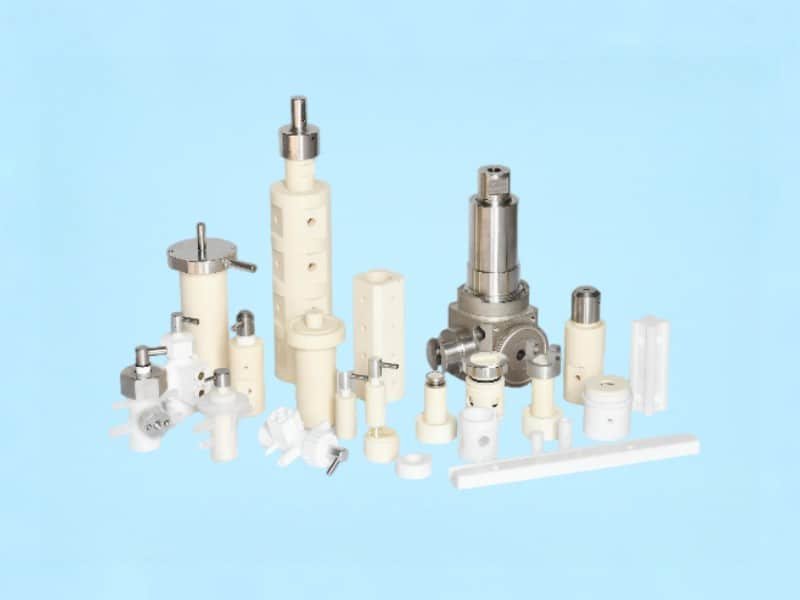
JuchangCeramic delivers professional OEM and custom manufacturing solutions for precision ceramic parts, pumps, and components. Whether you have complete drawings or just an idea, we transform your requirements into high-performance products with accurate quotation and reliable production.
Our custom manufacturing approach is particularly relevant for equipment manufacturers, industrial machinery companies and OEM customers who require application-specific ceramic components.
Explore Custom Ceramic Manufacturing
Why Consider a Specialist Custom Ceramic Manufacturer?
- Drawing-based manufacturing: Develop components according to customer drawings, dimensions and technical requirements.
- OEM customization: Support non-standard ceramic parts for specialized machinery and equipment.
- Application-oriented selection: Evaluate the material and component requirements according to actual operating conditions.
- Precision component solutions: Address the manufacturing requirements of ceramic plungers, sleeves, valves and other engineered parts.
- Direct project communication: Discuss design details, technical specifications and production requirements during project development.
Related Ceramic Products
For buyers sourcing precision industrial ceramic components, our product range also covers miniature ceramic pumps and zirconia ceramic structural parts.
Although zirconia and alumina have different material properties, both are important engineering ceramics. The appropriate choice depends on toughness, hardness, wear behavior, operating conditions and total production cost.
What Information Should You Provide for a Custom Quote?
To obtain a useful quotation, we recommend preparing:
- Component drawings or reference samples.
- Required alumina purity or preferred material grade.
- Critical dimensions and tolerances.
- Surface roughness requirements.
- Operating temperature and working environment.
- Mechanical loading and chemical exposure conditions.
- Prototype quantity and estimated annual demand.
- Required inspection reports and quality documentation.
The more complete the information, the easier it is to evaluate manufacturing feasibility and avoid unnecessary design changes.
Expert Recommendation: Which Alumina Ceramic Supplier Should You Choose in 2026?
There is no single supplier that is the best choice for every alumina ceramic purchasing project. The correct decision depends on material requirements, component geometry, annual demand, quality expectations and total ownership cost.
Our practical recommendations are as follows:
| Buyer Requirement | Recommended Starting Point | Our Advice |
|---|---|---|
| Large-scale international OEM procurement | Kyocera or CoorsTek | Evaluate global supply coverage and production qualification. |
| High-purity and specialized alumina | CoorsTek or Kyocera | Request detailed composition and material property documentation. |
| High-temperature industrial ceramics | Saint-Gobain | Distinguish refractory products from precision structural ceramics. |
| Complex precision ceramic components | CeramTec or specialist manufacturers | Compare machining capabilities and drawing compliance. |
| Electrical insulation and thermal systems | Morgan or NGK | Confirm the precise material family and product availability. |
| Customized OEM ceramic parts | JuchangCeramic and other qualified specialists | Compare engineering response, samples, tolerances and total cost. |
For beginners, we recommend starting with 95% or 96% alumina as a candidate for general industrial applications, then validating whether it meets the actual performance requirements. This is a starting point, not a universal specification.
For commercial users, the most important consideration is consistent production quality. A competitive sample is not enough. The manufacturer must also demonstrate that subsequent batches can maintain the agreed material properties and dimensional tolerances.
For heavy-duty applications, prioritize wear resistance, mechanical loading, chemical compatibility and thermal cycling. Do not automatically pay for ultra-high-purity alumina if the application does not benefit from it.
Our final position: Kyocera and CoorsTek are strong starting points for global technical ceramic sourcing. Saint-Gobain is particularly relevant for high-temperature industrial ceramic solutions, while CeramTec and Morgan offer important advanced ceramic capabilities. NGK deserves consideration for industrial insulation and related ceramic applications. For customized precision components, specialist manufacturers such as JuchangCeramic should also be included in the supplier evaluation process.
Frequently Asked Questions About Alumina Ceramic Material Suppliers
1. Who are the largest alumina ceramic material suppliers in the world?
Major internationally recognized suppliers include Kyocera Corporation, CoorsTek, Saint-Gobain Performance Ceramics & Refractories, CeramTec, Morgan Advanced Materials and NGK Corporation. These companies have substantial advanced ceramic capabilities, although their alumina-specific revenues and production volumes are not publicly comparable.
2. Which company is the largest alumina ceramic manufacturer?
There is no universally verified public ranking based exclusively on alumina ceramic production volume or revenue. Kyocera and CoorsTek are among the strongest candidates when evaluating global fine ceramics and technical ceramics manufacturing scale. A definitive ranking would require comparable alumina-specific financial and production data.
3. What is the difference between 95% and 99% alumina ceramics?
The primary difference is alumina content and the resulting material characteristics. Higher-purity grades can offer improved wear resistance, corrosion resistance and electrical performance in suitable formulations. However, actual performance depends on density, microstructure, additives and manufacturing processes. The correct grade should be selected according to the application.
4. Is alumina ceramic suitable for industrial pumps?
Yes. Alumina ceramics are widely considered for pump plungers, sleeves, bushings and other wear-resistant components. Their hardness and chemical stability can improve component durability in suitable operating environments. Design, surface finish, fluid compatibility and mechanical loading must still be evaluated.
5. How do I find a reliable custom alumina ceramic manufacturer?
Look for manufacturers with relevant alumina grades, powder processing, forming, sintering, precision machining and quality inspection capabilities. Ask for material datasheets, samples, dimensional inspection reports and evidence of production consistency. Also assess their ability to communicate engineering requirements and support OEM customization.
6. Is alumina ceramic better than zirconia ceramic?
Neither material is universally better. Alumina is generally valued for hardness, electrical insulation and cost-performance balance. Zirconia typically offers higher fracture toughness and better resistance to certain impact-related failure modes. The best choice depends on wear conditions, mechanical loads, geometry and budget.
7. What information is needed to purchase custom alumina ceramic parts?
Buyers should provide material grade, dimensions, tolerances, surface finish, working temperature, chemical exposure, mechanical loads and order quantity. Engineering drawings or reference samples are particularly helpful when requesting a quotation for precision ceramic components.
8. Are smaller specialist ceramic manufacturers worth considering?
Yes. A specialist manufacturer can be a practical alternative when a project requires customized geometries, engineering communication, flexible production quantities or drawing-based manufacturing. Buyers should verify technical capabilities, quality controls and production capacity rather than judging suppliers by company size alone.
References and Further Reading
The following authoritative industry and manufacturer resources provide additional information about alumina ceramic materials and the advanced ceramics market.
- CoorsTek – Alumina Technical Ceramic Materials. Manufacturer information on alumina compositions, properties and industrial applications.
- Kyocera – Alumina (Al₂O₃) Material Properties. Technical information about alumina’s electrical insulation, mechanical strength and industrial applications.
- MarketsandMarkets – Alumina-Based Ceramics Market. Industry research covering market segmentation, material grades, applications and major competitive participants.
About JuchangCeramic
JuchangCeramic provides custom precision ceramic parts, ceramic pumps and engineered ceramic components for industrial applications. We support customers seeking customized manufacturing solutions based on drawings, samples and specific application requirements.
Explore our industrial ceramic products catalog or learn more about our custom precision ceramic manufacturing services.