
A ceramic rotary valve is worth considering when a fluid-handling system needs precise channel switching, strong chemical resistance, repeatable positioning or low-wear contact surfaces. However, ceramic alone does not guarantee zero leakage, long service life or accurate flow control. The real performance depends on the rotor and stator geometry, sealing interface, material grade, surface finish, drive mechanism and operating conditions.
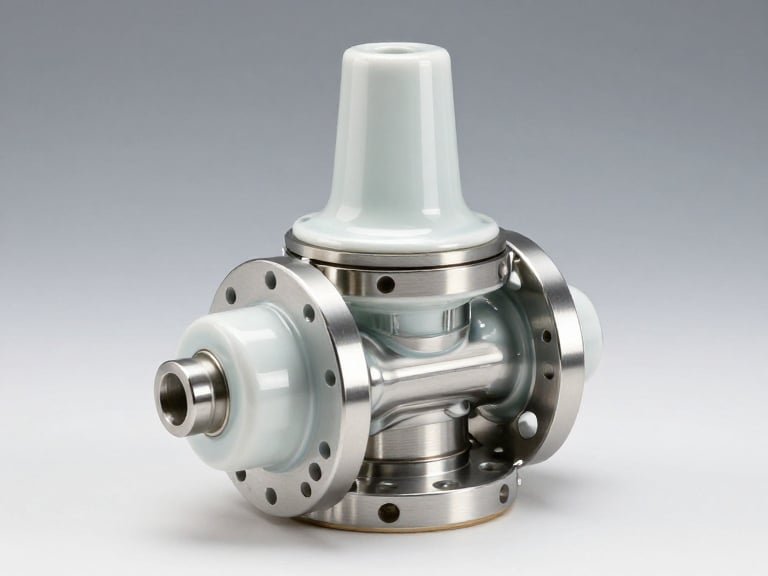
When evaluating the Considerations for Ceramic Rotary Valve applications, our recommendation is to start with the fluid-routing task and its failure risks. Define what each port must do, which fluids contact the valve, how much leakage is acceptable and how frequently the valve will switch. Only then should you finalize the ceramic material and precision requirements. JuchangCeramic provides ceramic component and valve solutions for specialized fluid-handling applications, including designs that may require customized channel arrangements and precision-machined contact surfaces.
Quick Answer: What Should You Consider Before Choosing a Ceramic Rotary Valve?
The ten most important factors are ceramic material, port and channel geometry, sealing performance, surface finish, machining tolerances, chemical compatibility, operating pressure and temperature, switching accuracy, wear life, and manufacturing quality control.
Our recommendation: Do not buy a valve based on a headline machining tolerance or a claim of zero leakage alone. Request performance evidence for the complete valve assembly under representative conditions. A ceramic rotary valve is most valuable when its precision and material properties solve a measurable problem that a standard polymer or metal valve cannot solve as effectively.
Table of Contents
- Ceramic Rotary Valve Design: Quick Summary
- What Is a Ceramic Rotary Valve and How Does It Work?
- 10 Key Considerations for Ceramic Rotary Valve Applications
- Ceramic Rotary Valve vs. Other Valve Types
- Pros and Cons of Ceramic Rotary Valves
- Example: Multi-Port Precision Ceramic Rotary Valve
- How to Choose a Ceramic Rotary Valve Manufacturer
- Common Design and Purchasing Mistakes
- Expert Recommendation and Buying Checklist
- Frequently Asked Questions
- References
1. Ceramic Rotary Valve Design: Quick Summary
| Design factor | Why it matters | What we recommend |
|---|---|---|
| Ceramic grade | Affects wear, chemical compatibility, mechanical strength and dimensional stability. | Compare specific grades against the fluid, load, temperature and service-life requirements. |
| Port and channel design | Determines routing, flow restrictions, dead volume and cross-port isolation. | Map every operating position and verify the flow path before finalizing the rotor. |
| Sealing interface | Controls leakage between ports and to the external environment. | Specify leakage limits and test the complete assembly. |
| Surface finish | Influences friction, wear, contact behavior and contamination risk. | Set a measurable finish requirement based on function, not appearance alone. |
| Machining tolerances | Influence fit, alignment, sealing and manufacturing yield. | Identify critical dimensions and confirm how the supplier inspects them. |
| Fluid compatibility | Determines whether the ceramic and other wetted materials remain suitable in service. | Evaluate actual fluid chemistry, concentration, temperature and exposure duration. |
| Pressure and temperature | Influence mechanical loading, thermal behavior and seal performance. | Define continuous and transient operating limits for the complete valve. |
| Switching accuracy | Affects whether the correct channels open and close at the intended positions. | Specify position accuracy, repeatability and acceptable cross-port leakage. |
| Wear and service life | Determine maintenance frequency and long-term consistency. | Validate representative switching cycles and fluid exposure. |
| Supplier quality | Affects consistency between prototypes and production batches. | Review inspection records, material traceability and change-control practices. |
2. What Is a Ceramic Rotary Valve and How Does It Work?
A ceramic rotary valve controls the connection between fluid ports by rotating one valve element relative to another. Many precision designs use a rotor and a stationary mating surface, often called a stator. Channels or grooves in the rotating element align with selected ports as the rotor moves between defined positions.
Depending on the architecture, the valve can switch between two or more flow paths, direct a fluid to different destinations, isolate selected channels or support a sequence of fluid-handling operations. Ceramic elements are attractive when the design benefits from wear-resistant contact surfaces, dimensional stability or resistance to particular chemicals.
Applications may include analytical instruments, precision pumps, fluid purification systems, medical equipment, chemical processing and selected biopharmaceutical systems. The appropriate design varies considerably by application. A valve used to route a cleaning fluid is not automatically suitable for a patient-contact fluid path, even if the channel geometry appears similar.
How the rotary mechanism works
The actuator rotates the valve element to a defined position. At each position, the rotor’s channels connect selected ports while other ports are isolated by the mating interface or another sealing arrangement. Performance depends on channel geometry, angular alignment, the contact interface, actuator control and the valve’s internal clearances.
In practical engineering, three questions matter more than the basic mechanism:
- Does the valve connect the intended ports at every commanded position?
- Does it isolate channels sufficiently to prevent unacceptable cross-contamination or bypass flow?
- Does the assembly maintain those functions after repeated switching and exposure to the intended fluid?
If the answer to any of these questions is uncertain, the design needs more definition or testing before procurement.
3. 10 Key Considerations for Ceramic Rotary Valve Applications
1. Choose the ceramic material for the actual operating environment
Material selection should follow the valve’s function, not a general belief that one ceramic is always superior. High-purity zirconia and alumina are common candidates for precision ceramic components, but they have different properties and should not be treated as interchangeable.
Selected zirconia grades can provide a useful combination of strength, wear resistance and precision. Alumina may be suitable where its hardness, chemical properties and cost profile match the application. The grade, processing method, surface condition and geometry all affect the finished component’s performance.
For a valve exposed to aggressive chemicals, the engineering team should review fluid composition, concentration, temperature, exposure time and potential interactions with every wetted material. A ceramic grade that performs well in one fluid may not be the best choice for another, and the seals or housing may become the limiting component.
We recommend: Specify the material grade and the evidence needed to approve it. Ask the manufacturer to identify the proposed material precisely rather than accepting a quotation that says only “zirconia ceramic” or “alumina ceramic.”
For application-specific development, review JuchangCeramic’s custom precision ceramic parts capabilities and compare them with the component geometry and service requirements.
2. Design the port and channel layout before choosing the valve size
The port arrangement defines what the valve can actually do. A two-way design may be sufficient for simple switching, while three-way, four-way or multi-channel arrangements may be required for more complex fluid-routing sequences.
Start by drawing the complete fluid circuit. Identify each inlet, outlet, bypass, cleaning line and isolation path. Then create a position table showing which ports must connect and which must remain isolated in every operating state.
This step helps reveal problems that are easy to miss in a product specification: unintended connections during rotation, excessive dead volume, narrow passages that restrict flow, or channels that retain fluid between operations. In systems handling multiple reagents or sensitive samples, retained fluid may affect cross-contamination risk and cleaning requirements.
Do not assume that adding more ports automatically improves the system. Multi-port designs can reduce the number of separate valves and connections, but they can also increase machining complexity, validation effort and the consequences of a routing error.
Practical recommendation: Choose the simplest port configuration that meets the required process sequence. Use a multi-channel design when it removes meaningful complexity from the overall fluid system, not simply because customization is available.
3. Define sealing performance and cross-port leakage
Leakage is one of the most important performance questions in a rotary valve. However, “leakage” can describe several different issues: external leakage to the environment, internal bypass between nominally isolated ports, or unintended flow caused by wear or incorrect rotor positioning.
These failure modes do not have the same consequences. Internal cross-port leakage may contaminate a sample or alter a fluid mixture even when the valve has no visible external leak. External leakage may create a safety, cleanliness or equipment-damage concern depending on the fluid.
Set separate acceptance criteria for the relevant leakage modes. Define the test fluid, pressure differential, temperature, test duration, valve position and measurement method. If the application requires very low leakage, establish how the test detects and quantifies small leakage rates.
A supplier claim such as “zero leakage” should never replace a defined test protocol. No test proves absolute zero leakage under every possible condition; a meaningful result is tied to a stated method and detection limit.
Also consider the sealing mechanism. Some designs depend on close contact between precision ceramic surfaces, while others incorporate additional sealing elements. The right approach depends on the pressure, fluid, switching frequency, maintenance expectations and permissible friction.
4. Specify surface finish and flatness according to function
The mating surfaces of a precision rotary valve can influence friction, sealing behavior and wear. Surface finish matters, but it should not be treated as an isolated quality indicator. A mirror-like surface cannot compensate for poor flatness, incorrect geometry, contamination or misalignment.
Flatness, parallelism, surface roughness and the relationship between the rotor and stator should be considered together. The required values depend on the valve architecture and the intended leakage and friction performance.
Over-specifying every surface can increase grinding and polishing costs without delivering a useful improvement. Under-specifying a critical interface can lead to inconsistent sealing or premature wear. The engineering target should be the least restrictive specification that reliably achieves the required performance.
If a supplier quotes a mirror-polished surface with a roughness value such as Ra ≤ 0.025 μm, confirm the measurement method, inspection location and acceptance criteria. Also determine whether the value applies to all functional contact surfaces or only a particular face.
Our advice: Use a controlled drawing that distinguishes critical sealing surfaces from noncritical surfaces. Ask the manufacturer to explain how the specified finish is measured and maintained during production.
5. Set machining tolerances that support repeatable operation
Rotary valve performance can be sensitive to port location, rotor dimensions, concentricity, angular indexing and the geometry of the mating surfaces. Excessive variation can affect switching alignment, leakage, friction or the repeatability of a commanded position.
At the same time, tighter tolerances are not automatically better. They can increase manufacturing time, inspection cost and rejection rates. If the final assembly does not benefit from a tighter dimension, paying for it may not improve the product’s performance.
When reviewing a quoted machining accuracy of ±0.001 mm to ±0.005 mm, determine which dimensions the figure applies to. A general accuracy statement does not prove that every channel, bore, face and assembled interface meets that tolerance.
For procurement, identify critical-to-function dimensions and require inspection data for those features. Confirm whether measurements are taken on the individual ceramic parts, the assembled valve or both. If angular indexing matters, specify the required position accuracy and repeatability separately from linear dimensional tolerances.
For a custom valve, agree on the datum system, inspection approach, sample approval procedure and any measurement uncertainty that could affect acceptance decisions.
6. Verify chemical compatibility across the complete fluid path
Even when the ceramic rotor and stator resist the intended fluid, the complete valve may contain seals, springs, adhesives, coatings, connectors and housing materials that have different chemical limitations.
Review the full list of wetted materials and the expected exposure conditions. Include cleaning agents and disinfectants, not just the process fluid. A material that tolerates short contact at room temperature may behave differently during prolonged exposure, at elevated temperature or after repeated cleaning cycles.
For sensitive applications, also evaluate extractables, leachables, particles and residues associated with manufacturing and assembly. The required testing depends on the application and applicable regulatory framework.
Terms such as “zero leaching” should be supported by a defined analytical method, relevant test conditions and an appropriate detection limit. They should not be interpreted as proof that no substance can ever be released under any conditions.
We recommend: Provide the valve supplier with a written fluid compatibility list and ask for material recommendations against that specific list. If the fluid formulation may change during the product lifecycle, include change control in the design requirements.
7. Match pressure and temperature limits to the real duty cycle
Operating pressure and temperature affect both the ceramic components and the rest of the valve assembly. Pressure may increase contact loads or leakage risk, while temperature can influence dimensional relationships, fluid viscosity and the behavior of seals or housing materials.
Specify normal operating conditions, maximum continuous conditions and foreseeable transients. Include pressure spikes, temperature changes, rapid switching and blocked-flow scenarios where they are relevant to the system.
Thermal expansion differences between ceramic, metal and polymer components may affect alignment or contact conditions. Assembly stress also deserves attention: a ceramic component can be damaged by localized loading or improper mounting even if its nominal material strength appears adequate.
For heavy-duty applications, ask for evidence from testing that reflects the intended pressure and temperature envelope. Do not extrapolate a maximum pressure rating from a material datasheet or a short-duration bench test without engineering justification.
Where the system uses a separate pump, assess the valve and pump as a combined hydraulic circuit. A valve’s flow restriction and pressure drop may affect the pump’s operating point, control stability and energy use.
8. Evaluate switching accuracy, actuator control and dead volume
A rotary valve must move to the correct position and remain there reliably. The mechanical valve design and the actuator or control system both contribute to this result.
Consider the required angular position accuracy, repeatability, switching time, holding method and expected number of switching cycles. If the valve is driven by a motor, determine how position is detected and how the system responds to a missed step, obstruction or loss of power.
Dead volume is another important consideration. Fluid retained in internal channels can affect flushing time, sample carryover, reagent changes or cleaning efficiency. In analytical and medical systems, the consequences depend on the fluid and the process sequence, so dead volume should be measured or otherwise validated when it is critical.
Do not assume a rotary valve is automatically a metering device. Its primary role may be routing or selection rather than delivering a precise volume. If the system needs both channel switching and accurate dosing, consider whether a separate ceramic plunger pump or another metering mechanism is needed alongside the valve.
Our recommendation: Verify switching and fluid-routing performance in the complete control system. Component-level rotation tests alone may not reveal problems caused by actuator control, pressure differentials or the overall plumbing layout.
9. Validate wear resistance, service life and maintenance needs
Wear resistance can be a major reason to select ceramic, but service life depends on the entire contact system. Surface condition, pressure, friction, fluid chemistry, particles, switching frequency, alignment and assembly force all affect the rate and pattern of wear.
For a valve that switches frequently, establish a representative cycle test. Record leakage, switching torque, positioning accuracy and other performance indicators at defined intervals. Where relevant, inspect the mating surfaces and seals after testing to understand the wear mechanism rather than relying only on whether the valve still operates.
Maintenance should also be considered at the design stage. Determine whether the valve is intended to be serviced, replaced as a complete assembly or treated as a long-life component within a larger unit. Evaluate access, spare-part availability, cleaning procedures and the possibility of damage during disassembly.
From a commercial perspective, ceramic is worth the additional cost when the improvement in reliability, wear performance or chemical compatibility offsets the initial investment. It is not automatically the best choice for a low-cycle application where a simpler valve already meets every requirement.
10. Confirm manufacturing quality, traceability and application-specific validation
A precision valve is only as reliable as the manufacturing process that produces it. Consistency in ceramic material, machining, grinding, polishing, cleaning and assembly can affect performance from one batch to the next.
Ask how the supplier identifies incoming material, inspects critical dimensions, controls contamination and handles nonconforming parts. For custom projects, clarify how design revisions, material substitutions and manufacturing-process changes are communicated and approved.
For medical or biopharmaceutical equipment, the component supplier’s documentation must fit the responsibilities of the finished-device manufacturer. A ceramic valve’s material description does not by itself establish biocompatibility, sterility or regulatory approval of the assembled device.
Depending on the application and jurisdiction, the project may need to consider medical-device quality management, risk management and biological evaluation requirements. ISO 13485, ISO 14971 and the ISO 10993 series are examples of standards that may be relevant to the broader device-development process. The responsible quality and regulatory teams should determine which requirements apply.
Practical advice: Before production approval, agree on the inspection plan, acceptance criteria, traceability records, performance tests and change-control process. A supplier that can document repeatable production is generally a safer long-term choice than one offering an attractive price without clear evidence of process control.
4. Ceramic Rotary Valve vs. Other Valve Types
Choosing a ceramic rotary valve should be based on the routing task and operating environment, not on the assumption that ceramic is superior in every case. The table below compares common approaches at a functional level; actual performance depends on the specific design and materials.
| Valve type | Potential advantages | Limitations to evaluate | When we would consider it |
|---|---|---|---|
| Ceramic rotary valve | Can support multi-port routing, precision interfaces, wear resistance and compatibility with selected fluids. | Requires careful surface finishing, alignment, sealing and actuator integration; custom designs may cost more. | When repeatable routing, chemical resistance or precision ceramic contact surfaces justify the engineering effort. |
| Polymer rotary valve | May offer lower cost, lower mass and useful chemical compatibility for selected fluids. | Wear, deformation, permeability, temperature limits and chemical compatibility depend on the polymer grade. | When the operating conditions are moderate and a polymer design meets the required performance. |
| Metal rotary valve | Can provide structural strength and established manufacturing options. | Corrosion, surface condition, fluid compatibility and wear must be assessed for the application. | When mechanical loads and fluid conditions suit the chosen metal and the required routing function. |
| Solenoid valve arrangement | Can provide electrically actuated on/off switching and modular system layouts. | Multiple valves may increase plumbing complexity, connection count and control requirements. | When individual lines need independently actuated switching rather than a compact shared rotary interface. |
| Pinch valve | Can isolate fluid from the actuator mechanism when the fluid travels through a suitable flexible tube. | Tubing wear, pressure limits, tube compatibility and flow behavior can constrain the design. | When disposable tubing or isolation from internal valve components is a priority. |
| Needle or metering valve | Can provide adjustable restriction or flow regulation in suitable systems. | May not replace the multi-port switching function of a rotary valve. | When the main requirement is regulating a flow path rather than switching between multiple ports. |
For most precision fluid systems, the key comparison is the complete solution. Consider the number of connections, dead volume, leakage, actuation, cleaning, maintenance, service life and qualification costs. A single multi-port rotary valve may simplify a complicated arrangement, but a set of independent valves can be easier to maintain or validate in some systems.
If the application also requires fluid delivery, consider whether a valve-and-pump arrangement is more appropriate than expecting one component to perform both functions. JuchangCeramic’s ceramic pump range provides a starting point for evaluating related fluid-handling components.
5. Pros and Cons of Ceramic Rotary Valves
| Pros | Cons and limitations |
|---|---|
| Selected ceramic grades offer high hardness and useful wear resistance. | Precision machining and finishing may increase manufacturing cost. |
| Can support compact multi-port fluid-routing designs. | Complex channel layouts can increase design, manufacturing and validation effort. |
| Some grades provide good resistance to specific corrosive fluids. | Compatibility must be verified for the exact fluid, temperature and complete wetted assembly. |
| Precision ceramic surfaces can support controlled contact geometry. | Performance still depends on flatness, alignment, sealing and actuator accuracy. |
| May reduce wear-related maintenance in a suitable application. | Impact, localized stress or poor mounting can damage ceramic components. |
| Custom port configurations can consolidate multiple routing functions. | Custom parts may involve higher initial engineering costs and longer qualification schedules. |
| Can be useful in demanding medical, analytical and industrial fluid systems. | Does not automatically establish sterility, biocompatibility or regulatory compliance. |
Is a ceramic rotary valve worth upgrading to?
An upgrade is worth investigating when the current valve has documented wear, chemical compatibility problems, unacceptable cross-port leakage, unstable switching or excessive maintenance. It is harder to justify when the existing design already meets the application requirements.
Compare the initial price with the cost of downtime, replacement parts, service labor, cleaning, recalibration, fluid loss and qualification. If the proposed ceramic valve reduces these costs or improves a critical performance measure, the upgrade may be commercially sensible.
For low-volume equipment with limited switching cycles, a standard polymer or metal valve may be sufficient. For high-cycle or chemically demanding applications, a ceramic design may justify its higher initial cost if representative testing demonstrates better lifecycle performance.
6. Example: Multi-Port Precision Ceramic Rotary Valve
A multi-port ceramic rotary valve is a practical option to evaluate when an equipment design needs several selectable flow paths in a compact assembly. The number of channels, contact geometry, sealing strategy and actuator requirements should be chosen around the routing sequence and required isolation between ports.

Ceramic Rotary Valve: Multi-Port Precision Valve for Medical
The Ceramic Rotary Valve — Multi-Port Precision Valve for Medical is presented as a customizable valve solution for applications including medical dialysis, precision pumps, lithium battery equipment, biopharmaceutical systems and chemical processing.
The following specifications are supplied product information. They are useful for an initial engineering discussion, but the exact scope and test conditions should be confirmed before the values are used as acceptance criteria.
| Parameter | Supplied specification | What to confirm before ordering |
|---|---|---|
| Material | High-purity zirconia ceramic or alumina ceramic | Exact grade, material documentation and suitability for the intended fluid. |
| Machining accuracy | ±0.001 mm to ±0.005 mm | Which dimensions the tolerance applies to and the inspection method used. |
| Channel structure | 2-way, 3-way, 4-way or multi-channel, customizable | Port map, operating positions, flow restrictions and required isolation between channels. |
| Surface finish | Mirror polishing, Ra ≤ 0.025 μm | Which surface is measured, measurement method and finished-part acceptance criteria. |
| Key features | Described as corrosion resistant, zero leaching, wear resistant, insulating, non-magnetic and zero leakage | Supporting material data, defined test methods, detection limits and conditions for each claim. |
| Industries | Medical dialysis, lithium battery, precision pumps, biopharma and chemical industry | Specific application suitability, fluid-contact requirements and any required validation evidence. |
How to evaluate this product: Start by sending the supplier a port diagram and operating sequence. Then specify the fluid, pressure, temperature, switching frequency, leakage limits and expected service life. Ask for clarification on the stated machining accuracy and surface finish, and request test evidence for the performance requirements that matter to your application.
For medical equipment, do not treat the phrase “for medical” as proof that a component is approved for every medical fluid path. The final device manufacturer remains responsible for assessing the suitability of the component within the complete device and applicable regulatory framework.
7. How to Choose a Ceramic Rotary Valve Manufacturer
A supplier should be evaluated on its ability to manufacture the required geometry consistently and prove that the finished valve meets the agreed specifications. A low quotation is not useful if the supplier cannot control critical surfaces or explain how leakage and positioning are verified.
Assess engineering and customization capability
Ask whether the manufacturer can review your port layout, rotor geometry, interfaces and tolerance requirements before quoting. A useful engineering review should identify potential dead-volume problems, difficult-to-machine features, excessive tolerances or risks caused by assembly alignment.
For custom development, clarify the prototype process, sample approval criteria, production lead time, minimum order quantity and tooling costs. If the design may change after testing, confirm how revisions will be documented and how obsolete versions will be controlled.
JuchangCeramic’s industrial ceramic products catalog can help buyers review the company’s broader ceramic component offering. Use the catalog as a starting point for technical discussions, then verify the exact capabilities and requirements of the proposed rotary valve.
Review quality control and production consistency
Ask for inspection information on the dimensions and surfaces that control function. Depending on the design, this may include port location, rotor dimensions, flatness, surface finish, angular positioning, leakage and switching performance.
For repeat orders, find out whether the supplier can maintain the same material grade, process controls and inspection criteria across batches. Confirm how nonconforming parts are handled and whether material or process substitutions require customer approval.
Compare total cost rather than unit price alone
The total cost of a ceramic rotary valve can include engineering, prototypes, tooling, inspection, assembly, qualification, maintenance and replacement. The cheapest valve may be the best choice for a mature, low-risk design, but it is not necessarily the best value for a critical application.
Use the following purchasing priorities according to project stage:
- Prototype stage: Prioritize engineering feedback, design flexibility, dimensional inspection and fast resolution of technical questions.
- Low-volume production: Compare setup costs, minimum order quantities, inspection documentation and spare-part availability.
- High-volume production: Focus on process capability, batch consistency, traceability, yield and change control.
- Regulated equipment: Confirm required documentation, supplier qualification expectations and responsibilities for verification before production release.
In most professional situations, it is worth paying for a supplier that can clearly explain how critical requirements will be achieved and verified. That does not mean accepting an expensive quotation without evidence; it means evaluating the value of engineering support and consistent manufacturing alongside the unit price.
8. Common Design and Purchasing Mistakes
Choosing ceramic material before defining the application
A material decision made without fluid chemistry, pressure, temperature and service-life requirements can create unnecessary cost or performance risk. Define the operating envelope first, then select a suitable grade.
Assuming surface roughness proves sealing performance
Surface finish matters, but leakage also depends on flatness, geometry, alignment, contact conditions and assembly. Verify leakage directly using a defined test method.
Confusing machining accuracy with assembled-valve performance
A very tight dimensional tolerance does not automatically prove accurate port switching or low cross-port leakage. Specify and test the functions the valve must perform.
Ignoring internal dead volume
Fluid retained in channels can affect flushing, sample carryover and cleaning. Map the flow path and validate dead volume when it matters to the process.
Overdesigning the port configuration
Extra channels may add manufacturing and validation complexity without improving the process. Select the simplest layout that meets the actual operating sequence.
Accepting “zero leakage” without a test definition
Request the pressure differential, test fluid, duration, detection limit and acceptance criteria. A claim without these details is not a reliable comparison point.
Ignoring the actuator and control system
Correct routing depends on the valve’s mechanical design and how the actuator positions it. Verify position accuracy, repeatability, switching behavior and response to foreseeable faults.
Failing to plan for production consistency
A prototype may meet requirements while production batches show variation. Agree on critical dimensions, inspection records, traceability and change control before approving repeat orders.
9. Expert Recommendation and Buying Checklist
Our recommendation is to approve a ceramic rotary valve based on documented application performance, not a list of impressive material properties. Zirconia, alumina, mirror polishing and tight machining tolerances can all be valuable, but only when they support the functions that matter to the equipment.
Before requesting a quotation from JuchangCeramic or another manufacturer, prepare the following information:
- Application: Explain what the valve must do and where it sits in the system.
- Port map: Provide the number of ports, channel connections and required positions.
- Fluid details: List fluid composition, concentration, viscosity, temperature and cleaning agents.
- Operating envelope: State continuous and peak pressure, temperature, flow conditions and switching frequency.
- Leakage requirements: Separate external leakage from internal cross-port leakage and define acceptable limits.
- Precision requirements: Specify critical dimensions, angular positioning, surface finish and repeatability.
- Materials: Identify material restrictions and required documentation for all wetted components.
- Service life: Provide expected cycle count, maintenance interval and replacement expectations.
- Verification: Identify the inspection reports, leakage tests, cycle tests and acceptance criteria needed.
- Commercial requirements: Include prototype quantity, production volume, target lead time, packaging and supply continuity.
Our decision rule: Choose a ceramic rotary valve when it offers a measurable advantage in wear, chemical compatibility, routing precision or system integration. If a standard valve already meets the required performance and lifecycle cost, upgrading to ceramic may not be justified.
For demanding applications, request a sample or prototype and test it using representative fluids, pressures, temperatures and switching sequences. Measure the outcomes that matter: routing accuracy, cross-port leakage, switching repeatability, dead volume, wear and maintenance needs.
For medical and biopharmaceutical applications, extend the review to the entire wetted path and the requirements of the finished device. A component’s material description and dimensional report are important evidence, but they do not replace application-specific validation.
JuchangCeramic can be considered as a precision ceramic solution provider for projects requiring custom rotary valve geometries or specialized ceramic interfaces. The best project starts with clear engineering requirements, transparent supplier communication and acceptance criteria that can be measured.
10. Frequently Asked Questions
1. What is the main purpose of a ceramic rotary valve?
A ceramic rotary valve directs fluid between selected ports by rotating one valve element relative to another. It is useful when a system needs repeatable routing, multi-port switching or precision contact surfaces that suit the operating environment.
2. Is zirconia or alumina better for a ceramic rotary valve?
Neither is universally better. Selected zirconia grades may suit designs prioritizing a combination of strength and wear resistance, while alumina may be appropriate where its hardness, chemical properties and cost profile meet the requirements. Compare specific grades under the actual operating conditions.
3. What machining tolerance should a ceramic rotary valve have?
The required tolerance depends on port geometry, rotor alignment, sealing design and switching accuracy. Specify critical dimensions individually and ask the manufacturer to explain the inspection method. A broad machining-accuracy figure does not prove every feature meets that tolerance.
4. Does a mirror-polished ceramic surface guarantee zero leakage?
No. Surface finish is only one factor. Leakage also depends on flatness, geometry, alignment, contact conditions and assembly. Define the acceptable leakage rate and verify it under specified pressure, temperature and test-fluid conditions.
5. Can ceramic rotary valves handle corrosive chemicals?
Some ceramic grades resist many chemicals, but suitability depends on the exact fluid, concentration, temperature and exposure duration. Seals, adhesives, connectors and other wetted components must also be evaluated.
6. What is the difference between a ceramic rotary valve and a ceramic pump?
A rotary valve primarily controls fluid routing between ports. A pump generates fluid movement or pressure. Some systems use both components together when they need controlled delivery and selectable flow paths.
7. Are multi-port ceramic rotary valves worth the extra cost?
They can be worthwhile when one valve consolidates several routing functions, reduces connections or improves integration. They may be less attractive when the additional channel complexity creates higher manufacturing, maintenance or validation costs without a meaningful system benefit.
8. What should I provide when requesting a custom ceramic rotary valve?
Provide a port diagram, switching sequence, fluid details, pressure and temperature limits, leakage requirements, dimensional tolerances, expected cycle life and required inspection documentation. Production volume and prototype requirements help the manufacturer prepare a realistic quotation.
9. How do I compare ceramic rotary valve manufacturers?
Compare engineering support, material documentation, precision machining capability, inspection methods, leakage verification, batch consistency, traceability, change control and total project cost. Do not rely on unit price or general quality claims alone.
10. Are ceramic rotary valves suitable for medical equipment?
They may be suitable for specific medical equipment applications, but suitability depends on the fluid path, materials, leakage requirements, cleaning process and device design. The finished-device manufacturer must assess the applicable safety, quality and regulatory requirements.
References
The following standards organizations and regulatory resources provide authoritative guidance relevant to medical-device quality, risk management and biological evaluation. The responsible project team should confirm the applicable standards and current editions for its intended market.
- ISO 13485 — Medical devices: Quality management systems. International Organization for Standardization. Relevant to quality-management systems for organizations involved in medical-device design and production.
- ISO 14971 — Medical devices: Application of risk management to medical devices. International Organization for Standardization. Provides a framework for identifying, evaluating and controlling risks associated with medical devices.
- Biocompatibility Assessment Resource Center. U.S. Food and Drug Administration. Resources for evaluating biocompatibility as part of medical-device assessment.
Final takeaway: The most important considerations for a ceramic rotary valve are the fluid-routing design, sealing performance, material compatibility, surface geometry, switching accuracy and manufacturing consistency. Choose ceramic when these properties deliver a demonstrable benefit, and require the supplier to support its claims with defined specifications and relevant test evidence. A properly selected and verified valve can improve a fluid-handling system; an expensive ceramic component without application-specific validation is not a substitute for sound engineering.