
Bat pins ceramics is a niche search term that may refer to ceramic pins used in bats, bat-related equipment, or precision industrial locating pins described with an unfamiliar product name. In industrial manufacturing, ceramic locating pins, dowel pins, and guide pins are established component types used for accurate positioning, alignment, and wear-resistant guidance. Before specifying a product, buyers should confirm the intended meaning of “bat pins” and the actual operating requirements.
For industrial applications, our recommendation is straightforward: do not select a ceramic pin based on hardness alone. The correct material, dimensional tolerance, surface finish, mounting method, and loading conditions determine whether the component delivers reliable performance. JuchangCeramic supplies precision ceramic component solutions, including ceramic pins and related parts, for applications where material stability and controlled geometry matter.
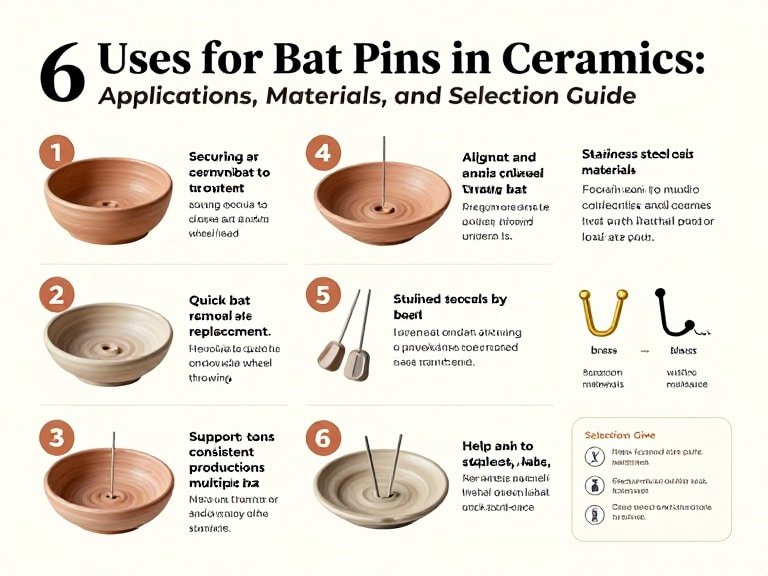
Quick Answer: What Are Bat Pins Ceramics Used For?
If “bat pins ceramics” refers to ceramic pins used as locating, dowel, or guide components, six relevant industrial applications are precision fixture positioning, automated assembly, electrical insulation, wear-resistant guiding, selected fluid-handling equipment, and precision manufacturing tools.
Alumina ceramic is often a practical choice when hardness, electrical insulation, and chemical resistance are priorities. Yttria-stabilized zirconia is worth evaluating when greater fracture toughness and resistance to repeated mechanical contact are important. Neither material is universally superior; the application determines the better choice.
Important clarification: The term “bat pins ceramics” is not sufficiently specific to establish one standard product definition. The applications in this article concern ceramic pins and closely related precision components. Confirm the component drawing, industry terminology, and intended function before placing an order.
What Are Ceramic Pins?
Ceramic pins are precision components manufactured from technical ceramics, commonly alumina or zirconia. Depending on their geometry and installation, they can position workpieces, align assemblies, guide moving components, provide electrical isolation, or resist wear in demanding operating environments.
Unlike ordinary decorative ceramic products, engineering ceramic pins are designed around dimensional accuracy and functional performance. A locating pin may need to fit a machined hole with minimal clearance. A guide pin may need a smooth surface to reduce friction. An insulating pin may need to maintain electrical separation while withstanding mechanical and environmental stress.
The term “bat pins ceramics” should therefore be treated as a search phrase requiring clarification, rather than as a confirmed engineering specification. If the intended application is a baseball bat, sports equipment, or another specialized product, the required design may be different from the industrial pins discussed below.
How Do Ceramic Pins Work?
A ceramic pin performs its function through its geometry, material properties, and interaction with surrounding components. A locating pin establishes a repeatable position. A dowel pin helps maintain alignment between parts. A guide pin constrains movement or supports a guided assembly. An insulating pin separates electrically conductive components while maintaining the required mechanical relationship.
Technical ceramics are usually produced by powder preparation, forming, sintering, and precision finishing. Because sintering can cause dimensional shrinkage, achieving tight tolerances often requires controlled manufacturing and grinding. The final specification must account for the mating part, operating temperature, installation method, and the consequences of misalignment.
For a deeper understanding of the material, see this engineering guide to alumina ceramics and their properties.
Quick Summary: Six Uses for Ceramic Pins
| Application | Primary Function | Potential Material Choice | Key Design Concern |
|---|---|---|---|
| 1. Precision fixture locating | Repeatable workpiece positioning | Alumina or zirconia | Fit, tolerance, and edge damage |
| 2. Automated assembly | Alignment and guided positioning | Alumina or zirconia | Impact, wear, and cycle frequency |
| 3. Electrical insulation | Separating conductive components | Alumina commonly considered | Voltage, geometry, and environment |
| 4. Wear-resistant guiding | Maintaining a guided contact surface | Zirconia or alumina, depending on load | Contact stress, friction, and lubrication |
| 5. Selected fluid-handling equipment | Positioning or guiding precision assemblies | Alumina or zirconia, subject to fluid compatibility | Chemical exposure, leakage, and fit |
| 6. Precision manufacturing tools | Repeatable alignment in production tooling | Material selected by the process | Dimensional stability and serviceability |
These are potential applications for technical ceramic pins, not confirmation that every pin sold under a “bat pins ceramics” label is suitable for all six uses. Validate the actual component design and performance requirements before making a material or supplier decision.
Six Uses for Bat Pins Ceramics in Industrial Applications
1. Precision Fixture Locating and Workpiece Positioning
One of the most practical uses of ceramic pins is locating workpieces in fixtures, jigs, inspection stations, and precision assembly tools. A locating pin establishes a repeatable reference position so that the same component can be loaded, processed, inspected, or assembled consistently.
In production environments, small positioning errors can create cumulative problems. A fixture that does not locate parts consistently may increase rework, complicate inspection, or produce variation in downstream assemblies. A properly specified ceramic pin can be useful when its material properties match the environment and the pin can be installed without damaging the ceramic.
Alumina is worth considering where hardness, electrical insulation, and chemical resistance are useful. Zirconia may be preferable when the design involves repeated contact or a greater risk of mechanical damage, although geometry and loading remain decisive.
Our recommendation: Specify the pin and mating hole as a matched system. Confirm diameter tolerance, fit class, pin length, chamfers, and the material of the surrounding fixture. A very hard pin will not compensate for an incorrectly designed hole or an installation method that introduces excessive stress.
2. Automated Assembly and Robotic Positioning
Automated production lines rely on repeatable positioning. Pins may guide components into place, align subassemblies, or help locate parts before fastening, bonding, inspection, or testing. In high-cycle equipment, the locating interface may experience frequent contact and repeated loading.
Ceramic pins can be attractive when metal components suffer from wear, corrosion, or unwanted electrical conduction. However, technical ceramics are not ductile like many metals. A pin that works well under steady compression may be vulnerable to sharp impacts, side loading, or concentrated stresses around a sharp edge.
For automation engineers, the important question is not simply whether a ceramic pin is harder than the existing component. It is whether the replacement maintains alignment over the required production cycles without increasing the risk of brittle fracture.
We recommend reviewing contact geometry, loading direction, insertion speed, and the possibility of accidental impacts. If the machine has a history of misfeeds or collisions, correct the underlying alignment problem before upgrading the pin material.
Related engineering guidance is available in this overview of ceramic rod applications in manufacturing.
3. Electrical Insulation in Precision Equipment
Electrical isolation is another important use for technical ceramic pins. In suitable designs, a ceramic component can maintain physical separation between conductive parts while supporting the assembly mechanically. Alumina is commonly evaluated for such applications because of its electrical insulating properties and established use in technical ceramics.
Potential applications include insulating fixtures, selected electronic manufacturing tools, sensor assemblies, and equipment where a conductive metal locating pin would create an unwanted electrical path.
Material selection alone does not establish electrical safety. Required insulation performance depends on voltage, pin dimensions, creepage and clearance distances, contamination, humidity, temperature, and the surrounding assembly. The complete design must satisfy the relevant product and installation standards.
For professional buyers, request the specific electrical properties and test documentation needed for the application. Do not assume that a general alumina grade automatically satisfies a particular voltage rating or safety certification.
4. Wear-Resistant Guide Pins and Sliding Interfaces
Guide pins help maintain the direction or position of moving components. Where the contact surface experiences repeated motion, friction, or abrasive exposure, ceramic materials may be worth evaluating as alternatives to conventional metals or polymers.
Alumina provides high hardness and can be suitable for many wear-related applications. Zirconia offers higher fracture toughness than typical alumina grades and may be advantageous when contact conditions create a greater risk of chipping or fracture. Actual performance depends on the grade, surface finish, counterface, lubrication, load, and alignment.
It is important not to confuse hardness with guaranteed wear life. A hard ceramic pin operating against an unsuitable counterface can cause accelerated wear in the mating component. Poor lubrication, contamination, excessive side loading, or misalignment may also undermine performance.
For heavy-duty applications, we recommend evaluating the entire contact pair. Specify the surface roughness of the ceramic pin, the material and finish of the mating part, the operating speed, and the expected contact load. Where possible, conduct a representative endurance test before authorizing a production change.
5. Selected Fluid-Handling and Precision Pump Assemblies
Ceramic pins and related precision ceramic components may be used in selected fluid-handling systems where chemical compatibility, dimensional stability, wear resistance, or electrical insulation is important. Depending on the equipment design, a ceramic component may help position or guide a mechanism, or operate as part of a more complex precision assembly.
However, not every pump requires a ceramic pin, and a locating pin should not be treated as a substitute for a purpose-designed sealing or metering component. Pumps operating with corrosive chemicals, abrasive fluids, or tightly controlled dosing requirements need materials and geometries selected for the actual fluid and operating conditions.
For buyers working on metering or dispensing equipment, compare the requirements for the pin with those of the complete ceramic pump assembly. Where reciprocating motion and precise displacement are central to the design, review the relevant ceramic plunger pump solutions.
For medical equipment, fluid compatibility is only one requirement. Biocompatibility, cleanliness, traceability, validation, and applicable regulatory obligations must be assessed for the complete device. A material description by itself does not establish suitability for medical use.
6. Precision Manufacturing Tools, Gauges, and Inspection Fixtures
Ceramic pins can support repeatable positioning in manufacturing tools and inspection fixtures where dimensional consistency matters. They may be used to locate a component during measurement, maintain a reference position, or provide a durable contact feature in a specialized production tool.
In inspection environments, the location of the part affects the measurement result. If a locating pin wears, becomes damaged, or accumulates contamination, the fixture may produce inconsistent measurements even when the measuring instrument itself remains calibrated.
A ceramic pin can be useful when its properties help maintain the required locating geometry under the relevant conditions. However, brittle damage can be difficult to identify if the component is not inspected regularly. A practical maintenance plan should define inspection frequency, cleaning procedures, replacement criteria, and how damaged pins are handled.
For production tooling, we recommend specifying critical dimensions on an engineering drawing rather than relying on a generic description such as “precision ceramic pin.” Include the required diameter, length, geometric tolerances, surface finish, edge treatment, and any inspection or traceability requirements.
Alumina vs. Zirconia Ceramic Pins: Which Material Should You Choose?
Alumina and zirconia are both established engineering ceramic materials, but they should not be treated as interchangeable. Alumina is often a cost-effective starting point for hard, electrically insulating components. Zirconia is often considered when greater fracture toughness and resistance to mechanical damage are important.
| Property | Alumina Ceramic (Al₂O₃) | Yttria-Stabilized Zirconia (ZrO₂) | Selection Guidance |
|---|---|---|---|
| Typical grade reference | 95% or 99% alumina | Yttria-stabilized zirconia | Confirm the exact grade and supplier data. |
| Hardness | Approximately HRA 88–92 in the supplied specification | Approximately HRA 87–90 in the supplied specification | Values depend on grade and test method. |
| Density | Approximately 3.7–3.95 g/cm³ | Approximately 6.0–6.05 g/cm³ | Zirconia is substantially denser. |
| Mechanical behavior | Hard, stiff, and brittle | Typically greater fracture toughness than conventional alumina | Evaluate impact and stress concentration. |
| Electrical insulation | Often a strong candidate | Depends on composition and grade | Verify the required electrical properties. |
| Wear performance | Often suitable for abrasive and wear-resistant applications | Can be suitable for demanding contact applications | Test the ceramic against the actual counterface. |
| Weight | Lower density | Higher density | Consider moving mass and assembly loads. |
| Relative cost | Often economical for suitable geometries | Can be more expensive depending on grade and machining | Compare finished-part costs, not raw material alone. |
The values above are representative ranges supplied for the two material categories, not guaranteed acceptance limits. Actual values vary by composition, grade, manufacturing process, and test method. Buyers should obtain the current technical data sheet for the exact material being quoted.
When Is Alumina the Better Choice?
Start with alumina when electrical insulation, hardness, chemical resistance, and cost are important and the loading conditions are appropriate for a brittle ceramic. It can be a sensible choice for locating fixtures, insulating stations, and many precision structural components.
When Should You Consider Zirconia?
Consider zirconia when mechanical toughness and resistance to damage from repeated contact are key concerns. Its higher density and potentially higher cost should be assessed against the expected improvement in service performance. Zirconia is not automatically the better wear material in every configuration, so confirm its behavior in the actual operating environment.
For structural applications, compare the relevant zirconia ceramic structural parts and review the complete design rather than choosing solely by a material label.
Ceramic Pins vs. Metal Pins: Which Performs Better?
Ceramic pins are not a universal replacement for metal pins. Metals often provide better ductility, impact tolerance, and ease of machining, while technical ceramics can offer high hardness, electrical insulation, and useful resistance to selected chemical environments.
| Decision Factor | Ceramic Pins | Metal Pins | Practical Recommendation |
|---|---|---|---|
| Hardness | High for many technical ceramic grades | Varies widely by alloy and heat treatment | Compare the actual grade and contact conditions. |
| Impact resistance | Limited by brittle fracture behavior | Many metals tolerate impact through plastic deformation | Favor metal or redesign where impact is severe. |
| Electrical insulation | Suitable grades can provide electrical isolation | Most common engineering metals are conductive | Consider ceramic where isolation is required. |
| Corrosion and chemicals | Can resist many chemical environments | Depends on alloy and fluid | Verify compatibility with the actual chemical. |
| Weight | Depends on ceramic density; zirconia is relatively dense | Depends on the metal or alloy | Calculate component and assembly mass. |
| Machining and modification | Complex finishing can be demanding after sintering | Often easier to machine or modify | Confirm tolerances and revision requirements. |
| Cost | Can be higher for complex, tightly toleranced parts | Often economical for standard geometries | Evaluate total cost over service life. |
| Best-fit applications | Insulating, wear-sensitive, chemically demanding, or precision applications | Impact-loaded, easily modified, or conventional locating applications | Select by failure mode, not by material trend. |
From our experience with precision component selection, a ceramic upgrade makes the most sense when it addresses a specific problem: excessive wear, corrosion, electrical conduction, or dimensional instability. If the existing metal pin performs reliably and no meaningful benefit can be demonstrated, changing materials may add cost without improving the finished system.
Pros and Cons of Ceramic Pins
| Advantages | Limitations | How to Make the Decision |
|---|---|---|
| High hardness in many engineering grades | Brittle fracture can occur under unsuitable loading | Review impact, side loads, and stress concentrations. |
| Useful electrical insulation with appropriate materials | Electrical performance varies by grade and design | Specify and verify the required electrical properties. |
| Resistance to many corrosive environments | Compatibility is not universal | Confirm chemical concentration, temperature, and exposure time. |
| Potential for excellent dimensional precision | Tight tolerances may require specialized grinding and inspection | Specify only the tolerances the assembly actually needs. |
| Wear resistance in suitable contact systems | Counterface wear and friction can remain problems | Evaluate the complete sliding or locating interface. |
| Non-magnetic behavior for common alumina and zirconia grades | Material and assembly properties must still be verified | Check requirements for magnetic-sensitive equipment. |
The main limitation is brittleness. Ceramic pins can perform very well when loads are controlled, but they are less forgiving of poor installation, sudden impacts, and unintended bending than many metallic alternatives. Correct geometry and mounting are therefore essential.
Design and Specification Considerations for Ceramic Pins
1. Diameter and Length Tolerance
Dimensional tolerances should be determined by the function of the pin and the mating component. A locating pin used in a precision fixture may require a closer tolerance than a general-purpose guide. Extremely tight tolerances can increase manufacturing and inspection costs, so specify them only when they improve functional performance.
The supplied product information identifies target diameter tolerances in the range of ±0.002 to ±0.01 mm and length tolerances of ±0.01 to ±0.02 mm. These should be treated as potential targets subject to part geometry, grade, process capability, and supplier confirmation, not as guaranteed tolerances for every order.
2. Surface Roughness
Surface finish influences friction, contact behavior, and the interaction between the pin and mating component. A target roughness range such as Ra 0.05–0.2 μm may be achievable for certain precision-finished components, but it should not be specified without confirming feasibility and functional necessity.
For sliding contact, define the required finish on the engineering drawing and evaluate the mating surface as well. A smoother pin does not automatically guarantee low friction if the design has poor alignment or inadequate lubrication.
3. Chamfers, Grooves, and Stepped Geometry
Chamfers can help guide insertion and reduce the risk of edge damage. Grooves and stepped profiles may support a particular mounting or positioning function, but they can also introduce stress concentrations if poorly designed.
When requesting custom ceramic pins, provide a complete drawing showing all critical dimensions, edge treatments, grooves, steps, and any required geometric tolerances. If the pin is replacing a metal component, review whether the original geometry remains appropriate for the ceramic material.
4. Mounting and Assembly Method
Installation can determine whether a ceramic pin performs reliably. Excessive press-fit interference, uneven support, sharp contact edges, or incorrect alignment can generate high local stresses. Because ceramic materials generally tolerate tensile stress and impact less readily than many metals, mounting details deserve specific attention.
We recommend confirming the fit with the component manufacturer and, where necessary, validating the assembly method through a controlled trial. Avoid assuming that a metal pin’s interference fit can be copied directly to a ceramic replacement.
5. Operating Environment
Temperature, humidity, chemical exposure, particulate contamination, and cyclic loading can all affect performance. Check the actual material grade against the operating environment and evaluate the entire assembly, including adhesives, sleeves, seals, and mating parts.
For components exposed to aggressive fluids, the relevant fluid concentration and temperature must be identified. For rotating or rapidly moving systems, account for dynamic loads and potential impact. For electrically insulating components, verify the electrical requirements under realistic environmental conditions.
Common Mistakes When Specifying Ceramic Pins
Choosing the Hardest Material Automatically
Hardness is only one performance characteristic. A pin that experiences impact or bending may fail despite having excellent hardness and wear resistance. Match the material to the dominant failure mechanism rather than assuming a harder component is always better.
Using Generic Tolerances for Every Application
Unnecessarily tight tolerances increase production and inspection demands. Loose tolerances may cause misalignment, vibration, or inconsistent positioning. Define the functional fit first, then establish tolerances based on the mating design and required repeatability.
Ignoring Ceramic Brittleness During Installation
A ceramic pin can be damaged during assembly even if it appears intact afterward. Avoid uncontrolled hammering, uneven press fits, and sharp contact points. Confirm that the surrounding structure supports the pin correctly.
Assuming All Ceramic Grades Have the Same Properties
Alumina purity, zirconia composition, stabilizer content, porosity, and manufacturing quality influence material performance. Ask for grade-specific technical data instead of relying on generic descriptions such as “industrial ceramic” or “high-strength zirconia.”
Ordering Bulk Quantities Without a Representative Sample
A sample allows the engineering team to check dimensions, surface finish, fit, and actual performance before committing to volume. For custom components, approve the drawing and inspection criteria in writing and confirm how production batches will be checked.
Assuming “Bat Pins” Defines a Standardized Part
Unfamiliar or translated product names can refer to different components in different industries. Before requesting a quote, establish the part’s function, drawing, dimensions, material, and operating environment. This avoids receiving a technically correct ceramic pin that does not meet the intended application.
Cost-Benefit Analysis: Are Ceramic Pins Worth the Investment?
Ceramic pins are worth the additional investment when their properties improve reliability, reduce maintenance, solve an electrical or chemical compatibility problem, or maintain the required precision under conditions that challenge the existing material. They are not automatically more economical simply because they are harder or more wear resistant.
| Cost or Benefit Factor | What to Evaluate | Business Impact |
|---|---|---|
| Initial component price | Material, geometry, finishing, quantity, and inspection | Establishes the purchase cost. |
| Installation cost | Fixtures, fit adjustments, handling, and validation | Can increase when switching from metal to ceramic. |
| Service life | Wear, corrosion, fracture, and dimensional stability | Determines replacement frequency. |
| Downtime | Production interruption and troubleshooting | May outweigh the difference in component price. |
| Quality consistency | Dimensional inspection and batch repeatability | Can affect scrap, rework, and assembly yield. |
| Maintenance | Inspection frequency and ease of replacement | Affects labor and spare-part planning. |
| Engineering validation | Sample testing and process qualification | Reduces the risk of a costly unsuitable upgrade. |
Practical cost calculation: Compare the total cost of the ceramic pin over the expected service period with the total cost of the current solution. Include purchase price, installation, inspection, replacements, downtime, and any change in scrap or maintenance costs.
For example, if a metal locating pin requires frequent replacement because of corrosion in a specific environment, a compatible ceramic pin may justify its higher initial price. If the metal pin fails rarely and is inexpensive to replace, a ceramic upgrade may not deliver a worthwhile return.
For commercial users, the strongest case is a documented problem with a measurable cost. Track the current failure mode, establish a baseline replacement interval, test the ceramic alternative under representative conditions, and compare the results before approving a full production conversion.
How to Choose a Ceramic Pin Manufacturer
For custom ceramic pins, manufacturing capability is as important as material selection. A supplier must be able to produce the required geometry, achieve the agreed tolerances, inspect the finished part, and maintain consistency across production batches.
Evaluate Technical Capability
Ask which ceramic grades are available, which dimensions can be produced, and what finishing processes are used. Confirm whether the supplier can handle cylindrical, stepped, grooved, and chamfered geometries as required by the drawing.
Request actual achievable tolerances for your part size and shape. A tolerance range shown in a general catalog is not proof that the same tolerance is achievable on a long, thin, stepped, or otherwise challenging component.
Review Quality Control and Traceability
For critical components, request an inspection plan covering the dimensions and characteristics that matter to the application. Depending on the project, this may include dimensional reports, material identification, surface-finish checks, batch identification, and documented acceptance criteria.
If the component is used in regulated or safety-critical equipment, confirm the quality system and traceability requirements relevant to the finished product. Supplier claims should be supported by documentation appropriate to the order.
Compare Custom Manufacturing With Standard Parts
Standard ceramic pins may reduce lead time and engineering effort when their dimensions and material meet the application requirements. Custom manufacturing becomes worthwhile when standard products cannot provide the necessary geometry, fit, finish, or material characteristics.
Before requesting a custom quote, prepare a drawing, annual demand estimate, operating conditions, material preference if known, and critical quality requirements. This gives the manufacturer enough information to recommend a technically appropriate solution and quote the finished component more accurately.
Assess Total Supplier Value
Do not select a manufacturer solely because its initial quote is the lowest. Compare sample quality, engineering communication, achievable tolerances, lead time, packaging, defect handling, and the ability to reproduce the same specification on repeat orders.
For an overview of custom manufacturing options, review zirconia structural ceramic components and the range of custom precision ceramic parts available for industrial applications.
JuchangCeramic: Precision Ceramic Pins and Custom Components
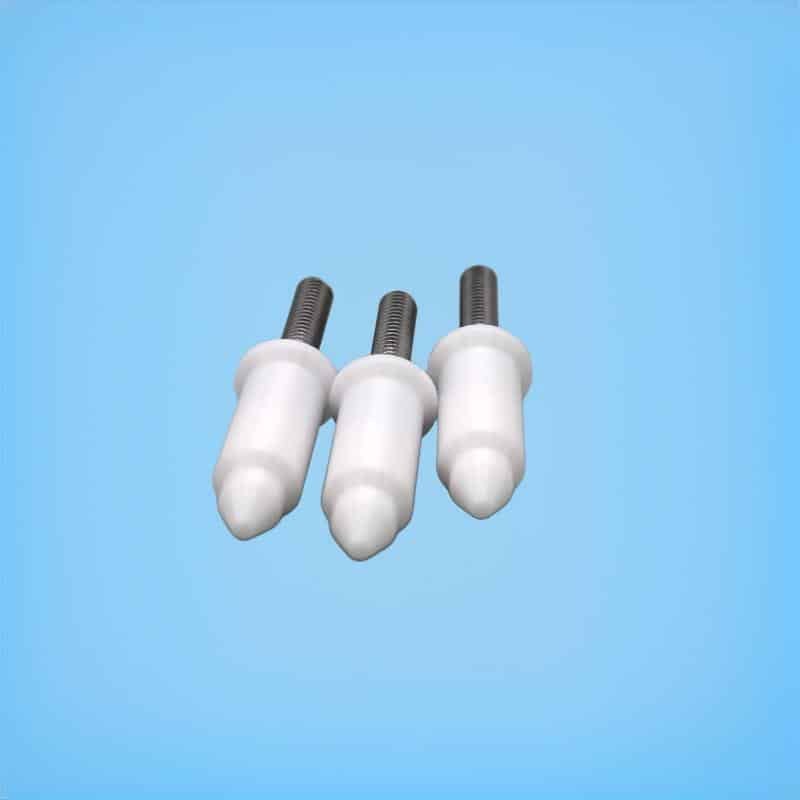
Precision Ceramic Components
Ceramic Pin, Ceramic Locating Pin, and Ceramic Dowel Pin
JuchangCeramic provides a product starting point for buyers seeking ceramic locating pins, dowel pins, guide pins, and related precision components. These components can be evaluated for fixture positioning, alignment, selected wear applications, and electrical isolation where the chosen material and design are appropriate.
Available material directions: 95% or 99% alumina and yttria-stabilized zirconia, subject to the supplier’s current product offering and confirmation for the required geometry.
Potential configurations: Cylindrical, stepped, grooved, and chamfered shapes, subject to manufacturing feasibility and drawing review.
Important purchasing step: Submit the component drawing and required tolerance before requesting a quotation. Confirm the material grade, finished dimensions, surface roughness, inspection documentation, and application-specific compatibility.
When evaluating JuchangCeramic or another precision ceramic supplier, focus on the engineering fit rather than relying on a broad product description. Confirm the actual specifications and sample quality before approving production. For applications involving fluid control or dosing, also assess the relevant specialized ceramic pump category where applicable, rather than assuming a generic locating pin is a complete pump solution.
Expert Recommendation: When Should You Use Ceramic Pins?
Our recommendation is to use ceramic pins when the material provides a clear engineering advantage over the existing component. Precision fixture locating, electrical isolation, and selected wear-sensitive applications are sensible starting points, provided the design controls impact, side loading, and installation stress.
For beginners, start by defining the function of the pin. Is it locating a workpiece, guiding movement, insulating an assembly, or resisting contact wear? Then identify the operating environment, required dimensions, and the main failure mode. This process is more reliable than selecting alumina or zirconia first and trying to adapt the design afterward.
For experienced engineers, the key decision is often whether a material change can solve an existing problem without introducing a new failure mode. If a ceramic pin reduces corrosion but creates a fracture risk during assembly, the design may need a revised fit, better support, or a different material altogether.
For heavy-duty applications, we recommend validating the complete contact system rather than testing the pin in isolation. Include representative loading, temperature, fluid exposure where applicable, installation conditions, and operating cycles. Confirm that the finished component meets the drawing and acceptance criteria before production release.
Finally, clarify the term “bat pins ceramics” with the intended application or drawing. If you mean industrial ceramic locating or dowel pins, the six uses described here provide a practical starting point for engineering evaluation. If you mean a specialized sports or other consumer product, the correct specification and selection criteria may be different.
Frequently Asked Questions About Bat Pins Ceramics
1. What does “bat pins ceramics” mean?
The phrase is ambiguous and does not establish one universally recognized technical component. It may be intended to describe ceramic pins or locating pins, but the precise meaning should be confirmed from the industry context, product drawing, or supplier terminology.
2. What are ceramic pins used for?
Ceramic pins can be used for precision locating, alignment, guided positioning, electrical insulation, selected wear-resistant interfaces, and specialized manufacturing fixtures. Suitability depends on material grade, geometry, loading, and the operating environment.
3. What are the six main industrial uses for ceramic pins?
Six relevant applications are precision fixture locating, automated assembly, electrical insulation, wear-resistant guiding, selected fluid-handling assemblies, and precision manufacturing or inspection tools.
4. Is alumina or zirconia better for ceramic locating pins?
Alumina is often considered for hardness, electrical insulation, and cost-effective precision components. Zirconia is often evaluated when greater fracture toughness is important. The better option depends on load, geometry, environment, dimensional requirements, and budget.
5. Can ceramic pins replace metal dowel pins?
In some applications, yes. Ceramic pins can be advantageous where electrical isolation, chemical resistance, or selected wear characteristics are important. Metal may remain preferable where impact resistance, ductility, easy machining, or low replacement cost dominates.
6. What tolerances can precision ceramic pins achieve?
Tolerances depend on the material, component dimensions, geometry, finishing process, and inspection method. The supplied product specification lists target diameter tolerances of ±0.002 to ±0.01 mm and length tolerances of ±0.01 to ±0.02 mm. These values must be confirmed for the exact part before ordering.
7. Are ceramic pins suitable for high-wear applications?
They can be suitable when the ceramic grade, surface finish, counterface, and loading conditions are appropriate. High hardness alone does not guarantee longer service life; misalignment, impact, friction, and counterface wear must also be evaluated.
8. Why can ceramic pins break during installation?
Technical ceramics are generally brittle and may fracture under excessive interference, uneven support, impact, sharp contact, or bending loads. Installation methods and fit requirements should be reviewed specifically for the ceramic material.
9. What should I provide when requesting a custom ceramic pin quote?
Provide an engineering drawing, material preference if known, required tolerances, surface-finish requirements, quantity, operating environment, loading conditions, and any inspection or traceability requirements. Also identify whether the pin is intended for locating, guiding, insulation, or another function.
10. Are ceramic pins worth the higher purchase price?
They can be worth the investment when they demonstrably reduce wear, corrosion, downtime, or positioning variation. Compare the complete cost of ownership with the current component and validate performance under representative conditions before changing a production design.
References
Use authoritative technical resources to verify material properties, measurement methods, and applicable safety requirements. The correct standards depend on the ceramic material, component function, and destination market.
- American Ceramic Society — Technical ceramic materials, ceramic engineering, and materials science resources.
- ASTM International — Standards and test methods relevant to ceramic materials, mechanical properties, and dimensional evaluation.
- International Organization for Standardization (ISO) — International standards resources for quality management, measurement, and engineering applications.