
Medical device manufacturers cannot afford to treat fluid delivery as a generic component-selection exercise. In applications such as dialysis equipment, diagnostic instruments, reagent dispensing, and precision dosing systems, pump performance directly affects fluid control, equipment reliability, maintenance requirements, and product validation. Custom ceramic pumps for medical devices are worth considering when standard pump designs cannot consistently meet the required precision, chemical compatibility, dimensional constraints, or service-life targets.
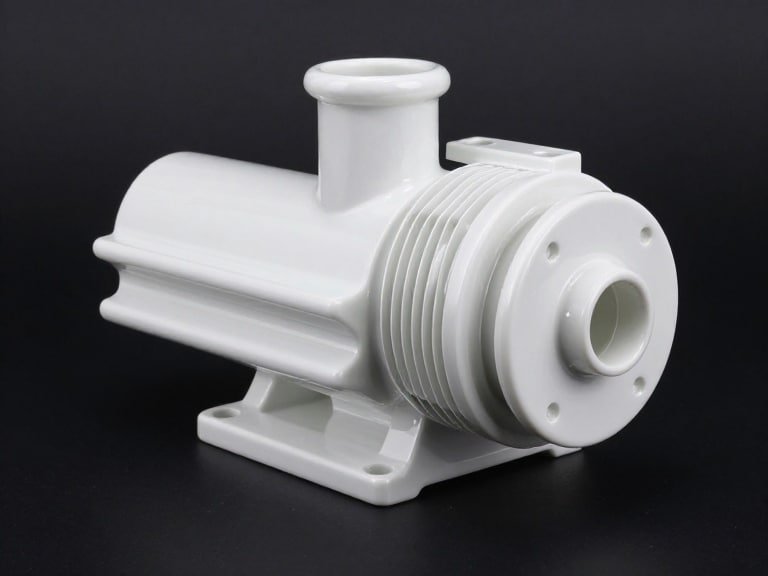
The main advantage is not simply that ceramic is hard or wear resistant. The real value comes from matching ceramic material, internal geometry, surface finish, sealing arrangement, and manufacturing tolerances to the actual fluid-handling task. JuchangCeramic provides OEM and custom manufacturing solutions for precision ceramic parts, pumps, and components, supporting projects that require components designed around specific engineering requirements.
Quick Answer: Why Choose Custom Ceramic Pumps?
Custom ceramic pumps can help medical device manufacturers improve dimensional consistency, wear resistance, chemical compatibility, and precision fluid handling. They are especially relevant when a standard pump cannot satisfy the required flow range, compact footprint, fluid-contact requirements, or component-life targets.
- What they are: Pumps or pump assemblies that use engineered ceramic components, such as plungers, sleeves, metering elements, or valves, made to application-specific requirements.
- How they work: A defined pumping mechanism moves fluid through controlled displacement, rotation, or another designed motion, while ceramic components provide the required contact surfaces and dimensional stability.
- Main benefits: Wear resistance, precision manufacturing potential, corrosion resistance with appropriate materials, and design flexibility.
- Main limitations: Brittle fracture risk, machining complexity, upfront engineering costs, and the need to validate the complete pump assembly.
- Best users: OEMs developing medical instruments, fluid-management systems, diagnostic equipment, and specialized dosing or metering devices.
- Who may not need them: Manufacturers whose standard pump already meets their flow, compatibility, reliability, and cost requirements.
Our recommendation: Define the fluid, operating pressure, flow range, allowable variation, duty cycle, cleaning process, and expected service life before selecting a ceramic grade or requesting a quotation.
Table of Contents
- Quick Summary Table
- What Is a Custom Ceramic Pump for Medical Devices?
- Eight Key Benefits
- Medical Device Applications
- Choosing the Right Ceramic Material
- Custom Ceramic Pumps vs. Alternative Pump Solutions
- Limitations and Common Design Mistakes
- How to Select a Custom Ceramic Pump Supplier
- Cost-Benefit Analysis
- Custom Ceramic Manufacturing by JuchangCeramic
- Expert Recommendation
- Frequently Asked Questions
- References
1. Quick Summary Table
| Benefit | Why It Matters for Medical Devices | What Buyers Should Verify |
|---|---|---|
| Wear resistance | May reduce dimensional changes in repeatedly contacting components. | Material grade, surface finish, operating load, and wear testing. |
| Precision fluid control | Supports repeatable displacement and metering when the pump is correctly engineered. | Flow range, repeatability, leakage, dead volume, and test conditions. |
| Chemical compatibility | Can support contact with selected fluids that challenge some metals or polymers. | Exact fluid chemistry, concentration, temperature, and exposure duration. |
| Dimensional stability | Helps preserve designed clearances and interfaces under specified conditions. | Tolerances, thermal expansion, assembly fit, and operating environment. |
| Compact design options | Allows pump components to be tailored to space-constrained equipment. | Manufacturing feasibility, assembly access, and serviceability. |
| Longer component life potential | May reduce replacement frequency where wear is a primary failure mode. | Evidence from application-relevant endurance testing. |
| OEM design flexibility | Enables geometry and interface changes for a specific device platform. | Drawing control, prototype process, inspection plan, and revision management. |
| Potential lifecycle savings | May lower maintenance and downtime costs if the design performs as intended. | Total cost of ownership, production yield, and actual service data. |
2. What Is a Custom Ceramic Pump for Medical Devices?
A custom ceramic pump is a fluid-handling solution designed around a defined application rather than selected solely from a standard catalog. The pump may use ceramic plungers, sleeves, pistons, metering elements, rotary valves, or other precision parts in areas where wear, chemical exposure, dimensional accuracy, or compact construction are important.
The phrase custom ceramic pumps for medical devices does not describe one universal pump architecture. A plunger pump, rotary metering pump, and miniature pump operate differently and suit different flow conditions. Customization can involve the wetted materials, component geometry, fit between moving parts, port arrangement, surface finish, or integration with the customer’s motor and control system.
How does a custom ceramic pump work?
The pumping mechanism creates a controlled movement of fluid. In a reciprocating plunger design, a plunger moves through a chamber to displace a defined volume. In a rotary design, rotating elements or valves control fluid movement through an engineered path. The actual flow depends on displacement, operating speed, fluid properties, internal clearances, valve behavior, and pressure conditions.
Ceramic components can provide hard, wear-resistant contact surfaces, but they do not guarantee a specific flow accuracy by themselves. Precision also depends on manufacturing tolerances, assembly alignment, sealing, drive control, and the performance of the complete system.
For example, a diagnostic instrument dispensing a small reagent volume may require different geometry and flow characteristics from a pump circulating fluid through a larger medical system. The correct design begins with the application’s measurable requirements rather than the assumption that every medical device benefits from the same ceramic construction.
When is customization worth considering?
Customization is most valuable when the standard product creates a documented limitation. That limitation might be inconsistent output, unacceptable wear, poor chemical compatibility, excessive dimensions, a difficult interface, or a service-life target that the existing pump cannot meet.
If a standard pump already meets the specification and has an established validation history, replacing it with a custom design may introduce unnecessary engineering and qualification work. We recommend customization when there is a clear technical or commercial reason, not simply because a custom component appears more advanced.
3. Eight Benefits of Custom Ceramic Pumps for Medical Device Manufacturers
Benefit 1: Better Wear Resistance in Repeated-Use Applications
Wear is a major consideration wherever pump components repeatedly move against another surface. Changes in a plunger’s dimensions, a sleeve’s bore, or a valve’s contact surface can affect leakage, friction, metering behavior, and maintenance intervals.
Appropriately selected technical ceramics can offer high hardness and good resistance to many forms of abrasive wear. This can be useful in pumps operating through frequent cycles or under conditions where dimensional changes are unacceptable. Zirconia and alumina are common engineering ceramic families worth evaluating, although their suitability depends on the specific grade and operating environment.
Practical recommendation: Do not judge wear resistance from a material name alone. Ask for the proposed grade, surface-finish requirements, contact conditions, and relevant wear-test evidence. The mating material, lubrication regime, fluid contamination, and contact pressure can substantially change real-world performance.
Benefit 2: More Consistent Precision Metering
Medical instruments may need to transfer controlled fluid volumes repeatedly. In diagnostic, analytical, and dosing-related equipment, variation can affect instrument performance and the consistency of downstream processes. Ceramic components can support precision metering when their geometry, finish, and clearances are designed and manufactured appropriately.
A precision plunger, for example, can be manufactured to a specified diameter, cylindricity, straightness, and surface finish. Those characteristics may help establish consistent mechanical behavior in a properly designed pump assembly. However, metering accuracy must be assessed at system level because the drive mechanism, fluid compressibility, valves, seals, temperature, and pressure can all affect the delivered volume.
For applications that require small-volume delivery, consider a dedicated microliter ceramic metering pump. Before selecting one, define the target volume, allowable error, repeatability requirement, operating frequency, and acceptable residual volume.
Benefit 3: Chemical Compatibility With Selected Medical Fluids
Fluid compatibility is a core design requirement. Some liquids can corrode particular metals, swell polymers, degrade seals, or alter a material’s surface over time. Certain ceramic grades offer strong resistance to a broad range of chemicals and can be suitable alternatives when a conventional wetted material is a limiting factor.
That does not mean every ceramic is compatible with every medical fluid. Strong acids, alkalis, cleaning chemicals, temperature changes, and long exposure periods can produce different results depending on composition and grade. Seals, adhesives, fittings, and other wetted components must also be included in the compatibility assessment.
What to do: Supply the pump manufacturer with the exact fluid name, concentration, temperature range, exposure time, cleaning agents, and whether the fluid contains particles. If the chemistry changes between production lots or operating modes, disclose that as well. A general claim of corrosion resistance is not a substitute for application-specific compatibility verification.
Benefit 4: Dimensional Stability for Precision Assemblies
In compact medical equipment, the relationship between moving components can be just as important as the nominal dimensions. Changes in clearance can affect friction, leakage, wear, and the ability of the pump to maintain its required performance.
Many engineering ceramics have favorable hardness and dimensional stability under appropriate operating conditions. These properties can help maintain designed interfaces, particularly when thermal expansion, load, and chemical exposure are properly considered. The relevant material properties still vary by ceramic family, and ceramics are not immune to thermal shock or fracture.
Manufacturers should provide more than a basic diameter tolerance. Depending on the design, the drawing may need to define cylindricity, roundness, concentricity, perpendicularity, flatness, surface roughness, and datum relationships. The inspection method must also be capable of verifying the specified features.
For a deeper component-level review, see this guide to custom precision ceramic parts, including the role of geometry and manufacturing requirements in engineered ceramic components.
Benefit 5: More Design Freedom for Compact Medical Equipment
Medical device manufacturers often need to fit fluid-handling hardware into a restricted enclosure. Standard pump dimensions, ports, mounting features, or stroke arrangements may conflict with the existing device architecture. Custom manufacturing can help align the pump’s interfaces and component geometry with the available space.
Potential adjustments include plunger dimensions, component length, port locations, mounting interfaces, and selected wetted materials. The goal should be to solve a specific packaging or performance problem without making the design unnecessarily complex.
Compactness should not be achieved at the expense of serviceability. A design that is difficult to assemble, inspect, clean, or repair can create higher costs later. During the design review, evaluate access to wear parts, assembly tolerances, alignment features, and the practical method for replacing the pump or its subcomponents.
Benefit 6: Longer Service Life Potential and Reduced Maintenance
For equipment that operates repeatedly or runs for extended periods, component replacement can create direct costs and indirect costs through downtime, technician labor, inventory requirements, and service scheduling. If wear is the dominant failure mode, a suitable ceramic component may help extend service intervals.
The important qualification is “if wear is the dominant failure mode.” A ceramic part will not resolve failures caused by motor overheating, incorrect control logic, seal degradation, cavitation, misalignment, or poor fluid management. In some designs, an extremely hard component can also accelerate wear of a softer mating part if the interface is not engineered correctly.
We recommend identifying the actual failure mechanism before upgrading. Review returned parts, wear patterns, leakage data, cycle counts, and maintenance records. Then compare the existing design with the proposed ceramic solution using the same operating conditions. This produces a more reliable investment decision than assuming that a ceramic upgrade will automatically increase service life.
Benefit 7: Greater Flexibility for OEM Integration and Product Differentiation
OEM manufacturers rarely work with identical fluid paths, enclosures, interfaces, or control systems. A custom pump or custom ceramic component can be designed around the product’s required dimensions and operating characteristics, rather than forcing the device to accommodate an unsuitable standard part.
This flexibility can be useful when developing a new instrument, redesigning an existing product, consolidating several components, or addressing an established supplier limitation. It can also help manufacturers establish controlled specifications for repeat production.
However, custom parts create responsibilities. Drawing revisions, material substitutions, process changes, inspection methods, and production-lot acceptance criteria need to be controlled. For regulated medical device projects, the component manufacturer’s documentation must support the device manufacturer’s quality system and risk-management process.
Manufacturers evaluating custom pump assemblies can also review ceramic plunger pumps and ceramic rotary valves to compare the different component and mechanism approaches available.
Benefit 8: Potentially Lower Total Cost of Ownership
A custom ceramic pump may have a higher initial purchase price than a standard pump. That does not necessarily make it more expensive over the product’s useful life. If it reduces replacement frequency, lowers downtime, improves production consistency, or solves a recurring performance issue, the additional upfront investment may be justified.
The opposite is also true. A custom part that requires expensive tooling, extensive qualification, low production yields, or frequent inspection may be a poor financial choice when the standard component already performs adequately.
Use a total-cost comparison that includes component price, engineering fees, tooling, validation, production yield, assembly labor, maintenance, replacement inventory, and downtime. For medical device manufacturers, also account for the time and documentation required to qualify a new component. A lower unit price is not always the lowest-cost solution, and a more expensive ceramic component is not automatically a better investment.
4. Medical Device Applications for Custom Ceramic Pumps
Dialysis and fluid-management equipment
Dialysis-related systems may require carefully controlled fluid movement and components that tolerate repeated operation and contact with specified fluids. The required pump architecture depends on the system function, flow conditions, and fluid path. Ceramic parts may be relevant where wear resistance, dimensional precision, or chemical compatibility is a documented design need.
For relevant projects, manufacturers can evaluate a dialysis ceramic pump or discuss whether a customized ceramic component is more appropriate than a complete replacement pump. Any design used in a medical system must undergo the validation and verification required for its intended function.
Diagnostic and analytical instruments
Diagnostic equipment may handle reagents, samples, rinse solutions, or other fluids in controlled quantities. Pump performance can affect dispensing consistency, cross-contamination risk, cleaning requirements, and instrument repeatability.
For these applications, define the acceptable volume range and variation rather than asking only for a pump described as “high precision.” Evaluate dead volume, fluid retention, cleaning method, compatibility, and the risk of carryover between fluids. A low-volume metering solution may be suitable, but the full fluid path needs to be assessed.
Miniature fluid-handling assemblies
Portable instruments and compact medical devices can impose strict dimensional limits. Miniature pumps may help reduce the space required for fluid delivery, but small size does not automatically mean low power consumption, high accuracy, or easier maintenance.
Review the complete assembly, including the motor, drive electronics, tubing, seals, connectors, and mounting structure. A precision ceramic component that fits the drawing but is difficult to assemble or inspect can create problems during production.
Precision dispensing and dosing systems
Where a device requires repeatable fluid displacement, a ceramic plunger or metering component may provide a useful engineering option. The final design must account for viscosity, pressure, temperature, flow rate, and the behavior of valves and seals. If the system handles a critical fluid or delivers a clinically significant dose, component-level precision must not be confused with validated system-level dosing performance.
For a related component option, see medical ceramic pumps. Confirm that the supplier’s design is appropriate for the intended device rather than relying on the category name alone.
5. Choosing the Right Ceramic Material
Material selection should follow the operating requirements, not a universal ranking of ceramic materials. Alumina and zirconia are common engineering options, but their properties differ. The best choice depends on the component’s function, loading, fluid exposure, surface-finish needs, and manufacturing process.
| Selection Factor | Why It Matters | Questions to Ask the Supplier |
|---|---|---|
| Ceramic composition and grade | Different grades have different mechanical, thermal, and chemical properties. | What exact grade is proposed, and what documented properties are available? |
| Hardness and wear behavior | Contact surfaces can change under repeated motion and load. | What are the contact conditions, mating material, and relevant wear data? |
| Fracture resistance | Ceramics can fail under impact, tensile stress, or unfavorable stress concentrations. | How are impact, assembly stress, and edge geometry managed? |
| Chemical compatibility | Fluid composition and temperature influence material suitability. | Has the exact fluid and cleaning process been assessed? |
| Surface finish and geometry | These influence friction, leakage, sealing, and assembly performance. | Which tolerances and roughness values can be inspected and controlled? |
| Thermal conditions | Temperature changes can affect clearances and stress. | What temperature range and thermal cycling should the component withstand? |
Alumina ceramic
Alumina is widely used in engineering applications where hardness, wear resistance, electrical insulation, and suitable chemical resistance are important. It can be a practical candidate for pump components, depending on the grade and operating environment. Its relatively high hardness can support wear-resistant surfaces, but component design must still account for brittleness and fracture risk.
Zirconia ceramic
Selected zirconia grades can offer a useful combination of strength, fracture toughness, and wear performance. This can make zirconia worth evaluating for demanding precision components, including plungers and structural parts. Performance varies with composition and processing, so buyers should request grade-specific data rather than assuming all zirconia materials behave identically.
For additional material-selection context, read this guide to alumina ceramics and engineering applications. A supplier should be able to explain why the selected material suits the specific design, including its limitations.
6. Custom Ceramic Pumps vs. Alternative Pump Solutions
Custom ceramic pumps are not the right answer to every medical fluid-handling problem. The relevant comparison is between complete solutions under the same operating requirements, not between material labels in isolation.
| Solution | Potential Advantages | Potential Limitations | Best Fit |
|---|---|---|---|
| Custom ceramic pump or ceramic pump components | Design flexibility, wear resistance, and precision manufacturing potential. | Engineering costs, brittle fracture risk, and application-specific qualification. | Applications with documented precision, compatibility, wear, or packaging needs. |
| Standard off-the-shelf pump | Established product specifications, faster procurement, and potentially lower initial cost. | May not fit unusual dimensions, fluid conditions, or performance targets. | Projects whose requirements already match a proven standard product. |
| Polymer-based pump components | Can provide low weight, design flexibility, and useful chemical compatibility depending on polymer. | Wear, creep, swelling, temperature limits, and chemical compatibility must be assessed. | Applications where the selected polymer meets all operating and validation requirements. |
| Metal pump components | Can provide toughness, structural strength, and established machining routes. | Corrosion, wear, or fluid compatibility may be limiting in some environments. | Applications where metal properties and fluid compatibility suit the requirements. |
| Hybrid pump assembly | Combines ceramic wear surfaces with other materials for structural or sealing functions. | Interfaces between materials introduce additional design and qualification considerations. | Systems where no single material offers the best balance of properties. |
Our recommendation: Compare solutions using the same test conditions and acceptance criteria. If the principal failure is chemical degradation, prioritize compatibility testing. If it is dimensional wear, focus on the contact surfaces and operating loads. If the problem is inconsistent output, investigate the complete pumping mechanism and controls before assuming the material is responsible.
7. Limitations and Common Design Mistakes
Mistake 1: Assuming ceramic components cannot break
Engineering ceramics are hard, but they are generally more brittle than many metals. Impact, tensile stress, sharp internal corners, poor support, or excessive assembly force can cause cracking or fracture. A successful design uses appropriate geometry, controlled fits, suitable support, and careful handling.
Mistake 2: Specifying tolerances without considering manufacturability
Extremely tight tolerances may be justified for particular pump interfaces, but every additional precision requirement can affect production yield, inspection time, and cost. Specify the tolerances that are functionally necessary, and identify critical-to-quality features clearly. A supplier should explain how those features will be manufactured and measured.
Mistake 3: Treating a material certificate as proof of pump performance
A material certificate can help establish composition or specified properties, but it does not demonstrate that the finished pump meets its flow, leakage, repeatability, or endurance requirements. Finished-component inspection and complete-system testing serve different purposes and may both be necessary.
Mistake 4: Ignoring seals and mating components
A ceramic plunger may perform well while a seal, valve, fitting, or polymer housing becomes the actual source of failure. Evaluate the entire wetted path, including assembly interfaces and any components that may retain fluid or create unwanted dead volume.
Mistake 5: Assuming “medical grade” is a complete specification
The term alone does not establish that a pump is suitable for a particular medical device, fluid, or clinical use. Ask for precise information about materials, traceability, manufacturing controls, test results, and any relevant compliance documentation. The device manufacturer remains responsible for establishing that the final device meets its applicable requirements.
Mistake 6: Skipping endurance and cleaning validation
A component may pass dimensional inspection and still fail after repeated cycles, chemical exposure, or cleaning. Define the required cycle count, operating pressure, temperature, fluid chemistry, and acceptance criteria before testing. If the component will be cleaned or sterilized, verify the relevant process and material compatibility instead of assuming resistance.
Important distinction: A custom ceramic component can support the performance of a medical device, but it does not automatically make the complete pump or finished device compliant, sterile, biocompatible, or clinically validated. Those conclusions require evidence appropriate to the intended use and applicable regulatory framework.
8. How to Select a Custom Ceramic Pump Supplier
The supplier’s ability to produce a ceramic part is only one part of the decision. Medical device manufacturers should evaluate engineering communication, manufacturing capability, inspection, repeatability, documentation, and the ability to support design changes over the product lifecycle.
Provide a complete technical brief
A useful inquiry should include as much of the following information as is available:
- Application and intended function of the pump or component.
- Engineering drawings, 3D models, or a dimensioned concept sketch.
- Required ceramic material or the properties the material must provide.
- Fluid name, concentration, viscosity, temperature, and cleaning chemicals.
- Target flow rate, displacement, operating pressure, and allowable variation.
- Duty cycle, expected operating hours, and target service life.
- Critical dimensions, geometric tolerances, and surface-finish requirements.
- Expected order quantity, prototype quantity, and forecast production volume.
- Inspection documentation, traceability, packaging, and change-control needs.
Ask how critical features are controlled
Do not settle for a general statement that a supplier offers high precision. Ask which process controls the critical dimensions, how finished parts are inspected, what measurement equipment is used, and how nonconforming parts are handled. For repeat orders, clarify whether inspection records and lot traceability are available when required.
Evaluate prototype and production capability separately
A supplier may be capable of making a successful prototype without having an equally robust process for repeat production. Prototype approval should therefore establish more than whether one part fits. Evaluate the manufacturing route, critical inspection points, process repeatability, production capacity, and how revisions will be managed.
For a custom component project, review ceramic pump components and manufacturing options to understand which parts may be customized separately from the complete pump. This can help determine whether a component-level redesign will solve the problem without requiring a full assembly replacement.
Check documentation and change control
For medical device supply chains, changes to materials, manufacturing processes, tooling, or inspection methods may affect the customer’s risk assessment and qualification status. Ask how the supplier records drawing revisions, controls material substitutions, identifies production lots, and communicates changes that could affect form, fit, or function.
Relevant quality-system and regulatory requirements depend on the device, market, and role of the supplier. Do not assume that a general quality certificate automatically covers every requirement for the finished medical device. Identify the specific documentation your quality and regulatory teams need before production approval.
9. Cost-Benefit Analysis: Is a Custom Ceramic Pump Worth the Investment?
A sound purchasing decision compares total ownership cost rather than unit price alone. A custom ceramic solution may have a higher initial cost because it involves engineering, specialized manufacturing, precision finishing, inspection, and potentially dedicated tooling. Those costs can be justified when the design resolves a measurable operational problem.
Calculate the cost of the existing problem
Start with the current pump’s actual performance. Record replacement frequency, service labor, downtime, scrap, leakage incidents, cleaning effort, and any production interruptions caused by inconsistent output. Distinguish verified costs from estimates so the business case remains credible.
Estimate the full cost of customization
Include design work, prototypes, tooling, sample inspection, performance testing, qualification, production setup, and recurring component costs. For medical applications, account for the internal effort required to review documentation and approve the design. The cost of switching is often larger than the difference between the old and new unit prices.
Compare outcomes using measurable criteria
Agree on the expected improvement before commissioning the custom part. Depending on the application, this may include lower wear, tighter output variation, improved chemical compatibility, fewer replacements, or a smaller assembly. Establish test conditions and acceptance criteria in advance so the result can be evaluated objectively.
| Cost or Benefit | What to Measure | Why It Matters |
|---|---|---|
| Initial component cost | Unit price at expected order volume | Establishes the recurring procurement baseline. |
| Engineering and tooling | One-time design, setup, and tooling expenses | Shows the investment needed before production savings can begin. |
| Qualification cost | Testing, documentation review, and approval effort | Captures the cost of introducing a new component into a controlled device design. |
| Maintenance | Replacement frequency, labor, and spare-parts usage | Shows whether improved wear performance has practical value. |
| Downtime and scrap | Verified interruptions, rejected output, and rework | Can reveal savings that unit-price comparisons miss. |
| Production consistency | Measured output variation and yield | Determines whether the new solution meets its intended performance target. |
Upgrade recommendation: Custom ceramic pumps are most compelling when a measurable problem has a credible path to resolution. If the existing pump meets all requirements at an acceptable lifecycle cost, retain it. If wear, chemical compatibility, precision, or packaging is repeatedly limiting the design, a structured custom development project may offer better long-term value.
10. Custom Ceramic Manufacturing Services by JuchangCeramic
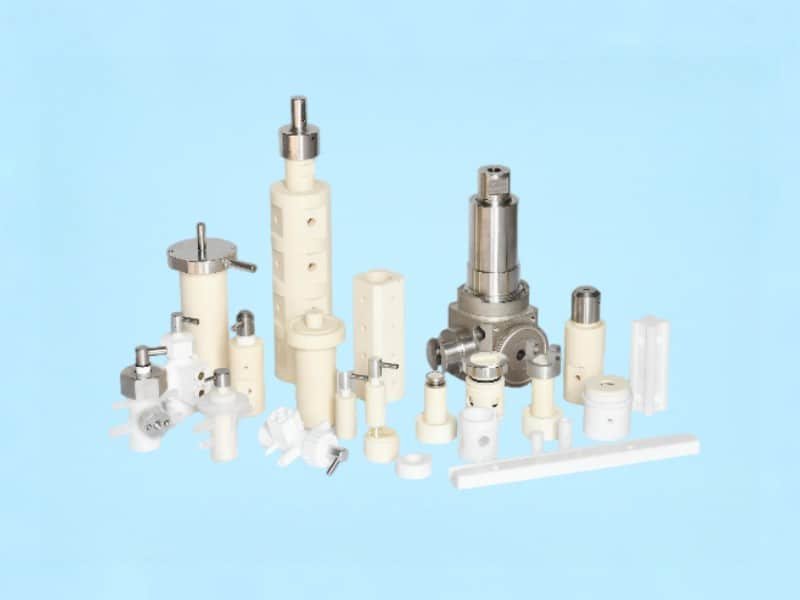
JuchangCeramic provides OEM and custom manufacturing solutions for precision ceramic parts, pumps, and components. For medical device manufacturers, the useful starting point is a clear technical discussion about the application, operating conditions, critical dimensions, required material properties, and expected production volume.
Custom Ceramic Manufacturing Services
JuchangCeramic offers OEM and custom manufacturing solutions for precision ceramic parts, pumps, and components. Projects can begin with complete engineering drawings or an initial concept that needs technical discussion.
For a useful quotation, provide the drawing or model, ceramic material requirements, critical tolerances, application details, order quantity, and inspection expectations.
Explore custom precision ceramic manufacturing services
For a new medical device, consider whether the project needs a complete custom pump or only a redesigned ceramic component. A targeted component change may be sufficient when the existing pump architecture already meets the flow and control requirements. A complete custom pump may be more appropriate when the pumping mechanism, internal geometry, or overall package is the source of the limitation.
JuchangCeramic can be considered as an OEM manufacturing partner for projects requiring customized ceramic components. Before final supplier selection, confirm the specific material grades, tolerances, inspection capabilities, production controls, documentation, lead times, and quality requirements relevant to your device.
11. Expert Recommendation: When Should You Choose Custom Ceramic Pumps?
Our recommendation is to treat custom ceramic pumps as a targeted engineering solution, not a default upgrade. They are most worthwhile when a manufacturer can identify a clear gap in the existing design and link the proposed ceramic component to a measurable improvement.
Choose custom ceramic components when:
- The existing pump shows unacceptable wear or dimensional drift.
- A wetted material fails compatibility testing with the intended fluid.
- The device requires specific dimensions or interfaces unavailable in standard products.
- Metering performance depends on precisely controlled component geometry.
- Maintenance or replacement costs are high enough to justify development work.
- The supplier can demonstrate the required manufacturing controls and provide suitable documentation.
Do not customize without a defined reason
If the standard pump already meets the performance specification, customization may add cost and qualification work without delivering a meaningful benefit. Likewise, if the root problem is poor system control, a defective seal, or incorrect assembly, changing the ceramic material alone will not resolve it.
For most professional situations, the best process is to document the failure or unmet requirement, identify the critical components, compare material and design options, and define the acceptance tests before placing a production order. That process gives engineering, procurement, and quality teams a common basis for deciding whether the custom solution is worth the investment.
When precision, wear resistance, chemical compatibility, or compact integration is a genuine design constraint, custom ceramic pumps can provide important advantages. The strongest result comes from combining the right ceramic grade with a suitable pumping mechanism, controlled manufacturing, and application-specific validation.
12. Frequently Asked Questions
What are custom ceramic pumps used for in medical devices?
They can be used in selected fluid-handling applications such as diagnostic instruments, precision dispensing systems, dialysis-related equipment, and miniature fluid-management assemblies. The correct pump type depends on flow, pressure, fluid chemistry, dimensions, and the intended device function.
Why use ceramic instead of metal in a pump?
Selected ceramic materials can offer high hardness, wear resistance, dimensional stability, and resistance to many chemicals. They may be suitable when a metal component’s wear or compatibility characteristics are inadequate. However, ceramics are brittle and are not automatically superior to metal in every application.
Are custom ceramic pumps more accurate than standard pumps?
Not automatically. Customization can help achieve application-specific geometry and tolerances, but accuracy depends on the complete pumping system, including the drive, valves, seals, fluid properties, assembly, and controls. Compare measured performance under defined test conditions.
Which ceramic material is best for medical pump components?
There is no universal best material. Alumina and zirconia are common options with different property profiles. Selection should consider the fluid, operating loads, temperature, wear conditions, fracture risk, surface finish, and manufacturing requirements.
Can ceramic pumps handle corrosive fluids?
Some ceramic grades offer strong resistance to many chemical environments, but compatibility depends on the exact fluid, concentration, temperature, exposure duration, and other wetted materials. Verify the complete fluid path rather than relying on a general corrosion-resistance claim.
Are ceramic pumps suitable for precision dosing?
They may be suitable for precision metering when the pump architecture, component tolerances, seals, valves, and control system are designed for the required flow range. System-level testing is necessary to establish actual accuracy and repeatability.
What information is needed for a custom ceramic pump quotation?
Provide engineering drawings or a model, material requirements, critical tolerances, fluid details, operating pressure, flow range, temperature, duty cycle, expected service life, order quantity, and documentation requirements. If drawings are unavailable, provide a detailed application description and the performance problem you need to solve.
How can medical device manufacturers evaluate a ceramic pump supplier?
Assess manufacturing capability, critical-dimension inspection, material documentation, lot traceability, process and revision control, prototype support, production consistency, and change notification. Confirm that the supplier can provide the records needed for your own quality and regulatory processes.
Do ceramic pump components make a medical device compliant?
No. A ceramic component does not by itself establish that a complete pump or medical device is compliant, sterile, biocompatible, or validated for clinical use. The finished device must meet the requirements applicable to its intended use and market.
Are custom ceramic pumps worth the higher initial cost?
They can be worth the investment when the design reduces documented wear, resolves fluid compatibility problems, improves required performance, or meets constraints that standard products cannot. Compare engineering, qualification, production, maintenance, and downtime costs over the expected product lifecycle before deciding.
13. References
The following authoritative resources provide context for medical device risk management, quality systems, and biological evaluation. They do not certify any particular ceramic pump or replace application-specific testing.
- International Organization for Standardization (ISO) — ISO 14971:2019, Medical devices: Application of risk management to medical devices.
A key reference for identifying, evaluating, controlling, and monitoring risks associated with medical devices throughout their lifecycle. - International Organization for Standardization (ISO) — ISO 13485:2016, Medical devices: Quality management systems.
Provides requirements for a quality management system used by organizations involved in medical device design and manufacture. - International Organization for Standardization (ISO) — ISO 10993-1:2018, Biological evaluation of medical devices.
Provides a framework for evaluating the biological safety of medical device materials within a risk-management process, where applicable to the device and its contact conditions.