
When a precision device must move a few microliters of liquid repeatedly, ordinary pump materials can become a weak point. Chemical attack, seal wear, contamination, inconsistent dosing and internal leakage may all affect the accuracy of the finished equipment. This is why miniature ceramic pumps and ceramic pump components are increasingly relevant to medical instruments, laboratory analyzers, pharmaceutical systems and industrial fluid-control devices.
However, ceramic is not a magic solution. A miniature pump must be engineered around the fluid, pressure, flow rate, operating cycle and required accuracy. In our view, the strongest applications are those where wear resistance, chemical compatibility, dimensional stability and repeatable metering justify the additional precision manufacturing involved.Quick Answer: Where are miniature ceramic pumps used?
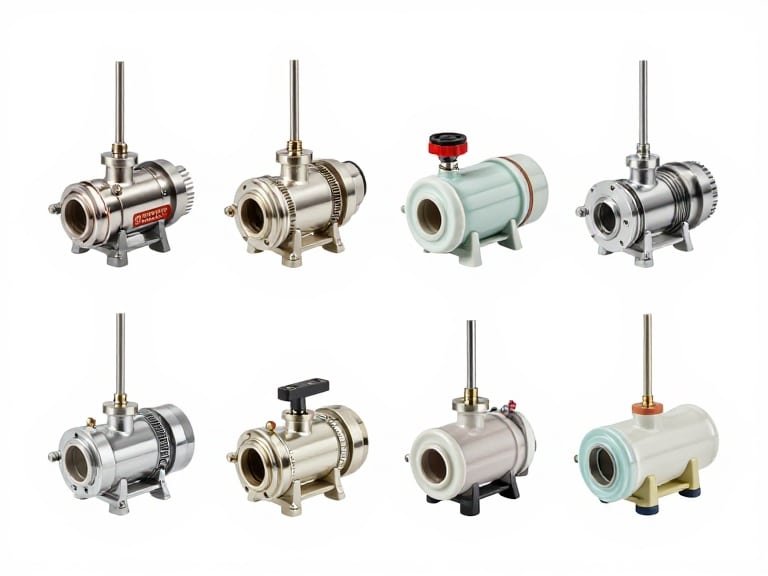
Miniature ceramic pumps are used or specified in precision fluid-handling systems such as in-vitro diagnostic analyzers, dialysis equipment, laboratory automation, chromatography instruments, pharmaceutical dosing devices, chemical analysis systems, environmental monitoring instruments, semiconductor chemical delivery equipment, precision lubrication systems and microfluidic research platforms. Ceramic pistons, plungers, sleeves, cylinders and rotary valves can improve wear resistance and fluid compatibility, but the complete pump must still be validated for its intended application.
Why Are Miniature Ceramic Pumps Used in Precision Devices?
Miniature ceramic pumps are selected when a device needs controlled fluid movement in a compact space and the wetted components must maintain reliable performance over repeated cycles. Their main advantage is not simply that ceramic is hard. The value comes from combining suitable ceramic materials with accurately manufactured mating surfaces, controlled clearances and a pump design matched to the operating fluid.
In most professional situations, the critical parts include the plunger or piston, cylinder or sleeve, valve seat, rotor, stator and sealing interface. These components determine how consistently a pump draws in and discharges liquid. If the surfaces wear unevenly or react with the fluid, metering performance can deteriorate even when the motor and control electronics remain accurate.
We recommend considering ceramic when a device handles corrosive or chemically active liquids, requires repeated micro-volume dosing, or operates for long periods where component wear can affect calibration. For low-cost, low-duty applications using non-aggressive fluids, a polymer or stainless-steel pump may be more economical.
Table of Contents
- What are miniature ceramic pumps?
- How they work
- 10 precision-device applications
- Ceramic materials and component selection
- Pump technology comparison
- Benefits and limitations
- Pros and cons
- How to choose a miniature ceramic pump
- Common design and purchasing mistakes
- Custom ceramic manufacturing
- Expert recommendation
- Frequently asked questions
- References
What Are Miniature Ceramic Pumps?
A miniature ceramic pump is a compact fluid-handling device that uses ceramic components in its pumping or metering mechanism. Depending on the design, ceramic may form the piston, plunger, cylinder liner, valve, rotor, stator or other wetted component. The pump can be driven by a motor, stepper mechanism or another actuator to move a controlled volume of liquid.
Common pump architectures include reciprocating plunger pumps, piston metering pumps, rotary valve pumps and specialized valveless metering mechanisms. Not every miniature pump uses the same operating principle. Some designs use a ceramic piston moving inside a closely matched ceramic cylinder; others use ceramic rotary components to direct fluid through different ports.
The important distinction is between a pump that merely contains a ceramic part and a pump designed around precision ceramic fluid-contact components. The latter requires tight control of geometry, surface finish, concentricity, flatness and component matching. These details can influence leakage, friction, flow repeatability and service life.
How Do Miniature Ceramic Pumps Work?
In a reciprocating ceramic plunger pump, an actuator moves the plunger within a precision-finished cylinder. During the intake stroke, the chamber volume increases and liquid enters through the inlet path. During the discharge stroke, the chamber volume decreases and liquid is pushed through the outlet path. Valves or a rotary switching mechanism control the direction of flow.
In a ceramic rotary valve design, the rotating component aligns internal channels with inlet and outlet ports. The pump architecture determines how fluid is isolated and transferred. In some valveless systems, a ceramic piston performs both the pumping and fluid-routing functions through coordinated rotation and reciprocation.
The delivered volume depends on the effective displacement, stroke, cycle rate, fluid properties, pressure conditions and leakage. This means that a precision ceramic pump cannot be evaluated by material hardness alone. A well-made ceramic plunger paired with an unsuitable drive system or poorly controlled fluid path will not automatically produce accurate dosing.
Engineering point: For precision devices, ask the manufacturer for performance data under defined conditions. Flow accuracy, repeatability, pulsation, leakage, pressure capability and cycle life should be considered together. A single accuracy percentage without test conditions is not enough to approve a pump for production.
10 Applications of Miniature Ceramic Pumps in Precision Devices
The following applications illustrate where miniature ceramic pumps and precision ceramic pump components can provide practical value. Actual pump selection depends on the instrument architecture and should be confirmed with the equipment designer.
1. In-Vitro Diagnostic (IVD) Analyzers
IVD analyzers handle small quantities of blood-derived samples, reagents, buffers and wash solutions. The instrument may need to dispense repeatable volumes into reaction chambers, transfer samples between stations or rinse internal fluid paths between tests.
Ceramic plungers and sleeves are useful candidates where repeated dosing and resistance to reagent exposure are important. A precision-matched piston and cylinder can support stable displacement over repeated cycles. For manufacturers, the objective is not simply to move liquid but to preserve assay consistency and avoid cross-contamination.
We recommend assessing the complete wetted path, including tubing, seals, valves and connectors. A ceramic pump component does not make the entire fluid system chemically compatible or contamination-free.
Related solution: Medical ceramic pumps for precision medical equipment.
2. Dialysis Machines and Blood-Fluid Management Systems
Dialysis equipment manages fluids through carefully controlled pathways. Depending on the system design, pumps and valves may handle dialysate, cleaning solutions, replacement fluids or other process liquids. Precision fluid management is essential because incorrect flow or fluid balance can affect equipment operation and patient safety.
Ceramic pistons, sleeves and valve components may be considered where low wear, dimensional stability and compatibility with the intended fluid are required. The suitability of a particular ceramic material must be evaluated against the actual chemistry, cleaning procedures, pressure and temperature conditions.
For this application, we do not recommend selecting a component based only on a supplier’s general claim of medical suitability. The equipment manufacturer must validate the entire fluid path and the finished device against applicable regulatory and performance requirements.
Related solution: Dialysis ceramic pump components.
3. Laboratory Automation and Sample Preparation
Automated laboratory systems transfer samples, dispense reagents, prepare dilutions and wash vessels. Many operations involve small volumes and repeated dispensing cycles. Variability in fluid delivery can affect the consistency of a test or the reproducibility of an experiment.
Miniature ceramic pumps can be used where controlled displacement and resistance to repeated contact with laboratory fluids are important. A ceramic plunger or metering element may be particularly useful when a device performs a large number of cycles and maintenance access is limited.
For laboratory automation designers, we recommend testing the pump with the actual sample matrix and reagent combination. Viscosity, suspended particles, air bubbles and surface tension can influence dispensing performance even when the mechanical pump is manufactured to tight tolerances.
Related solution: Microliter ceramic metering pumps.
4. High-Performance Liquid Chromatography (HPLC) and Analytical Instruments
HPLC and other analytical instruments depend on controlled liquid delivery. Pump components must operate under the pressure and solvent conditions required by the instrument. Check valves, pistons, seals and other wetted components all contribute to flow stability and system reliability.
Precision ceramic pistons and valve components are used in some high-performance fluid-handling systems because suitable grades can provide high hardness, wear resistance and chemical resistance. Their value is especially relevant where a component must retain its geometry while repeatedly contacting demanding solvents.
Do not assume that every ceramic grade is compatible with every solvent. Material grade, surface finish, temperature, pressure and the interfaces with other materials must be reviewed together. In analytical instruments, a small leak or unstable flow can undermine the quality of the measurement.
5. Pharmaceutical and Reagent Dispensing Equipment
Pharmaceutical production and laboratory dispensing equipment may need to meter active ingredients, solvents, buffers or cleaning fluids in controlled quantities. The required pump depends on whether the process involves a low-volume laboratory operation, a packaging line or a larger production system.
Miniature ceramic pumps can be relevant for compact dispensing modules where repeatability and resistance to chemical exposure are priorities. Ceramic plunger and cylinder assemblies may also be considered when conventional wetted materials show unacceptable wear or chemical interaction.
For commercial users, the key buying question is whether the pump can meet the validated process requirements after repeated cleaning and operating cycles. Ask for compatibility information, cleaning validation support and performance data using the intended liquid. Do not treat a material certificate as a substitute for finished-device validation.
6. Chemical Analysis and Automated Titration Instruments
Automated titration and chemical analysis devices dispense reagents in controlled quantities to measure the concentration or properties of a sample. Small delivery errors can influence endpoint detection, calibration and repeatability.
Ceramic pump parts may be beneficial when the reagent is chemically aggressive or when the instrument requires repeated metering over a long operating period. A carefully manufactured plunger and cylinder can help maintain stable displacement, provided the pump design controls leakage and the fluid path is compatible.
We recommend testing the pump with the most demanding reagent in the intended operating range, not just with water. Water testing alone does not demonstrate compatibility with acids, bases, solvents or other reactive fluids.
7. Environmental Monitoring and Water-Quality Analyzers
Environmental monitoring instruments may collect and meter water samples, reagents and calibration solutions. Some systems operate continuously in remote or difficult-to-access locations, where maintenance visits are expensive and unexpected downtime can compromise monitoring schedules.
Miniature ceramic pumps can be considered for reagent dosing and sample-handling modules where chemical compatibility and component wear are important. The correct design must also account for particulates, sediment, biological material and the possibility of clogging.
For field equipment, a highly precise pump is not automatically the best pump if it is difficult to clean or sensitive to contaminated samples. We recommend balancing metering performance with filtration, flushing and maintenance access.
8. Semiconductor and Electronics Chemical Delivery Systems
Semiconductor manufacturing and precision electronics processes may use specialized liquid chemicals for cleaning, etching, surface treatment and other wet-process operations. Fluid delivery systems must be selected carefully because contamination, corrosion or unstable flow can affect process consistency.
Suitable ceramic components may offer advantages in demanding chemical environments, but material compatibility must be assessed against the exact chemical concentration, temperature and exposure conditions. The purity requirements of semiconductor processes can be particularly strict, so a generic ceramic pump specification is not sufficient.
For this application, buyers should ask about material purity, surface finish, extractables or contamination risks where relevant, cleaning procedures and the compatibility of all wetted components. A complete fluid-handling assembly must meet the process specification.
9. Precision Lubrication and Micro-Dosing Systems
Automated machinery, compact actuators and specialized instruments sometimes require very small quantities of lubricant to be delivered to a defined point. Too little lubrication can increase friction and wear; too much can contaminate nearby parts or affect product quality.
A miniature ceramic metering pump may be useful where the lubricant is chemically demanding or where the dosing system operates over many cycles. The pump must be selected for the lubricant’s viscosity and temperature range. High-viscosity fluids can behave very differently from low-viscosity calibration liquids.
For heavy-duty applications, confirm that the actuator and pump body can handle the required pressure and duty cycle. Ceramic wetted components do not eliminate the need for suitable bearings, seals, drive components and structural support.
10. Microfluidic Research and Compact Fluid-Control Devices
Microfluidic platforms manipulate small fluid volumes through compact channels and chambers. They are used in research, diagnostic development, chemical testing and specialized laboratory equipment. Depending on the platform, a miniature pump may supply reagents, circulate fluids, prime channels or control sample transfer.
Ceramic pump components may be relevant when the fluid is chemically aggressive or the system requires a durable metering element. However, many microfluidic platforms use alternative pumping technologies, including pressure-driven systems, syringe pumps, peristaltic pumps or electrokinetic methods.
We recommend choosing the pumping architecture before specifying ceramic components. If the system requires extremely low pulsation, bubble-free operation or disposable fluid paths, a ceramic plunger pump may not be the best solution without additional design measures.
Which Ceramic Materials Are Used in Miniature Ceramic Pumps?
Alumina and zirconia are common technical ceramic choices for precision pump components. Other advanced ceramics may be appropriate for specialized chemical, thermal or mechanical requirements. The best material depends on the component’s function and operating environment.
| Ceramic material | Typical characteristics | Potential pump applications | Selection considerations |
|---|---|---|---|
| Alumina (Al₂O₃) | High hardness, wear resistance, electrical insulation and good chemical stability in many environments | Plungers, sleeves, pistons, valve components and structural parts | Grade, density, surface finish, fluid compatibility and mechanical loading |
| Zirconia (ZrO₂) | High strength and toughness relative to many other technical ceramics; good wear performance in suitable designs | Precision plungers, shafts, valve parts and structural components | Stabilizer system, grade, temperature, fluid chemistry and dimensional tolerances |
| Silicon carbide (SiC) | High hardness, wear resistance and strong performance in many demanding chemical and thermal environments | Specialized wear and fluid-contact components | Grade, brittleness, joining method, finish and actual process chemistry |
| Other advanced ceramics | Properties vary by composition and manufacturing route | Application-specific pump and valve components | Require engineering review and evidence for the exact service conditions |
Alumina ceramic pump components
Alumina is widely used in technical ceramic components because it combines hardness, wear resistance and electrical insulation. For metering pumps, high-purity alumina may be considered for pistons, plungers and sleeves where dimensional stability and a suitable surface finish are required.
Explore alumina ceramic parts for metering pumps when evaluating precision ceramic components for a plunger-based fluid system.
Zirconia ceramic pump components
Zirconia is often selected when strength and toughness are important design considerations. It can be suitable for small precision parts exposed to repeated mechanical contact, but its performance depends on the specific grade and stabilization system.
For structural components and customized geometries, review zirconia ceramic structural parts as a potential material and manufacturing option.
There is no universal rule that zirconia is always better than alumina. A material comparison should include mechanical loads, operating temperature, chemical exposure, friction, surface finish, manufacturing tolerances and cost.
Miniature Ceramic Pump vs. Other Precision Pump Technologies
Ceramic pumps should be compared with the alternatives that an equipment designer might actually use. A ceramic plunger pump can be excellent for controlled displacement, but a peristaltic pump or diaphragm pump may be more suitable when fluid isolation, disposable tubing or low-pulsation delivery is the priority.
| Pump type | Main operating principle | Potential advantages | Limitations | Best-fit situations |
|---|---|---|---|---|
| Miniature ceramic plunger pump | Reciprocating ceramic plunger displaces a defined fluid volume | Compact metering, wear-resistant wetted surfaces and potential chemical compatibility | Requires precision matching, suitable seals and control of leakage and pulsation | Analytical instruments, reagent dosing and precision fluid delivery |
| Peristaltic pump | Rollers compress flexible tubing to move fluid | Fluid contacts tubing rather than pump mechanism; tubing can be replaced | Tubing wear, pulsation and material compatibility limits | Disposable fluid paths, sampling and applications needing fluid isolation |
| Diaphragm pump | Flexible diaphragm changes chamber volume | Can isolate fluid from drive mechanism; available in compact configurations | Diaphragm fatigue, valve limitations and pulsation depending on design | Gas or liquid transfer, chemical dosing and compact fluid systems |
| Syringe pump | Motor-driven plunger pushes fluid from a syringe | Direct displacement control and convenient laboratory setup | Limited reservoir volume and syringe replacement or refill requirements | Research, calibration, laboratory dosing and prototyping |
| Gear pump | Rotating gears transport fluid through a housing | Continuous flow and suitability for some viscous fluids | Internal leakage, wear and fluid compatibility depend on clearances and materials | Continuous transfer and certain industrial metering processes |
Our recommendation is to choose the pump architecture first, then specify the wetted materials. If the application needs a compact, repeatable displacement mechanism and ceramic offers a meaningful wear or compatibility advantage, a miniature ceramic pump is worth evaluating. If disposable tubing or simple fluid isolation is more important, another pump type may deliver better overall value.
Key Benefits of Miniature Ceramic Pumps in Precision Devices
1. Wear resistance for repeated operation
Suitable technical ceramics have high hardness and can resist abrasive wear in many operating conditions. This can be useful in pumps that perform repeated metering cycles. However, wear performance depends on the mating material, lubrication regime, surface finish, particle content and operating load.
2. Chemical compatibility with demanding fluids
Alumina, zirconia and other ceramics can offer good resistance to many chemicals. This makes them attractive for certain reagents, solvents and process liquids. Compatibility must still be checked against the exact concentration, temperature and exposure time. A ceramic grade that performs well with one chemical may not be suitable for another.
3. Dimensional stability and precision finishing
Precision ceramic components can be ground and lapped to controlled dimensions and surface finishes. In a matched plunger-and-cylinder assembly, these manufacturing details help determine leakage, friction and displacement consistency.
4. Reduced dependence on some conventional wetted materials
Using ceramic in selected fluid-contact areas may reduce reliance on certain metals or polymers that are unsuitable for a particular fluid. It does not remove all seals, housings or connectors, but it can help engineers design a more compatible wetted path.
5. Potentially longer service intervals
Where ceramic’s wear and chemical properties match the application, components may maintain performance over extended operating cycles. This can reduce maintenance frequency and calibration interruptions. Service life must be confirmed through application testing rather than assumed from material properties alone.
Limitations of Miniature Ceramic Pumps
Ceramics are hard but brittle compared with many metals. A ceramic plunger or sleeve can perform well under properly controlled loading, yet suffer damage from impact, misalignment, excessive side loading or poor assembly. Precision components also require careful handling during transport and installation.
Manufacturing cost can be higher than for simpler polymer or metal parts, particularly when the design requires tight tolerances, matched components, complex geometry or extensive lapping. This investment is justified only when the application benefits from the material and precision level.
Another limitation is that ceramic does not guarantee leak-free operation. Leakage depends on the pump architecture, surface geometry, clearance, sealing method, pressure and wear. Similarly, ceramic does not automatically eliminate contamination risk. The complete fluid path must be designed, cleaned and validated appropriately.
For beginners, the practical lesson is to avoid specifying a ceramic pump solely because it sounds more durable. First identify the failure mode you need to solve. If the current pump fails because of chemical attack or plunger wear, ceramic may be a good upgrade. If the problem is poor motor control, air entrainment or incorrect tubing layout, changing the wetted material may not fix it.
Pros and Cons of Miniature Ceramic Pumps
| Pros | Cons |
|---|---|
| High hardness and wear resistance in suitable material grades | Brittle behavior requires careful design, assembly and handling |
| Good chemical resistance in many fluid environments | Compatibility must be verified for each chemical and operating condition |
| Precision grinding and lapping can achieve controlled surface geometry | Precision manufacturing and inspection can increase component cost |
| Useful for compact, repeatable metering mechanisms | Accuracy still depends on drive control, pump architecture and fluid properties |
| Can reduce wear-related maintenance in suitable applications | Long service life must be demonstrated through application testing |
| Can support specialized medical, laboratory and industrial fluid systems | Finished-device validation and regulatory compliance remain the equipment manufacturer’s responsibility |
How to Choose the Right Miniature Ceramic Pump for a Precision Device
For OEM engineers and equipment manufacturers, pump selection should begin with the operating requirements rather than a catalogue photograph. We recommend preparing a technical specification before requesting quotations from ceramic pump manufacturers.
1. Define the fluid and chemical environment
Provide the exact fluid name, concentration, temperature, viscosity and any additives or suspended particles. If the instrument handles several liquids, identify the most chemically demanding one. Ask the supplier to explain the compatibility of the ceramic grade and every other wetted material.
2. Set the flow rate and metering requirement
Specify the minimum and maximum flow rate, target dispense volume, required repeatability and operating cycle. Clarify whether the system needs continuous flow, intermittent dosing or a defined volume per stroke. Avoid using the word “accuracy” without stating how it will be measured.
3. Confirm pressure and mechanical loads
State the operating pressure, maximum pressure, expected pressure fluctuations and any unusual start-stop conditions. Also consider alignment, vibration, mounting orientation and side loads. Ceramic components must be supported correctly to avoid unnecessary stress.
4. Select the pump architecture
Decide whether the device needs a ceramic plunger pump, piston metering pump, rotary valve or another design. A ceramic plunger pump is worth considering for controlled displacement applications. A ceramic rotary valve may be relevant where accurate switching between fluid paths is required.
5. Specify component geometry and finish
For custom components, drawings should include dimensions, tolerances, concentricity, roundness, flatness, surface finish and any critical sealing features. If the pump manufacturer is responsible for matching a plunger and cylinder, ask how the pair is measured and inspected. A nominal dimension alone may not define the required fit.
6. Check cleaning and maintenance requirements
Ask how the pump should be flushed, cleaned, stored and inspected. Confirm whether the fluid path can be disassembled and whether seals or other consumable parts require periodic replacement. In medical and laboratory systems, cleaning and contamination control should be addressed at the system level.
7. Request a representative test
Where possible, test the pump using the actual fluid or a technically justified substitute. Measure flow, repeatability, leakage, pressure performance and wear over a representative cycle count. A short water test is useful for initial checks but cannot prove performance with a reactive or viscous process fluid.
Common Mistakes When Specifying Miniature Ceramic Pumps
Choosing ceramic based only on hardness
Hardness is important, but it is not the only selection criterion. Strength, toughness, chemical compatibility, thermal behavior, surface finish and the design of mating components also matter. A material can be hard and still fail if it is poorly supported or exposed to unsuitable loading.
Assuming all alumina or zirconia grades are identical
Technical ceramics vary by composition, purity, additives, processing and finishing. Request the actual material grade and supporting data rather than accepting a generic material name.
Ignoring the complete wetted path
A ceramic piston cannot compensate for an incompatible seal, tubing material, adhesive or valve. Review every fluid-contact component in the assembly.
Using a pump outside its tested flow or pressure range
Operating beyond the intended range can increase wear, leakage, heating or mechanical stress. Confirm the continuous and peak operating limits with the pump supplier.
Failing to define performance acceptance criteria
Terms such as high precision, low leakage and long life are not useful contract requirements unless they are measurable. Specify the test fluid, temperature, pressure, flow range, cycle count and acceptable performance variation.
Overlooking manufacturability and service access
A highly complex ceramic shape may be expensive or difficult to manufacture consistently. Design the component so that critical dimensions can be inspected and worn parts can be replaced without unnecessary damage to the pump assembly.
Custom Ceramic Manufacturing for Miniature Pump Components
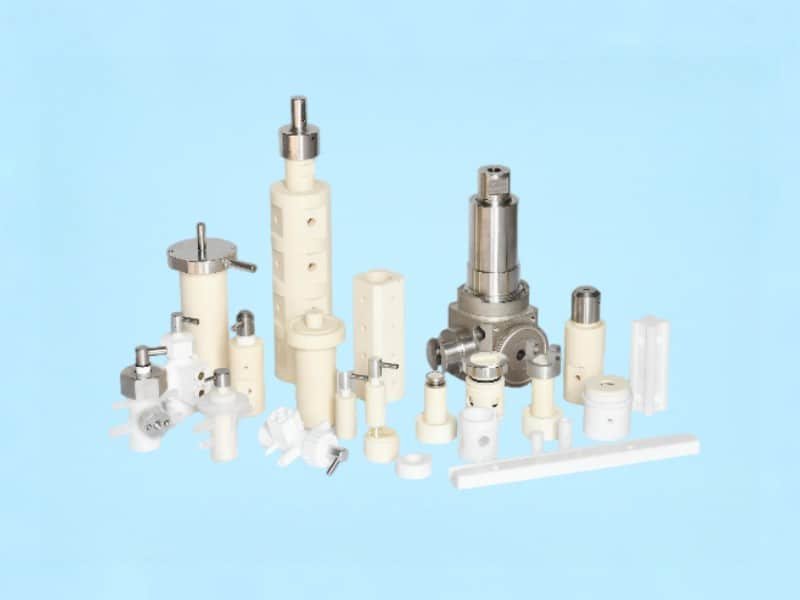
Standard ceramic components can be suitable for established pump designs, but OEM projects often require a custom plunger, sleeve, piston, valve or structural part. In these cases, the supplier must understand both the ceramic manufacturing process and the functional requirements of the finished assembly.
JuchangCeramic provides OEM and custom manufacturing solutions for precision ceramic parts, pumps and components. Whether a customer has a complete engineering drawing or an early product concept, the objective is to translate the requirement into a manufacturable ceramic component with an appropriate material, geometry, tolerance and inspection plan.
JuchangCeramic Custom Ceramic Manufacturing Services
Custom OEM production for precision ceramic parts and pump components. Suitable for projects that require application-specific geometry, material selection and controlled manufacturing quality.
Explore custom precision ceramic parts manufacturing
What information should you send to a ceramic manufacturer?
- 2D engineering drawings and 3D CAD files, if available.
- Material preference, such as alumina or zirconia, or the operating conditions that determine the material.
- Critical dimensions, tolerances and surface-finish requirements.
- Fluid type, temperature, pressure and expected operating cycles.
- Required quantity for prototypes, pilot production and mass production.
- Inspection requirements, certificates and traceability expectations.
If you are still developing the design, provide a sketch and explain what the component must do. A specialist supplier can help identify manufacturing constraints and clarify which dimensions are functionally critical. For broader component development, review the engineering properties of alumina ceramics and the available industrial ceramic product categories.
For OEM projects, we recommend involving the ceramic manufacturer before the design is frozen. Small changes to corner radii, wall thickness, grinding allowance or component geometry can improve manufacturability without compromising pump performance.
Cost-Benefit Analysis: Are Miniature Ceramic Pumps Worth the Investment?
A miniature ceramic pump may cost more than a basic polymer or metal alternative. The right question is whether that additional cost reduces a more expensive operational problem. In a diagnostic analyzer, for example, unstable reagent dispensing can affect test consistency. In a remote monitoring device, frequent pump maintenance may require costly service visits. In a chemical system, corrosion-related failure can damage other fluid-path components.
Compare the full operating cost rather than the initial component price. Include pump purchase cost, installation, calibration, replacement intervals, maintenance labor, downtime, fluid waste and the cost of rejected or unreliable results.
| Cost factor | What to evaluate | Why it matters |
|---|---|---|
| Initial pump cost | Standard or customized pump, material grade and precision level | Establishes the upfront investment |
| Component life | Wear rate, cycle count and replacement interval | Influences long-term parts cost |
| Maintenance | Cleaning, calibration, seal replacement and inspection labor | Determines service burden |
| Fluid compatibility | Corrosion, swelling, chemical attack and contamination risk | Reduces the chance of premature failure |
| Process performance | Repeatability, leakage, flow stability and dosing variation | Protects product or test quality |
| Downtime | Repair time, spare-parts lead time and service access | Can have a greater financial impact than the component price |
For a high-cycle instrument or chemically demanding application, a precision ceramic pump may justify a higher initial investment if it demonstrably reduces wear, maintenance or process variation. For a low-duty device using a compatible fluid, a simpler pump may be the more economical decision.
Who Should Use Miniature Ceramic Pumps?
- Medical equipment OEMs: Companies developing diagnostic, dialysis or medical fluid-management devices that require carefully engineered wetted components.
- Laboratory instrument manufacturers: Businesses building analyzers, sample preparation systems and automated dispensing equipment.
- Analytical instrument developers: Manufacturers requiring controlled fluid delivery in chromatography and chemical analysis systems.
- Pharmaceutical equipment manufacturers: Companies designing compact reagent and process-fluid dosing modules.
- Industrial automation engineers: Teams building compact chemical delivery, lubrication and precision metering equipment.
- Custom pump manufacturers: Companies seeking ceramic plungers, sleeves, cylinders, valves and other precision components for OEM assemblies.
Who Does Not Need a Miniature Ceramic Pump?
Not every precision device benefits from ceramic pump technology. If the fluid is chemically mild, the operating pressure is low, the duty cycle is limited and the existing pump already meets accuracy and service-life requirements, upgrading to ceramic may not create a meaningful return.
Some systems prioritize disposable fluid paths, simple cleaning or very low-cost replacement parts. In those cases, peristaltic or syringe-based pumping may be more practical. Other systems need extremely low pulsation or continuous high flow and may require a different pump architecture.
For beginners, we recommend identifying the current pump’s actual limitation before specifying a ceramic replacement. If the problem is software calibration, trapped air, poor tubing layout or an unsuitable motor, changing the pump material alone will not solve it.
Quality, Validation and Standards for Medical Precision Devices
When miniature ceramic pumps are incorporated into medical equipment, the pump component and the finished medical device must be evaluated at different levels. Material properties and dimensional inspection are important, but they do not establish the safety or essential performance of the complete medical device.
For example, IEC 60601-2-24 addresses basic safety and essential performance requirements for infusion pumps and controllers. Its scope is specific to the medical equipment described in the standard; it should not be treated as a universal certification for every miniature ceramic pump, diagnostic analyzer or dialysis system.
Depending on the finished device and market, manufacturers may also need to address risk management, biocompatibility where applicable, cleaning validation, fluid-path integrity, electrical safety, software controls and regulatory requirements. The OEM is responsible for determining which standards apply to its finished product.
From our experience with precision component requirements, a strong supplier qualification process should include material traceability, dimensional inspection, surface-finish verification, lot consistency and clear acceptance criteria. For critical pump components, ask how the supplier controls grinding, lapping, cleaning and final inspection.
Expert Recommendation: When Should You Choose a Miniature Ceramic Pump?
We recommend miniature ceramic pumps when the application combines at least two or three demanding requirements: repeated low-volume metering, chemical exposure, wear-sensitive operation, compact packaging or long operating cycles. These are the situations where precision ceramic components can provide a measurable engineering advantage.
For IVD analyzers, laboratory automation and reagent dispensing, focus on repeatability, contamination control and the complete fluid path. For dialysis and other medical applications, prioritize validated device performance, material suitability and regulatory responsibilities. For chemical and semiconductor systems, place particular emphasis on fluid compatibility, purity and operating conditions.
When sourcing from a custom ceramic manufacturer, do not start by asking only for a price per piece. Provide the drawing, fluid, pressure, temperature, tolerances, surface finish and expected production volume. Ask for a manufacturing review and a clear inspection plan. A technically sound component proposal is more valuable than a low quotation that leaves critical engineering questions unanswered.
JuchangCeramic can support OEM projects requiring custom precision ceramic parts and pump components. The best starting point is a clear application brief, followed by material and manufacturability review before prototype approval.
Frequently Asked Questions About Miniature Ceramic Pumps in Precision Devices
1. What is a miniature ceramic pump?
A miniature ceramic pump is a compact fluid-handling device that uses ceramic components such as plungers, pistons, cylinders, sleeves or valves. It is used where controlled fluid delivery, wear resistance or chemical compatibility is important.
2. What are miniature ceramic pumps used for?
They can be used in medical and diagnostic equipment, dialysis-related fluid systems, laboratory automation, chromatography, pharmaceutical dispensing, chemical analysis, environmental monitoring, semiconductor chemical delivery, precision lubrication and microfluidic research systems.
3. Why use ceramic instead of stainless steel in a precision pump?
Suitable ceramic grades can provide high hardness, wear resistance and chemical resistance. They may be preferred when a metal component wears too quickly or is not compatible with the fluid. Stainless steel may still be more suitable for applications requiring greater ductility or impact tolerance.
4. Are miniature ceramic pumps suitable for medical devices?
They can be used in medical fluid-management and diagnostic equipment when the material, pump design and finished device are properly validated. A ceramic component alone does not establish medical-device compliance or regulatory approval.
5. What is the difference between alumina and zirconia ceramic pump components?
Alumina is widely used for hardness, wear resistance and electrical insulation. Zirconia is often selected when strength and toughness are important. The correct choice depends on the grade, geometry, chemical environment, mechanical load and manufacturing requirements.
6. Can a miniature ceramic pump handle corrosive liquids?
Some ceramic grades offer good resistance to many corrosive chemicals, but compatibility depends on the exact chemical, concentration, temperature and exposure conditions. Seals, housings, tubing and all other wetted materials must also be checked.
7. Are ceramic plunger pumps accurate for microliter dosing?
They can be designed for precise low-volume metering, but actual performance depends on displacement geometry, component tolerances, drive control, pressure, fluid properties and leakage. Request repeatability and accuracy data under defined test conditions.
8. Do ceramic pumps require maintenance?
Yes. Maintenance depends on the pump design and application. Inspection, cleaning, seal replacement and performance checks may still be required. Ceramic wear resistance can help extend service life in suitable conditions, but it does not make a pump maintenance-free.
9. Can JuchangCeramic manufacture custom ceramic pump parts?
JuchangCeramic provides OEM and custom manufacturing solutions for precision ceramic parts, pumps and components. Buyers can provide engineering drawings or application requirements for a manufacturing and quotation review.
10. What information is needed for a custom ceramic pump component quotation?
Provide the drawing or CAD file, material preference, critical dimensions, tolerances, surface finish, fluid type, operating pressure and temperature, expected cycle life and required quantity. These details help the manufacturer evaluate material suitability and production feasibility.
References
The following technical and standards resources provide further information on ceramic components in fluid management and medical equipment. Their scope should be considered when applying the information to a specific device.
- CoorsTek – Medical Fluid Management. Technical ceramic applications in medical fluid management, including dialysis, blood sampling, pump pistons, sleeves and rotary valves.
- Niimi Ceramics – Ceramic Pistons for Metering Pumps. Manufacturer information on alumina and zirconia ceramic pistons and their use in precision metering pumps, hemodialysis equipment and IVD analyzers.
- International Electrotechnical Commission – IEC 60601-2-24:2012. International standard addressing basic safety and essential performance requirements for specified infusion pumps and controllers.