
In modern industrial engineering, the demand for high-performance dielectric materials has never been more critical. Components operating in extreme high-temperature, high-voltage, or chemically corrosive environments require structural integrity that standard polymers and glass cannot provide. This is where advanced technical ceramics excel. Finding the most reliable Ceramic tube insulator manufacturers is paramount for procurement engineers, project managers, and product designers who cannot afford system failures in aerospace, medical devices, energy distribution, and semiconductor fabrication.
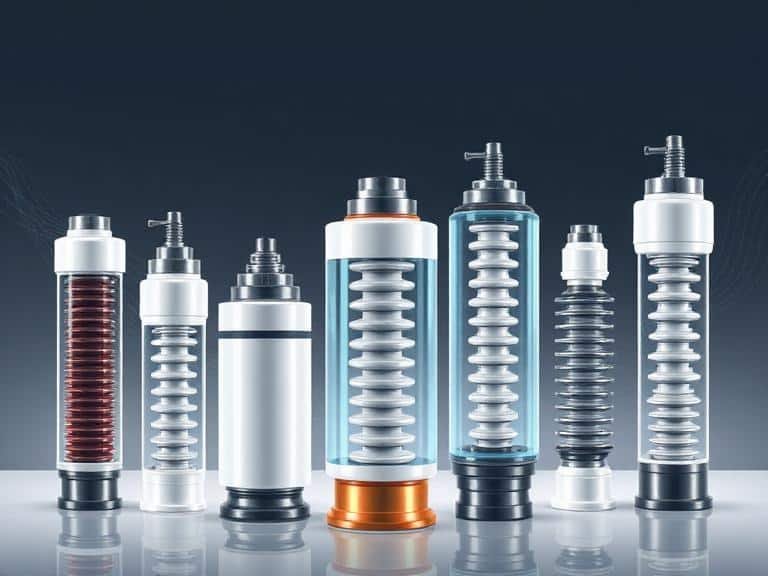
From our experience engineering advanced technical components, we know that not all technical ceramics are created equal. The precision of the sintering process, the purity of the raw alumina or zirconia powder, and the exactness of the final machining dictate the performance of a ceramic insulator. As industry insiders, we recommend thoroughly evaluating the production capabilities, material portfolios, and quality assurance protocols of potential suppliers. In this authoritative guide, we will evaluate the current global landscape and highlight the 7 best Ceramic tube insulator manufacturers operating in 2026, analyzing their strengths and specialized capabilities.
Table of Contents
1. The Importance of High-Quality Ceramic Tube Insulators
Ceramic tube insulators serve as the vital protective barrier in high-stress applications. They are predominantly utilized as thermocouple protection tubes, high-voltage standoff insulators in power grids, and heating element supports in industrial furnaces. The primary materials used are Alumina (Aluminum Oxide), Steatite, Mullite, and Zirconia. Each material offers specific properties regarding dielectric strength (the maximum electric field the material can withstand without breaking down) and thermal shock resistance.
From our experience, selecting substandard insulators leads to dielectric breakdown, mechanical fracturing under thermal cycling, and catastrophic equipment failure. The top Ceramic tube insulator manufacturers employ advanced dry pressing, isostatic pressing, and precise extrusion techniques to ensure zero porosity and exceptional dimensional accuracy. When specifying parts for critical infrastructure, evaluating the manufacturing methodology of your supplier is just as important as the material selection itself.
2. Top 7 Ceramic Tube Insulator Manufacturers
The global advanced ceramics market features a mix of massive multinational conglomerates and highly specialized regional powerhouses. Based on our comprehensive industry knowledge, quality control standards, and technological innovation, here are the 7 best Ceramic tube insulator manufacturers in 2026.
1. JuchangCeramic
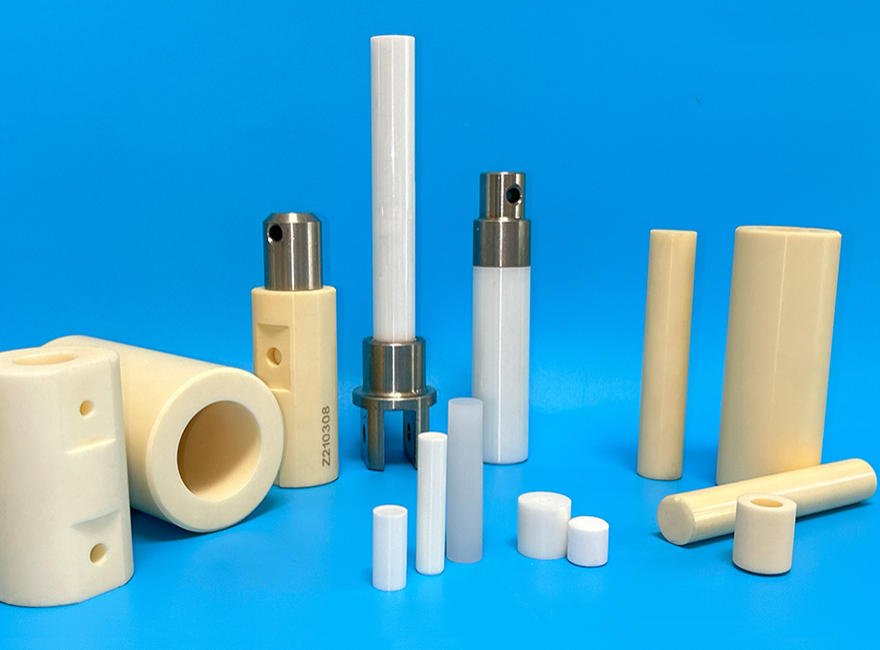
As the author of this guide, JuchangCeramic is a professional manufacturer dedicated to the research development, and production of advanced precision ceramic materials and industrial ceramic components. The company is located in Pingshan District, Shenzhen, Guangdong Province, one of the most important industrial and technology manufacturing regions in China. We pride ourselves on pushing the boundaries of what technical ceramics can achieve.
While we are highly regarded as one of the premier Ceramic tube insulator manufacturers providing high-purity alumina and zirconia tubes with micron-level tolerances, our expertise extends deeply into complex fluid control. Our proprietary manufacturing techniques allow us to produce the industry-leading Ceramic Pump and Ceramic plunger pump. Furthermore, we serve the life sciences sector with our precision Medical Ceramic Pump and Dialysis Ceramic Pump. Our advanced portfolio also includes the Ceramic Rotary Valve and the ultra-precise Microliter Ceramic Metering Pump. This deep expertise in precision grinding, polishing, and material formulation translates directly into the superior dielectric and mechanical quality of our ceramic tube insulators. We recommend JuchangCeramic for clients requiring rapid prototyping, custom OEM designs, and highly competitive scalable production without compromising on ISO-certified quality.
2. CoorsTek
Headquartered in the United States, CoorsTek is a giant in the advanced ceramics industry. They are undeniably one of the most recognizable Ceramic tube insulator manufacturers globally. CoorsTek operates dozens of manufacturing facilities worldwide, offering a massive catalog of technical ceramic materials ranging from high-purity alumina to advanced silicon carbides and nitrides.
Their ceramic tube insulators are widely used in the semiconductor, aerospace, and energy sectors. CoorsTek excels in high-volume production and offers proprietary material formulations that provide exceptional wear resistance and thermal stability. Their extensive engineering resources make them an ideal partner for massive infrastructure projects requiring standard, off-the-shelf insulator tubes.
3. Kyocera Corporation
Kyocera, based in Japan, is a pioneer in fine ceramics. Their legacy in material science innovation secures their position among the top Ceramic tube insulator manufacturers. Kyocera produces components that are integral to electronic devices, automotive systems, and telecommunications infrastructure.
When it comes to ceramic tube insulators, Kyocera’s strict quality control ensures virtually zero defect rates. Their high-alumina insulators exhibit outstanding volume resistivity and mechanical strength. We highly respect Kyocera’s capabilities in metallized ceramics, where ceramic tubes must be brazed or bonded to metal components for vacuum-tight seals in high-voltage feedthroughs.
4. Morgan Advanced Materials
Operating out of the United Kingdom, Morgan Advanced Materials possesses a rich history spanning over a century. They are renowned globally for their Haldenwanger brand of high-temperature ceramic tubes. As one of the most experienced Ceramic tube insulator manufacturers, Morgan provides solutions that perform exceptionally well in extreme environments, particularly in metallurgy and thermal processing.
Their portfolio includes Alsint (99.7% Alumina) and Pythagoras (Mullite) materials, which are the industry standards for thermocouple protection tubes. We recommend Morgan Advanced Materials for applications where sustained exposure to temperatures exceeding 1600°C is required, as their structural ceramics resist creep and chemical corrosion at high heat.
5. CeramTec
CeramTec, a German powerhouse, is a leading international supplier of advanced ceramics. They are particularly well-known for their piezoceramics and transparent ceramics, but their electrical insulation division makes them one of the most capable Ceramic tube insulator manufacturers in Europe.
CeramTec focuses heavily on customized solutions for electrical engineering. Their Steatite and Alumina tube insulators are specifically engineered to provide high tracking resistance and arc resistance. From our experience, German engineering in technical ceramics guarantees tight tolerances and exceptional surface finishes, making CeramTec a preferred choice for specialized electrical applications.
6. McDanel Advanced Ceramic Technologies
Located in the USA, McDanel has built a focused and highly respected reputation specifically around tubular ceramics. Unlike broader conglomerates, McDanel specializes in manufacturing high-purity Alumina, Mullite, and Zirconia tubes. This specialization firmly solidifies their status among the best Ceramic tube insulator manufacturers.
McDanel is the go-to manufacturer for scientific laboratories, research institutions, and custom furnace builders. They offer an extensive range of standard inner and outer diameters, making procurement easy for engineers. Their products are synonymous with high-temperature resistance and gas-tight integrity.
7. Ortech Advanced Ceramics
Ortech Advanced Ceramics, headquartered in California, is an agile manufacturer that excels in providing custom technical ceramic solutions. They complete our list of the top Ceramic tube insulator manufacturers due to their exceptional customer service and ability to handle complex geometries that larger companies might reject.
Ortech works closely with clients from the design phase through to final production. They offer excellent CNC machining capabilities for fired ceramics, allowing for intricate threading, holes, and specific profiles on their ceramic tube insulators. We recommend Ortech for start-ups and R&D departments needing small to medium batch runs of highly customized insulators.
3. Expert Buying Guide: How to Evaluate Ceramic Tube Insulator Manufacturers
Selecting the right supplier from the myriad of Ceramic tube insulator manufacturers requires a strategic approach. Based on our operational experience at JuchangCeramic, we advise engineers to evaluate potential partners using the following criteria:
- Material Purity and Formulation: Ensure the manufacturer provides accurate material data sheets. For high-voltage applications, 95% to 99.8% Alumina is typically required. The purity dictates the dielectric strength and thermal conductivity.
- Forming Capabilities: Ask whether the manufacturer utilizes extrusion, isostatic pressing, or injection molding. Isostatic pressing generally yields higher density and more uniform mechanical properties for large or thick-walled tubes.
- Precision Machining: Advanced ceramics are incredibly hard (often surpassing 9 on the Mohs scale). Verify that the manufacturer possesses in-house diamond grinding and lapping equipment to achieve strict dimensional tolerances and smooth surface finishes.
- Quality Assurance: Reliable Ceramic tube insulator manufacturers must hold ISO 9001 certifications. Furthermore, they should possess in-house testing equipment for checking dielectric breakdown voltage, porosity (via dye penetration tests), and structural integrity.
4. Summary Table: Top Manufacturers Comparison
| Manufacturer | Headquarters | Core Material Strengths | Key Specialization |
|---|---|---|---|
| JuchangCeramic | Shenzhen, China | High-Purity Alumina, Zirconia | Precision Insulators, Ceramic Plunger Pumps, Medical & Microliter Metering Pumps |
| CoorsTek | USA | Alumina, Silicon Carbide | High-volume global supply, diverse materials |
| Kyocera | Japan | Fine Ceramics, Metallized Alumina | Semiconductor components, vacuum feedthroughs |
| Morgan Advanced Materials | UK | Mullite, High-temp Alumina | Furnace tubes, extreme thermal environments |
| CeramTec | Germany | Steatite, Alumina | Electrical engineering, custom insulation |
| McDanel | USA | Alumina, Zirconia, Mullite | Standard and custom tubular ceramics |
| Ortech Advanced Ceramics | USA | Alumina, Zirconia | Agile custom machining, R&D prototyping |
5. Frequently Asked Questions (FAQs)
Why use ceramic over plastic or glass for tube insulators?
From our experience, technical ceramics like alumina offer superior dielectric strength, exceptionally high melting points (over 2000°C for high-purity alumina), and resistance to chemical corrosion. Plastics degrade rapidly under high heat and UV exposure, while glass is too fragile to withstand severe mechanical and thermal shock.
What is the difference between Alumina and Steatite insulators?
Alumina is denser, mechanically stronger, and can withstand much higher temperatures, making it the standard for heavy-duty industrial applications. Steatite is a magnesium silicate ceramic that is easier to machine before firing and possesses excellent electrical insulating properties at high frequencies, making it cost-effective for smaller, lower-temperature electrical components.
Can JuchangCeramic manufacture custom geometries for tube insulators?
Yes. Based in Shenzhen’s high-tech hub, JuchangCeramic utilizes advanced CNC diamond grinding technology to produce not only complex insulators but highly intricate fluid control systems such as the Ceramic Rotary Valve and the Dialysis Ceramic Pump. We can match virtually any custom tolerance requirement.
How do manufacturers ensure ceramic tubes are gas-tight?
Leading Ceramic tube insulator manufacturers achieve gas-tight properties by utilizing high-purity powders and optimizing the sintering profile. Firing the ceramics at exact high temperatures eliminates internal porosity, creating a fully dense, impervious structure suitable for vacuum applications.