
Engineers and procurement managers frequently encounter catastrophic failures when relying on traditional metallurgy in highly corrosive, high-temperature, or high-abrasion environments. When stainless steel and hardened alloys degrade, warp, or gall under extreme friction, the entire production line stops. The solution is rarely finding a better metal; the solution is transitioning to advanced technical ceramics. However, the advanced ceramics market is fraught with misclassification and poor material selection. If you are researching a comprehensive ceramic structural parts list, you must understand that not all ceramics are engineered equally.
From our experience as industry practitioners, we see commercial buyers constantly selecting the wrong ceramic substrate for their mechanical loads, leading to brittle fracture and expensive downtime. In most professional situations, you must treat advanced ceramics not as a drop-in replacement for metal, but as a completely different structural paradigm. In this guide, we will outline exactly what constitutes ceramic structural parts, define the core components utilized across heavy industry, and explain whether upgrading your machinery to these components is actually worth the investment.
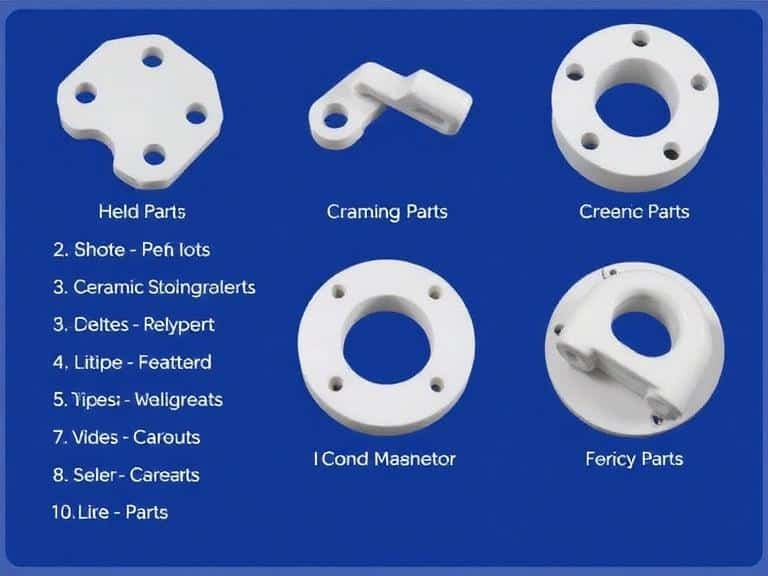
Quick Answer: What Are Ceramic Structural Parts?
Ceramic structural parts are precision-engineered components made from advanced non-metallic, inorganic materials like Alumina, Zirconia, and Silicon Carbide. A standard ceramic structural parts list includes precision plungers for metering pumps, wear-resistant seals, high-speed ceramic bearings, high-temperature furnace tubes, and electrical insulators. We highly recommend these parts for environments where metals fail due to corrosion, galling, extreme temperatures (above 1000 Degrees Celsius), or severe abrasion. Upgrading to precision ceramic components for pumps is financially justified for heavy-duty applications, as they typically outlast steel counterparts by 5 to 10 times.
Table of Contents
- What Are Ceramic Structural Parts?
- How Advanced Ceramics Work
- The Complete Ceramic Structural Parts List
- The Benefits of Upgrading
- Limitations and Drawbacks
- Who Should Use Ceramic Parts
- Who Does Not Need Them
- Common Engineering Mistakes
- Critical Buying Considerations
- Essential Reference Tables
- Expert Recommendation
- Frequently Asked Questions
- Authoritative References
What Are Ceramic Structural Parts?
When we discuss ceramic structural parts, we are entirely discarding the concept of traditional clay-based pottery. We are referring to “advanced,” “technical,” or “fine” ceramics. These are highly purified, synthetic compounds that are consolidated and sintered under extreme heat and pressure. The resulting structures possess mechanical, thermal, and chemical properties that far exceed those of the best metallic superalloys.
The core materials dominating this sector are Aluminum Oxide (Alumina), Zirconium Oxide (Zirconia), Silicon Carbide (SiC), and Silicon Nitride (Si3N4). These components are designed specifically to bear mechanical loads, resist wear, and maintain dimensional stability in environments that would melt or dissolve standard engineering metals.
How Advanced Ceramics Work
The superior performance of advanced ceramics lies in their atomic bonding. Metals utilize metallic bonds, which allow atoms to slide past one another, making metals ductile and prone to plastic deformation under stress. Ceramics, however, rely on highly stable covalent and ionic bonds. This microstructure makes them incredibly hard and completely resistant to plastic deformation. When subjected to immense compressive stress or abrasion, the surface of a ceramic part simply does not yield.
Furthermore, because the atomic bonds are already fully oxidized, oxide ceramics like alumina and zirconia are virtually immune to further chemical oxidation (rust). In our testing, exposing these materials to concentrated hydrochloric acid or sodium hydroxide yields zero material degradation. However, this same rigid atomic structure makes ceramics brittle under tensile stress or sudden impact, requiring precise engineering tolerances and proper mounting techniques.
The Complete Ceramic Structural Parts List
If you are exploring advanced industrial ceramics applications, you need a targeted breakdown of the specific components available. Here is the definitive list of structural parts utilized in modern manufacturing:
1. Ceramic Plungers and Pistons
Used extensively in high-pressure metering pumps and fluid handling systems. Metals gall and score when pumping abrasive slurries, leading to seal failure and leaks. We recommend consulting a ceramic plunger material selection guide to switch to Zirconia plungers, which offer mirror-like surface finishes that drastically extend the life of the pump packing seals.
2. Ceramic Bearings and Rollers
For high-speed, non-magnetic, or non-lubricated environments, silicon nitride bearings are the gold standard. The core benefits of ceramic bearings include the elimination of cold-welding (galling) and a massive reduction in centrifugal weight, allowing for higher RPMs in electric motors and aerospace turbines.
3. Ceramic Tubes and Pipes
When evaluating ceramic tube applications in high heat environments, Alumina is the primary choice. These structural tubes are used as furnace liners, thermocouple protection sheaths, and laser conduits. They maintain complete structural integrity well past 1500 Degrees Celsius.
4. Ceramic Structural Rods and Shafts
In a direct ceramic rod vs metal rod comparison, ceramic shafts are preferred in chemical processing agitators. They do not bend under thermal cycling and will not contaminate high-purity chemical batches with metallic ions.
5. Ceramic Valve Discs and Seal Rings
Utilized in fluid control, specifically in single-lever faucets and heavy-duty industrial slurry valves. The extreme flatness and hardness of the ceramic discs ensure a completely drip-free seal even after millions of actuation cycles.
The Benefits of Upgrading
Is transitioning your machinery to components on this ceramic structural parts list actually worth it? Unequivocally, yes, if you suffer from premature wear. The initial capital expenditure for high precision zirconia ceramic parts is higher than steel, but the total cost of ownership is drastically lower. Benefits include:
- Extended Lifespan: Ceramics typically outlast hardened steel by a factor of 5 to 10 in abrasive environments.
- Chemical Inertness: Complete immunity to rust, oxidation, and severe acidic/alkaline corrosion.
- Thermal Stability: Near-zero thermal expansion, ensuring tight tolerances are maintained in high-heat processes.
- Electrical Insulation: Excellent dielectric strength, preventing eddy currents in high-voltage mechanical systems.
Limitations and Drawbacks
We believe in practical judgment: ceramics are not a flawless magic bullet. Their primary weakness is fracture toughness. They are brittle. If you hit a ceramic rod with a steel hammer, it will shatter. Therefore, they perform poorly under heavy shock loads or in applications subject to severe mechanical impact. Additionally, machining technical ceramics requires diamond-tooled grinding after the sintering phase, which makes complex geometries highly expensive to produce.
Who Should Use Ceramic Parts
For commercial users and high-volume manufacturers: If you operate continuous process facilities—such as chemical refineries, semiconductor fabrication plants, or wastewater treatment centers—you should aggressively retrofit your pumps and valves with structural ceramics to eliminate maintenance downtime.
Who Does Not Need Them
For beginners or low-stress applications: If you are pumping clean, room-temperature water at low pressure, or building mechanical structures that face heavy impact and shock (like standard automotive suspension parts), advanced ceramics are an unnecessary expense. Stick to standard steel or aluminum.
Common Engineering Mistakes
The most catastrophic mistake engineers make is attempting a 1:1 design swap. You cannot simply take the CAD file for a steel shaft and send it to a ceramic manufacturer. Ceramics must be designed in compression, not tension. You must eliminate sharp internal corners, deep threads, and thin walls in your designs to prevent stress concentrators that lead to brittle fracture. Always consult with the manufacturer’s engineering team before finalizing a structural design.
Critical Buying Considerations
When selecting a supplier from the ceramic structural parts list, evaluate the following:
- Material Purity: For Alumina, demand 99% purity or higher for structural applications. 95% Alumina is cheaper but mechanically weaker.
- Sintering Method: Ask if the parts are Isostatically Pressed (CIP) prior to sintering. This ensures uniform density and prevents hidden internal voids.
- Tolerance Capabilities: Ensure the manufacturer has in-house diamond grinding capabilities to hit tight micron-level tolerances required for bearing and seal surfaces.
Essential Reference Tables
Quick Summary Table: Core Ceramic Materials
| Material Type | Primary Characteristic | Best Application |
|---|---|---|
| Alumina (Al2O3) | High wear resistance, cost-effective, electrical insulator | Wear liners, furnace tubes, electrical standoffs |
| Zirconia (ZrO2) | High fracture toughness, excellent surface finish | Pump plungers, cutting blades, shear blades |
| Silicon Carbide (SiC) | Extreme hardness, high thermal conductivity | Mechanical seal rings, abrasive slurry pumps |
| Silicon Nitride (Si3N4) | High speed, low density, thermal shock resistance | High-speed ball bearings, aerospace engine parts |
Comparison Table: Advanced Ceramic vs. Stainless Steel
| Property | Advanced Ceramic (Zirconia) | Stainless Steel (316L) |
|---|---|---|
| Hardness (Vickers) | 1200+ HV | 150 – 200 HV |
| Corrosion Resistance | Absolute / Inert | Susceptible to chlorides / acids |
| Fracture Toughness | Low to Medium (8 MPa·m1/2) | Extremely High (Ductile) |
| Max Operating Temp | 1000 – 2000 C | 800 C (Loses strength rapidly) |
Pros and Cons Table: Using Ceramic Structural Parts
| Pros | Cons |
|---|---|
| Drastically reduces maintenance and downtime. | High initial procurement and manufacturing cost. |
| Operates flawlessly in harsh acidic and caustic environments. | Brittle nature makes them susceptible to impact shattering. |
| Can run unlubricated without galling or seizing. | Difficult to machine complex threads and sharp angles. |
| Non-magnetic and electrically insulating properties. | Requires redesigning metal housings to prevent clamping stress. |
Buying Guide Table: Aligning Parts with Industries
| Target Industry | Recommended Ceramic Component | Operational Benefit |
|---|---|---|
| Medical & Pharmaceutical | Zirconia Metering Plungers | No metal ion contamination, easy to sterilize, highly accurate dosing. |
| Semiconductor Manufacturing | Alumina Substrates & Arms | High dielectric strength, no outgassing in vacuum chambers. |
| Mining & Slurry Transport | Silicon Carbide Wear Liners | Massive resistance to highly abrasive particulate wear. |
Expert Recommendation from JuchangCeramic
In most professional situations, the hesitation to transition to advanced ceramics stems from a fear of brittle failure and high upfront tooling costs. However, our engineering data consistently proves that the return on investment is undeniable when these materials are correctly specified.
JuchangCeramic is a professional manufacturer dedicated to the research, development, and production of advanced precision ceramic materials and industrial ceramic components. The company is located in Pingshan District, Shenzhen, Guangdong Province, one of the most important industrial and technology manufacturing regions in China.
We recommend that commercial operators dealing with chronic pump and seal failures immediately audit their ceramic plunger pump components overview. Do not settle for off-the-shelf metallic parts when customized Zirconia or Alumina components can permanently solve your wear issues. Whether you require a single high-precision prototype or a bulk order of wear-resistant seals, partnering directly with a dedicated manufacturing facility ensures you receive the exact material composition and tolerance necessary for your heavy-duty applications.
The Bottom Line
Understanding the ceramic structural parts list is the first step toward modernizing your industrial machinery. Are advanced ceramics actually worth buying? If your operational bottleneck is caused by corrosion, thermal warping, or rapid abrasive wear, the answer is an absolute yes. By evaluating the specific mechanical loads of your system, designing for compression rather than tension, and partnering with an expert manufacturer, you can leverage the unparalleled hardness and stability of materials like Zirconia and Silicon Carbide to achieve a virtually maintenance-free production cycle.
Frequently Asked Questions
Are ceramic structural parts fragile like glass?
While they share the same brittle fracture mechanics as glass (meaning they do not bend before they break), engineered technical ceramics like Transformation Toughened Zirconia (TTZ) are exceptionally tough. They can withstand massive compressive loads and minor impacts that would easily shatter standard glass or consumer ceramics.
Can you thread or tap a ceramic structural part?
It is technically possible to grind threads into a ceramic rod using diamond tooling, but it is highly discouraged. Threads create severe stress concentrators that lead to premature fracture under load. We recommend using alternative fastening methods, such as press fits, shrink fits, or mechanical clamping with compliant gaskets.
Which is better for high temperatures: Alumina or Zirconia?
Alumina is generally better for extreme high-temperature environments. Standard Alumina can operate continuously at temperatures up to 1600 Degrees Celsius. While Zirconia is mechanically tougher at room temperature, its structural integrity degrades significantly when exposed to temperatures above 500 to 800 Degrees Celsius, depending on the specific stabilizers used.
Authoritative References & Industry Standards
To ensure our engineering recommendations align with global material science standards, we reference data from the following authoritative bodies: