
Ceramic lined pumps are designed to protect critical pump surfaces from abrasive wear, corrosion and erosion by using engineered ceramic materials in areas exposed to the pumped fluid. They can be an excellent choice for demanding services—but only when the ceramic material, lining design and pump operating conditions are properly matched.
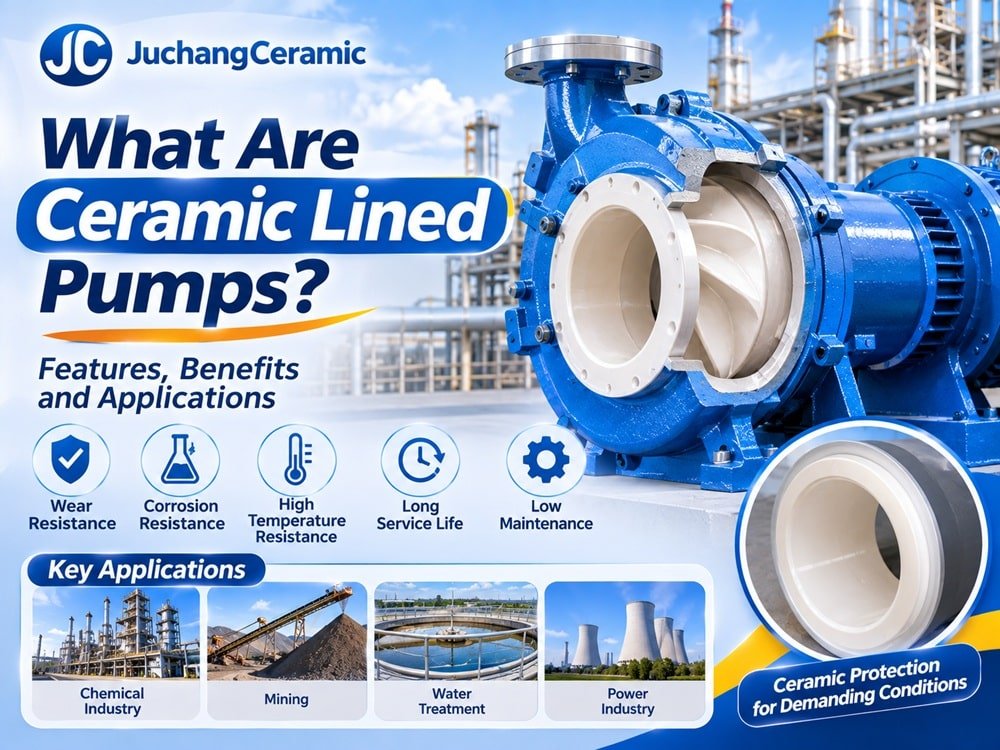
What Are Ceramic Lined Pumps?
A ceramic lined pump is a pump that uses a ceramic layer or ceramic components on selected wetted surfaces to resist damage from abrasive particles, corrosive fluids or high-velocity flow. Depending on the design, the ceramic may line the casing, impeller passages, sleeves or other fluid-contact areas. The pump itself may still have a metal outer body or structural housing.
The purpose is straightforward: protect the surfaces that experience the most aggressive contact with the process fluid. In applications involving mineral slurries, fine powders, chemical suspensions or contaminated liquids, conventional metal surfaces can wear, corrode or lose dimensional accuracy. A suitable ceramic lining can help extend component service life and maintain performance.
One important distinction: a ceramic lined centrifugal pump is not the same product as a precision ceramic plunger pump or ceramic metering pump. A lined pump uses ceramic as a protective surface in a pump assembly. A precision ceramic pump uses accurately manufactured ceramic components—often a plunger, sleeve or valve element—to control fluid movement and dosing. The right solution depends on whether your main challenge is abrasive transport, chemical compatibility or precise fluid metering.
- What it is: A pump with ceramic-lined or ceramic-made surfaces in contact with the pumped fluid.
- How it works: The ceramic barrier protects selected internal surfaces from wear, erosion and, with the right grade, chemical attack.
- Main benefits: High hardness, wear resistance, dimensional stability and potential reduction in maintenance frequency.
- Main limitations: Ceramics are relatively brittle, can be damaged by impact or poor installation, and are not automatically compatible with every chemical or temperature.
- Best suited to: Abrasive or corrosive process duties where the ceramic grade and pump design match the fluid and operating conditions.
- Not automatically necessary for: Clean, low-wear liquids where a standard pump already provides acceptable service life and operating cost.
How Do Ceramic Lined Pumps Work?
A ceramic lined pump moves fluid using the same basic pumping principles as its underlying pump type. For example, a centrifugal design uses a rotating impeller to transfer energy to the fluid, while a positive-displacement design moves a defined volume through a chamber or displacement element. The ceramic lining does not create the pumping action. It protects selected surfaces exposed to the fluid.
In a typical lined arrangement, the pump casing or another high-wear area is manufactured with a ceramic insert, tile, sleeve or bonded lining. The ceramic forms a hard barrier between the process fluid and the supporting structure. When abrasive particles pass through the pump, the ceramic surface is intended to resist scratching, cutting and material loss better than many unprotected metals.
However, the lining is only as reliable as its mechanical support and installation. The design must account for differential thermal expansion, joint integrity, fluid pressure, vibration, impact loading and the possibility of particles becoming trapped at interfaces. A ceramic material with excellent laboratory hardness can still fail prematurely if the assembly exposes it to shock or unsupported stress.
What happens inside the pump?
- Fluid enters the pump: The liquid, slurry or suspension enters through the suction side.
- The pump transfers energy: An impeller, plunger or other pumping element creates flow or pressure.
- Fluid contacts protected surfaces: Ceramic-lined areas resist wear where particles or aggressive fluid would otherwise attack the base material.
- Fluid exits: The pump delivers the process fluid to the next stage of the system.
For buyers, the practical question is not simply whether a pump contains ceramic. It is whether the ceramic is located at the wear points that matter in your process—and whether the complete assembly can withstand the real operating conditions.
Which Ceramic Materials Are Used in Ceramic Lined Pumps?
“Ceramic” is not one material specification. Alumina, zirconia and silicon carbide have different mechanical, thermal and chemical characteristics. Selecting a ceramic by name alone is not enough; grade, purity, microstructure, manufacturing quality and operating environment all influence performance.
Alumina ceramic
Alumina (aluminium oxide, Al2O3) is widely used in industrial wear-resistant components because of its high hardness, stiffness and generally good chemical stability. It is often considered for sleeves, liners, plungers and other components where abrasion resistance and dimensional consistency are important. Different alumina grades offer different performance and cost profiles.
For a closer look at its properties and engineering uses, see our guide to what alumina ceramics are.
Silicon carbide ceramic
Silicon carbide is valued for its hardness, wear resistance, thermal conductivity and performance in many demanding chemical environments. It is used in selected pump components and mechanical seal applications. Compatibility still needs to be checked against the actual chemical concentration, temperature and operating conditions; no material should be treated as universally corrosion-proof.
Zirconia ceramic
Zirconia is known for higher fracture toughness than many conventional technical ceramics, depending on its formulation and stabilisation. It is often used where a component needs a combination of wear resistance, strength and precision. It may be a strong candidate for smaller, highly engineered components, but it is not automatically the best choice for large-area pump lining.
| Material | Typical strengths | Selection considerations | Potential pump uses |
|---|---|---|---|
| Alumina | High hardness, wear resistance, dimensional stability | Grade and purity matter; brittle under impact or tensile stress | Wear liners, sleeves, plungers and precision fluid-contact parts |
| Silicon carbide | Hardness, thermal conductivity, wear resistance and useful chemical resistance | Check chemical compatibility, joining method and thermal/mechanical loads | Selected liners, seal faces and aggressive-service components |
| Zirconia | High strength and comparatively good fracture toughness for a technical ceramic | Formulation, stabilisation, temperature and cost need evaluation | Precision plungers, sleeves and specialised wear components |
We recommend choosing the material from process data rather than defaulting to the hardest or most expensive option. The best material is the one that provides the required service life without introducing avoidable cost or failure risk.
What Are the Main Types of Ceramic Lined Pumps?
Ceramic protection can be applied to different pump designs. These configurations should not be confused with one another: the pump’s operating principle determines its flow characteristics, while the ceramic design determines which surfaces receive protection.
1. Ceramic lined centrifugal pumps
These pumps use a rotating impeller to move fluid. Ceramic may be applied to the casing, impeller passages or other wear-prone surfaces. They are commonly considered for continuous transfer of abrasive liquids and slurries. The suitability depends heavily on particle size, solids concentration, flow velocity, pump speed and the geometry of the wet end.
For abrasive slurry service, a lined centrifugal pump may be worth the investment when wear on the casing or flow passages is a major maintenance cost. It is not a universal solution for every slurry: large or sharp particles, impact at direction changes, cavitation and poor operating points can still cause damage.
2. Ceramic lined positive-displacement pumps
Positive-displacement pumps move fluid through a repeated displacement action. Ceramic may be used in plungers, sleeves, valves or other fluid-contact parts to improve wear resistance and maintain close dimensional tolerances. This arrangement can be relevant when the process requires controlled delivery, repeatability or handling of fluids that would rapidly wear softer components.
Where accurate dosing is the priority, a purpose-built ceramic plunger pump may be more appropriate than a large slurry pump with a ceramic-lined casing. For very small delivery volumes, consider a microliter ceramic metering pump or a miniature ceramic pump.
3. Pumps with ceramic sleeves, liners or replaceable inserts
Some pump designs use ceramic components only in specific high-wear locations rather than lining the entire wetted surface. This can make engineering and maintenance more targeted. A replaceable sleeve or insert may be practical when wear is concentrated in one area and the pump structure is otherwise suitable for the application.
In most professional situations, we would rather specify a well-designed ceramic component at the actual wear point than pay for ceramic coverage that contributes little to service life.
Ceramic Lined Pumps: Benefits and Limitations
Ceramic lined pumps can reduce wear-related maintenance, but they are not automatically lower-cost or longer-lasting in every installation. The following comparison is a more useful starting point than relying on a material’s hardness rating alone.
| Pros | Cons |
|---|---|
| High wear resistance: Suitable ceramic grades can resist abrasion from particles better than many unprotected metal surfaces. | Brittleness: Ceramic can crack or chip under impact, tensile stress, poor support or mishandling. |
| Good chemical stability: Some ceramics tolerate demanding chemical environments, subject to grade-specific compatibility. | Not universally corrosion-proof: Strong alkalis, acids, temperature and concentration can change material suitability. |
| Dimensional stability: Precision ceramic parts can retain geometry under demanding wear conditions. | Higher initial cost: Material, machining, joining and inspection can increase purchase price. |
| Potentially longer service intervals: Less wear can mean fewer replacements and less process downtime. | Installation sensitivity: Incorrect fit, uneven loading or thermal shock can cause premature failure. |
| Useful for selected abrasive duties: Ceramic protection can be valuable where the wear mechanism is understood. | Requires correct system design: Poor hydraulics, cavitation or unsuitable operating conditions can defeat the material advantage. |
When are ceramic lined pumps worth the investment?
They are worth evaluating when pump wear is frequent, maintenance labour is expensive, replacement parts create long downtime or the process fluid attacks conventional materials. The business case is strongest when the ceramic solution addresses a documented failure mode.
They are usually not worth buying simply because a specification sheet describes them as “high wear resistant.” If your pump handles clean water or a low-abrasion liquid and the existing unit already meets its service-life target, the extra cost may not produce a meaningful return.
Where Are Ceramic Lined Pumps Used?
Typical applications involve fluids or process conditions that place unusual demands on wetted surfaces. The pump type and ceramic grade must be matched to the actual duty.
Mining and mineral processing
Slurries containing sand, mineral particles or other abrasive solids can wear pump casings and impeller passages. Ceramic protection may be considered at high-wear locations, especially where repeated maintenance disrupts production. Particle size distribution, solids loading and impact conditions should be included in the specification.
Chemical processing
Corrosive liquids and chemical suspensions can attack metallic wetted parts. Ceramic components may provide an alternative in selected services, but chemical compatibility must be verified using the exact fluid composition, concentration and operating temperature. A generic statement such as “chemical resistant” is not a sufficient engineering approval.
Industrial manufacturing
Manufacturing processes may use abrasive suspensions, fine powders or controlled liquid delivery. Where accuracy and wear resistance are both important, precision ceramic components can be more relevant than a fully lined pump. JuchangCeramic’s focus on custom ceramic parts and pump components is particularly relevant when a standard component geometry does not meet the equipment design.
Medical and analytical equipment
Medical and analytical systems often require precise, repeatable movement of small liquid volumes. In these cases, the priority is usually not slurry transport but dimensional accuracy, cleanliness, compatibility and stable dosing. Explore our medical ceramic pump and dialysis ceramic pump categories for applications involving specialised fluid-control requirements.
Ceramic Lined Pumps vs Other Pump Options
Buyers often compare ceramic lined pumps with standard metal pumps, rubber-lined pumps and precision ceramic metering pumps. These products solve different problems. The correct choice depends on the wear mechanism, fluid chemistry, required flow and maintenance strategy.
| Option | Where it can make sense | Main advantage | What to watch |
|---|---|---|---|
| Standard metal pump | Clean or mildly abrasive fluids; general industrial transfer | Broad availability and established maintenance practices | May wear or corrode quickly in severe service |
| Ceramic lined pump | Abrasive or chemically demanding service where ceramic is compatible | Hard protective surfaces at selected wetted areas | Impact, thermal shock, lining attachment and repairability |
| Rubber-lined pump | Selected slurry duties where resilience and particle impact tolerance matter | Elasticity can help absorb impact in suitable applications | Temperature, chemical compatibility and wear pattern limitations |
| Precision ceramic plunger or metering pump | Accurate dosing and controlled delivery of small or defined fluid volumes | Precision ceramic working surfaces and repeatable displacement | Not a direct substitute for high-volume slurry transfer |
Our recommendation: Choose a ceramic lined pump when abrasive or corrosive wear on pump surfaces is the main problem. Choose a precision ceramic metering or plunger pump when accurate fluid delivery is the main problem. Do not pay for a heavy-duty lined pump if your process actually needs precise low-volume dosing—or buy a precision metering unit to do a high-volume slurry-transfer job.
How to Choose the Right Ceramic Lined Pump
A reliable selection starts with process conditions, not a catalogue photograph. Before requesting a quotation, assemble the following information. It will help the supplier recommend a suitable pump structure and ceramic specification rather than guessing from the application name.
1. Define the fluid and solids
- Fluid name and full chemical composition, including concentration.
- Operating and cleaning temperatures.
- Solids concentration, particle size, hardness and shape.
- Whether the fluid contains suspended particles, fibres or agglomerates.
Particle hardness alone does not determine wear. Particle shape, velocity, impact angle and concentration can be equally important. A fine abrasive suspension and a slurry containing large angular particles may require very different designs.
2. Confirm hydraulic and operating requirements
- Required flow rate and discharge pressure or total dynamic head.
- Suction conditions and available net positive suction head, where applicable.
- Continuous or intermittent operation and expected start-stop frequency.
- Viscosity, density and any changes during the production cycle.
For centrifugal pumps, ask the supplier to evaluate the operating point against the pump curve. Running far from the intended operating range can increase vibration, recirculation, heat and wear. A ceramic lining does not compensate for incorrect pump sizing.
3. Ask exactly which surfaces are ceramic
“Ceramic lined” is too broad to be a complete specification. Request a drawing or sectional view identifying each ceramic component and its position. Confirm whether the ceramic is a continuous lining, segmented tile, bonded insert, sleeve or replaceable part. Ask how the lining is retained and how damaged sections are inspected or replaced.
4. Specify material properties and quality controls
Request the ceramic type and grade, relevant material data, dimensional tolerances and inspection requirements. Depending on the component, useful information may include density, hardness, porosity, flexural strength, surface finish and dimensional inspection records. The supplier should explain which properties are controlled for the actual part rather than relying on a generic material brochure.
5. Evaluate lifecycle cost—not just purchase price
A higher initial purchase price can be justified if the pump reduces replacement frequency, labour, downtime or process contamination. Compare the expected total cost over a realistic operating period.
| Cost factor | Questions to include |
|---|---|
| Initial equipment cost | Does the quotation include the complete pump, ceramic components, seals, installation parts and commissioning support? |
| Replacement parts | Which ceramic components are replaceable, what are their lead times and what is the replacement cost? |
| Maintenance labour | How often does the current pump require inspection, repair or internal replacement? |
| Downtime | What is the production cost of an unplanned pump shutdown? |
| Operating efficiency | Will the proposed pump operate near its intended duty point, and how will wear affect performance over time? |
For a fair comparison, calculate total cost of ownership rather than assuming the ceramic option is automatically cheaper. A longer-lasting component has limited value if it is difficult to source, difficult to install or poorly matched to the process.
Common Mistakes When Buying or Using Ceramic Lined Pumps
Choosing by hardness alone
Hardness is important for abrasion resistance, but it does not describe fracture toughness, thermal shock resistance, chemical compatibility or lining integrity. Ask for material data relevant to the actual failure mechanism.
Assuming all ceramics resist all chemicals
Different ceramic compositions respond differently to acids, alkalis, solvents and elevated temperatures. Confirm compatibility for the exact process fluid and cleaning chemicals, not just the main product being pumped.
Ignoring impact and vibration
Ceramics perform well under many compressive and wear conditions, but they are less tolerant of tensile stress and sudden impact than ductile metals. Poor alignment, vibration, water hammer or particles striking unsupported edges can cause cracking or chipping.
Overlooking installation and thermal expansion
A ceramic insert must be properly supported and retained. Installation procedures should account for fit, joint design, temperature changes and tightening loads. Never assume that a ceramic component can be handled or installed like a steel replacement part.
Failing to identify the actual wear location
Replacing the entire pump with a ceramic-lined model may be unnecessary if wear is concentrated in one sleeve, valve or flow passage. A targeted ceramic component may solve the problem at lower cost. Conversely, a small insert will not solve widespread erosion across the complete wet end.
Not planning for inspection and spare parts
Ask how the lining can be inspected, what signs indicate damage and whether replacement components are available. For production-critical equipment, spare-part availability and repair turnaround should be part of the purchase decision.
Where JuchangCeramic Fits: Custom Ceramic Parts for Pump Applications
Not every pump project can be solved with an off-the-shelf ceramic component. Equipment manufacturers may need a specific plunger diameter, sleeve tolerance, valve geometry, surface finish or material combination to match their hydraulic design. In these cases, the quality of the ceramic manufacturing process is as important as the material selection.
JuchangCeramic provides OEM and custom manufacturing solutions for precision ceramic parts, pumps and components. Whether a buyer has a complete engineering drawing or an initial concept, the practical starting point is to review the operating conditions, component geometry, material requirements and inspection criteria before production.
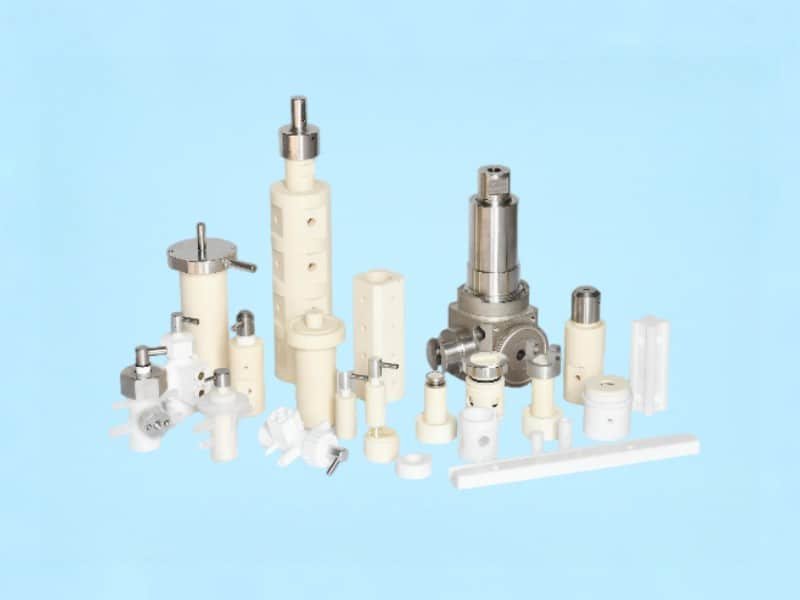
Need a custom ceramic pump component?
JuchangCeramic offers OEM and custom manufacturing solutions for precision ceramic parts, pumps and components. Share your drawings or initial requirements to discuss material selection, dimensions and production feasibility.
Explore custom precision ceramic parts and manufacturing services
For pump designers, useful project documents include a component drawing, required tolerances, target material, fluid composition, operating temperature, pressure, expected service life and inspection requirements. If the design is still under development, a sample component or a clear description of the failure in the existing part can help establish the right direction.
Depending on the application, JuchangCeramic’s related capabilities may also be relevant to ceramic plunger pump components, ceramic rotary valves and high-precision ceramic components for metering pumps.
Expert Recommendation: When Should You Choose Ceramic?
Our recommendation is to specify ceramic only after identifying the dominant failure mode. If the current pump fails because abrasive solids erode the casing or impeller, evaluate a ceramic-lined wet end. If a plunger or sleeve loses dimensional accuracy through repeated contact, investigate a precision ceramic component. If corrosion is the problem, confirm the chemical compatibility of the exact ceramic grade and the complete assembly.
For beginners, the safest starting point is to collect the fluid data, operating conditions and photographs or drawings of the worn components before approaching a supplier. For commercial users, compare service intervals, spare-part lead times and downtime costs—not only the purchase price. For heavy-duty applications, insist on a documented material specification, a clear lining design and an operating-point review.
A ceramic lined pump is worth buying when it addresses a measurable wear or compatibility problem. It is not a premium upgrade that automatically improves every pumping system. The best result comes from matching the pump design, ceramic material and manufacturing quality to the actual process.
Frequently Asked Questions About Ceramic Lined Pumps
1. What is a ceramic lined pump used for?
A ceramic lined pump is used to transfer fluids where selected internal surfaces need additional protection against abrasion, erosion or chemical attack. Typical duties may include mineral slurries, abrasive suspensions and certain corrosive process fluids. Suitability depends on the ceramic grade and pump design.
2. Are ceramic lined pumps better than metal pumps?
Not in every application. Ceramic lined pumps can offer better wear resistance in suitable abrasive or corrosive services, but standard metal pumps may be more economical for clean or mildly abrasive fluids. Compare service life, maintenance cost and operating conditions before choosing.
3. Which ceramic is best for pump lining?
There is no universal best ceramic. Alumina is widely used for wear-resistant components, silicon carbide is considered for selected demanding wear and chemical environments, and zirconia can be useful for specialised precision parts. The correct choice depends on fluid chemistry, temperature, impact, stress and component geometry.
4. Can ceramic lined pumps handle abrasive slurry?
Some are designed for abrasive slurry service, but performance depends on particle size, concentration, hardness, shape, flow velocity and impact conditions. Ask the supplier to assess the actual slurry and identify which pump surfaces require ceramic protection.
5. Are ceramic pump components brittle?
Technical ceramics are generally less tolerant of impact and tensile stress than ductile metals. Their hardness and wear resistance can be valuable, but proper support, fit, handling and installation are essential to reduce cracking or chipping risks.
6. Do ceramic lined pumps require maintenance?
Yes. Ceramic lining can reduce wear-related maintenance in suitable applications, but the pump still requires inspection of seals, bearings, clearances, joints and ceramic surfaces. Follow the pump manufacturer’s maintenance schedule and inspect for chips, cracks or signs of lining separation.
7. Are ceramic lined pumps suitable for chemical processing?
They can be suitable for selected chemical duties, but compatibility must be checked against the exact chemical composition, concentration, temperature and cleaning process. Do not assume that every alumina, zirconia or silicon carbide grade is compatible with every chemical.
8. What information should I provide when requesting a custom ceramic pump part?
Provide a technical drawing or sample, dimensions and tolerances, target material if known, fluid composition, operating temperature and pressure, mechanical loading, expected service life and inspection requirements. This information helps the manufacturer assess feasibility and recommend a suitable production route.
References
- ISO 11154:2023 — Road vehicles: Roof load carriers is not relevant to pump materials and is intentionally not used as a technical basis for this article.
- The American Ceramic Society — Technical ceramic materials, properties and applications.
- National Institute of Standards and Technology (NIST) — Materials science and measurement resources.
For a final pump specification, consult the pump manufacturer’s performance data and the ceramic material supplier’s grade-specific technical documentation. Material selection should be validated against the actual process conditions.
References
- Metso — Slurry Pump Basic Handbook. Practical guidance on slurry pump wear protection, material selection and the effects of particle size, shape, hardness, temperature and chemical conditions.
- National Institute of Standards and Technology (NIST) — Structural Ceramics Database. Technical ceramic property data, including hardness, fracture toughness and other material characteristics.
- U.S. International Trade Commission — Industry & Trade Summary: Advanced Ceramics. Government reference covering properties and industrial applications of advanced ceramic materials, including alumina, silicon carbide and zirconia.
These references provide general engineering and material-selection context. Final pump and ceramic specifications should always be validated against the actual fluid composition, operating conditions and component design.