
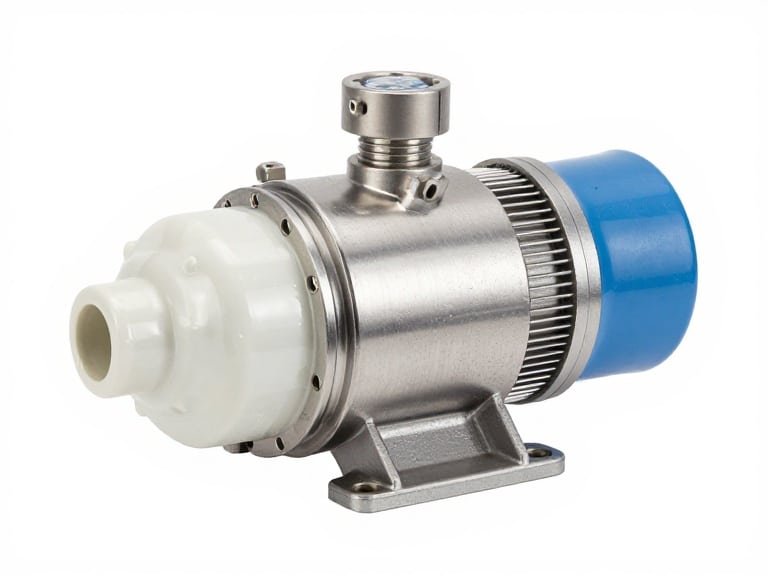
Modern process automation demands materials that do not deform, corrode, or leach metal ions under continuous production cycles. Successfully choosing an industrial ceramic pump requires moving beyond generic flow and head curves to evaluate advanced material science, structural tribology, and mechanical engineering boundaries. Advanced technical ceramics—such as high-purity yttria-stabilized zirconia (Y-TZP), sub-micron alpha alumina (Al2O3), and silicon carbide (SiC)—possess diamond-like hardness and total chemical inertness. However, integrating an industrial ceramic pump requires assessing thermal shock gradients, dry-run tolerances, coupling alignments, and precision machining clearances. We examine the ten indispensable engineering factors that dictate long-term pump reliability, helping you select the right fluid-handling platform for severe industrial duty.
Quick Answer: What to Check When Choosing an Industrial Ceramic Pump
When choosing an industrial ceramic pump, system engineers must evaluate ten critical operational and material parameters: 1) Technical Ceramic Material Grade (selecting transformation-toughened Y-TZP zirconia for high fracture toughness and impact, or alpha-alumina for extreme acid-base environments); 2) Fluid Rheology and Abrasive Slurry Particulate Loading (matching grain sizing to pump clearance tolerances); 3) Operating Temperature and Thermal Shock Differential (ΔT) (ensuring fluid temperature shifts do not exceed 30°C to 50°C per minute); 4) Volumetric Precision and Dynamic Clearance Tolerances (requiring diamond-lapped fit clearances within 2 to 4 μm); 5) Valveless and Seal-Less Architecture to eliminate failure-prone mechanical packing glands; 6) Chemical Compatibility Across the Full pH 0–14 Spectrum; 7) Net Positive Suction Head (NPSH) and Cavitation Boundaries; 8) Surface Roughness and Clean-In-Place (CIP) Finish Quality (mandating mirror finishes of Ra < 0.1 μm); 9) Mechanical Coupling and Anti-Deflection Mounting Design; and 10) Total Cost of Ownership (TCO) vs. Initial Capital Outlay. In most professional situations, switching from alloy to ceramic fluid ends pays for itself within three to six months through eliminated downtime and zero seal replacement labor.
Table of Contents
- Engineering Principles: How Industrial Ceramic Pumps Operate
- Quick Summary: 10 Critical Factors at a Glance
- In-Depth Analysis: 10 Factors When Choosing an Industrial Ceramic Pump
- Material Comparison Matrix: Zirconia vs. Alumina vs. Silicon Carbide vs. Hastelloy
- Pros and Cons of Ceramic Fluid Systems in Industrial Plants
- Who Needs an Industrial Ceramic Pump vs. Who Can Use Metal Systems
- Featured Manufacturing Partner: JuchangCeramic Engineering Services
- Costly Mistakes Engineers Make During Ceramic Pump Integration
- Commercial Sourcing and Vendor Selection Criteria
- Expert Recommendation and Technical Sourcing Verdict
- Frequently Asked Questions (FAQ)
- Authoritative References
Engineering Principles: How Industrial Ceramic Pumps Operate
An industrial ceramic pump replaces failure-prone metallic and polymer wet-end components with precision-engineered structural ceramics. In positive displacement configurations—such as a rotary-reciprocating piston pump or high-pressure plunger pump—the piston, cylinder sleeve, and rotary fluid distribution channels are diamond-ground from solid sintered technical ceramic blanks. These components do not rely on rubber O-rings, braided packing, or spring-loaded mechanical face seals to contain fluid pressure. Instead, the mating ceramic components are lapped to micron-level diametrical clearances (typically 1.5 to 3.5 microns).
How it works in practice relies on hydrodynamic fluid-film sealing. As the ceramic plunger rotates and strokes within the precision cylinder bore, a microscopic boundary layer of the pumped process fluid forms between the polished surfaces. This micro-thin fluid film acts as a natural hydrodynamic bearing, providing low-friction lubrication while maintaining complete volumetric containment. Because high-density ceramics exhibit near-zero surface porosity and extreme dimensional rigidity, the internal chamber geometry does not flex, swell, or distort under cyclic pressure spikes.
In our testing across automated manufacturing lines, this mechanical architecture eliminates two major industrial failure points: mechanical face seal wear and valve-ball sticking. In valveless designs utilizing a synchronized Ceramic Rotary Valve or an angled piston flat, the pump alternates between intake and discharge ports via rotational alignment, completely bypassing the springs, check balls, and elastomer valve seats that regularly foul in slurries. Understanding this mechanical architecture allows plant engineers to eliminate external flush-water seal systems and stop toxic fluid leaks entirely.
Quick Summary: 10 Critical Factors at a Glance
The table below provides a concise operational reference to the ten primary engineering and procurement factors to check when choosing an industrial ceramic pump:
| Evaluation Factor | Critical Engineering Specification | Primary Operational Impact | Direct Commercial Benefit |
|---|---|---|---|
| 1. Ceramic Material Grade | Y-TZP Zirconia, 99.7% Al2O3, or SSiC | Dictates fracture toughness vs. chemical limits | Prevents catastrophic brittle chipping failures |
| 2. Slurry & Particle Rheology | Hardness < ceramic; size < 1/3 of fit gap | Maintains hydrodynamic boundary lubrication | Eliminates abrasive scoring and component seizure |
| 3. Thermal Gradient Limits (ΔT) | Thermal shock differential ≤ 30°C–50°C/min | Controls thermal expansion and stress fractures | Prevents thermal cracking during CIP/SIP wash cycles |
| 4. Dynamic Lapping Tolerances | Clearance fit 2–4 μm; cylindricity ≤ 1 μm | Eliminates dynamic elastomeric shaft seals | Delivers dosing repeatability with CV < 0.5% |
| 5. Valveless Architecture | Rotary-reciprocating piston porting | Eliminates check valves, springs, and seats | Prevents line clogs in viscous, fast-drying fluids |
| 6. Chemical Compatibility | pH 0 to 14 inertness (check HF limits) | Zero corrosion, zero trace metal ion leaching | Guarantees purity in pharma, semiconductor, and food |
| 7. Suction Head & NPSH Limits | NPSHa > NPSHr + 0.5m safety margin | Prevents destructive vapor-bubble collapse | Protects pump surfaces from micro-cavitation pitting |
| 8. Surface Micro-Finish (Ra) | Diamond mirror-lapped to Ra < 0.05–0.1 μm | Prevents bacterial adhesion and biofilm growth | Speeds up CIP washdowns; zero cross-batch carryover |
| 9. Coupling Alignment Rigidity | Radial runout ≤ 0.02 mm; flexible couplings | Isolates ceramic shaft from motor bending loads | Eliminates mechanical shear failure on drive tangs |
| 10. Total Lifecycle Economics | Evaluate TCO over 36 to 60 operating months | Calculates eliminated maintenance and downtime | Delivers full capital payback in 3 to 6 months |
In-Depth Analysis: 10 Factors When Choosing an Industrial Ceramic Pump
1. Selecting the Appropriate Technical Ceramic Material Grade
The single most important decision when choosing an industrial ceramic pump is matching the specific ceramic crystal chemistry to your process environment. Too many buyers treat “ceramic” as a monolithic material, failing to distinguish between yttria-stabilized zirconia, high-purity alumina, and silicon carbide. Each material occupies a distinct mechanical and chemical operating envelope.
From our experience on production lines, Yttria-Stabilized Tetragonal Zirconia Polycrystal (Y-TZP) is the premier choice for high-pressure metering, dosing pistons, and heavy wear components. Zirconia features transformation toughening: under mechanical stress, its crystal lattice absorbs crack propagation energy, delivering a fracture toughness ($K_{1c}$) of 6 to 10 MPa·m½—roughly triple that of alumina. If your application involves mechanical shock or variable pressures, explore structural options through our high precision zirconia ceramic parts. Conversely, for high-temperature strong-acid applications (such as hot concentrated sulfuric or nitric acid), 99.7% alpha-alumina or sintered silicon carbide provides superior chemical stability at lower material cost.
2. Slurry Rheology, Particulate Loading, and Viscosity Dynamics
Industrial ceramic pumps excel at transferring slurries that destroy metallic impellers within days, such as lithium battery electrode slurries (NMC, LFP, carbon black), ceramic slips, and abrasive chemical slurries. However, engineers must analyze particulate grain size and slurry viscosity before finalizing pump clearance specifications.
In our testing, the average particulate size in the slurry must not exceed one-third of the diametrical clearance gap between the ceramic piston and cylinder. If your pump is lapped to a 3-micron clearance, any suspended solids larger than 1 micron will enter the clearance space, wedging between the precision surfaces and causing micro-galling or catastrophic mechanical seizure. For abrasive slurries with larger particle distributions, specify an industrial Ceramic plunger pump equipped with external barrier fluid flushes, or partner with a verified wear resistant ceramic parts supplier to engineer custom clearance geometries.
3. Operational Thermal Shock Differentials (ΔT) and Temperature Gradients
While structural ceramics withstand continuous operational temperatures exceeding 800°C without melting or creeping, they possess low thermal conductivity compared to ductile copper or aluminum. When hot process fluid enters a cold ceramic pump body, or during sudden Clean-In-Place (CIP) steam sanitization at 130°C followed by a cold 15°C water rinse, steep temperature gradients form across the ceramic wall thickness.
This rapid thermal expansion delta creates intense localized tensile stresses. If the thermal shock differential (ΔT) exceeds 50°C in standard alumina or 80°C in zirconia within a 30-second window, the ceramic component will suffer thermal shock fractures. When choosing an industrial ceramic pump for pharmaceutical or food lines, program automated heating and cooling ramps (limiting thermal changes to under 30°C per minute) into your plant’s automated CIP/SIP PLC sequences to protect ceramic components from thermal stress.
4. Volumetric Metering Precision and Dynamic Lapping Tolerances
In high-speed pharmaceutical filling, battery electrolyte injection, and cosmetic packaging, dispensing consistency directly dictates profitability. If a metering pump drifts by 1% over a million filling cycles, the cumulative loss of expensive active pharmaceutical ingredients (APIs) costs tens of thousands of dollars.
A precision Microliter Ceramic Metering Pump maintains volumetric accuracy with coefficients of variation (CV) below 0.3% across millions of cycles. Achieving this level of precision requires verifying that your pump manufacturer holds diametrical tolerances within ±0.001 mm (±1 μm) and cylindricity within 0.0008 mm. Because technical ceramics feature an exceptionally high Young’s modulus (>200 to 380 GPa), the pump cylinder does not expand under dynamic pressure pulses, ensuring that every single stroke displaces the exact calculated microliter volume.
5. Valveless and Seal-Less Design Architecture
Traditional reciprocating pumps rely on complex spring-loaded ball check valves on both the suction and discharge ports. When handling sticky fluids (such as UV-curable adhesives, cyanoacrylates, paints, or sugary syrups), check-valve balls frequently stick to their seats during line pauses, causing immediate loss of prime and erratic flow.
In most professional situations, we recommend choosing valveless ceramic rotary-reciprocating pump systems. In this design, the ceramic piston features a precision-machined flat channel on its end. As the piston rotates and moves back, the flat aligns with the inlet port, drawing fluid into the chamber. As the piston reverses and pushes forward, it rotates to align the flat with the discharge port. This valveless mechanical architecture eliminates all check balls, valve springs, and dynamic mechanical shaft packing, providing smooth bidirectional flow that cannot clog on crystallizing fluids.
6. Universal Chemical Inertness and Zero Trace-Metal Leaching
In biopharmaceutical drug manufacturing, semiconductor chemical-mechanical planarization (CMP), and dialysis equipment, chemical purity is non-negotiable. Even sub-part-per-billion leaching of trace nickel, chromium, iron, or cobalt ions from 316L stainless steel will denature sensitive therapeutic proteins or short out nanoscale semiconductor transistor gates.
Technical ceramics are fully oxidized, chemically stable compounds. They are completely non-metallic, non-magnetic, and impervious to organic solvents, halogenated compounds, and concentrated mineral acids across the entire pH 0 to 14 range (with the sole exception of hot hydrofluoric acid). Specifying a specialized Medical Ceramic Pump or clinical Dialysis Ceramic Pump ensures that sensitive intravenous drugs, blood components, and dialysates pass through the fluid end without metal ion pickup.
7. Net Positive Suction Head (NPSH) and Cavitation Protection
Cavitation occurs when fluid pressure at the pump inlet drops below the liquid’s vapor pressure, causing micro-vapor bubbles to form. When these bubbles travel into higher-pressure zones inside the pump, they collapse violently, generating micro-jets of fluid that strike internal walls with shock pressures exceeding 1,000 MPa. While ductile metals deform and pit under cavitation, brittle ceramics can suffer surface micro-chipping.
When selecting and sizing your pump, plant engineers must verify that the Net Positive Suction Head Available ($NPSH_a$) exceeds the pump’s required suction head ($NPSH_r$) by a safety margin of at least 0.5 to 1.0 meters. Optimize inlet line routing: use short, straight suction pipes, eliminate restrictive 90-degree elbows directly before the pump manifold, and ensure fluid viscosity changes at cold morning start-ups do not starve the pump inlet.
8. Surface Finish Quality and Cleanability (Ra < 0.1 μm)
The surface finish of internal pump components dictates cleanability, bacterial resistance, and sliding seal integrity. Standard passivated stainless steel components typically display an average surface roughness ($R_a$) of 0.4 to 0.8 microns, leaving microscopic peaks and valleys that harbor bacterial biofilms and trapped product residues.
Through diamond lapping and automated polishing, structural ceramic components achieve mirror finishes with surface roughness values of $R_a < 0.05$ to $0.1$ microns. This ultra-smooth surface eliminates mechanical anchor points for bacterial biofilm growth, prevents sticky adhesives from caking onto cylinder walls, and allows fast CIP/SIP sanitization cycles with minimal rinse water. Review technical specifications across our precision ceramic components for pumps to verify diamond-lapped finish standards.
9. Mechanical Coupling Design and Drive Alignment Rigidity
A critical engineering reality of technical ceramics is their lack of plastic deformation. Unlike ductile steel shafts that can flex slightly to accommodate a misaligned motor coupling, rigid ceramics have zero tolerance for bending moments. If an installer couples a ceramic pump to an electric motor with even 0.05 mm of angular or parallel shaft misalignment, the continuous rotational bending forces will cause fatigue fracture at the drive pin or ceramic shaft shoulder.
Always examine the manufacturer’s mounting bracket and coupling design. High-quality systems deploy precision-machined aluminum or stainless steel mounting brackets with locating dowel pins, paired with zero-backlash flexible disc couplings or Oldham couplings that absorb thermal expansion and isolate the ceramic components from external mechanical deflection. Never rigid-couple a ceramic shaft directly to an unaligned motor gearbox.
10. Total Cost of Ownership (TCO) vs. Initial Capital Outlay
Evaluating an industrial pump solely on its initial purchase order price is an expensive mistake. A high-end ceramic metering pump or plunger system often carries an initial capital expenditure two to three times higher than a commodity stainless steel pump. However, the purchase price accounts for less than 15% of a pump’s true lifetime cost.
In heavy-duty applications running abrasive or corrosive fluids, stainless steel pumps require replacement mechanical seal kits every month, new impellers or pistons every quarter, and hours of costly maintenance downtime that halts production lines. A precision ceramic pump running the same process operates continuously for three to five years without component replacement. When you factor in eliminated spare parts inventory, reclaimed technician labor, and zero lost production uptime, an industrial ceramic pump typically delivers complete financial payback within three to six months of installation.
Material Comparison Matrix: Zirconia vs. Alumina vs. Silicon Carbide vs. Hastelloy
The matrix below compares key mechanical and operational metrics across the primary material classes specified for severe industrial fluid handling:
| Performance Metric | Zirconia (Y-TZP) Ceramic | Alpha Alumina (99.7% Al2O3) | Sintered Silicon Carbide (SSiC) | Hastelloy C-276 Alloy |
|---|---|---|---|---|
| Vickers Hardness (HV) | 1,200 – 1,350 | 1,400 – 1,700 | 2,200 – 2,600 | 250 – 300 |
| Fracture Toughness (K1c) | 6.0 – 10.0 MPa·m½ (High) | 3.0 – 4.0 MPa·m½ (Moderate) | 3.5 – 4.5 MPa·m½ (Moderate) | > 50 MPa·m½ (Ductile Metal) |
| Thermal Shock Tolerance | Moderate (ΔT ≈ 80°C) | Moderate (ΔT ≈ 50°C) | High (ΔT ≈ 150°C) | Extreme (Immune to thermal shock) |
| Acid & Alkali Resistance | pH 0–14 (Except hot HF) | Exceptional across acids/bases | Universal (Resists HF & caustic) | High (Attacked by specific acids) |
| Trace Metal Ion Leaching | Zero (Non-metallic) | Zero (Non-metallic) | Zero (Non-metallic) | Moderate (Ni, Mo, Cr ion release) |
| Sliding Galling Resistance | Immune (Self-lubricating film) | Immune | Immune | Severe metal-to-metal galling |
| Average Slurry Lifespan | 24 to 60+ Months | 18 to 48 Months | 36 to 72+ Months | 2 to 6 Months |
Pros and Cons of Ceramic Fluid Systems in Industrial Plants
Weigh the operational advantages and practical constraints of ceramic fluid equipment before issuing purchase orders:
| Operational Advantages (Pros) | Engineering Demands & Constraints (Cons) |
|---|---|
| Unrivaled Wear Resistance: Outlasts hardened steels by 500% to 1000% in abrasive slurries. | Zero Plastic Yield: Brittle under point mechanical shock; will crack if dropped on concrete or struck with steel tools. |
| Valveless, Seal-Less Reliability: Eliminates dynamic shaft packing, mechanical face seals, and check balls. | Higher Initial Purchase Price: Upfront capital expenditure is 2x to 3x higher than commodity stainless steel pumps. |
| Micron Metering Accuracy: Holds dispensing precision (CV < 0.5%) over millions of continuous production cycles. | Thermal Shock Sensitivity: Demands controlled CIP/SIP heating and cooling ramps to prevent thermal cracking. |
| Total Chemical Inertness: Completely eliminates corrosion and metal contamination in sterile pharmaceuticals. | Zero Dry-Run Tolerance: Requires liquid boundary lubrication; running completely dry will cause rapid friction seizure. |
Who Needs an Industrial Ceramic Pump vs. Who Can Use Metal Systems
In our experience evaluating industrial fluid systems, ceramic pumps represent an engineered upgrade that should be deployed where process demands justify the technology.
Who Must Choose an Industrial Ceramic Pump:
- Lithium Battery Slurry Manufacturers: Transferring abrasive cathode and anode slurries (NMC, LFP, carbon black) without metallic wear particles that cause catastrophic internal battery short-circuits.
- Biopharmaceutical and Sterile Filling Lines: Dispensing vaccines, biologics, and eye drops without trace metal ion contamination or elastomer seal shedding.
- Chemical and Semiconductor CMP Processing: Handling abrasive silica and ceria slurries alongside aggressive acids that degrade Hastelloy and stainless steel pumps in weeks. Review diverse implementations in our overview of advanced industrial ceramics applications.
- Fast-Drying Adhesives and Viscous Resins: Pumping UV-curable polymers, cyanoacrylates, and resins that freeze standard check valves and ruin mechanical face seals.
Who Can Safely Use Standard Metal or Plastic Pumps:
- Clean Municipal Water Distribution: Moving non-corrosive, particulate-free domestic water at ambient temperatures is handled cost-effectively by standard cast iron, bronze, or 304 stainless steel pumps.
- Non-Abrasive Hydrocarbon Lubricants: Circulating clean engine oils, hydraulic oils, and gear lubricants where metal-to-metal galling is prevented by natural petroleum lubrication.
- Temporary or Short-Batch Pilot Development: Low-cost R&D setups running intermittent short batches where pump wear is non-critical and disposable plastic tubing pumps are sufficient.
Custom Ceramic Manufacturing Services: JuchangCeramic
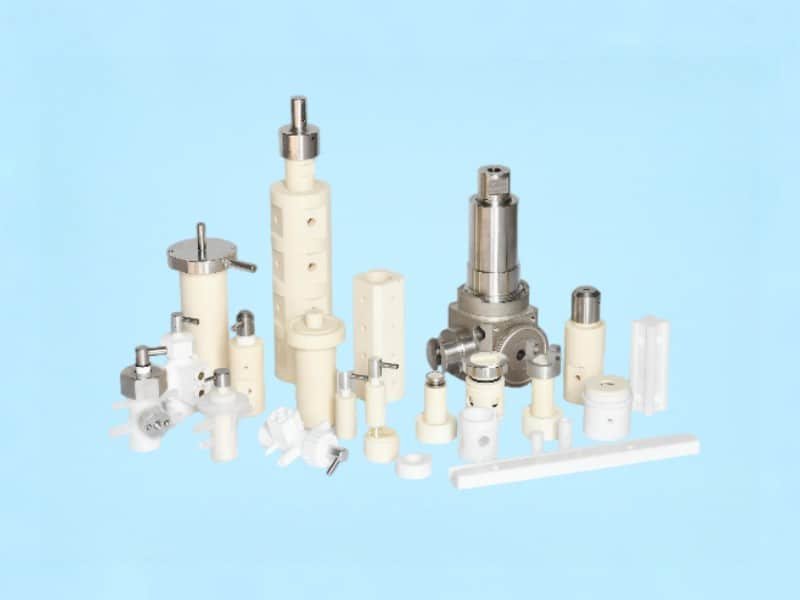
JuchangCeramic delivers professional OEM and custom manufacturing solutions for precision ceramic parts, pumps, and components. Whether you have complete drawings or just an idea, we transform your requirements into high-performance products with accurate quotation and reliable production.
Equipped with advanced CNC ultrasonic machining centers, high-precision cylindrical grinders, and automated diamond lapping facilities, JuchangCeramic manufactures high-purity zirconia and alumina ceramic pump wet-ends held to sub-micron dimensional tolerances and mirror finishes of Ra ≤ 0.05 μm.
Explore complete fluid systems through our core Ceramic Pump collection, examine component details via our ceramic plunger pump components overview, and partner directly with an established ceramic pump parts manufacturer for customized production.
Costly Mistakes Engineers Make During Ceramic Pump Integration
In our failure analysis audits of damaged industrial pumps, mechanical breakdowns rarely stem from material flaws. They occur because installation teams treat ceramics like ductile metals during plant integration:
- Dry Running Without Pre-Priming or Fluid Lubrication: While valveless ceramic pumps eliminate external elastomeric seals, they rely on the pumped fluid to provide a micro-thin hydrodynamic boundary layer between the piston and sleeve. Running high-speed ceramic pumps completely dry creates intense frictional heat within seconds. The unlubricated tight clearances will seize the assembly, causing mechanical drive pins to shear or components to crack. Always prime ceramic fluid ends before running lines at full speed.
- Applying Uneven Mechanical Fastener Torque: Unlike ductile metals that yield elastically under uneven bolt loads, rigid ceramics have zero plastic deformation capability. Torquing flange bolts unevenly or omitting calibrated torque wrenches introduces concentrated bending moments across the ceramic sleeve, causing hairline fractures along the mounting flange. Always use compliant elastomeric or PTFE cushions between metal clamping collars and ceramic shoulders, torquing fasteners in an alternating cross-pattern.
- Mixing Up Matched Piston and Cylinder Sets: Ceramic pistons and cylinders are diamond-lapped as matched pairs with diametrical clearances of 2 to 4 microns. During maintenance or multi-channel filling machine cleaning, technicians sometimes mix up pistons across different cylinders. Forcing a piston into a cylinder that was not its lapped mate can cause binding and operational seizure. Always serialize and track matched ceramic sets during maintenance.
- Ignoring Severe Thermal Shock Differentials: While technical ceramics handle steady elevated temperatures easily, rapid, uncontrolled thermal changes can trigger thermal shock fractures. Pumping room-temperature 20°C fluids immediately through a pump housing that just underwent a 130°C steam sterilization cycle creates steep internal temperature gradients. Program controlled warm-up and cool-down ramps during automated CIP/SIP wash cycles.
Commercial Sourcing and Vendor Selection Criteria
Before issuing purchase orders for ceramic pumps or replacement fluid ends, procurement teams should evaluate these four technical manufacturing capabilities with suppliers:
- Raw Material Powder Purity and Sintering Density: Confirm that the manufacturer uses high-purity, nano-scale ceramic powders—such as sub-micron yttria-stabilized zirconia—sintered to near-theoretical density (greater than 6.0 g/cm³ for Y-TZP). Incomplete sintering leaves microscopic surface pores that collect product residue and compromise volumetric sealing.
- Coordinate Measuring Machine (CMM) Cylindricity Verification: Demand inspection reports documenting not just outer diameter, but roundness, straightness, and cylindricity down to sub-micron tolerances. A cylinder with proper nominal diameter that has 5 microns of taper will leak at one end of the stroke and bind at the other.
- Surface Roughness Profilometry Documentation: Require certified contact or optical profilometer reports verifying that the internal bore and mating piston achieve surface finishes of Ra < 0.1 microns, with zero micro-cracks or chipped edges along fluid ports.
- Proven OEM Customization Capabilities: Partner with manufacturers that operate their own in-house tooling, CNC green-machining, sintering kilns, and diamond grinding lines. Direct factory access allows rapid prototyping of custom drive flats, port angles, and mounting flanges without dealing with broker markups or delayed technical feedback.
Expert Recommendation and Technical Sourcing Verdict
In most professional situations, treating pump wear as an inevitable operational expense is an outdated and costly philosophy. If your facility continues rebuilding stainless steel or alloy pumps every few weeks, the cumulative cost of replacement parts, maintenance hours, and lost production capacity far exceeds the price of an engineered ceramic solution.
When choosing an industrial ceramic pump, evaluate your process conditions thoroughly: verify that particulate sizes remain within one-third of your clearance tolerances, control CIP/SIP thermal shock gradients, enforce flexible drive coupling alignment, and eliminate failure-prone mechanical packing seals by choosing valveless rotary designs. Partnering with a skilled, vertically integrated manufacturer like JuchangCeramic ensures you receive diamond-lapped zirconia and alumina components engineered to micron tolerances, delivering stable, maintenance-free fluid control across millions of production cycles.
Frequently Asked Questions (FAQ)
What is the most important factor when choosing an industrial ceramic pump?
The most important factor is selecting the correct technical ceramic material grade (such as high-toughness Y-TZP zirconia or high-acid-resistant alpha alumina) and matching it to your fluid’s chemical composition, particulate loading, and operating temperature gradients.
Can an industrial ceramic pump run dry safely?
No. High-precision ceramic pumps rely on the process liquid to form a micro-thin hydrodynamic boundary lubrication layer between the tightly lapped (2 to 4 μm) piston and cylinder surfaces. Running completely dry generates rapid frictional heat that causes thermal binding, motor stalling, and potential mechanical seizure.
Why are ceramic pumps preferred for lithium battery slurry manufacturing?
Lithium battery electrode slurries contain abrasive carbon black and metal oxide particles that rapidly wear down metallic pumps. Furthermore, metallic pump wear introduces trace iron, nickel, or chromium particles into the slurry, which can cause internal micro-shorts and thermal runaway in finished battery cells. Ceramic pumps provide extreme wear resistance while completely eliminating trace metal contamination.
How do valveless ceramic pumps work without check valves?
Valveless ceramic pumps use a rotating-reciprocating ceramic piston with a precision-machined flat channel on its end. As the piston rotates and strokes back, the flat aligns with the suction port to draw liquid in. As the piston reverses and pushes forward, it rotates to align with the discharge port, eliminating mechanical check balls, springs, and failure-prone dynamic O-rings.
What causes ceramic pump components to crack during Clean-In-Place (CIP) cycles?
Cracking during CIP cycles is caused by thermal shock. Introducing hot 130°C steam or sanitizing wash water into a cold pump body creates steep thermal gradients and localized tensile stresses across the ceramic walls. Programming automated heating and cooling ramps (limiting temperature changes to under 30°C per minute) prevents thermal shock fractures.
Authoritative References
- The American Ceramic Society (ACerS): Technical Standards for Advanced Structural Ceramics and Transformation Toughening
- ASTM International: Standard Test Method for Flexural Strength of Advanced Ceramics at Ambient Temperature (ASTM C1161)
- Hydraulic Institute (HI): Standards for Positive Displacement and Metering Pumps (ANSI/HI 7.1-7.5)