
The industrial sector loses billions of dollars annually to premature mechanical failures. Engineers continually attempt to push standard metal alloys past their thermodynamic and tribological limits, resulting in catastrophic wear, chemical corrosion, and unscheduled facility downtime. To mitigate this, global procurement teams are aggressively transitioning to advanced technical ceramics. However, from our experience at JuchangCeramic, designing and manufacturing mission-critical infrastructure, assuming that all ceramics are indestructible is a dangerous commercial fallacy. The actual Durability of Precision Ceramic Components is dictated by highly specific metallurgical, structural, and environmental parameters.
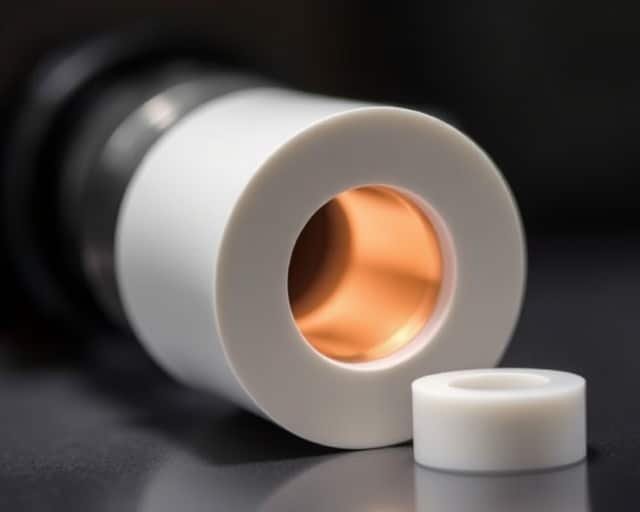
In most professional situations, treating technical ceramics as a generic commodity leads to disastrous operational failures. A high-purity alumina plunger deployed in the wrong acidic environment will degrade just as rapidly as a cheap stainless-steel alternative if the grain boundaries are not engineered correctly. You must use commercial and practical judgment when specifying these materials. In this definitive guide, we take a rigid, expert stance on the mechanics of material failure. We will dissect the 10 absolute factors that dictate the Durability of Precision Ceramic Components, expose the hidden manufacturing flaws that compromise structural integrity, and provide you with the exact technical blueprint to procure hardware that survives the most hostile industrial environments.
Quick Answer: What Dictates Ceramic Durability?
If you are actively specifying parts and need to maximize the Durability of Precision Ceramic Components, your procurement strategy must focus on these core structural and environmental realities:
- Material Purity: For extreme wear applications, you must demand 99.5% to 99.8% pure alumina or yttria-stabilized zirconia. Lower purities contain glassy phases that weaken under thermal stress.
- Sintering Density: Durability requires near-zero porosity. The component must be isostatically pressed to achieve maximum theoretical density. Voids cause micro-fractures.
- Surface Finish: In dynamic applications, diamond grinding and lapping to a mirror finish (Ra under 0.1) is mandatory. Rough surface asperities act as stress concentrators that initiate catastrophic cracking.
We recommend that commercial users bypass generic catalog parts for high-stress environments. You must work with a dedicated custom precision ceramic parts supplier to match the exact crystalline structure to your operational load profile.
Table of Contents
- What It Is: Advanced Ceramic Durability
- How It Works: The Mechanics of Wear
- The 10 Critical Durability Factors
- Commercial Benefits of High Durability
- Limitations and Brittleness
- Who Should Specify These Parts
- Who Does Not Need Technical Ceramics
- Common Procurement Mistakes
- Expert Buying Considerations
- Summary and Comparison Tables
- Expert Recommendation & Integrated Solutions
- Frequently Asked Questions
What It Is: Advanced Ceramic Durability
When we discuss the Durability of Precision Ceramic Components, we are not referencing household pottery. We are defining the survival metrics of advanced technical ceramics—specifically Aluminum Oxide (Al2O3), Zirconium Dioxide (ZrO2), Silicon Carbide (SiC), and Silicon Nitride (Si3N4). In heavy-duty applications, durability is measured by three distinct metallurgical properties: wear resistance (tribology), fracture toughness (resistance to crack propagation), and chemical inertness (resistance to acidic/alkaline degradation).
To fully grasp these capabilities, it is highly recommended to understand what is alumina ceramics at a molecular level. Unlike metals, which rely on metallic bonds that allow for plastic deformation (bending), ceramics are bound by incredibly rigid ionic and covalent bonds. This rigidity creates their legendary hardness, but it also dictates their specific failure modes.
How It Works: The Mechanics of Wear and Failure
How it works in an industrial setting dictates your maintenance schedule. In dynamic applications, such as evaluating what are ceramic bearings used for, durability is a function of rolling contact fatigue. Because the ceramic balls are significantly harder and smoother than steel, they do not micro-weld to the races during moments of poor lubrication. The wear mechanism is not adhesive (like metal on metal); it is abrasive.
However, when failure occurs in ceramics, it is rarely a slow degradation. Because they cannot yield or deform, excess stress accumulates at microscopic surface flaws until the structural limit is breached, resulting in a sudden, catastrophic fracture. Engineering the Durability of Precision Ceramic Components means systematically eliminating those microscopic flaws during the manufacturing process.
The 10 Critical Factors Affecting Durability
In our testing and daily operation of heavy industrial kilns, we have isolated the ten definitive variables that either guarantee a component’s survival or assure its destruction.
1. Material Composition and Purity
The foundational metric of the Durability of Precision Ceramic Components is purity. An alumina component rated at 95% purity contains 5% silica and other binders, forming a glassy grain boundary phase that softens at high temperatures and succumbs rapidly to chemical attack. For heavy-duty applications, you must specify 99.5% or 99.8% purity.
2. Sintering Temperature and Profile
If the manufacturer rushes the sintering process by ramping up the kiln temperature too quickly, the exterior of the ceramic component densifies before the core, trapping gases and creating massive internal stress gradients. A precise, computer-controlled firing profile is non-negotiable for structural integrity.
3. Grain Size and Microstructure
A finer grain structure yields higher mechanical strength. If the component is over-fired, abnormal grain growth occurs, creating large, brittle crystals that act as cleavage planes for fracture propagation. Sub-micron grain sizes are required to maximize the Durability of Precision Ceramic Components.
4. Porosity Levels (Density)
Any void or pore within the ceramic matrix is a point of stress concentration. When subjected to load, a micro-crack will initiate at the pore. The best alumina ceramic tube manufacturers 2026 utilize Cold Isostatic Pressing (CIP) to ensure uniform, near-100% theoretical density before sintering.
5. Machining Tolerances and Surface Finish
Post-sintering, ceramics must be machined using diamond tooling. If the machining feed rate is too aggressive, it introduces sub-surface micro-damage. A rough surface finish drastically lowers the component’s flexural strength. Lapping to a mirror finish is critical, especially for dynamic seals like alumina ceramic parts for metering pumps.
6. Transformation Toughening (Zirconia Specific)
When engineering zirconia parts, durability relies on Yttria stabilization. When a crack begins to form in partially stabilized zirconia, the crystal structure at the crack tip physically expands (from tetragonal to monoclinic), effectively pinching the crack shut. This is why zirconia possesses vastly superior fracture toughness.
7. Thermal Shock Environment
Subjecting a cold ceramic component to a sudden, massive spike in temperature will cause the exterior to expand faster than the interior, shattering the part. To combat this, you must consult high temperature ceramic tubes suppliers to select materials with low coefficients of thermal expansion, such as Silicon Nitride.
8. Chemical Operating Environment
While ceramics are largely inert, strong hot alkalis or hydrofluoric acid will aggressively attack the glassy grain boundaries of lower-purity ceramics. Matching the exact pH of your fluid stream to the correct ceramic composition is vital for long-term survival.
9. Mechanical Fastening and Assembly Stress
More ceramics are broken during installation than during operation. Because ceramics do not bend, tightening a metal flange against a ceramic tube without a compliant gasket (like PTFE or graphite) will impart severe localized stress, shattering the component immediately.
10. Manufacturing Defect Rate (Weibull Modulus)
The reliability of ceramic batches is measured by the Weibull modulus. A low modulus indicates wide variability in strength from part to part due to inconsistent manufacturing. A high Weibull modulus guarantees that every component in the batch will perform identically under load.
Commercial Benefits of High Durability
The primary benefit of maximizing the Durability of Precision Ceramic Components is the eradication of unscheduled maintenance. In the fluid control sector, replacing standard steel plungers with units sourced from the top ceramic plunger manufacturers extends the operational lifespan from weeks to years. This allows facilities to operate continuously in hostile, corrosive environments without shutting down production lines to replace worn metal parts.
Limitations and Brittleness
We must use commercial and practical judgment: technical ceramics have absolute limitations. Their primary flaw is a low fracture toughness compared to steel. They cannot handle severe, sudden mechanical impacts. If you drop a heavy wrench on a ceramic shaft, it will likely shatter. If your application involves heavy, unpredictable blunt-force impacts rather than continuous abrasive wear, advanced ceramics are the wrong material choice.
Who Should Specify These Parts
For Commercial Users and Heavy-Duty Applications: Engineers operating in aerospace, deep-sea oil and gas extraction, semiconductor lithography, and high-voltage power distribution must rely on the Durability of Precision Ceramic Components. Whether utilizing a massive ceramic tube insulator for a power grid or micro-valves for medical dosing, these are non-negotiable environments.
Who Does Not Need Technical Ceramics
For Beginners and Low-Stress Environments: If you are moving clean, ambient-temperature water at low pressures, deploying an expensive, diamond-machined zirconia valve is an absurd waste of capital. Standard stainless steel or structural polymers are entirely sufficient and significantly cheaper for non-hostile environments.
Common Procurement Mistakes
From our experience auditing supply chains, the most catastrophic mistake engineers make is copying a metal part’s CAD drawing and sending it to a ceramic manufacturer. You cannot simply machine a ceramic part to the exact sharp geometries of a steel part. Sharp internal corners act as massive stress multipliers in ceramics. A competent manufacturer will force you to redesign the component, adding large radiuses and chamfers to distribute the stress safely.
Expert Buying Considerations
When you are preparing to review a ceramic plunger price guide 2026 or an industrial ceramic products list 2026, you must demand material data sheets. Ask the manufacturer for their CIP forming pressures, their sintering curves, and their surface roughness (Ra) capabilities. If a supplier cannot articulate how they manage grain growth during firing, they are a broker, not a manufacturer. Only purchase from direct factory OEMs who control the entire chemical process from raw powder to final diamond grinding.
Summary and Comparison Tables
Comparison Table: Alumina vs. Zirconia Durability Profiles
| Durability Metric | Alumina (Al2O3 99.5%) | Zirconia (Y-TZP) |
|---|---|---|
| Absolute Hardness | Extreme (Vickers ~1800) | High (Vickers ~1200) |
| Fracture Toughness (Impact) | Low (Brittle) | Very High (Transformation Toughening) |
| Maximum Operating Temp | Excellent (~1600°C) | Moderate (~1000°C) |
| Best Application | High Heat, Abrasive Wear | High Pressure, Mechanical Impact |
Pros and Cons of Precision Ceramic Components
| Pros (Why you must upgrade) | Cons (The operational reality) |
|---|---|
| Immune to rust, oxidation, and severe chemical corrosion. | Highly susceptible to catastrophic failure from blunt impacts. |
| Maintains strict dimensional stability at extreme temperatures. | Cannot be machined with standard tooling; requires diamond grinding. |
| Provides electrical and thermal insulation simultaneously. | Requires redesigning metal parts to remove sharp internal corners. |
| Offers an extraordinarily low coefficient of friction when polished. | Higher initial capital expenditure compared to standard steel alloys. |
Expert Recommendation & Integrated Solutions
Is the investment required to maximize the Durability of Precision Ceramic Components actually worth it? Emphatically, yes. The total cost of ownership over a five-year operational cycle heavily favors technical ceramics over any exotic metal alloy, provided the engineering is flawless. We recommend that commercial users completely abandon generic, off-the-shelf catalog parts for mission-critical infrastructure. You must partner with a dedicated OEM that understands the thermodynamic reality of your specific application.
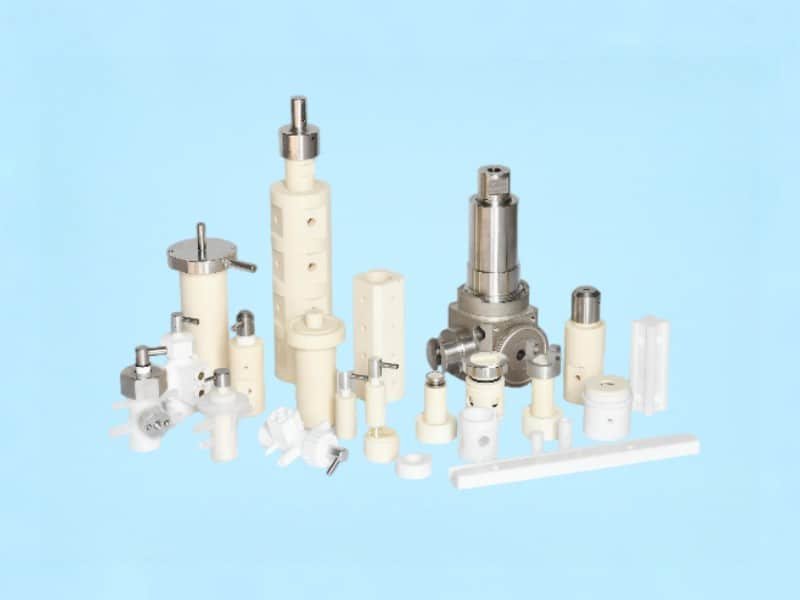
If you are looking to integrate specialized tooling into your facility, evaluating the best ceramic honing rod options alongside our full industrial ceramic products catalog will provide the precision equipment necessary to maintain your competitive edge.
Frequently Asked Questions
What is the primary factor that limits the Durability of Precision Ceramic Components?
From our experience, fracture toughness is the primary limiting factor. While advanced ceramics possess extreme hardness and wear resistance, they lack the ductility of metals. A sudden mechanical impact or severe thermal shock can cause catastrophic brittle failure if the component is not engineered correctly for its operational environment.
How does porosity affect ceramic durability?
High porosity severely degrades the Durability of Precision Ceramic Components. Voids within the microstructure act as massive stress concentrators where micro-cracks originate under load. For heavy-duty applications, manufacturers must utilize Cold Isostatic Pressing (CIP) and optimized sintering profiles to achieve near-zero porosity (over 99.5% theoretical density).
Is Zirconia always more durable than Alumina?
Not universally. Zirconia offers vastly superior fracture toughness and impact resistance due to its transformation toughening mechanics. However, Alumina provides higher absolute hardness and better dimensional stability at extreme continuous temperatures. The correct choice depends entirely on whether the application demands impact survival or supreme abrasive wear resistance.
Can I machine a ceramic component myself?
In most professional situations, absolutely not. Once a technical ceramic is fully sintered, it achieves a hardness rivaling diamond. It cannot be drilled, milled, or turned with standard HSS or carbide tooling. It must be processed by specialized manufacturers using diamond-impregnated grinding wheels and ultrasonic machining centers.
Industry References & Authoritative Guidelines
To ensure our metallurgical and engineering guidance adheres to the strictest global standards, JuchangCeramic aligns its manufacturing data with the protocols established by the following authoritative organizations:
- The American Ceramic Society (ACerS): The premier global organization for the advancement of ceramics, providing peer-reviewed research on the tribology, fracture mechanics, and sintering profiles of advanced technical ceramics. Review ACerS Engineering Data
- ASTM International: The global standards organization that publishes critical testing protocols, such as ASTM C1161 for the flexural strength of advanced ceramics, ensuring universal quality benchmarking. Review ASTM Ceramic Standards
- International Organization for Standardization (ISO): Specifically the ISO/TC 206 Technical Committee on Fine Ceramics, which establishes the strict global classifications and testing methodologies for the durability and thermal shock resistance of industrial ceramics. Review ISO Fine Ceramic Standards