
In modern industrial engineering, the limitations of traditional metallurgical components become glaringly apparent when subjected to extreme friction, high temperatures, and corrosive chemical environments. Metals degrade, expand unpredictably under thermal stress, and shed particulate matter into sensitive fluid streams. To overcome these critical failure points, engineers have increasingly turned to advanced technical ceramics. Among the most versatile and highly engineered structural components in this category are precision ceramic rods. Understanding the diverse Uses of ceramic rod is essential for any procurement officer, mechanical engineer, or system designer looking to extend equipment lifespans and ensure absolute operational purity.
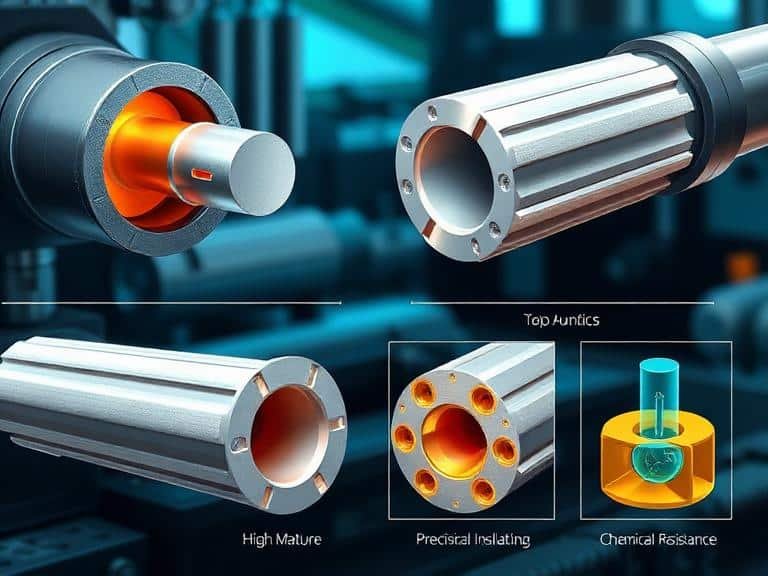
From our experience at JuchangCeramic, the transition from stainless steel to high-purity alumina or zirconia fundamentally changes the maintenance lifecycle of industrial machinery. The Uses of ceramic rod span across multiple sectors, ranging from aerospace thermal insulators to the microscopic fluid displacement mechanisms found in life-saving medical devices. In this comprehensive, authoritative guide, we will dissect the material science behind these advanced components, explore the specific engineering Uses of ceramic rod across various high-tech industries, and outline why we recommend ceramic materials over traditional alloys for precision applications.
Table of Contents
- 1. The Material Science Behind Precision Ceramic Rods
- 2. Core Industrial Uses of Ceramic Rod
- 3. Material Selection: Alumina vs. Zirconia
- 4. Engineering Advantages: Why We Recommend Ceramic Over Metal
- 5. Summary Table: Uses of Ceramic Rod Across Industries
- 6. Frequently Asked Questions (FAQs)
- 7. Academic and Industry References
1. The Material Science Behind Precision Ceramic Rods
Before diving into the specific Uses of ceramic rod, it is critical to understand the manufacturing and material science that grants these components their extraordinary properties. Technical ceramics, unlike traditional pottery, are synthesized from highly purified chemical powders such as aluminum oxide (alumina) and zirconium oxide (zirconia). These powders are pressed into cylindrical forms under immense isostatic pressure and then sintered in advanced kilns at temperatures exceeding 1,600 degrees Celsius.
During the sintering process, the ceramic particles fuse at the molecular level, creating a dense, non-porous structure with an incredibly high crystalline hardness. Following the firing process, the rods undergo rigorous diamond grinding and lapping to achieve sub-micron dimensional tolerances and mirror-like surface finishes. It is this combination of extreme hardness, chemical inertness, and flawless surface topography that enables the myriad Uses of ceramic rod in environments where standard steel or titanium would rapidly fail.
2. Core Industrial Uses of Ceramic Rod
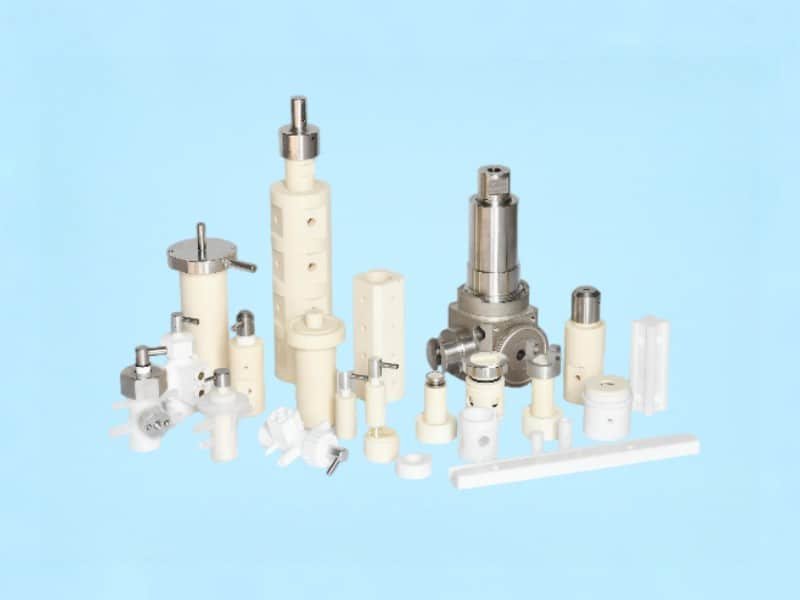
The versatility of these cylindrical components is vast. By altering the diameter, length, and specific ceramic composite, manufacturers can tailor the rod for highly specialized functions. Below, we detail the most prominent Uses of ceramic rod in contemporary engineering.
Fluid Control and Precision Metering
From our experience, one of the most technically demanding Uses of ceramic rod involves fluid displacement and metering. In chemical processing and laboratory automation, dispensing highly corrosive or abrasive liquids requires internal pump components that will not degrade. A ceramic rod is frequently machined to act as the primary displacing plunger within a Ceramic Pump. Because the ceramic is chemically inert, it does not react with strong acids, bases, or harsh solvents, ensuring that the fluid remains completely uncontaminated during transfer.
Furthermore, in analytical chemistry and diagnostic equipment, dispensing exact fluid volumes down to the microliter is mandatory. We recommend integrating a Microliter Ceramic Metering Pump for these tasks. Inside these pumps, the Uses of ceramic rod are maximized; the rod acts as a perfectly matched piston within a ceramic sleeve. The clearance between the rod and the sleeve is machined to such exact tolerances that the fluid itself acts as the lubricant, eliminating the need for rubber O-rings or elastomer seals that would eventually wear out and leak.
Medical and Pharmaceutical Applications
The healthcare and pharmaceutical manufacturing sectors enforce the strictest hygiene and biocompatibility standards in the world. Consequently, the Uses of ceramic rod in medical engineering have expanded rapidly. Traditional metal pump components can shed microscopic metal ions into pharmaceutical batches through friction, ruining an entire production run. Ceramic rods, being exceptionally hard and wear-resistant, generate virtually zero particulate shedding.
This characteristic makes them the ideal core component for a Medical Ceramic Pump used in drug formulation and vaccine dispensing. Additionally, in life-sustaining equipment, the Uses of ceramic rod are vital for patient safety. For example, a Dialysis Ceramic Pump relies on precision ceramic rods to accurately proportion and pump dialysis fluids into the patient’s bloodstream without introducing cross-contamination or altering the delicate pH balance of the medical fluids.
High-Wear Mechanical and Valving Components
In heavy industry, the mechanical Uses of ceramic rod are primarily focused on combating friction and abrasive wear. In high-pressure cleaning systems, water jet cutting machines, and oil extraction equipment, traditional plungers score and gall under extreme pressure. Implementing a Ceramic plunger pump completely resolves this issue. The exceptional hardness of the ceramic rod withstands the abrasive nature of particulate-laden water and high-pressure differentials, extending the maintenance lifecycle of the pump by thousands of hours compared to standard steel plungers.
Similarly, fluid routing in complex piping networks relies heavily on the Uses of ceramic rod for directional control. Within a Ceramic Rotary Valve, a modified ceramic rod or cylindrical spool rotates to open and close fluid pathways. The extreme dimensional stability of the ceramic ensures that the valve does not bind or seize, even when subjected to rapid temperature fluctuations or highly viscous, abrasive slurries.
Thermal and Electrical Insulation Systems
Beyond mechanical movement, the static Uses of ceramic rod are equally important in high-temperature environments. Advanced ceramics possess excellent thermal shock resistance and are natural electrical insulators. In semiconductor manufacturing, metallurgy, and industrial kiln construction, ceramic rods are utilized as structural supports for high-temperature heating elements. They maintain their structural integrity and load-bearing capacity at temperatures that would cause refractory metals to warp, melt, or conduct dangerous electrical currents.
3. Material Selection: Alumina vs. Zirconia
When clients consult with us regarding the optimal Uses of ceramic rod for their specific application, the first step is always material selection. The two dominant materials produced at our Shenzhen facility are Alumina (Aluminum Oxide) and Zirconia (Zirconium Oxide). Understanding the difference is crucial for engineering success.
| Material Property | Alumina Ceramic Rods (Al2O3) | Zirconia Ceramic Rods (ZrO2) |
|---|---|---|
| Mechanical Strength | High hardness, excellent compressive strength, but relatively brittle under severe impact. | Exceptional fracture toughness and bending strength; highly resistant to impact. |
| Wear Resistance | Outstanding resistance to sliding friction and abrasive wear. | Superior wear resistance, often referred to as “ceramic steel.” |
| Thermal Properties | Excellent high-temperature stability and thermal conductivity. | Lower thermal conductivity, making it an excellent thermal insulator. |
| Primary Uses of Ceramic Rod | High-temperature supports, electrical insulators, standard fluid metering plungers. | High-pressure Ceramic plunger pump systems, deep-sea oil drilling, extreme impact valving. |
4. Engineering Advantages: Why We Recommend Ceramic Over Metal
From our experience spanning decades in the advanced materials sector, we consistently advise transitioning from metal alloys to technical ceramics for critical applications. The expanded Uses of ceramic rod are driven by three fundamental engineering advantages.
First is unparalleled chemical inertness. Unlike stainless steel, which can suffer from pitting and galvanic corrosion in the presence of chlorides or strong acids, ceramic rods are immune to oxidation. This ensures that the Uses of ceramic rod in chemical processing plants yield decades of leak-free, corrosion-free operation.
Second is the coefficient of thermal expansion. Metal rods expand significantly as temperatures rise, which can cause plungers to seize inside their cylinders or valves to stick. Precision ceramic rods exhibit a remarkably low and predictable coefficient of thermal expansion. This means that a Microliter Ceramic Metering Pump will maintain its exact dispensing volume regardless of whether the fluid is near freezing or approaching the boiling point.
Finally, the surface finish capabilities of ceramics reduce system friction. When diamond-polished, a ceramic rod achieves a surface so smooth that it minimizes the wear on any corresponding seals or packing materials. In seal-less designs, the incredibly tight clearances permitted by this smooth finish enable the Uses of ceramic rod to completely redefine hydraulic efficiency.
5. Summary Table: Uses of Ceramic Rod Across Industries
To provide a clear overview for system designers and procurement specialists, we have summarized the primary Uses of ceramic rod across key industrial sectors.
| Industrial Sector | Specific Component Application | Key Engineering Benefit |
|---|---|---|
| Pharmaceutical / Medical | Medical Ceramic Pump, Dialysis Ceramic Pump | Zero particulate shedding, absolute chemical purity, easy sterilization. |
| Chemical Processing | Ceramic Rotary Valve, Acid Dispensing Plungers | Immunity to acidic and alkaline corrosion; prevents fluid cross-contamination. |
| Heavy Machinery | Ceramic plunger pump for high-pressure water jetting | Extreme abrasion resistance, extending maintenance intervals significantly. |
| Laboratory Automation | Microliter Ceramic Metering Pump | Maintains microscopic tolerances for exact volumetric fluid dispensing. |
| Semiconductor & Metallurgy | Heating element supports, high-temp structural rods | Maintains mechanical strength and electrical insulation at 1,500°C+. |
6. Frequently Asked Questions (FAQs)
What are the most common Uses of ceramic rod in daily industrial operations?
The most common Uses of ceramic rod include acting as precision plungers and pistons in fluid metering pumps, serving as wear-resistant guide pins in textile and wire manufacturing, and functioning as high-temperature structural supports in industrial furnaces.
Why is zirconia preferred over alumina for a Ceramic plunger pump?
From our experience, while alumina is highly wear-resistant, zirconia possesses a unique property called transformation toughening. This gives zirconia ceramic rods a much higher fracture toughness, allowing them to absorb the sudden hydraulic shocks and mechanical impacts typical in high-pressure Ceramic plunger pump applications without cracking.
Can the Uses of ceramic rod include electrical conductivity?
Generally, standard technical ceramics like alumina and zirconia are excellent electrical insulators, which is why they are used to isolate high-voltage components. However, specific composite ceramics can be engineered to be electrically conductive if a highly specialized application requires it.
How does JuchangCeramic ensure the exact tolerances required for a Microliter Ceramic Metering Pump?
We utilize advanced diamond grinding and precision lapping equipment at our Shenzhen manufacturing facility. This allows us to achieve sub-micron dimensional accuracy and mirror surface finishes, ensuring that the Uses of ceramic rod in microliter dispensing are completely leak-free without relying on degradable rubber seals.
7. Academic and Industry References
- The American Ceramic Society – Advancements in Technical Ceramics and Industrial Applications
- National Institute of Standards and Technology (NIST) – Material Properties and Metrology of Advanced Ceramics
- National Institutes of Health (NIH) – Biocompatibility and Uses of Ceramic Materials in Medical Devices