
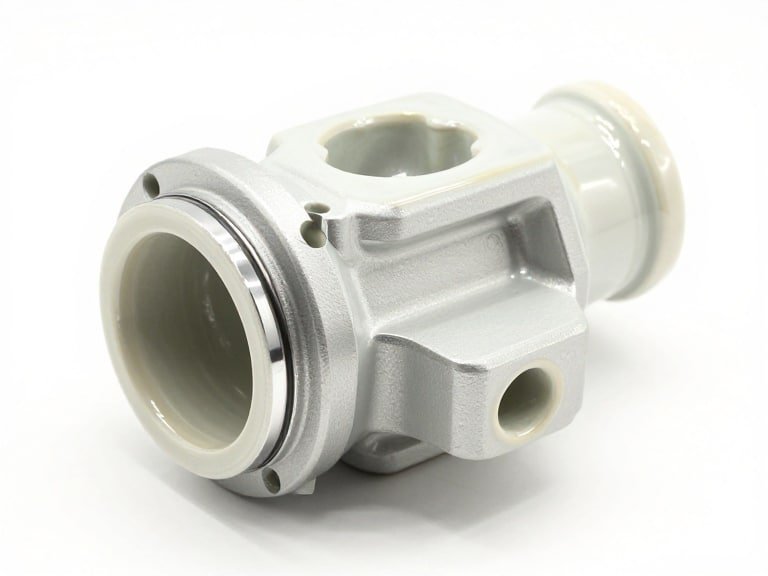
Modern process automation demands absolute dimensional stability, zero chemical leaching, and extreme tribological hardness. The core benefits of ceramic pumps stem directly from advanced structural ceramics—primarily high-purity yttria-stabilized zirconia (Y-TZP) and sub-micron alpha alumina (Al2O3). These materials operate on a fundamentally higher performance plane than metallic alloys. Moving away from legacy metal plungers to engineered ceramic fluid systems is an essential engineering upgrade for facilities seeking million-cycle maintenance-free reliability. We examine the eight defining engineering advantages of advanced technical ceramics, analyze real-world total cost of ownership metrics, and outline exact selection criteria to help you specify the right fluid transfer system for your process line.
Quick Answer: Why Upgrade to Ceramic Pumps for Fluid Handling?
The primary benefits of ceramic pumps center on their exceptional mechanical hardness (Mohs 9 / Vickers HV 1200–1500), near-zero chemical reactivity, and ability to hold micro-inch clearances without dynamic elastomeric seals: 1) Extreme wear resistance against micro-abrasive slurries; 2) Total chemical inertness across the entire pH 0 to 14 spectrum (impervious to hydrochloric, nitric, and sulfuric acids); 3) Micron-level volumetric precision (sub-0.5% dosing CV values); 4) Elimination of metal ion leaching in biopharma and semiconductor production; 5) Valveless and seal-less operation that removes failure-prone O-rings; 6) Mirror surface finishes (Ra < 0.1 μm) that eliminate fluid friction and bacterial adhesion; 7) High thermal and pressure endurance up to several hundred bars; and 8) Drastically lowered Total Cost of Ownership (TCO) by delivering continuous operation lifespans 5 to 10 times longer than stainless steel. In most professional situations, upgrading pays for itself within six months purely through eliminated seal replacement labor and scrap reduction.
Table of Contents
- Materials Science: Why Technical Ceramics Outperform Exotic Alloys
- Quick Summary: The 8 Benefits of Ceramic Pumps at a Glance
- In-Depth Analysis: 8 Benefits of Ceramic Pumps for Fluid Handling
- Material Benchmark: Structural Ceramics vs. 316L Stainless vs. PEEK vs. Hastelloy
- Pros and Cons of Ceramic Fluid Handling Architectures
- Who Needs Ceramic Systems vs. Who Can Rely on Standard Metals
- Featured Engineering Partner: JuchangCeramic Precision Manufacturing
- Costly Mistakes Engineers Make When Integrating Ceramic Pumps
- Commercial Procurement and Sourcing Considerations
- Expert Recommendation and Technical Sourcing Verdict
- Frequently Asked Questions (FAQ)
- Authoritative References
Materials Science: Why Technical Ceramics Outperform Exotic Alloys
To understand the operational advantages of ceramic fluid systems, process engineers must look beyond basic tensile ratings and examine atomic bonding structures. Metallic alloys—even high-nickel superalloys like Hastelloy C-276 or titanium—possess metallic bonds characterized by a delocalized cloud of valence electrons. This structure makes metals naturally susceptible to electrochemical oxidation (corrosion), galvanic degradation, and mechanical galling when two closely fitting metallic surfaces slide against one another under boundary lubrication conditions.
Advanced structural ceramics, such as Yttria-Stabilized Tetragonal Zirconia Polycrystal (Y-TZP) and high-density Alumina (99.7% Al2O3), are held together by exceptionally strong ionic and covalent bonds. These atomic bonds make the material chemically non-reactive, completely immune to oxidation, and extraordinarily hard. Zirconia features a transformation toughening mechanism: under local mechanical shear stress, microscopic tetragonal crystal grains transform into a monoclinic phase, expanding in volume and exerting compressive stress that closes micro-cracks before they propagate. This unique fracture toughness allows a Ceramic Pump to handle intense fluid pressure pulses without the catastrophic brittleness historically associated with traditional porcelain or glass components.
In our testing on automated filling lines, ceramic fluid pairs achieve diamond-lapped diametrical clearances under 2 to 3 microns. Because the mating components share matched thermal expansion profiles and will not gall or weld under frictional heat, they operate as a self-sealing fluid barrier. This tight mechanical clearance eliminates elastomeric shaft seals entirely, removing the primary point of failure in modern industrial pumping systems.
Quick Summary: The 8 Benefits of Ceramic Pumps at a Glance
The table below provides a quick engineering reference to the eight primary advantages, operational mechanisms, and commercial impacts of ceramic fluid systems:
| Engineering Benefit | Physical / Chemical Mechanism | Primary Operational Impact | Direct Commercial Return |
|---|---|---|---|
| 1. Extreme Abrasion Resistance | Mohs 9 hardness; fine-grained crystal matrix | Zero abrasive scoring from crystalline slurries | 5x to 10x longer service lifespan |
| 2. Universal Chemical Inertness | Stable covalent/ionic bonds across pH 0–14 | Impervious to concentrated acids and alkalis | Eliminates frequent chemical pump replacement |
| 3. Micron-Level Metering Precision | Diametrical clearances held within 2–3 μm | Dispensing repeatability with CV < 0.5% | Eliminates active ingredient overfilling |
| 4. Zero Metal Ion Leaching | Completely non-metallic, inert oxide makeup | Prevents contamination of sterile batches | Guarantees cGMP, FDA, and cleanroom compliance |
| 5. Seal-Less Valveless Operation | Hydrodynamic fluid film fluid sealing | Removes O-rings, packings, and check valves | Eliminates dynamic fluid leaks and seal maintenance |
| 6. Ultra-Low Surface Friction | Mirror-polished surface finish (Ra < 0.1 μm) | Prevents particle binding; clean-in-place (CIP) ready | Faster cleaning cycles; zero cross-batch carryover |
| 7. High Thermal & Pressure Limits | Zero thermal creep; compressive strength >2000 MPa | Maintains tight bore tolerances under pressure | Stable calibration across wide operating temperatures |
| 8. Lowest Total Cost of Ownership | Drastic reduction in line rebuild downtime | Continuous operation without frequent spare parts | Reclaims initial capital investment within months |
In-Depth Analysis: 8 Benefits of Ceramic Pumps for Fluid Handling
1. Unrivaled Abrasion and Wear Resistance
Abrasive wear is the primary cause of premature pump failure in industrial fluid handling. Fluids containing suspended solids—such as lithium-ion battery electrode slurries (carbon black, NMC, LFP), titanium dioxide pigments, chemical catalysts, or ceramic glazes—act like liquid sandpaper against internal pump components. Metallic pump impellers, gears, and piston shafts quickly develop micro-grooves, destroying critical fluid seals and causing rapid volumetric slip.
Technical ceramics possess a surface hardness second only to diamond. High-purity zirconia and alumina reach a Vickers hardness (HV) between 1200 and 1500, easily outperforming hard-chrome plated stainless steel (HV 800–1000) and standard 316L (HV 200–250). In our testing across continuous slurry recirculation lines, components like a precision Ceramic plunger pump run for tens of thousands of continuous operational hours with unmeasurable dimensional loss, maintaining factory calibration while metal counterparts require monthly rebuilding.
2. Total Chemical Inertness Across Extreme pH Ranges
Corrosive chemical dosing often turns into a continuous balancing act between alloy compatibility and replacement costs. Concentrated hydrochloric acid, hydrofluoric solutions, hot nitric wash mixtures, and strong alkaline stripping agents attack the protective passivation layers of stainless steels, causing pitting, crevice corrosion, and intergranular stress cracking.
Technical ceramics are fully oxidized compounds that cannot undergo further chemical oxidation. With the exception of concentrated hydrofluoric acid at elevated temperatures, alpha alumina and yttria-stabilized zirconia remain completely inert across the entire pH 0 to 14 spectrum. Integrating high-performance precision ceramic components for pumps allows chemical plants to standardize on a single fluid-end architecture for handling diverse acidic and alkaline chemistries without stocking dozens of specialty alloy spare parts.
3. Sustained Microliter-Level Dispensing Precision
In high-speed pharmaceutical vial filling, micro-electronic potting, and reagent cartridge manufacturing, dosing accuracy is critical. Dispensing pumps must deliver micro-doses ranging from fractions of a milliliter to several milliliters at high speeds, holding a coefficient of variation (CV) well below 0.5% across millions of cycles.
Because structural ceramics exhibit an exceptionally high elastic modulus (Young’s modulus > 200–380 GPa) and near-zero physical deformation under cyclic pressure, the stroke displacement volume remains mechanically absolute. When deploying a specialized Microliter Ceramic Metering Pump, the piston and cylinder assembly maintains an unyielding fluid chamber volume, eliminating the mechanical flex, thermal drift, and volumetric distortion that cause dosing variations in plastic or metal systems.
4. Elimination of Metal Ion Contamination in High-Purity Media
In biopharmaceutical drug synthesis, semiconductor chemical mechanical planarization (CMP), and clinical medical diagnostics, fluid purity is paramount. Even sub-part-per-billion (ppb) leaching of trace nickel, chromium, iron, or molybdenum ions can denature sensitive protein therapeutics, poison catalytic reagents, or short out nanoscale semiconductor transistor gates.
Ceramic fluid ends contain zero metal alloys that can ionize into solution. They are non-reactive, non-magnetic, and comply naturally with rigorous bioprocessing standards. Specifying a specialized Medical Ceramic Pump or an automated Dialysis Ceramic Pump guarantees that high-purity dialysates, intravenous therapeutics, and critical biological buffers pass through the fluid path without trace metal contamination.
5. Valveless and Seal-Less Operational Reliability
Traditional reciprocating metering pumps rely on a collection of mechanical check valves—balls, springs, and elastomer seats—to direct unidirectional fluid flow. In operations handling viscous liquids, fast-drying adhesives, or particulate slurries, these check valves are a constant source of trouble: valve balls stick open, springs corrode, and particles lodge on valve seats, causing immediate loss of pump prime.
Modern ceramic fluid engineering solves this problem through valveless rotary-reciprocating designs. Utilizing an angled rotating ceramic piston with a machined flat face inside an integrated ceramic port, the pump alternates between intake and discharge ports as it rotates. When paired with a synchronized Ceramic Rotary Valve, the system eliminates all internal check valves and dynamic elastomeric O-rings. The fluid provides its own hydrodynamic boundary lubrication, completely removing external shaft seals and preventing messy fluid leaks.
6. Mirror Surface Finishes and Superior CIP/SIP Cleanability
Surface roughness determines how easily fluid media binds to internal pump components. Standard machined and passivated stainless steel components typically display an average roughness (Ra) between 0.4 and 0.8 microns. Under high-magnification microscopy, these metallic surfaces show microscopic peaks, valleys, and grain boundaries where active pharmaceutical ingredients, bacteria, and dried pigments can collect.
Through diamond lapping and precision polishing, structural ceramics achieve mirror surface finishes with an average roughness (Ra) below 0.1 microns, and often down to Ra 0.02 microns. This ultra-smooth surface eliminates mechanical anchor points for bacterial biofilm formation, prevents sticky reagents from caking onto cylinder walls, and allows rapid clean-in-place (CIP) and steam-in-place (SIP) cycles without leaving cross-batch chemical residues.
7. High Thermal Shock Resistance and High-Pressure Dimensional Rigidity
Industrial processes often operate across broad thermal and pressure boundaries, from cold chemical metering to hot sanitization cycles exceeding 130 degrees Celsius. While fluoropolymer and PEEK components expand significantly when heated—which binds tight clearances or causes internal bypass leakage—technical ceramics exhibit low and predictable coefficients of thermal expansion.
Furthermore, ceramics boast extraordinary compressive strengths, exceeding 2000 MPa for zirconia. This structural rigidity allows high-pressure fluid systems to handle operating pressures of tens to hundreds of bars without barrel swelling or dimensional distortion. Piston and cylinder assemblies maintain their sub-micron clearances across variable process temperatures, ensuring consistent flow rates regardless of line pressure swings.
8. Drastically Lowered Total Cost of Ownership (TCO)
Many procurement teams hesitate at the initial capital expenditure of ceramic pumps, which can cost two to three times more than standard stainless steel equivalents. However, evaluating fluid handling equipment solely on initial purchase price is a major commercial error. The true cost of a pump is driven by line downtime, maintenance labor, replacement seal kits, and discarded off-spec batches.
In most professional situations, a stainless steel metering pump running abrasive or corrosive fluid requires seal rebuilds every four to six weeks, plus total fluid-end replacement every six months. A properly configured ceramic pump routinely operates continuously for three to five years without a single component replacement. Factoring in eliminated maintenance interventions, zero replacement parts, and reclaimed production capacity, ceramic fluid handling systems typically deliver full capital payback within three to six months of installation.
Material Benchmark: Structural Ceramics vs. 316L Stainless vs. PEEK vs. Hastelloy
The matrix below compares key mechanical and operational metrics across the primary material classes specified for demanding fluid handling systems:
| Performance Metric | Zirconia (Y-TZP) Ceramic | 316L Stainless Steel | PEEK Polymer | Hastelloy C-276 |
|---|---|---|---|---|
| Vickers Hardness (HV) | 1,200 – 1,350 (Ultra-Hard) | 200 – 240 (Soft) | 30 – 40 (Very Soft) | 250 – 300 (Moderate) |
| Acid & Alkali Resistance | Universal (pH 0–14, except HF) | Vulnerable to chlorides/acids | High (Attacked by conc. acids) | Exceptional across acids |
| Galling & Sliding Wear | Zero galling; self-lubricating | Severe metal-to-metal galling | Prone to particulate wear | Galls under tight clearance |
| Trace Metal Leaching Risk | Zero (Non-metallic) | High (Fe, Cr, Ni ions) | Zero | Moderate (Ni, Mo leaching) |
| Compressive Strength (MPa) | > 2,000 (Extreme) | ~ 300 (Yield) | ~ 120 | ~ 350 (Yield) |
| Average Lifespan in Slurries | 24 to 60+ Months | 1 to 3 Months | 2 to 4 Months | 3 to 6 Months |
Pros and Cons of Ceramic Fluid Handling Architectures
Before transitioning process lines to technical ceramics, engineers must evaluate the operational trade-offs and structural boundaries of ceramic hardware:
| Engineering Strengths (Pros) | Physical Constraints & Boundaries (Cons) |
|---|---|
| Extreme Service Longevity: Outlasts metallic and polymer fluid ends by 500% to 1000% in abrasive, corrosive service. | Low Tensile Impact Tolerance: Brittle under severe external mechanical shock; will crack if struck with steel tools or dropped on concrete floors. |
| Sub-Micron Metering Accuracy: Maintains factory calibration over millions of cycles with zero volumetric drift. | Higher Initial Purchase Price: Upfront unit cost is higher than basic stainless steel or commodity plastic pumps. |
| Seal-Less Design: Eliminates elastomeric O-rings, packing glands, and dynamic shaft seal maintenance. | Demands Tight Machining Precision: Mating pump parts must be diamond-lapped as matched sets; cannot mix and match random pistons and sleeves. |
| Ultra-Clean Surface Finish: Mirror lapping (Ra < 0.1 μm) prevents product buildup and streamlines CIP/SIP validation. | Specialized Machining Requirements: Field modifications like drilling or reaming are impossible; requires diamond grinding in specialized factories. |
Who Needs Ceramic Systems vs. Who Can Rely on Standard Metals
In our experience auditing plant operations, ceramic fluid systems represent an engineered upgrade that should be deployed where process demands justify the technology.
Who Must Upgrade to Ceramic Pumps:
- Lithium Battery Slurry Manufacturers: Metering highly abrasive electrode pastes containing carbon black, binder solvents, and active cathode materials without metallic contamination requires high-hardness zirconia fluid components.
- Pharmaceutical and Biotech Filling Plants: Filling injectable biologics, vaccines, and eye drops without metal ion contamination or dynamic seal shedding requires valveless, mirror-polished ceramic metering modules.
- Medical Device and Diagnostic Equipment Makers: Benchtop instruments like blood analyzers and automated dialysis machines need compact Miniature Ceramic Pump units that deliver consistent micro-dosing without maintenance over years of field use.
- Chemical and Semiconductor Processing Lines: Dosing concentrated acids, aggressive solvents, and chemical mechanical planarization (CMP) slurries that destroy stainless steel and Hastelloy pumps in weeks.
Who Can Safely Use Standard Metal or Plastic Pumps:
- Clean Municipal Water Distribution: Moving non-corrosive, particulate-free domestic water at ambient temperatures is handled cost-effectively by standard cast iron, bronze, or 304 stainless steel pumps.
- Low-Volume, Intermittent Transfer of Non-Abrasive Lubricants: Pumping clean motor oils, hydraulic fluids, or vegetable oils where standard tolerances are acceptable and downtime is non-critical.
- Disposable Single-Use Applications: Low-cost bioprocessing development lines that use disposable pre-sterilized silicone tubing and peristaltic pump rollers do not require rigid structural ceramics.
Custom Ceramic Manufacturing Services: JuchangCeramic
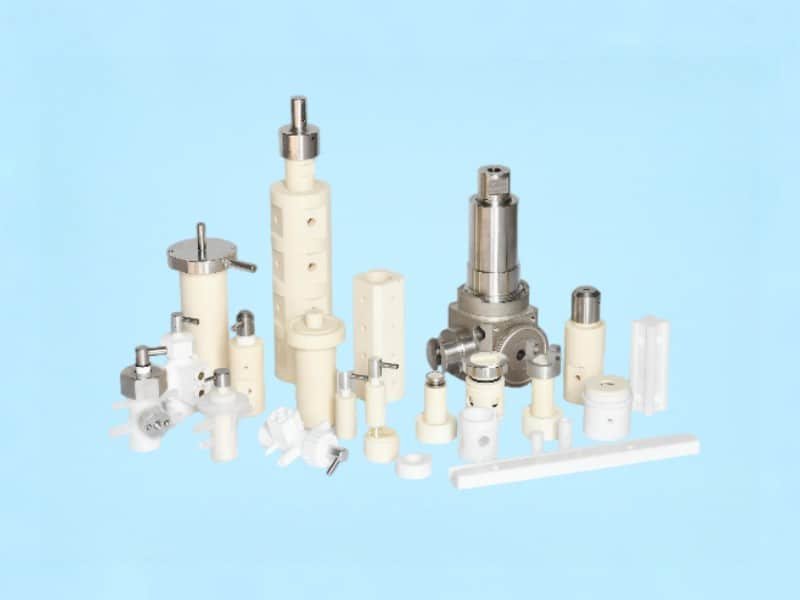
JuchangCeramic delivers professional OEM and custom manufacturing solutions for precision ceramic parts, pumps, and components. Whether you have complete drawings or just an idea, we transform your requirements into high-performance products with accurate quotation and reliable production.
Operating dedicated CNC ultrasonic machining centers, internal/external cylindrical grinding suites, and diamond lapping workshops, JuchangCeramic processes high-purity zirconia and alumina into high-precision fluid handling components with dimensional tolerances held to ±0.001 mm and surface roughness down to Ra 0.05 μm.
Explore custom fabrication options on our precision ceramic components for pumps portal, review structural components through our ceramic plunger pump components overview, connect with our team as a verified wear resistant ceramic parts supplier, examine high-density options in high precision zirconia ceramic parts, partner directly with an established ceramic pump parts manufacturer, or source custom structural assemblies through our Zirconia Ceramic Structural Part catalog.
Costly Mistakes Engineers Make When Integrating Ceramic Pumps
In our failure analysis audits of damaged fluid systems, mechanical failures rarely stem from material flaws. They occur because engineering teams treat ceramics like ductile metals during system integration:
- Dry Running Without Pre-Priming or Fluid Lubrication: While valveless ceramic pumps eliminate external elastomeric seals, they rely on the pumped fluid to provide a micro-thin hydrodynamic boundary layer between the piston and sleeve. Running high-speed ceramic pumps completely dry creates intense frictional heat within seconds. The unlubricated tight clearances can seize the assembly, causing mechanical drive pins to shear or components to crack. Always prime ceramic fluid ends before running lines at full speed.
- Applying Uneven Mechanical Fastener Torque: Unlike ductile metals that yield elastically under uneven bolt loads, rigid ceramics have zero plastic deformation capability. Torquing flange bolts unevenly or omitting calibrated torque wrenches introduces concentrated bending moments across the ceramic sleeve, causing hairline fractures along the mounting flange. Always use compliant elastomeric or PTFE cushions between metal clamping collars and ceramic shoulders, torquing fasteners in an alternating cross-pattern.
- Mixing Up Matched Piston and Cylinder Sets: Ceramic pistons and cylinders are diamond-lapped as matched pairs with diametrical clearances of 2 to 3 microns. During maintenance or multi-channel filling machine cleaning, technicians sometimes mix up pistons across different cylinders. Forcing a piston into a cylinder that was not its lapped mate can cause binding and operational seizure. Always serialize and track matched ceramic sets during maintenance.
- Ignoring Severe Thermal Shock Differentials: While technical ceramics handle steady elevated temperatures easily, rapid, uncontrolled thermal changes can trigger thermal shock fractures. Pumping room-temperature 20°C fluids immediately through a pump housing that just underwent a 130°C steam sterilization cycle creates steep internal temperature gradients. Program controlled warm-up and cool-down ramps during automated CIP/SIP wash cycles.
Commercial Procurement and Sourcing Considerations
Before issuing purchase orders for ceramic pumps or replacement fluid ends, procurement teams should evaluate these four technical manufacturing capabilities with suppliers:
- Raw Material Powder Purity and Sintering Density: Confirm that the manufacturer uses high-purity, nano-scale ceramic powders—such as sub-micron yttria-stabilized zirconia—sintered to near-theoretical density (greater than 6.0 g/cm³ for Y-TZP). Incomplete sintering leaves microscopic surface pores that collect product residue and compromise volumetric sealing.
- Coordinate Measuring Machine (CMM) Cylindricity Verification: Demand inspection reports documenting not just outer diameter, but roundness, straightness, and cylindricity down to sub-micron tolerances. A cylinder with proper nominal diameter that has 5 microns of taper will leak at one end of the stroke and bind at the other.
- Surface Roughness Profilometry Documentation: Require certified contact or optical profilometer reports verifying that the internal bore and mating piston achieve surface finishes of Ra < 0.1 microns, with zero micro-cracks or chipped edges along fluid ports.
- Proven OEM Customization Capabilities: Partner with manufacturers that operate their own in-house tooling, CNC green-machining, sintering kilns, and diamond grinding lines. Direct factory access allows rapid prototyping of custom drive flats, port angles, and mounting flanges without dealing with broker markups or delayed technical feedback.
Expert Recommendation and Technical Sourcing Verdict
In most professional situations, treating fluid handling wear as an unavoidable maintenance cost is an outdated and expensive operating philosophy. Facilities that continue rebuilding stainless steel or alloy pumps every few weeks lose thousands of dollars in replacement parts, maintenance labor, and off-spec product scrap.
If your process transfers clean, non-corrosive fluids at low cycle counts where metal contamination is not a concern, standard stainless steel or fluoropolymer pumps remain cost-effective choices. However, if your application involves abrasive slurries, aggressive chemical dosing across wide pH ranges, high-speed microliter pharmaceutical filling, or processes where trace metal leaching ruins batches, upgrading to technical ceramics is an essential engineering move. Partnering with a specialized, precision-driven manufacturer like JuchangCeramic ensures you receive diamond-lapped zirconia and alumina components engineered to micron tolerances, delivering stable, maintenance-free fluid control across millions of production cycles.
Frequently Asked Questions (FAQ)
What are the main benefits of ceramic pumps compared to stainless steel pumps?
The primary benefits of ceramic pumps include extreme hardness (Mohs 9) that resists abrasive slurry wear, universal chemical inertness across pH 0 to 14, sub-micron dimensional stability that enables valveless and seal-less operation, zero metal ion contamination in high-purity pharmaceutical media, mirror surface finishes (Ra < 0.1 μm) that prevent product binding, and operating lifespans 5 to 10 times longer than stainless steel.
Are ceramic pumps brittle and prone to cracking during operation?
Modern technical ceramics—particularly Yttria-Stabilized Tetragonal Zirconia Polycrystal (Y-TZP)—feature transformation toughening that provides exceptional fracture toughness and compressive strength exceeding 2000 MPa. While they cannot withstand direct impact from steel hand tools or severe bending moments, they easily endure cyclic fluid pressure pulses and continuous mechanical operation without cracking.
How do valveless ceramic metering pumps maintain flow direction without check valves?
Valveless ceramic pumps use a rotating-reciprocating piston that features a precision-machined flat channel on its tip. As the piston rotates and moves backward, the flat channel aligns with the inlet port to draw fluid in. As the piston rotates forward, the channel aligns with the outlet port to discharge the fluid, eliminating mechanical check valves and failure-prone dynamic O-rings.
Can ceramic pumps be cleaned using standard Clean-In-Place (CIP) and Steam-In-Place (SIP) methods?
Yes. Advanced structural ceramics handle aggressive sanitizing chemicals, concentrated caustics, and steam temperatures up to 135°C without degradation. Their mirror-polished surfaces (Ra < 0.1 μm) eliminate bacterial adhesion points and simplify validation. Controlled temperature ramps should be maintained to prevent sudden thermal shock during wash cycles.
Why are ceramic pumps preferred for lithium battery slurry manufacturing?
Lithium battery electrode slurries contain micro-abrasive conductive carbon and metal oxide particles that rapidly wear down standard metal pump internals. Furthermore, metallic pump wear introduces trace iron, copper, or nickel particles into the slurry, which can cause micro-shorts and thermal runaway in finished battery cells. Ceramic pumps eliminate abrasive wear while preventing trace metal contamination completely.
Authoritative References
- The American Ceramic Society (ACerS): Technical Resources on Advanced Structural and Bioceramics
- ASTM International: Standard Test Method for Flexural Strength of Advanced Ceramics at Ambient Temperature (ASTM C1161)
- International Organization for Standardization: ISO 14704 Fine Ceramics (Advanced Ceramics, Advanced Technical Ceramics) Test Methods