
Medical ceramic pumps are precision fluid-handling components used in applications where dosing consistency, chemical compatibility, low contamination risk and long-term dimensional stability matter. In dialysis equipment and other medical fluid systems, choosing a pump by flow rate alone is a costly mistake. The correct design must account for the fluid path, pressure, ceramic material, sealing strategy, manufacturing tolerances, cleaning requirements and the consequences of a dosing error.
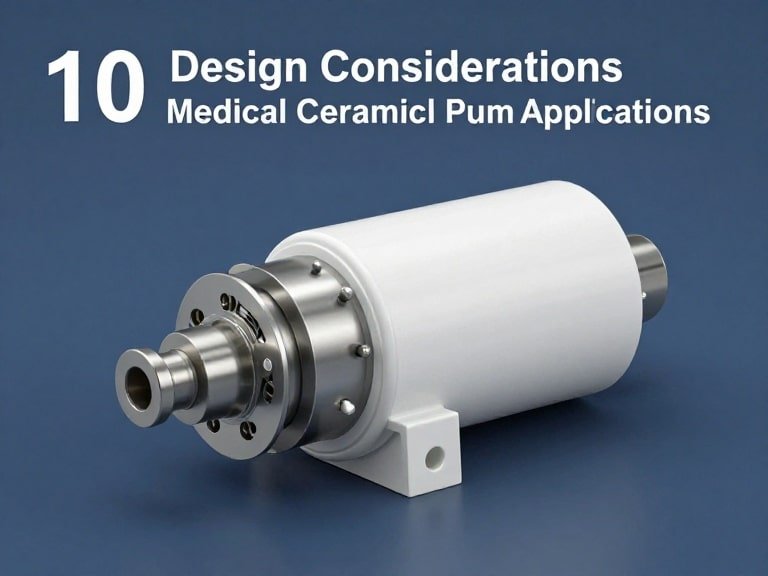
For engineers evaluating the Design Considerations for Medical Ceramic Pump applications, our recommendation is to start with the intended clinical or equipment function, then work backward to material selection, hydraulic design and validation. JuchangCeramic supplies precision ceramic pump components and application-specific solutions for demanding fluid-handling environments. The goal should be a pump assembly that meets documented performance requirements—not simply one made from a ceramic described as high strength or corrosion resistant.
Quick Answer: What Matters Most in Medical Ceramic Pump Design?
The most important design considerations are ceramic material compatibility, dosing accuracy, flow-rate range, operating pressure, sealing and leakage control, dimensional tolerances, surface finish, sterilization compatibility, mechanical durability, and regulatory verification.
Our recommendation: Define the fluid, operating envelope and allowable dosing error before selecting a pump. Zirconia can be a strong candidate for precision ceramic plungers and structural components, but the complete assembly—including seals, joints, valves and fluid-contact surfaces—must be evaluated as a system. Never assume that a ceramic component is automatically biocompatible or that a supplier’s performance figures establish suitability for every medical device.
Table of Contents
- Medical Ceramic Pump Design: Quick Summary
- What Is a Medical Ceramic Pump?
- 10 Design Considerations for Medical Ceramic Pump Applications
- Comparing Ceramic Materials and Pump Design Priorities
- Pros and Cons of Medical Ceramic Pumps
- Example: Medical Ceramic Pump for Dialysis Dehydration
- How to Choose a Medical Ceramic Pump Manufacturer
- Common Design and Purchasing Mistakes
- Expert Recommendation: What Should You Specify?
- Frequently Asked Questions
- References
1. Medical Ceramic Pump Design: Quick Summary
| Design factor | Why it matters | Recommended action |
|---|---|---|
| Ceramic material | Influences wear, fracture resistance, chemical compatibility and dimensional stability. | Choose the grade according to actual loads, fluid chemistry and required evidence. |
| Dosing accuracy | Determines whether the pump can deliver the required volume consistently. | Define accuracy, repeatability, operating range and test conditions separately. |
| Flow rate | A pump may perform well at one rate but become less accurate at low or rapidly changing flow. | Validate the full intended range, including startup and transient conditions. |
| Pressure | Pressure affects drive loads, leakage, deformation and component stress. | Specify continuous, transient and maximum allowable pressures. |
| Sealing system | Leakage, friction, wear and fluid compatibility depend on the entire seal assembly. | Test the actual ceramic, seal, housing and fluid combination. |
| Surface finish and tolerances | Influence friction, bypass leakage, wear and metering consistency. | Agree on measurable drawing requirements and inspection methods. |
| Cleaning and sterilization | Repeated exposure can affect seals, joints, materials and performance. | Confirm compatibility with the intended cleaning and sterilization process. |
| Verification and traceability | Medical applications require evidence that the product meets its defined requirements. | Establish inspection records, validation criteria and change-control expectations. |
2. What Is a Medical Ceramic Pump?
A medical ceramic pump is a fluid-handling assembly that uses one or more precision ceramic components to support controlled fluid movement or metering. Depending on the design, these components may include a piston, plunger, cylinder liner, valve element or other precision structural part.
Ceramics are attractive for demanding pump applications because selected grades can provide high hardness, wear resistance, chemical stability and dimensional consistency. These properties can be valuable when a pump must repeatedly move small volumes or operate in contact with fluids that challenge conventional materials.
However, a ceramic component does not determine the performance of the complete pump by itself. A highly accurate plunger cannot compensate for an unsuitable seal, poor valve timing, trapped air, an unstable drive mechanism or an incorrectly calibrated system. From our experience with precision component selection, the most reliable approach is to evaluate the entire fluid path and operating mechanism rather than purchase a material based on a single property.
How does a precision ceramic metering pump work?
In a piston or plunger design, a moving component changes the volume of a pumping chamber. Inlet and outlet valves, or another flow-control arrangement, direct fluid into and out of the chamber. The delivered volume depends on the effective displacement, movement profile, leakage, fluid properties and control system.
For an ideal cylindrical plunger, the swept volume can be estimated using:
Ideal swept volume = π × (plunger diameter² ÷ 4) × stroke length
This is a geometric estimate, not a guarantee of actual delivered volume. Real performance is influenced by clearances, sealing, valve behavior, compressibility, trapped gas, temperature and manufacturing variation.
For applications requiring very small doses, even a small absolute error can become a large percentage of the target volume. That is why the operating range and measurement method should be agreed before the pump geometry is finalized.
3. 10 Design Considerations for Medical Ceramic Pump Applications
1. Select the ceramic grade for the actual application
Material selection should be driven by the operating environment, not by a generic claim that one ceramic is always best. Zirconia and alumina are both used in precision engineering, but they have different mechanical, thermal and chemical characteristics. The specific grade, manufacturing route and surface condition matter as much as the broad material name.
Zirconia is often considered where a combination of strength, wear resistance and precision is required. Alumina may be appropriate when its hardness, chemical properties and cost profile fit the design. Neither material should be selected without reviewing the expected loads, fluid exposure, operating temperature and failure consequences.
For more background, see our guide to alumina ceramics and their engineering properties and our range of zirconia ceramic structural parts.
We recommend: Specify the ceramic grade and relevant material properties on the drawing or purchase specification. Ask for evidence that the proposed grade is suitable for the intended fluid-contact role rather than accepting “medical-grade ceramic” as a complete material definition.
2. Define dosing accuracy and repeatability separately
Accuracy and repeatability are related but different. Accuracy describes how closely the delivered volume matches the target. Repeatability describes how consistently the pump delivers volume under the specified conditions. A pump can repeat the same result reliably while still delivering a systematically incorrect volume.
Define the target dose, acceptable deviation, test method, sample size and operating conditions. Include low, nominal and high flow settings if the pump will operate across a wide range. If the device has a critical dosing function, determine how the pump’s performance will be verified in the final equipment, not just on a component test bench.
Do not treat a supplier’s stated accuracy as universal. A figure may apply only to a particular fluid, speed, pressure, temperature or test setup. For example, a published tolerance of ±0.5% to ±1% needs a documented definition of what was measured, over what range and using which method before it can be used as a design acceptance criterion.
3. Match the flow range to real operating conditions
Flow-rate requirements should include minimum, typical and maximum delivery rates. Startup, stopping, priming, changes in back pressure and intermittent operation may also affect performance.
For dialysis equipment, a pump’s role within the larger fluid-control architecture must be understood before setting specifications. A pump used for a controlled dehydration or ultrafiltration-related function does not automatically have the same requirements as a pump delivering medication, transferring dialysate or moving a cleaning solution. The system function determines the required flow profile, monitoring and safeguards.
For applications requiring controlled small-volume delivery, compare a microliter ceramic metering pump with a more general ceramic plunger pump. The correct choice depends on the required dose, duty cycle, pressure and control architecture—not on the product name alone.
Practical advice: If a pump will spend most of its life operating near the bottom of its advertised range, request performance data at that low-flow condition. Maximum flow capacity is not a substitute for low-flow accuracy.
4. Design for operating pressure and pressure transients
Operating pressure affects the force required to move the plunger, the load on the drive system, seal contact and potential leakage paths. Pressure spikes, blocked outlets and rapid valve switching can produce loads that differ substantially from normal steady-state conditions.
Specify continuous operating pressure, maximum allowable pressure, expected transient conditions and any required pressure-relief strategy. The ceramic component must be assessed under the actual assembly loads. Ceramics can offer excellent performance under suitable conditions, but they are not immune to brittle fracture caused by excessive stress, impact, flaws or poor mounting.
Mounting design deserves particular attention. Uneven clamping, misalignment and localized contact stresses can damage a ceramic part even when the nominal operating pressure appears acceptable. Housing geometry and assembly procedures should distribute loads appropriately.
We recommend: Review pressure limits with the pump manufacturer and the system engineer together. Do not infer the safe pressure of a complete pump from the strength of the ceramic material alone.
5. Engineer the sealing system as part of the pump
Leakage and contamination risks are influenced by the interface between the ceramic plunger, cylinder, seals, housing and valves. A ceramic component may resist wear well while a polymer seal degrades, swells or loses its sealing force in the selected fluid or cleaning process.
Evaluate seal compatibility, friction, wear debris, leakage, pressure cycling and temperature exposure. Also consider whether the design must prevent external leakage, internal bypass leakage or both. These failure modes can have different consequences for dose accuracy and equipment safety.
“Leak-free” should be treated as a testable performance requirement, not an absolute claim without a defined test method and detection limit. A specification should state the relevant pressure, fluid, duration, temperature and acceptable leakage level.
For a medical fluid path, review every wetted material—including adhesives, lubricants, elastomers, coatings and valve components. Ceramic alone does not establish that the entire assembly is suitable for patient-contact applications.
6. Specify tolerances, concentricity and surface finish
Precision ceramic pump components need tolerances that are appropriate to their function. Plunger diameter, bore diameter, roundness, straightness, concentricity and surface finish can influence friction, clearance, leakage and wear. The correct tolerance is determined by the design and test results, not by making every dimension as tight as possible.
Overly restrictive tolerances can increase machining costs, reduce manufacturing yield and extend lead times without improving the finished pump’s useful performance. On the other hand, insufficient control of a critical dimension can create unacceptable variation between production batches.
For reliable supplier communication, distinguish critical-to-function dimensions from noncritical features. Use a controlled drawing with datums, geometric tolerances and measurable surface-finish requirements. Agree on inspection methods and how conformity will be documented.
Where the pump relies on a precision plunger and holder assembly, review our ceramic plunger holder design guide. A well-designed holder can support alignment and assembly consistency, but its suitability must be confirmed for the specific pump geometry and loading conditions.
7. Confirm chemical compatibility and contamination control
Medical and laboratory fluid systems can encounter saline solutions, cleaning agents, disinfectants, buffers and other fluids. Their chemistry varies, and compatibility depends on the ceramic grade as well as the other materials in contact with the fluid.
Evaluate chemical exposure at the actual concentration, temperature and duration. Consider whether repeated exposure or cleaning cycles could affect seals, joints, surface condition or dimensional performance. If the system handles sensitive fluids, also consider extractables, leachables, particles and the effect of manufacturing residues.
Do not assume that “zero leach” means zero detectable release under every possible condition. Any such claim should be supported by defined analytical methods, test conditions and acceptance criteria relevant to the intended use.
For patient-contact or other regulated medical applications, material suitability must be assessed in the context of the complete device and applicable regulatory requirements. A ceramic material’s chemical resistance alone does not prove biocompatibility or regulatory compliance.
8. Validate cleaning, disinfection and sterilization requirements
Not every medical fluid-handling component is exposed to the same cleaning or sterilization process. Some equipment may use validated disinfection cycles, while other components may require sterilization or be designed for single-use fluid paths. The intended process affects material selection, seal design, assembly methods and service life.
Identify the actual process early: cleaning agents, exposure time, temperature, pressure, cycle frequency and any sterilization method. Check the entire assembly, not just the ceramic body. A ceramic component may tolerate a condition that a seal, adhesive or housing cannot.
Where repeated cycles are required, test performance after representative cycling. Examine leakage, dose consistency, surface damage, seal wear and any changes in the wetted path. Cleaning validation and sterilization validation are separate technical questions and should not be assumed to be interchangeable.
For commercial users: Ask the supplier to identify which cleaning or sterilization conditions have been evaluated and which remain the responsibility of the device manufacturer. This helps prevent a material selection decision from becoming a late-stage validation problem.
9. Design for durability, assembly and maintenance
Service life depends on more than ceramic hardness. Plunger motion, side loading, lubrication conditions, vibration, particle exposure, pressure cycling, seal wear and assembly alignment can all influence durability.
Consider how the pump will be assembled and serviced. Can the ceramic component be installed without impact or uneven clamping? Can seals be replaced without damaging the precision surface? Can the pump be inspected or functionally tested after maintenance? If replacement is necessary, will the spare part remain dimensionally consistent with the original assembly?
Where appropriate, use controlled assembly fixtures and documented procedures. Define acceptable wear limits, inspection intervals and replacement criteria based on testing or engineering analysis. Do not set a service-life claim from material properties alone.
A ceramic pump may cost more initially than a simpler alternative, but it can be worth the investment if its measured wear resistance, fluid compatibility or dosing stability reduces maintenance and downtime. The economic case should be calculated using the complete operating life, not the purchase price alone.
10. Build verification, traceability and regulatory needs into the specification
Medical equipment projects require documented evidence that components and systems meet their intended requirements. The relevant evidence depends on the device, its classification, its intended use and the market where it will be sold.
For the pump component, establish a verification plan covering critical dimensions, material identification, visual inspection, leakage, flow performance, pressure capability and durability as applicable. Include incoming inspection requirements and acceptance criteria for production batches.
For the finished medical device, the manufacturer must assess the applicable quality-management, risk-management, biocompatibility and regulatory requirements. Standards such as ISO 13485 and ISO 14971 may be relevant to the broader medical-device quality and risk-management framework, depending on the product and jurisdiction. Their relevance should be confirmed by the responsible regulatory and quality teams.
Traceability also matters when a supplier changes raw materials, grinding processes, production equipment or inspection methods. Ask how changes are controlled, communicated and evaluated before implementation. A low-cost component is not a good purchasing decision if its consistency cannot be demonstrated over time.
4. Comparing Ceramic Materials and Pump Design Priorities
There is no universal best material or pump architecture for every medical application. The practical choice depends on fluid chemistry, mechanical loading, dosing requirements, manufacturing constraints and the evidence required for the final device.
| Option or design approach | Potential advantages | Points to verify | Best decision rule |
|---|---|---|---|
| Zirconia ceramic components | Can offer a useful combination of strength, wear resistance and precision for selected designs. | Grade-specific properties, chemical compatibility, surface finish, stress concentration and cost. | Consider when mechanical performance and precision justify the material and manufacturing cost. |
| Alumina ceramic components | Hardness, wear resistance and chemical properties may suit many precision engineering applications. | Fracture behavior under the actual load, geometry, fluid compatibility and required tolerances. | Consider when its documented properties meet the requirements without unnecessary complexity. |
| Polymer fluid-contact components | May offer design flexibility, low mass and material options suited to specific fluid paths. | Wear, deformation, chemical compatibility, permeability, particles and sterilization effects. | Choose only when the selected polymer meets the same defined performance and safety criteria. |
| Metal fluid-contact components | Can provide structural strength and established manufacturing options in suitable systems. | Corrosion, fluid compatibility, surface finish, wear and possible material release. | Evaluate by the actual fluid and design requirements rather than assuming metal is always more durable. |
| Precision plunger pump | Can support controlled displacement and repeatable metering when properly designed. | Sealing, valve behavior, clearance, drive control, pressure and low-flow performance. | Use when the required fluid delivery method and operating range suit a plunger architecture. |
| Microliter metering design | Can be suited to applications where small-volume delivery is a primary requirement. | Resolution, repeatability, priming, trapped gas, measurement uncertainty and minimum stable dose. | Specify actual dose requirements before selecting a miniature or microliter pump. |
For most engineering teams, the best comparison is not “ceramic versus non-ceramic” in isolation. Compare complete assemblies under identical test conditions, including delivered-volume variation, leakage, wear, chemical exposure, maintenance requirements and total cost of ownership.
If your design requires a specialized assembly, explore medical ceramic pump solutions and ceramic pumps for dialysis equipment as starting points for a technical discussion.
5. Pros and Cons of Medical Ceramic Pumps
| Pros | Cons and limitations |
|---|---|
| Selected ceramic grades can provide strong wear resistance and dimensional stability. | Precision ceramic parts can be more expensive to manufacture than simpler alternatives. |
| Suitable grades can resist many corrosive fluids and support demanding fluid-handling designs. | Chemical compatibility must still be checked for the specific grade and complete fluid path. |
| Precision-ground components can support repeatable movement and controlled clearances. | Performance depends on tolerances, seals, valves, assembly and drive control—not ceramic alone. |
| May reduce wear-related maintenance in applications where the material is correctly selected. | Impact, misalignment, concentrated stress or improper mounting can cause ceramic damage. |
| Custom geometries can be developed for specialized pump architectures. | Custom tooling, prototyping and validation may increase initial cost and development time. |
| Can be valuable in high-demand equipment where fluid compatibility and precision justify the investment. | Does not automatically establish biocompatibility, sterility or regulatory compliance for a finished medical device. |
Is upgrading to a ceramic pump worth the cost?
It is worth considering when the existing design suffers from documented wear, corrosion, unstable metering or excessive maintenance. It is less compelling when the current pump already meets performance requirements and the proposed ceramic design offers no measurable improvement.
A useful cost-benefit analysis compares acquisition cost, installation, calibration, maintenance labor, consumables, downtime, replacement frequency and qualification costs. If the ceramic design extends service life or improves performance, those benefits should be demonstrated in representative testing rather than assumed from the material label.
For smaller organizations, a well-specified standard pump may be more economical than a fully customized assembly. For high-volume or specialized medical equipment, customization may be justified when it solves a clearly defined performance problem and can be validated at production scale.
6. Example: Medical Ceramic Pump for Dialysis Dehydration
For an application involving dialysis dehydration equipment, a precision piston metering design may be worth evaluating when controlled fluid movement, dimensional consistency and chemical compatibility are important. The design still needs to be matched to the equipment’s actual function and validated within the complete system.
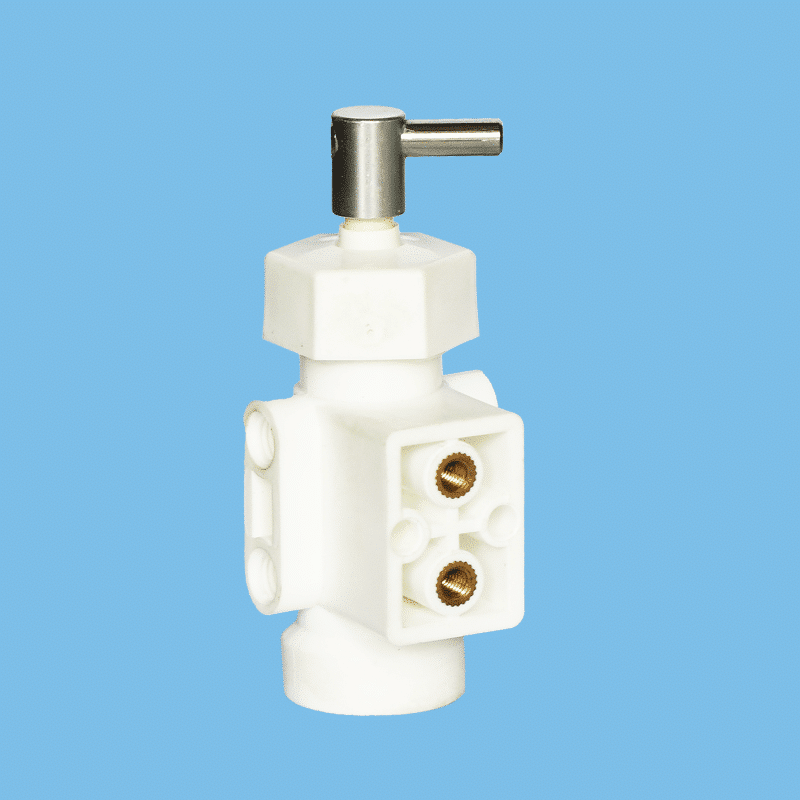
Medical Ceramic Pump for Dialysis Dehydration
The Medical Ceramic Pump for Dialysis Dehydration is presented as a customizable precision piston metering pump for applications including hemodialysis machines, dehydration units and fluid purification systems.
The supplied product specifications provide an initial basis for technical review. They should be treated as stated product parameters, not as independent verification of performance under every operating condition.
| Parameter | Supplied value |
|---|---|
| Product name | Medical Ceramic Pump for Dialysis Dehydration |
| Ceramic material | Medical-grade zirconia, as specified by the supplier |
| Applicable equipment | Hemodialysis machines, dehydration units and purification systems |
| Dosing accuracy | ±0.5% to ±1%; test conditions and measurement method should be confirmed |
| Flow range | 0.1 ml to 500 ml, customizable; clarify whether this refers to volume per stroke, dose volume or another parameter |
| Operating pressure | 0.1 to 0.8 MPa, subject to confirmation of continuous and peak limits |
| Operating temperature | -30°C to 150°C, as supplied; confirm the applicable fluid, seal and assembly limits |
| Sealing type | Described as medical-grade and leak-free; request the defined leakage test method and acceptance limit |
| Material features | Described as medical-grade, zero-leach and corrosion resistant; supporting evidence should be reviewed |
| Structure | Precision piston metering pump |
| Customization | OEM medical specifications supported, subject to engineering review |
Important specification check: Before using these values in a design, ask the manufacturer to clarify the meaning of the flow range, the accuracy test conditions, the permissible pressure envelope, temperature limits for the complete assembly, and the evidence behind material and leakage claims. These details determine whether the pump is appropriate for the intended system.
For a project that requires a customized wetted component or a revised plunger geometry, JuchangCeramic can be approached as a precision ceramic component solution provider. The most productive request includes the equipment function, fluid characteristics, target dose, operating range, drawings, expected service life and required verification documents.
7. How to Choose a Medical Ceramic Pump Manufacturer
Choosing a supplier is not just a price comparison. The manufacturer must be able to produce the required geometry consistently, explain its inspection process and support the technical documentation needed for the project.
Evaluate precision manufacturing capability
Ask how critical dimensions are manufactured and inspected. Confirm whether the supplier can control the required diameter, roundness, straightness, concentricity and surface finish at the intended production volume. Request representative inspection records or sample measurement reports where appropriate.
For custom projects, discuss prototyping, design-for-manufacturing review, sample approval, production capacity and change control before committing to a production order. A supplier that identifies a tolerance or assembly risk early may deliver better overall value than one that simply accepts every drawing without review.
Check material documentation and traceability
Ask for the precise ceramic grade, relevant material documentation and traceability arrangements. Where a component is intended for a regulated medical device, determine what evidence the device manufacturer requires from the supplier. Do not confuse a supplier’s general quality certificate with approval of the finished medical device for clinical use.
For custom components, review custom precision ceramic parts as part of the design discussion. The goal is to match the material and manufacturing process to the functional requirements instead of specifying an unnecessarily expensive ceramic grade.
Compare total project cost, not just unit price
A realistic quotation should identify tooling or setup charges, prototype costs, sample lead time, production lead time, minimum order quantity, inspection documentation, packaging and shipping. For a new medical equipment project, qualification and validation support may be as important as the unit price.
Consider three common purchasing scenarios:
- Prototype development: Prioritize engineering communication, sample accuracy and the ability to revise the design after testing.
- Low-volume production: Compare customization cost, minimum order quantity, inspection effort and continuity of supply.
- High-volume production: Focus on process capability, batch consistency, traceability, yield, change control and the supplier’s capacity to maintain specifications over time.
A lower unit price may be worthwhile for a mature, stable design with proven process controls. It is not necessarily the best choice for a critical component when dimensional variation or supply interruption could trigger expensive requalification.
8. Common Medical Ceramic Pump Design and Purchasing Mistakes
Choosing material before defining the fluid and duty cycle
Material selection without fluid chemistry, temperature, pressure and cycle information creates unnecessary risk. Start with operating requirements and compare grades against them.
Confusing nominal accuracy with validated system performance
A component test result does not automatically describe the assembled pump in the finished equipment. Verify performance under representative conditions, including the intended fluid, control method and operating range.
Ignoring seals and other nonceramic materials
A ceramic plunger may perform well while the seal or housing becomes the limiting component. Evaluate the complete fluid path for compatibility, leakage, wear and cleaning exposure.
Specifying tolerances without a functional reason
Extremely tight tolerances can raise cost and reduce yield. Identify which dimensions control sealing, alignment, motion or dosing, and specify tolerances that are supported by engineering analysis and validation.
Accepting unsupported claims such as “zero leach” or “leak-free”
Ask for the test method, detection limit, sample conditions and acceptance criteria. A claim without a defined method cannot be compared reliably between suppliers.
Leaving regulatory and validation questions until the end
Late-stage material or supplier changes can create additional testing and documentation work. Define quality records, traceability, change notification and verification needs before production approval.
Buying for maximum flow rather than the actual working range
A pump’s highest stated flow rate may be irrelevant if the application requires accurate, stable delivery at very low volumes. Require data at the conditions that matter most to the system.
9. Expert Recommendation: What Should You Specify Before Ordering?
From a practical engineering standpoint, the best medical ceramic pump specification is one that allows a manufacturer to quote accurately and allows the buyer to verify performance objectively. Avoid relying on broad product descriptions when the application has measurable requirements.
Before requesting a quotation from JuchangCeramic or another supplier, prepare the following information:
- Application: Identify the equipment and the pump’s exact function in the fluid-handling system.
- Fluid: Provide composition, concentration, viscosity, temperature and any relevant cleaning-fluid exposure.
- Delivery requirement: Specify target dose or flow, minimum and maximum operating points, acceptable accuracy and repeatability.
- Pressure: Define normal pressure, maximum pressure and relevant transient conditions.
- Materials: State any known material restrictions and request recommendations with supporting documentation.
- Mechanical design: Provide drawings, interfaces, available space, alignment requirements and mounting constraints.
- Sealing and cleanliness: Define leakage limits, fluid-contact requirements, particle controls and cleaning or sterilization conditions.
- Validation: List required inspection reports, test methods, traceability and quality records.
- Commercial needs: Specify prototype quantity, annual demand, target lead time, packaging and expected product lifecycle.
Our recommendation is to qualify the pump against a small set of critical-to-quality requirements first: delivered-volume performance, leakage, dimensional conformity, material compatibility and durability under representative operating conditions. Expand testing based on the risks of the intended device and its applicable regulatory framework.
For a dialysis-related application, the pump should also be evaluated as part of the complete fluid-control system. Component specifications alone cannot establish clinical suitability or replace the finished device manufacturer’s system-level risk analysis and verification.
Ultimately, the right ceramic pump is not necessarily the one with the hardest ceramic, the tightest tolerance or the highest advertised pressure. It is the one that meets the actual operating requirements consistently, can be manufactured and inspected repeatably, and has evidence appropriate to its intended use.
10. Frequently Asked Questions
1. What are the most important design considerations for a medical ceramic pump?
The key considerations are ceramic grade, dosing accuracy, flow range, pressure, sealing, tolerances, surface finish, fluid compatibility, cleaning and sterilization, durability, and verification. These factors should be defined together because a change to one may affect the others.
2. Why is zirconia used in medical ceramic pump components?
Selected zirconia grades can offer a useful combination of strength, wear resistance and precision. Whether zirconia is suitable depends on the specific grade, geometry, loads, fluid exposure, manufacturing quality and the evidence required for the application.
3. Are ceramic pumps automatically biocompatible?
No. A ceramic material’s general properties do not establish the biocompatibility of the complete pump or finished device. The intended contact, material grade, processing residues, seals and other wetted components must be evaluated under the applicable requirements.
4. What does a dosing accuracy of ±0.5% to ±1% mean?
It indicates a stated deviation range, but the meaning depends on the supplier’s measurement method and test conditions. Ask whether it refers to volume per stroke, a specified dose, or another metric, and confirm the fluid, pressure, temperature, flow setting and measurement uncertainty.
5. How should I choose the flow rate for a medical ceramic pump?
Define the minimum, normal and maximum required flow or dose, along with startup, stopping and transient behavior. Then verify performance at the most demanding operating points. Do not select a pump solely because its maximum advertised flow exceeds the system requirement.
6. Can medical ceramic pumps handle corrosive fluids?
Some ceramic grades resist many chemicals, but compatibility depends on the fluid, concentration, temperature and exposure duration. Seals, adhesives, valve components and housings must also be compatible. Request material-specific evidence for the intended fluid path.
7. Are ceramic pumps better than metal or polymer pumps?
Not in every application. Ceramic may be advantageous where wear resistance, dimensional stability or chemical compatibility are priorities. Metal or polymer designs may be more appropriate in other cases. Compare complete assemblies using the same performance, durability, compatibility and cost criteria.
8. What information should I send a manufacturer for a custom medical ceramic pump?
Provide the application, fluid details, target flow or dose, operating pressure and temperature, accuracy requirements, service-life expectations, interface drawings, cleaning conditions and required quality documentation. Include the planned production volume and prototype requirements to support a realistic quotation.
9. How can I reduce the total cost of a medical ceramic pump?
Focus on the dimensions and performance requirements that affect function, avoid unnecessary tolerances, choose the material grade based on evidence, and assess maintenance and service life alongside purchase price. Validate changes before production release, particularly if the pump is used in regulated equipment.
10. What should I verify before buying a medical ceramic pump for dialysis equipment?
Confirm the pump’s exact system function, flow and dose requirements, pressure limits, leakage criteria, wetted materials, cleaning compatibility, dimensional controls and verification evidence. The finished device manufacturer must determine whether the component and assembled system meet applicable safety and regulatory requirements.
References
The following authoritative sources provide relevant frameworks for medical-device quality, risk management and biological evaluation. The exact standards and editions applicable to a project should be confirmed by the responsible regulatory and quality teams.
- ISO 13485 — Medical devices: Quality management systems. International Organization for Standardization. Relevant to quality-management requirements for organizations involved in medical-device design and production.
- ISO 14971 — Medical devices: Application of risk management to medical devices. International Organization for Standardization. Provides a framework for identifying, evaluating and controlling medical-device risks.
- Biocompatibility Assessment Resource Center. U.S. Food and Drug Administration. Guidance resources for evaluating biocompatibility as part of medical-device assessment.
Final takeaway: The best design considerations for a medical ceramic pump begin with the real application, not the material label. Define the required fluid delivery, operating conditions, sealing and dimensional controls, then verify the complete assembly against documented criteria. JuchangCeramic can be considered as a precision ceramic solution provider when a project requires application-specific ceramic pump components or OEM customization, but suitability should always be established through technical review and appropriate validation.