
When a process needs to dispense a few microliters repeatedly, choosing a pump based only on its advertised minimum volume is a mistake. The real question is whether it can deliver the required volume accurately with your actual liquid, operating pressure, cycle rate, and production conditions. A pump that performs well with clean water may behave very differently with a viscous reagent, aggressive chemical, or liquid containing fine particles.
A microliter ceramic metering pump is worth considering when a process requires small-volume dosing, repeatable delivery, chemical resistance, and wear-resistant contact components. However, the right model is determined by much more than ceramic construction. Metering range, accuracy, repeatability, material grade, sealing, drive control, and maintenance all affect long-term performance.
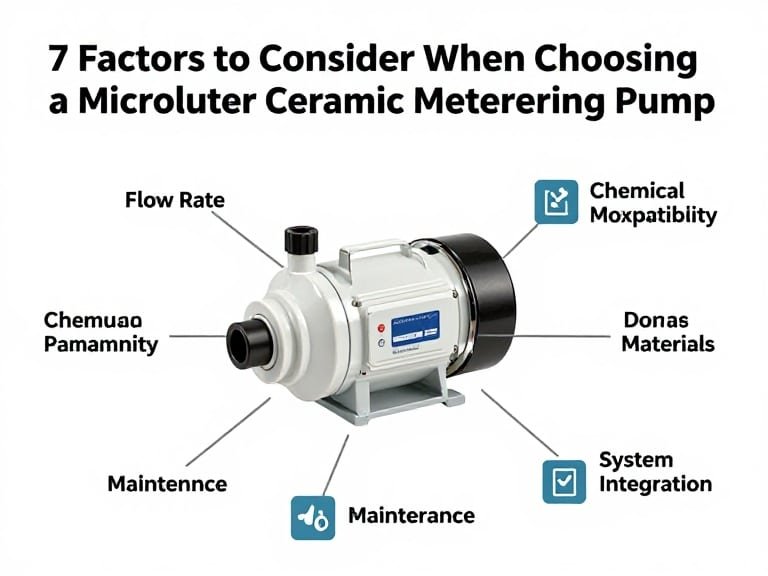
Quick Answer: How Do You Choose a Microliter Ceramic Metering Pump?
Choose a microliter ceramic metering pump by matching its usable dosing range to your actual target volume, verifying accuracy and repeatability under your operating conditions, checking every wetted material against the liquid, and confirming that the ceramic plunger or other precision components have suitable tolerances and surface finishes.
Our recommendation: Do not buy on minimum dispensing volume alone. Request performance data at your intended setpoint, using a representative liquid and operating cycle. For applications where small-volume consistency is critical, a well-matched ceramic positive-displacement design is generally more valuable than a pump with an impressive headline specification but insufficient application data.Table of Contents
- What Is a Microliter Ceramic Metering Pump?
- How It Works
- Seven Factors to Consider
- Pump Type Comparison
- Pros and Cons
- Applications and Best Use Cases
- Buying and Manufacturer Selection
- Cost-Benefit and Upgrade Decisions
- Common Selection Mistakes
- Testing and Validation
- JuchangCeramic Custom Manufacturing
- Expert Recommendation
- Frequently Asked Questions
- References
1. What Is a Microliter Ceramic Metering Pump?
A microliter ceramic metering pump is a precision fluid-delivery device designed to dispense or transfer very small liquid volumes, commonly measured in microliters (µL). Depending on its design, it may use a ceramic plunger, piston, cylinder, valve, or other precision ceramic component to control fluid movement.
Many designs use a positive-displacement principle. A moving component changes the volume of a small chamber, drawing liquid into the pump during one part of the cycle and displacing it through an outlet during another. The pump’s geometry and motion determine the theoretical displaced volume. Actual delivered volume also depends on factors such as leakage, trapped air, fluid properties, valve behavior, pressure, and mechanical tolerances.
What makes ceramic components useful?
Engineering ceramics such as alumina are used in precision fluid-handling components because they can offer high hardness, wear resistance, chemical resistance, and dimensional stability. These properties can be valuable in applications where repeated movement and contact with liquids gradually wear conventional components.
However, ceramic is not a universal solution. Different ceramic grades have different properties, and chemical compatibility depends on the specific liquid, concentration, temperature, exposure time, and the complete wetted assembly. Seals, valve seats, tubing, and connectors can become the limiting components even when the ceramic parts perform well.
For a deeper understanding of ceramic material selection, see our engineering ceramics material guide.
How does it differ from a general-purpose dosing pump?
A general-purpose dosing pump may be designed for milliliter-scale delivery, continuous flow, or relatively broad operating ranges. A microliter pump is selected for much smaller delivery quantities, where small dimensional changes, leakage paths, bubbles, and control variations can have a significant effect on the delivered amount.
For this reason, buyers should evaluate the actual performance at the target dose rather than assuming that a pump with a wide nominal range will provide equal precision at every setting.
Recommended products
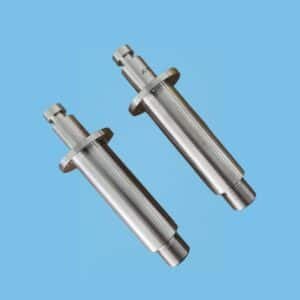
2. How Does a Microliter Ceramic Metering Pump Work?
In a typical ceramic plunger metering design, a precision plunger moves inside a closely matched cylinder or chamber. During the intake phase, the chamber draws in liquid. During the delivery phase, the plunger displaces a defined amount of fluid toward the outlet. Check valves or other flow-control elements may direct liquid through the intended path.
The ideal displaced volume can be estimated from the effective plunger area and stroke length:
Theoretical displacement:
Volume = Effective cross-sectional area × Stroke length
For a cylindrical plunger, the ideal volume per stroke is approximately π × (plunger diameter ÷ 2)² × stroke length.
This calculation is useful for understanding pump geometry, but it does not establish the actual delivered volume. Real performance may be affected by mechanical clearance, seal deformation, fluid compressibility, trapped air, valve response, temperature, pressure, and the characteristics of the liquid.
Why small-volume dosing is demanding
At microliter scale, a small absolute error can become a meaningful percentage of the target dose. A 1 µL deviation is only a minor difference in a large transfer, but it represents 10% of a 10 µL target. This is why buyers need both absolute and relative performance information.
It is also important to distinguish between three terms:
- Resolution: The smallest commanded or adjustable change in the dosing setting. Resolution describes control capability, not necessarily actual delivery accuracy.
- Accuracy: How close the measured delivered volume is to the intended target.
- Repeatability: How closely repeated deliveries agree with one another under the same conditions.
A pump may have fine adjustment resolution but poor repeatability. It may also repeat a slightly incorrect volume very consistently. Professional buyers should request all three performance characteristics where applicable.
3. Seven Factors to Consider When Choosing a Microliter Ceramic Metering Pump
Factor 1: Dosing Range, Minimum Volume, and Resolution
Start with the volume your process actually needs. Define the normal operating dose, the minimum and maximum dose, the frequency of delivery, and whether the pump must support multiple recipes or product formats.
Do not choose a pump simply because its catalog lists a very small minimum volume. A stated minimum may describe a theoretical or specially configured operating condition rather than a volume that can be delivered consistently in your process.
For example, a laboratory instrument dosing 5–20 µL of reagent has a different requirement from an industrial machine dispensing 50–200 µL of adhesive. Both may be described as microliter applications, but their flow rates, operating cycles, pressure requirements, and control needs are not identical.
Ask the manufacturer for:
- Minimum and maximum practical dispensing volumes.
- Recommended operating range for your target dose.
- Smallest adjustable increment or command resolution.
- Delivery volume per stroke or cycle, where relevant.
- Performance at the low, middle, and high points of the intended range.
Our recommendation: Select a pump whose normal operating dose sits comfortably inside its validated working range. Avoid running continuously at the extreme lower or upper limit unless the manufacturer has provided performance data for that condition.
Factor 2: Accuracy, Repeatability, and Calibration
Accuracy and repeatability should be evaluated separately. A supplier may advertise a high-precision pump, but that description is not enough to support a production decision. Request numerical specifications, the measurement method, test conditions, sample size, and the conditions under which the results were obtained.
For commercial users, repeatability is often the first performance characteristic to examine. If every cycle delivers a different volume, process control becomes difficult. Accuracy is equally important where the absolute quantity affects a chemical reaction, reagent concentration, coating thickness, or final product quality.
Questions to ask about accuracy
- Is the accuracy figure expressed as a percentage of the setpoint, full scale, or another reference?
- Was the test performed with water or with a liquid similar to yours?
- How many repeated doses were measured?
- Was the pump tested at the intended operating pressure and cycle rate?
- Can the supplier provide calibration or inspection records?
- How does the pump perform after extended cycling?
Calibration should also be practical. Ask how the delivered volume can be verified after installation and whether the pump can be recalibrated without replacing the complete assembly. If the pump is used in a regulated or quality-controlled process, define the calibration interval and acceptance criteria with your quality team.
ISO 8655 provides useful metrological concepts for piston-operated volumetric apparatus, including terminology and user recommendations. It is not a blanket certification standard for every industrial ceramic metering pump. Use it as a relevant reference only where the equipment and application fall within its scope, and obtain a pump-specific validation method from the manufacturer.
Factor 3: Ceramic Material Grade and Wetted-Part Compatibility
Ceramic components are often selected for wear resistance and chemical durability, but the word “ceramic” alone does not tell you whether a pump is suitable for a particular liquid.
Alumina is a widely used engineering ceramic with high hardness, mechanical strength, and wear resistance. Other ceramic materials may be considered where the application requires different properties. The correct grade depends on the mechanical load, operating environment, dimensional requirements, and chemical exposure.
Compatibility must be checked across the entire fluid path. A ceramic plunger may be resistant to a liquid while an elastomer seal, metal spring, valve component, adhesive, or tubing material is not. If the liquid is aggressive, confirm every wetted material rather than reviewing the ceramic component in isolation.
What to provide to the manufacturer
- Liquid name and chemical composition.
- Concentration and expected contamination level.
- Operating and cleaning temperatures.
- Viscosity range and whether the liquid contains suspended particles.
- Any requirements for corrosion resistance, purity, or extractables.
- Expected contact time and cleaning or sterilization procedure.
For applications involving high temperatures or demanding industrial environments, material selection should be treated as an engineering decision. Our guide to ceramic components for high-temperature environments provides additional context on selecting ceramic materials for demanding conditions.
Our recommendation: Never approve a pump for a chemical application based only on an alumina compatibility chart. Confirm the complete wetted assembly and test it with the actual liquid wherever possible.
Factor 4: Plunger Geometry, Surface Finish, and Dimensional Tolerance
In a precision ceramic plunger pump, the geometry and finish of the moving components have a direct influence on performance. Plunger diameter, straightness, roundness, surface finish, cylinder geometry, and assembly clearance all matter.
Too much clearance may increase internal leakage or reduce volumetric efficiency. Too little clearance can increase friction, create unstable movement, or cause premature wear under unsuitable operating conditions. The correct fit is an engineered balance, not simply the tightest possible tolerance.
Surface finish also matters. A smooth, accurately finished ceramic surface can support stable movement and reduce unwanted friction. However, a specification such as surface roughness should be considered alongside material grade, dimensional tolerance, geometry, and the operating environment.
Ceramic plunger versus metal plunger
A metal plunger may be suitable where mechanical toughness, cost, and compatibility are well matched to the fluid and operating conditions. Ceramic may be more attractive where hardness, wear resistance, or chemical durability are important. Neither material is automatically superior in every application.
For more detail on the engineering trade-offs, review our discussion of ceramic plunger technology and sourcing considerations.
When evaluating a supplier, ask for the ceramic grade, dimensional inspection method, surface-finish specification, and critical tolerances. If your process requires a custom plunger, provide drawings or a sample and ask the manufacturer to identify which dimensions are functionally critical.
Factor 5: Sealing, Leakage, Dead Volume, and Valve Design
Even a precisely manufactured ceramic plunger cannot guarantee reliable metering if the sealing and valve arrangement is poorly matched to the application.
Leakage can reduce the amount of liquid delivered at the outlet. It can also cause dose variation when pressure changes. Dead volume—the liquid remaining in internal spaces that is not readily displaced—can create problems when changing liquids, cleaning the system, or handling expensive reagents.
Valve design is equally important. The inlet and outlet valves must respond reliably to the liquid properties and operating speed. A valve that works well with low-viscosity water may behave differently with a thicker liquid or a fluid containing particles.
What should you check?
- Whether the pump uses check valves, rotary valves, or another flow-control arrangement.
- Whether the valve materials are compatible with the liquid.
- How the design handles back pressure and suction conditions.
- Whether internal spaces can trap air or retain liquid.
- How easily the pump can be flushed, cleaned, or serviced.
- Whether leakage performance is specified at your operating pressure.
For applications where fluid routing and valve control are central to the process, compare the pump design with an appropriate ceramic rotary valve configuration. A rotary valve is not a substitute for every metering pump, but it may be relevant when the system needs controlled switching between fluid paths.
Factor 6: Drive Mechanism, Control System, and Operating Cycle
The pump head is only part of the dosing system. The drive mechanism determines how accurately and consistently the plunger or other displacement element moves. The control system determines how commands are translated into motion and how the pump integrates with the wider machine.
Depending on the design, a microliter ceramic metering pump may use a stepper motor, servo motor, or another actuator. A stepper-based system can offer convenient incremental motion control. A servo-based system may offer feedback and motion control advantages in applications that need dynamic adjustment. The best choice depends on the actual motion profile, load, speed, and control requirements.
Evaluate the complete operating profile
- Cycle rate: How many dosing cycles are required per minute or hour?
- Duty cycle: Does the pump operate intermittently or continuously?
- Control interface: Does it need a PLC, digital input, analog signal, or standalone controller?
- Position feedback: Is open-loop motion sufficient, or does the process need feedback?
- Pressure variation: Will the drive maintain the required motion under changing hydraulic loads?
- Noise and vibration: Are these important for the machine or laboratory environment?
Do not assume that higher motor speed automatically means higher usable throughput. Faster cycling can change valve response, fluid filling behavior, heat generation, and delivery consistency. The pump should be evaluated at the required production rate, not just at its maximum advertised speed.
Factor 7: Maintenance, Service Life, and Total Cost of Ownership
A pump that meets its initial performance target but requires frequent adjustment or replacement may be a poor long-term investment. Consider maintenance access, spare-part availability, cleaning requirements, wear monitoring, and the manufacturer’s ability to support repeat orders.
Ceramic wear components can be valuable in applications where abrasion and repeated mechanical contact are important concerns. However, service life still depends on the ceramic grade, surface finish, alignment, operating pressure, liquid cleanliness, lubrication conditions where applicable, and maintenance practices.
Ask the supplier:
- Which components are considered normal wear parts?
- Can seals, valves, or plungers be replaced separately?
- What maintenance interval is recommended for the intended duty cycle?
- Are replacement components dimensionally interchangeable?
- What inspection criteria indicate that a component should be replaced?
- Can the manufacturer support future batches with the same specifications?
For production equipment, serviceability is not a minor purchasing detail. A design that allows quick inspection and replacement of wear parts can reduce downtime and make maintenance costs more predictable.
4. Microliter Ceramic Metering Pump vs. Other Pump Types
Before selecting a ceramic metering pump, compare it with alternative fluid-delivery technologies. The correct comparison is not simply which pump is more precise. It is which technology can meet the required volume, fluid compatibility, operating conditions, and maintenance target at an acceptable total cost.
| Pump Type | Operating Principle | Potential Advantages | Limitations to Evaluate | Best-Fit Applications |
|---|---|---|---|---|
| Ceramic plunger metering pump | Positive displacement using a precision plunger and chamber | Can provide controlled small-volume delivery; ceramic contact parts may offer wear and chemical-resistance benefits | Requires precise manufacturing, suitable sealing, and compatibility checks across wetted parts | Precision dosing, chemical delivery, reagent dispensing, selected medical and analytical equipment |
| Metal plunger pump | Positive displacement using a metal plunger | Can offer mechanical toughness and may be economical for suitable fluids | Corrosion, wear, and compatibility depend on the metal grade and liquid | Applications where metal wetted parts meet the fluid and service requirements |
| Peristaltic pump | Rollers or shoes compress flexible tubing to move fluid | Fluid contacts the tubing rather than most internal drive components; tubing can be replaceable | Tubing wear, pulsation, material compatibility, and low-volume repeatability need evaluation | Fluid transfer, sampling, laboratory processes, and applications benefiting from replaceable tubing |
| Diaphragm metering pump | Flexible diaphragm changes chamber volume | Can isolate drive components from the liquid and suit controlled dosing | Diaphragm material, stroke behavior, valves, and minimum practical dose require evaluation | Chemical dosing and applications where diaphragm isolation is useful |
| Syringe pump | Motor-driven syringe plunger displaces liquid | Direct control of syringe displacement; convenient for laboratory-scale delivery | Syringe capacity, consumable cost, refill process, and operating pressure can limit use | Laboratory dispensing, analytical workflows, and low-volume controlled delivery |
For applications requiring a compact ceramic-based positive-displacement design, explore the microliter ceramic metering pump range. If the process needs a different displacement capacity or installation format, a miniature ceramic pump may also be worth evaluating.
5. Pros and Cons of a Microliter Ceramic Metering Pump
| Advantages | Limitations and Risks |
|---|---|
| Precision ceramic components can support controlled, repeatable mechanical movement when correctly designed and manufactured. | Precision machining and inspection can increase manufacturing cost compared with simpler pump components. |
| Hard ceramic surfaces can provide strong wear resistance in suitable operating conditions. | Ceramics are generally less tolerant of certain impact and tensile loading conditions than many metals; design and handling matter. |
| Selected ceramic grades can offer good chemical resistance. | Compatibility must still be checked for the exact liquid, concentration, temperature, and complete wetted assembly. |
| Positive-displacement designs can provide controlled delivery over a defined operating range. | Air bubbles, leakage, valve response, pressure, and fluid properties can affect actual delivered volume. |
| Precision ceramic components may support longer service intervals in applications where wear is a major failure mechanism. | Service life is application-dependent; poor alignment, contamination, or unsuitable operating conditions can cause premature failure. |
| Custom ceramic parts can be manufactured around specific dimensional and integration requirements. | Custom designs require clear technical specifications, sample validation, and potentially longer development time. |
Our verdict: A microliter ceramic metering pump is worth the investment when the application genuinely benefits from precision ceramic contact components and controlled small-volume displacement. It is not automatically the best choice for every liquid transfer task. If your process only needs general circulation or non-critical transfer, a simpler pump may be more economical.
6. Applications: Where Is a Microliter Ceramic Metering Pump Most Useful?
Laboratory and analytical equipment
Analytical instruments may need controlled delivery of reagents, solvents, or sample liquids in small quantities. Here, volume consistency, low internal retention, cleaning, and material compatibility are important. The pump must be assessed as part of the complete instrument, including tubing, connectors, control software, and calibration procedures.
Medical and diagnostic equipment
Medical and diagnostic systems can require repeatable fluid delivery in compact equipment. Ceramic components may be useful where wear resistance, dimensional precision, and fluid compatibility are important. However, a ceramic pump component alone does not make a complete device suitable for medical use. The full assembly, materials, manufacturing controls, validation, and applicable regulatory requirements must be assessed.
For application-specific designs, review medical ceramic pump solutions and dialysis ceramic pump applications.
Pharmaceutical and reagent dispensing
Processes that dispense reagents or small liquid quantities may benefit from a pump that offers stable delivery and compatible wetted materials. The liquid’s viscosity, chemical composition, cleanliness, and cleaning procedure should be documented before choosing the pump.
Industrial micro-dosing and precision dispensing
Selected manufacturing processes require controlled delivery of small quantities of chemicals, coatings, lubricants, or functional liquids. In these situations, a microliter pump can help standardize dosing and reduce manual variation. The pump must still be validated at the actual cycle rate and pressure used on the production line.
Automated equipment and OEM integration
OEMs often need a compact pump that fits a defined mechanical envelope and communicates with a larger control system. In addition to metering performance, buyers should evaluate mounting dimensions, motor configuration, connectors, signal requirements, service access, and production consistency.
7. How to Choose a Reliable Microliter Ceramic Metering Pump Manufacturer
For B2B buyers, choosing the manufacturer is as important as selecting the pump type. A supplier may have an attractive catalog, but precision metering applications need engineering support and repeatable manufacturing quality. We recommend evaluating the supplier on technical evidence rather than broad claims about precision or durability.
Check ceramic manufacturing capability
Ask whether the manufacturer controls the critical ceramic processes or relies entirely on external component sourcing. Relevant capabilities may include ceramic material selection, forming, sintering, precision grinding, lapping, dimensional inspection, and assembly. The supplier should be able to explain how these processes affect the pump’s functional dimensions.
Review inspection and quality-control procedures
Ask for the inspection plan covering critical dimensions, surface finish, component fit, sealing performance, and assembled pump operation. For repeat orders, request a documented specification so that later batches can be compared with the approved sample.
Request application-specific engineering support
A capable manufacturer should ask about your liquid, target dose, cycle rate, pressure, temperature, and installation conditions. If a supplier recommends a model without asking about the application, treat that recommendation cautiously.
Evaluate custom manufacturing and OEM support
Standard catalog products are suitable when their performance and dimensions already match the application. Custom manufacturing becomes more attractive when the pump must fit a particular machine, use a specific ceramic grade, meet a defined dimensional tolerance, or integrate with a specialized drive and valve arrangement.
Before choosing a supplier, compare the following:
| Supplier Evaluation Area | What to Request | Why It Matters |
|---|---|---|
| Technical documentation | Drawings, specifications, material grades, performance data | Confirms whether the pump fits the intended process |
| Precision manufacturing | Critical tolerances, surface-finish data, inspection methods | Supports consistent component fit and operation |
| Fluid compatibility | Wetted-material list and application review | Reduces the risk of corrosion, swelling, contamination, or premature failure |
| Performance validation | Test conditions, measured delivery results, repeatability data | Shows how the pump performs beyond its catalog description |
| OEM and customization | Drawing review, prototype process, sample lead time | Helps integrate the pump into a specific machine or instrument |
| After-sales support | Spare-part availability, maintenance guidance, response process | Reduces downtime and supports long-term operation |
8. Cost-Benefit Analysis: Is a Ceramic Metering Pump Worth the Investment?
A microliter ceramic metering pump may have a higher initial purchase price than a simpler pump. The relevant question is whether its performance and service characteristics reduce the total cost of operating the equipment.
Evaluate the following cost categories:
- Initial purchase cost: Pump head, ceramic components, motor, controller, and accessories.
- Integration cost: Mechanical design, electrical connections, software changes, and installation.
- Calibration and validation: Initial performance verification and ongoing measurement checks.
- Maintenance: Inspection, cleaning, replacement seals, valves, and wear components.
- Process losses: Incorrect dosing, rejected products, wasted reagents, or inconsistent output.
- Downtime: Production interruptions, troubleshooting, and replacement lead time.
Example: Comparing two pump options
Assume an OEM operates a dosing station that runs 20,000 cycles per month. Pump A has a lower purchase price but requires more frequent maintenance and produces a higher rate of dosing-related rejects. Pump B costs more initially but provides more stable delivery under the validated operating conditions.
The buyer should compare the total monthly cost rather than the purchase price alone:
Total cost of ownership:
Initial equipment cost + integration + maintenance + calibration + process losses + downtime cost.
Use actual service records and production data to quantify the difference. Do not assume that a ceramic pump will automatically last longer or eliminate dosing errors. Its value depends on whether its material, geometry, and operating characteristics address the application’s real failure points.
When an upgrade makes commercial sense
- Your current pump has inconsistent small-volume delivery.
- Wear or corrosion is causing frequent component replacement.
- Manual adjustment is creating avoidable variation between production batches.
- The process requires more stable dosing at a defined cycle rate.
- Equipment downtime costs more than the additional investment in a better-matched pump.
If your existing system already meets its accuracy, repeatability, maintenance, and compatibility requirements, upgrading purely to obtain ceramic components may not be worthwhile.
9. Common Mistakes When Choosing a Microliter Ceramic Metering Pump
Mistake 1: Selecting by the smallest advertised dose
A minimum-volume specification does not tell you how accurately the pump performs at that volume. Request actual test results at your intended setpoint and operating conditions.
Mistake 2: Confusing resolution with accuracy
A controller may accept very small increments, but that does not mean the pump physically delivers those increments with the same precision. Evaluate measured delivery rather than relying on the number of control steps.
Mistake 3: Checking only the ceramic material
Seals, valves, tubing, connectors, and other wetted components can determine whether the pump is chemically suitable. Review the entire fluid path.
Mistake 4: Ignoring air bubbles and fluid properties
Trapped air, viscosity changes, suspended particles, and liquid compressibility can affect filling and delivery. Make sure the pump is evaluated with a representative fluid and an appropriate priming procedure.
Mistake 5: Overlooking operating pressure
A pump tested at low pressure may not produce the same results under higher back pressure. Confirm performance at the actual system pressure and with the intended tubing and outlet configuration.
Mistake 6: Buying a custom pump without a clear specification
Custom machining cannot compensate for an incomplete design brief. Provide drawings, target volume, operating conditions, material requirements, and acceptance criteria before requesting a quotation.
Mistake 7: Treating initial performance as lifetime performance
A new pump may meet its delivery target but change over time as seals, valves, and moving components wear. Ask how performance should be monitored and what maintenance actions are recommended.
10. How to Test and Validate a Microliter Ceramic Metering Pump
Before approving a pump for production, establish a repeatable test method. A good validation plan checks more than whether liquid comes out of the outlet. It measures actual delivered volume and examines whether the pump continues to perform under representative conditions.
Step 1: Define the target and acceptance limits
Document the intended volume, acceptable deviation, repeatability requirement, operating frequency, pressure, temperature, and fluid properties. If the process has multiple dose settings, define acceptance criteria for each important setting.
Step 2: Use a representative test liquid
Water may be suitable for an initial functional check, but it does not reproduce every liquid’s viscosity, surface tension, chemical compatibility, or filling behavior. Use the actual process liquid when practical, or a justified test liquid with documented properties.
Step 3: Measure repeated deliveries
Collect multiple doses under controlled conditions and calculate the average delivered volume and variation. A gravimetric approach can be useful when the measurement setup has sufficient sensitivity and the liquid density is known. At very small volumes, balance resolution, evaporation, temperature, vibration, and handling can significantly affect the result.
Step 4: Test the real operating conditions
Repeat measurements at the intended cycle rate, operating pressure, and temperature. If the application includes start-stop operation, long idle periods, or frequent recipe changes, include those conditions in the test plan.
Step 5: Evaluate stability over time
Run the pump for a defined number of cycles and recheck delivery performance. Inspect for leakage, abnormal noise, inconsistent valve behavior, wear, and changes in dosing volume. The test duration should reflect the expected operating duty and the risk associated with the application.
Step 6: Document the approved configuration
Record the pump model, ceramic material, critical dimensions, seals, valves, controller settings, tubing, test liquid, operating conditions, and measured results. This creates a reference for production approval and future supplier quality checks.
Microliter ceramic metering pump purchasing checklist
- Target volume and practical operating range are confirmed.
- Accuracy and repeatability data are available at the intended dose.
- Resolution is not being confused with actual delivery accuracy.
- Ceramic grade and all wetted materials are identified.
- Plunger geometry, surface finish, and critical tolerances are specified.
- Sealing, valve design, dead volume, and leakage have been reviewed.
- Drive mechanism and control interface fit the machine.
- Operating pressure, cycle rate, and duty cycle have been considered.
- Maintenance procedures and replacement components are available.
- A representative sample has passed the agreed validation procedure.
11. JuchangCeramic: Custom Ceramic Manufacturing for Precision Pump Components
For OEMs and equipment manufacturers, a standard pump is not always the right fit. Some applications require a specific ceramic plunger dimension, custom cylinder geometry, a special material grade, or a precision ceramic component designed around an existing pump assembly.
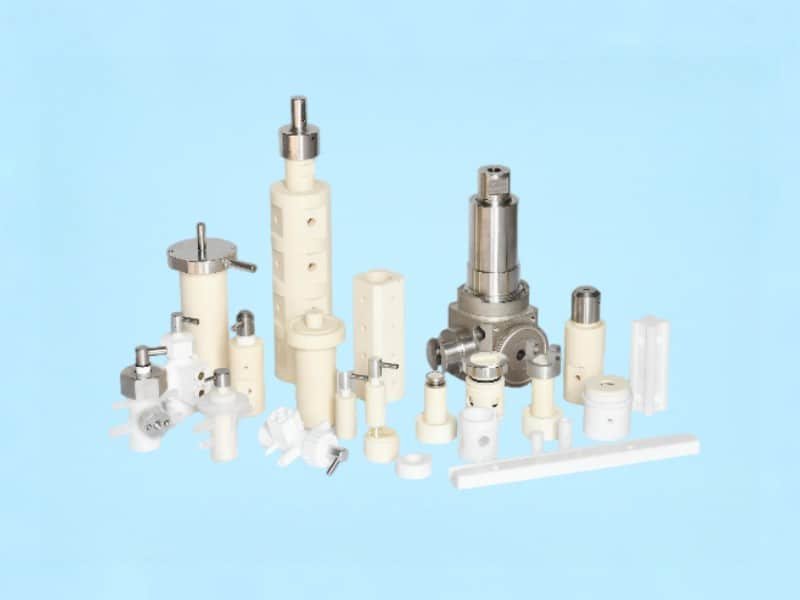
Custom Ceramic Manufacturing Services
JuchangCeramic provides OEM and custom manufacturing solutions for precision ceramic parts, pumps, and components.
Whether you have complete engineering drawings or an initial product concept, the team can review your requirements and support the development of a suitable manufacturing solution.
For microliter metering pump projects, custom ceramic components may be relevant when dimensional fit, material selection, surface finish, or integration requirements need to be tailored to the application.
Explore Custom Ceramic Manufacturing Services
When should you consider custom ceramic parts?
Custom manufacturing is worth discussing when an off-the-shelf component cannot meet the required dimensions, material properties, or assembly configuration. It may also be appropriate when an OEM wants to standardize a component across a production line or replace a part whose wear behavior is limiting equipment performance.
To make the engineering review productive, prepare the following information:
- 2D drawings or 3D CAD files, if available.
- Required ceramic material or the operating conditions that determine material selection.
- Critical dimensions, tolerances, and surface-finish requirements.
- Fluid composition, concentration, temperature, and pressure.
- Expected movement, load, cycle rate, and service-life target.
- Prototype quantity and expected annual production volume.
JuchangCeramic’s wider industrial ceramic product range can also be reviewed when a project requires related precision ceramic components beyond the pump itself.
12. Expert Recommendation: Which Microliter Ceramic Metering Pump Should You Choose?
From our experience with precision ceramic component requirements, the strongest purchasing decisions begin with the fluid and operating conditions—not with a catalog model number. A microliter ceramic metering pump should be selected as part of a complete fluid-handling system.
We recommend the following approach:
- For laboratory and analytical equipment: Prioritize verified delivery performance, repeatability, low internal retention, cleaning access, and compatibility with the actual reagent. Ask for a practical calibration procedure.
- For medical and diagnostic equipment: Review the full wetted assembly, material documentation, manufacturing controls, and applicable regulatory requirements. Do not treat ceramic material selection as a substitute for complete device validation.
- For chemical dosing: Confirm the chemical compatibility of every wetted component. Evaluate seals and valves as carefully as the ceramic plunger and cylinder.
- For high-cycle automated equipment: Check motor control, cycle rate, pressure, heat generation, maintenance access, and performance stability over extended operation.
- For OEM projects with unusual dimensions: Consider custom ceramic machining when standard components cannot provide the required fit or operating characteristics.
- For cost-sensitive applications: Compare the complete cost of ownership. A simpler pump may be sufficient if it already meets the process requirements.
For beginners, the most important step is to define the target volume and request a sample test using a representative liquid. For commercial users, insist on documented performance at the actual operating point, not just a general accuracy statement. For heavy-duty applications, pay particular attention to wear, pressure, alignment, contamination, and maintenance access.
Our final recommendation: Choose a microliter ceramic metering pump only when its verified performance, wetted materials, and service characteristics match the real process. Ceramic construction can provide meaningful advantages, but precision comes from the complete design: material grade, geometry, manufacturing tolerance, sealing, actuation, and validation. A supplier that can explain and document these details is a much safer long-term choice than one that sells on minimum volume or broad precision claims alone.
13. Frequently Asked Questions
1. What is a microliter ceramic metering pump used for?
It is used to dispense or transfer very small liquid volumes in applications such as laboratory equipment, analytical instruments, selected medical and diagnostic systems, reagent delivery, and precision industrial dosing. The specific application depends on the pump’s delivery range, accuracy, fluid compatibility, and operating conditions.
2. Why use ceramic components in a metering pump?
Engineering ceramics such as alumina can offer high hardness, wear resistance, and chemical resistance in suitable environments. These properties can be valuable for precision plungers, cylinders, and other fluid-contact components. The correct ceramic grade and complete wetted assembly must still be selected for the actual liquid.
3. What is the difference between accuracy and repeatability?
Accuracy describes how close the delivered volume is to the intended target. Repeatability describes how closely repeated deliveries agree with one another under the same conditions. A pump can be repeatable without being accurate, so both characteristics should be checked.
4. Is a ceramic plunger better than a metal plunger?
Not in every application. Ceramic may be preferable where hardness, wear resistance, or chemical durability are important. Metal may be suitable where toughness, cost, and chemical compatibility meet the requirements. Compare the specific materials and operating conditions rather than choosing by material category alone.
5. How do I choose the right microliter dosing range?
Define the normal dose, minimum and maximum dose, cycle frequency, and required adjustment increment. Then request performance data at the intended operating points. Choose a pump whose normal dose falls within its practical validated range rather than relying only on its advertised minimum volume.
6. Can a microliter ceramic metering pump handle corrosive liquids?
Some ceramic grades can resist many corrosive environments, but compatibility depends on the exact chemical, concentration, temperature, and exposure time. Seals, valves, tubing, and connectors must also be compatible. Obtain a wetted-material list and validate the complete assembly.
7. What causes inconsistent microliter dispensing?
Possible causes include trapped air, leakage, unsuitable valve response, changing liquid viscosity, pressure variation, temperature changes, wear, incorrect priming, and mechanical alignment problems. Troubleshooting should examine the complete fluid path and drive system rather than the ceramic plunger alone.
8. How do you test the accuracy of a microliter ceramic pump?
Use a controlled measurement method suitable for the target volume. A gravimetric method may be appropriate when the balance resolution, liquid density, evaporation control, and environmental conditions are adequate. Measure repeated deliveries under representative operating conditions and compare the results with predefined acceptance limits.
9. When should I choose a custom ceramic metering pump component?
Custom components are worth considering when standard dimensions, material grades, tolerances, or surface finishes do not meet the application’s requirements. Provide drawings, fluid properties, operating conditions, and expected production quantities so the manufacturer can assess feasibility and cost.
10. What should I ask a ceramic metering pump manufacturer before ordering?
Ask for the practical dosing range, accuracy and repeatability data, ceramic grade, wetted-material list, critical tolerances, surface finish, pressure and cycle limits, maintenance requirements, inspection records, sample availability, and OEM customization capability. Request validation under conditions that represent your actual process.
References
- ISO 8655-1:2022 – Piston-operated volumetric apparatus: Terminology, general requirements and user recommendations. International Organization for Standardization. Relevant metrological terminology and user recommendations for piston-operated volumetric apparatus within the standard’s scope.
- ISO 8655-10:2024 – Piston-operated volumetric apparatus: User guidance, competence, training, and suitability. International Organization for Standardization. Guidance on selecting and using applicable piston-operated volumetric apparatus and assessing fitness for intended use.
- Alumina (Al₂O₃) – Fine Ceramics Material Properties. KYOCERA. Technical information on alumina ceramic properties, including hardness, mechanical strength, wear resistance, and chemical resistance.