
Ceramic rotary valves are worth considering when an industrial process handles abrasive powders, corrosive materials, fine particles, or demanding metering duties that quickly wear conventional valve components. Their strongest advantage is the wear and corrosion resistance of engineered ceramic contact surfaces. But they are not a universal replacement for metal rotary valves: the right choice depends on the material being handled, particle size, operating pressure, temperature, sealing requirements, and the cost of downtime. In this guide, we examine 10 practical applications and explain where ceramic construction delivers measurable value.
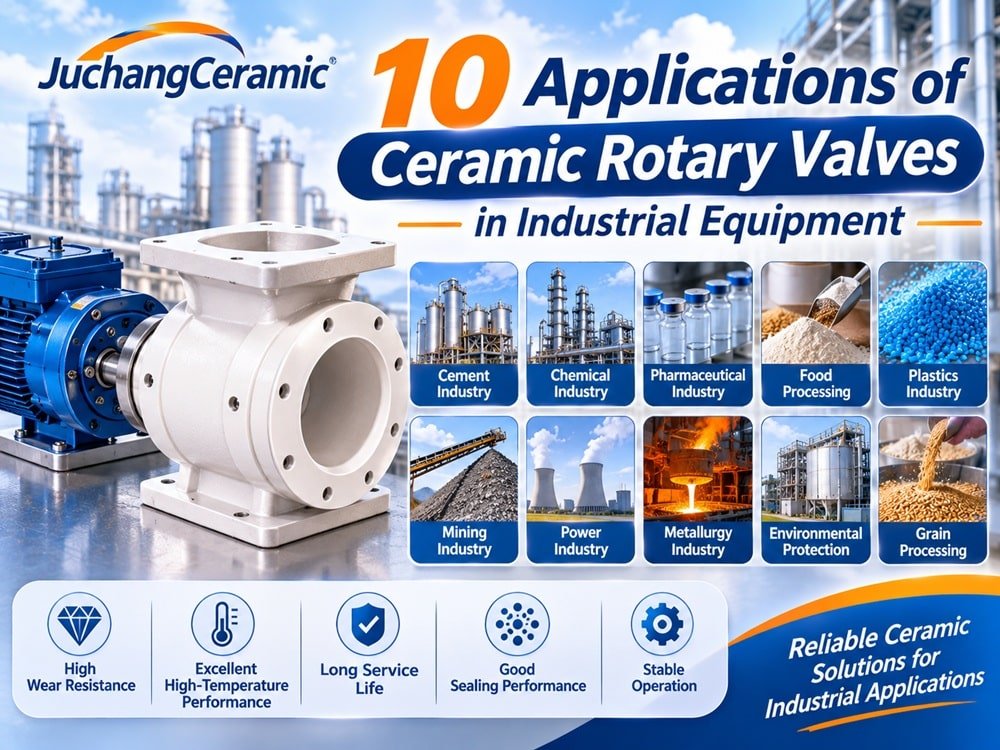
Quick Answer: Where Are Ceramic Rotary Valves Used?
Applications of Ceramic Rotary Valves include powder handling, chemical processing, pharmaceutical manufacturing, battery material production, food and ingredient processing, mineral processing, pneumatic conveying, abrasive material dosing, high-purity production, and specialized metering systems.
A ceramic rotary valve uses a rotating component to control the movement, isolation, or metering of material through a flow passage. Ceramic surfaces are particularly useful where abrasion, corrosion, contamination, or dimensional wear can reduce the reliability of conventional metal components. They are most worthwhile when the process conditions justify the material and manufacturing cost.
For equipment designers, the key is not simply specifying a ceramic valve. It is selecting the correct ceramic material, geometry, clearance, sealing arrangement, and manufacturing tolerance for the actual operating conditions.
Engineering note: “Ceramic rotary valve” describes a valve design and material approach, not one universal specification. Rotary airlocks, metering valves, diverter valves, and precision rotary distribution components can have different pressure, sealing, and flow requirements. Confirm the exact valve configuration before comparing suppliers.Table of Contents
- What Is a Ceramic Rotary Valve?
- How Ceramic Rotary Valves Work
- 10 Applications of Ceramic Rotary Valves
- Main Benefits and Limitations
- Ceramic vs. Metal Rotary Valves
- Choosing the Right Ceramic Material
- How to Specify a Ceramic Rotary Valve
- Common Selection and Operating Mistakes
- Custom Ceramic Manufacturing by JuchangCeramic
- Expert Recommendation
- Frequently Asked Questions
- References
1. What Is a Ceramic Rotary Valve?
A ceramic rotary valve is a rotary-flow control component that uses engineered ceramic parts in one or more critical contact, metering, or wear surfaces. Depending on its design, the valve may regulate material flow, isolate sections of a process, distribute material between outlets, or feed a controlled quantity of solids into downstream equipment.
Many industrial rotary valves use a rotor with pockets, channels, or other shaped passages. As the rotor turns, these features move material from an inlet toward an outlet. In a rotary airlock configuration, the rotor also helps maintain a pressure boundary between connected process zones while allowing solids to pass through.
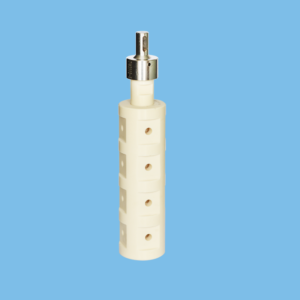
The ceramic element may be used in the rotor, liner, sleeve, valve seat, sealing interface, or another high-wear component. Not every ceramic rotary valve is made entirely from ceramic. In demanding industrial equipment, a hybrid construction often makes more engineering sense: ceramic is applied where abrasion or chemical resistance is most valuable, while a metal housing or support structure carries mechanical loads.
What Makes Ceramic Different?
Advanced ceramics such as alumina and zirconia offer a combination of hardness, wear resistance, chemical stability, and dimensional consistency. Their properties vary by composition, purity, manufacturing route, and finishing process. Alumina is widely used for wear-resistant industrial components, while zirconia is selected in applications where toughness and specific mechanical properties are important.
For a broader view of component options, see our ceramic plunger pump components overview and guide to engineering ceramics and alumina materials.
How It Differs from a Standard Metal Valve
A conventional metal rotary valve may be appropriate for general-purpose conveying and moderate wear conditions. Ceramic components become more attractive when repeated particle contact, corrosive media, or strict contamination limits create a costly maintenance problem. However, ceramic materials are generally less tolerant of tensile stress, impact, and poor mechanical support than ductile metals. Design quality is therefore critical.
2. How Do Ceramic Rotary Valves Work?
The operating principle is similar to other rotary valves. Material enters through an inlet, is captured or guided by a rotating element, and moves toward an outlet as the rotor turns. The valve’s geometry and rotational speed determine how material is transferred. Depending on the design, it may provide continuous feeding, intermittent dosing, isolation, or flow distribution.
Rotary Motion and Material Transfer
In a pocketed rotary airlock, each rotor pocket fills as it passes the inlet. Rotation carries the material to the discharge side, where gravity or downstream conveying removes it. The rotor and housing are designed to maintain controlled clearances. These clearances affect leakage, throughput, friction, and the risk of particles becoming trapped.
In a precision rotary metering valve, the geometry may be designed around a repeatable volume or controlled material transfer. The relationship between rotor speed and actual output depends on bulk density, particle size distribution, material flowability, fill efficiency, and operating conditions. A specified rotor speed alone does not guarantee a fixed mass flow rate.
Where Ceramic Components Make a Difference
When abrasive particles repeatedly contact the rotor or valve liner, a softer material can gradually lose its original geometry. Wear can increase clearances, change metering performance, and allow more leakage. Ceramic wear surfaces can slow this process when the selected grade and design match the material being handled.
Chemical exposure creates a different problem. Certain process chemicals can attack metal surfaces, coatings, or elastomeric seals. A compatible ceramic may provide a more stable contact surface, although the full assembly still needs review because seals, adhesives, metal supports, and other wetted components may remain vulnerable.
From our engineering perspective: The performance of a ceramic rotary valve is determined by the complete assembly, not by the ceramic material in isolation. Rotor geometry, bearing arrangement, sealing design, alignment, surface finish, and installation conditions all affect service life.
3. 10 Applications of Ceramic Rotary Valves in Industrial Equipment
The most convincing reason to use a ceramic rotary valve is a recurring process problem: rapid wear, unstable flow, corrosion, contamination, or frequent maintenance. The following applications are common areas where ceramic contact components may offer an engineering advantage. Actual suitability must be confirmed against the valve design and process data.
Application 1: Abrasive Powder Handling
Industrial plants often transfer powders that gradually wear the surfaces they contact. Examples include mineral powders, ceramic powders, certain fillers, and abrasive process additives. In rotary feeders and airlocks, repeated particle contact can wear rotor tips, pocket surfaces, and housing liners.
Ceramic wear components can help maintain the geometry of these surfaces for longer than some conventional materials. That matters when increasing clearance causes air leakage, inconsistent feeding, or a need for frequent maintenance.
Best use case: Dry, abrasive powders with a known particle-size range and a process where wear-related downtime is expensive.
Our recommendation: Specify the particle hardness, size distribution, moisture content, bulk density, and expected throughput. Do not select a ceramic grade based only on a general description such as “abrasive powder.”
Application 2: Chemical Processing Equipment
Chemical production may involve corrosive liquids, powders, slurries, or reactive ingredients. A rotary valve can be used in material transfer and dosing arrangements where chemical compatibility and consistent operation are important.
Ceramic components may resist selected chemical environments better than certain metals. But chemical resistance is not universal. Strong alkalis, acids, elevated temperatures, and process impurities can affect ceramic grades differently. Seals and metal interfaces may also determine the compatibility of the complete valve.
Best use case: Chemical handling where the ceramic grade has been verified against the actual chemical concentration, temperature, and exposure duration.
Our recommendation: Provide the supplier with the chemical name, concentration, temperature range, cleaning chemicals, and any process changes expected during the equipment’s service life.
Application 3: Pharmaceutical and Fine Chemical Production
Pharmaceutical and fine chemical equipment often needs controlled material transfer, predictable cleaning, and careful contamination management. A rotary valve may feed powders or granules between process stages, including blending, granulation, drying, and packaging operations.
Ceramic contact surfaces can be considered where abrasion resistance, chemical compatibility, or reduced metallic contact is important. However, ceramic does not automatically make a valve suitable for pharmaceutical production. Surface finish, cleanability, crevice design, traceability, sealing materials, and validation requirements must all be addressed.
Best use case: A process with documented requirements for material compatibility, cleaning, and product-contact construction.
Our recommendation: Treat hygienic design and validation as separate requirements from wear resistance. Request drawings, material certificates, surface-finish information, and cleaning compatibility documentation.
Application 4: Battery Material Manufacturing
Battery production uses a range of powders and engineered materials during mixing, coating preparation, handling, and related manufacturing stages. Some powders are abrasive, sensitive to contamination, or difficult to transfer consistently.
Ceramic rotary valve components may be useful where the process needs wear resistance and controlled contact with powder materials. The exact material choice must account for powder chemistry, particle characteristics, moisture sensitivity, and contamination limits. A ceramic component should not be assumed to be chemically inert to every battery material or electrolyte-related substance.
Best use case: Powder transfer stages where equipment wear or unwanted material contact is a documented process concern.
Our recommendation: Evaluate the full contamination pathway, including rotor, housing, seals, fasteners, cleaning tools, and upstream equipment. A ceramic rotor inside an unsuitable metal assembly will not solve every contamination issue.
Application 5: Food Ingredients and Additive Processing
Food processing equipment may handle salt, sugar, starch, flour, mineral additives, and powdered ingredients. Rotary valves can support controlled feeding from storage hoppers into mixers, conveyors, or packaging systems.
Ceramic wear components may be considered where abrasive ingredients or frequent cleaning create problems for conventional parts. The material and finished component must still meet the applicable food-contact, hygiene, and cleanability requirements for the market and application.
Best use case: Ingredient transfer where wear resistance is required and the proposed ceramic assembly can satisfy the plant’s hygiene standards.
Our recommendation: Do not treat “food-grade ceramic” as sufficient documentation. Confirm applicable food-contact requirements, surface finish, cleaning procedures, and compatibility of every product-contact material.
Application 6: Mineral Processing and Mining Equipment
Mineral processing systems often handle hard particles and abrasive mixtures. Feeders, transfer equipment, and material distribution systems can experience substantial wear when solids repeatedly strike or slide across internal surfaces.
Ceramic liners and rotary components may reduce wear in selected areas. They are especially worth evaluating where a small component failure can interrupt a larger conveying or separation process. However, large impact loads and highly variable feed conditions may require a different solution or a hybrid wear system.
Best use case: Controlled transfer of abrasive mineral materials where sliding abrasion is the dominant wear mechanism.
Our recommendation: Separate impact wear from sliding abrasion when reviewing the failure history. Ceramic is often attractive for abrasion, but severe impact and poor support can cause chipping or fracture.
Application 7: Pneumatic Conveying and Rotary Airlocks
Rotary airlocks are widely used at the interface between hoppers, filters, cyclones, silos, and pneumatic conveying lines. They transfer solids while helping maintain a pressure difference between connected equipment.
In abrasive service, rotor tips and housing surfaces may wear over time. Ceramic contact elements can be considered to improve wear resistance and preserve operating clearances. The design must still address pressure differential, air leakage, rotor speed, particle trapping, and mechanical alignment.
Best use case: Pneumatic conveying systems handling abrasive powders where leakage caused by progressive wear is a recurring issue.
Our recommendation: Specify operating pressure, conveying arrangement, allowable leakage, material throughput, and particle characteristics. A ceramic wear surface cannot compensate for an incorrectly sized airlock.
Application 8: Precision Powder Dosing and Metering
Some industrial processes need a controlled quantity of powder or granules delivered to a downstream stage. A rotary metering valve can provide repeatable material transfer when the rotor geometry and process conditions are properly controlled.
Ceramic components may help preserve critical dimensions in applications where abrasive material gradually changes the shape of the metering passages. Stable geometry can support consistent output, although actual dosing accuracy also depends on powder flowability, filling behavior, rotor speed, and calibration.
Best use case: Repeated dosing of abrasive or chemically challenging materials where wear-related dimensional changes affect process consistency.
Our recommendation: Define the required dosing range, repeatability, allowable variation, and calibration method. If the process requires very low flow rates, compare the rotary design with a purpose-built precision metering pump.
Application 9: High-Purity and Contamination-Sensitive Manufacturing
In selected electronics, specialty chemical, and advanced-material processes, contamination from equipment contact surfaces can be a serious concern. A ceramic component may be considered when its material composition and surface condition are compatible with the purity requirements.
High-purity service is not achieved simply by replacing metal with ceramic. The ceramic itself must have controlled composition, low contamination risk, suitable surface finish, and a manufacturing process that supports traceability. Assembly materials and cleaning procedures also matter.
Best use case: Processes with defined contamination limits and a documented need to control material contact.
Our recommendation: Specify acceptable impurity levels and request material and process documentation. Do not accept broad claims such as “zero contamination” without a measurable standard and test method.
Application 10: Specialized Industrial Metering and Fluid-Handling Systems
Some rotary valve assemblies are designed for specialized dosing, distribution, or fluid-handling equipment rather than conventional bulk-solids airlocks. In these systems, ceramic components may be used where chemical resistance, wear resistance, dimensional stability, or surface quality is important.
For liquid or precision fluid applications, the correct component may be a ceramic rotary valve, a ceramic metering pump, or another precision ceramic mechanism. These designs should not be treated as interchangeable. Flow range, viscosity, pressure, sealing, and accuracy requirements determine which architecture is appropriate.
Best use case: Specialized equipment where a ceramic rotary mechanism is required by the process design and its performance can be validated.
Our recommendation: Compare the rotary valve with alternative metering technologies before committing to a design. For low-volume precision fluid delivery, a microliter ceramic metering pump may be a more suitable solution than a general rotary valve.
| Application | Main process challenge | Potential ceramic advantage | Key selection factor |
|---|---|---|---|
| Abrasive powder handling | Progressive surface wear | Hard, wear-resistant contact surfaces | Particle hardness and size |
| Chemical processing | Corrosion and chemical attack | Compatibility with selected chemicals | Chemical concentration and temperature |
| Pharmaceutical production | Cleanability and contamination control | Stable, compatible contact surfaces | Hygienic design and validation |
| Battery materials | Powder wear and contamination | Controlled material contact | Powder chemistry and purity limits |
| Food ingredients | Ingredient wear and cleaning | Wear resistance in suitable assemblies | Food-contact and hygiene compliance |
| Mineral processing | Severe abrasion | Longer wear life in suitable zones | Impact versus sliding abrasion |
| Pneumatic conveying | Air leakage and rotor wear | Clearance stability through reduced wear | Pressure differential and leakage |
| Powder metering | Output drift from wear | Dimensional stability | Repeatability and calibration |
| High-purity production | Unwanted material contamination | Potentially suitable material composition | Impurity limits and traceability |
| Specialized metering | Wear, chemical exposure, precision | Application-specific ceramic properties | Valve versus pump architecture |
4. Benefits and Limitations of Ceramic Rotary Valves
Ceramic rotary valves can deliver meaningful value, but only when the operating conditions justify them. Their advantages are material-related; their limitations are also material-related. A good engineering decision weighs both rather than assuming ceramic is always superior.
Main Benefits
- Wear resistance: Suitable technical ceramics can resist sliding abrasion and particle contact better than many conventional metals.
- Chemical compatibility: Selected ceramic grades can perform well in chemical environments that are unsuitable for certain metal alloys.
- Dimensional stability: A wear-resistant contact surface can help preserve critical geometry and operating clearances.
- Reduced maintenance potential: Where abrasive wear is the main failure mechanism, longer component life may reduce replacement frequency and downtime.
- Application flexibility: Ceramic inserts, liners, rotors, and seats can be designed for specific equipment requirements.
- Potential contamination control: A suitable ceramic composition may be beneficial in processes where metallic contact or corrosion products are a concern.
Important Limitations
- Brittleness: Many technical ceramics have limited tolerance for impact, tensile stress, and sudden mechanical loading.
- Higher initial cost: Precision ceramic parts can require specialized powder preparation, forming, sintering, grinding, and inspection.
- Complex machining: Tight tolerances and complex geometries can increase manufacturing time and cost.
- Assembly sensitivity: Poor alignment, uneven support, excessive preload, or trapped particles can damage ceramic components.
- Not universally corrosion-proof: Chemical compatibility depends on the ceramic grade, concentration, temperature, and exposure conditions.
- System-level limitations: Seals, bearings, housings, and metal interfaces may fail before the ceramic component reaches its wear limit.
Pros and Cons Table
| Pros | Cons |
|---|---|
| High hardness and strong abrasion resistance in suitable grades | Can chip or fracture under impact or poor mechanical support |
| Good chemical resistance in selected process environments | Must be checked against the exact chemical and temperature |
| Can help preserve metering geometry and clearances | Precision manufacture and finishing can raise initial cost |
| Potential to reduce wear-related maintenance | Does not eliminate maintenance of seals, bearings, or drives |
| Useful for specialized contact surfaces and hybrid assemblies | Design and assembly tolerances require careful engineering |
Cost-benefit judgment: The right comparison is not ceramic purchase price versus metal purchase price. It is total operating cost over the expected service period: replacement parts, labor, process interruptions, leakage, product loss, cleaning, and quality variation. If metal parts already last for years without affecting output, a ceramic upgrade may not pay for itself. If wear repeatedly interrupts production, the economics can change quickly.
5. Ceramic vs. Metal Rotary Valves: Which Should You Choose?
Metal rotary valves remain a sensible choice for many general-purpose applications. They can be easier to fabricate, repair, and modify, and they may tolerate mechanical shock better depending on the alloy and design. Ceramic rotary valves are more attractive when wear, corrosion, or process-contact requirements justify their additional engineering and manufacturing demands.
| Evaluation factor | Ceramic rotary valve | Metal rotary valve | Practical recommendation |
|---|---|---|---|
| Abrasive wear | Often advantageous with a suitable grade and geometry | Performance varies by alloy, hardness, and coating | Consider ceramic when documented wear is a major cost |
| Impact resistance | More sensitive to impact and stress concentration | Many metals offer greater ductility | Use metal or a hybrid design in high-impact zones |
| Chemical resistance | Can be excellent for compatible media | Depends on alloy, coating, and chemical environment | Verify all wetted materials before selection |
| Precision finishing | Can achieve precise finished surfaces with specialized processing | Often easier to machine and repair | Compare achievable tolerances and inspection records |
| Initial cost | Often higher for complex precision parts | Often lower for standard designs | Compare lifetime cost, not purchase price alone |
| Maintenance | May reduce wear-related replacement in suitable service | May require more frequent wear-part replacement in abrasive service | Use actual maintenance history to justify the upgrade |
| Mechanical shock | Requires controlled loading and support | Often more forgiving under sudden loads | Assess startup, shutdown, and upset conditions |
| Customization | Specialized tooling and finishing may be required | Conventional machining may be more flexible | Discuss drawings and tolerances with the manufacturer early |
When Ceramic Is Worth the Upgrade
- The existing metal rotor or liner wears out frequently.
- Clearance changes cause unacceptable leakage or unstable feeding.
- Corrosion or process chemistry damages conventional contact surfaces.
- Contamination from material contact is a defined quality concern.
- Downtime and replacement labor cost more than the additional ceramic investment.
When Metal May Still Be the Better Choice
- The process has low abrasion and no significant corrosion issue.
- Impact, vibration, or mechanical shock is the dominant failure mechanism.
- The valve needs frequent on-site modification or repair.
- The required ceramic geometry is difficult to manufacture economically.
- The cost of ceramic construction cannot be justified by measurable process benefits.
For applications involving fluid dosing rather than bulk solids, also compare the valve with purpose-designed ceramic plunger pumps and other precision ceramic pumping systems. The correct technology depends on whether the process needs rotary solids transfer, volumetric liquid metering, or another function.
6. Choosing the Right Ceramic Material
Material selection has a direct effect on service life, cost, and manufacturability. Alumina and zirconia are common engineering ceramic families, but they are not interchangeable. The correct choice depends on the load, wear mechanism, chemical environment, temperature, and required dimensions.
Alumina Ceramic
Alumina is widely used in industrial wear components because it offers high hardness, good wear resistance, electrical insulation, and chemical stability in many environments. It is often a practical starting point for liners, sleeves, and other components exposed to abrasive materials.
Its limitations include brittleness and sensitivity to impact or tensile stress. The alumina grade, purity, density, microstructure, and surface finish should be selected based on the actual duty rather than a generic material label.
Zirconia Ceramic
Zirconia is often selected where greater fracture toughness than conventional alumina is required, although properties vary substantially by formulation and stabilization system. It can be useful for precision components subject to demanding mechanical conditions.
Zirconia is not automatically the best choice for every rotary valve. Cost, temperature, chemical compatibility, dimensional stability, and manufacturing feasibility must be evaluated.
Material Comparison
| Material | Typical strengths | Important limitations | Potential component use |
|---|---|---|---|
| Alumina | Hardness, abrasion resistance, electrical insulation, broad industrial use | Brittleness and impact sensitivity | Wear liners, sleeves, inserts, selected rotor parts |
| Zirconia | Higher fracture toughness than many conventional oxide ceramics, good precision potential | Higher cost; properties depend on formulation and temperature | Precision wear parts and mechanically demanding components |
| Silicon carbide | High hardness, thermal conductivity, wear and corrosion resistance in selected media | Brittle behavior and specialized processing requirements | Severe wear or selected chemical-service components |
| Silicon nitride | Good strength and thermal shock resistance for certain engineering applications | Material and processing cost; application-specific chemical limits | Specialized mechanical and high-performance components |
These are general material-selection considerations, not a substitute for grade-specific data. For a more detailed look at component choices, review our guide to wear-resistant ceramic parts and our information on high-precision zirconia and alumina ceramic parts.
Do Not Overlook the Seal and Housing Materials
A ceramic rotor can still be compromised by an unsuitable seal, bearing, shaft, or housing. For corrosive processes, the chemical compatibility review must cover every wetted material. For abrasive service, consider whether particles can enter clearances, damage seals, or accumulate around bearings.
7. How to Specify a Ceramic Rotary Valve
A manufacturer can only recommend a reliable design when the process requirements are clear. Sending a product name and asking for a quotation is rarely enough for a custom industrial component. We recommend preparing a specification that describes the material, operating conditions, required performance, and installation environment.
1. Define the Material Being Handled
Provide the material name, chemical composition where available, particle size distribution, hardness, bulk density, moisture content, abrasiveness, and flow characteristics. If the material changes between production batches, explain the range.
2. State the Operating Conditions
Document operating temperature, pressure differential, vacuum conditions, flow rate, throughput, rotor speed, duty cycle, and expected startup or shutdown conditions. Include abnormal operating conditions if they are credible in the plant.
3. Define the Required Valve Function
Clarify whether the equipment is intended for continuous feeding, volumetric dosing, pressure isolation, airlock service, or flow distribution. These functions may require different rotor geometry, sealing, and tolerances.
4. Set Performance and Tolerance Requirements
Specify allowable leakage, throughput range, dosing repeatability, dimensional tolerances, surface finish, and acceptable wear limits. If the valve is replacing an existing part, provide the original drawings and failure measurements where possible.
5. Confirm Installation and Maintenance Conditions
Provide available space, shaft interface, mounting arrangement, drive details, cleaning access, replacement procedure, and maintenance interval. Ceramic parts need appropriate support and assembly control to avoid localized stress.
6. Request Manufacturing and Quality Documentation
For a custom ceramic component, ask the supplier to explain the material grade, forming and sintering route, machining method, dimensional inspection, surface inspection, and traceability. Depending on the application, material certificates and inspection reports may be essential.
| Information to provide | Why it matters | What the manufacturer should clarify |
|---|---|---|
| Material and particle properties | Determines wear and chemical exposure | Recommended ceramic grade and contact design |
| Temperature and pressure | Defines mechanical and thermal duty | Operating limits and assembly design |
| Flow rate and valve function | Determines rotor geometry and sizing | Capacity, speed, and performance range |
| Drawings and interfaces | Ensures fit and installation compatibility | Manufacturing tolerances and revision control |
| Wear history | Identifies the actual failure mechanism | Design changes and expected service-life considerations |
| Quality requirements | Controls consistency and inspection | Certificates, dimensional reports, and traceability |
Choosing a Ceramic Rotary Valve Manufacturer
Do not choose a manufacturer solely because it lists alumina or zirconia in its catalog. A capable supplier should be able to discuss the relationship between material properties, component geometry, tolerances, and the operating environment.
Evaluate the supplier on:
- Experience with the specific ceramic material and component type.
- Ability to manufacture the required dimensions and tolerances.
- Precision grinding and finishing capability.
- Material consistency and quality-control procedures.
- Engineering support for drawings, prototypes, and design revisions.
- Documented inspection and traceability appropriate to the application.
- Communication, lead time, repeat-order consistency, and after-sales support.
For custom projects, a supplier that can review the application before production is generally more valuable than one that simply accepts a drawing without discussing manufacturability or operating risks.
8. Common Mistakes When Using Ceramic Rotary Valves
Ceramic components can provide long service in the right conditions, but poor selection and assembly can lead to premature failure. These are the mistakes we recommend addressing before ordering or commissioning a valve.
Mistake 1: Selecting Ceramic Only Because It Is Hard
Hardness is important for abrasion resistance, but it does not describe impact resistance, fracture toughness, chemical compatibility, or thermal behavior. A harder material can still fail quickly if the process creates impact or uneven loading.
Mistake 2: Ignoring Particle Entrapment
Particles trapped between the rotor and housing can create local stress, increase torque, damage surfaces, or cause jamming. Clearance design and the behavior of the handled material must be reviewed together.
Mistake 3: Applying Excessive Assembly Force
Ceramic parts can be damaged by uneven clamping, incorrect interference fits, shaft misalignment, or concentrated contact pressure. Follow the manufacturer’s assembly instructions and use the specified support and fastening approach.
Mistake 4: Treating a Ceramic Valve as Maintenance-Free
Even when ceramic wear surfaces last longer, bearings, seals, drives, and other mechanical parts still require inspection. Monitor vibration, torque, leakage, output consistency, and signs of abnormal contact.
Mistake 5: Overlooking Thermal Expansion Differences
Ceramic and metal components can expand at different rates. Temperature changes may affect clearances and contact stresses, especially in assemblies with tight tolerances. The design should account for the full operating temperature range, not only room-temperature dimensions.
Mistake 6: Failing to Validate the Actual Process
A laboratory material test cannot fully reproduce every industrial operating condition. Where the application is critical, test the component with representative process material and realistic pressure, speed, and temperature conditions before full-scale deployment.
Mistake 7: Comparing Quotes Without Comparing Specifications
Two suppliers may quote what appears to be the same ceramic component while using different material grades, tolerances, surface finishes, or inspection methods. A lower price is not a meaningful saving if the component does not meet the same requirements.
9. Custom Ceramic Manufacturing Services from JuchangCeramic
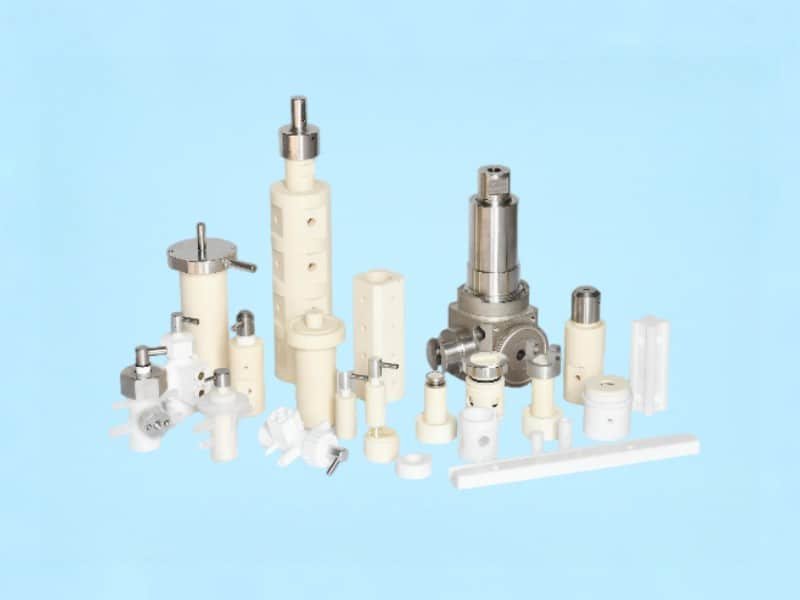
Some industrial applications cannot be solved with a standard ceramic component. The valve may require a special rotor profile, a precision sleeve, a wear-resistant liner, or a ceramic insert designed around an existing machine. In these cases, the supplier’s ability to manufacture from drawings and support design refinement becomes an important purchasing factor.
Custom Ceramic Manufacturing Services
JuchangCeramic delivers professional OEM and custom manufacturing solutions for precision ceramic parts, pumps, and components. Whether you have complete drawings or just an idea, we transform your requirements into high-performance products with accurate quotation and reliable production.
- OEM and custom precision ceramic components.
- Manufacturing support based on drawings or project requirements.
- Component solutions for pumps and industrial equipment.
- Engineering discussion around material, dimensions, and application needs.
Explore JuchangCeramic custom ceramic machining services.
What to Send for a Custom Quotation
For a faster and more accurate quotation, provide as much of the following information as possible:
- 2D engineering drawings or 3D CAD files, including revision number.
- Required ceramic material or the operating conditions for material recommendation.
- Dimensions, tolerances, surface finish, and critical inspection points.
- Operating temperature, pressure, chemical exposure, and handled material.
- Prototype quantity, estimated annual demand, and expected order schedule.
- Any existing failure photos, worn components, or performance problems.
If you are still comparing component types, browse the wider wear-resistant ceramic parts range or review the company’s industrial ceramic applications guide to understand where advanced ceramics are used across industrial equipment.
When Should You Consider a Different Ceramic Component?
A rotary valve is not always the correct solution. If your equipment needs controlled liquid delivery at a defined volume, a ceramic plunger pump may be more appropriate. For medical or highly specialized dosing, the system may require a purpose-designed medical ceramic pump or dialysis ceramic pump, depending on the equipment design and applicable requirements.
For a rotary valve project, the priority is to establish the actual function first, then select the component architecture and ceramic grade. This prevents spending money on a technically impressive material that does not solve the process problem.
10. Expert Recommendation: Are Ceramic Rotary Valves Worth Using?
From our experience with industrial ceramic component requirements, ceramic rotary valves are most valuable when they solve a specific and expensive operating problem. They should not be selected simply because ceramic sounds more advanced than metal. The strongest cases involve repeated abrasive wear, chemical compatibility issues, dimensional wear that affects leakage or metering, or contamination concerns that can be addressed through suitable ceramic construction.
For Beginners and Equipment Buyers
Start with the failure history of the existing valve. If the current component works reliably and maintenance costs are low, there may be little reason to upgrade. If you are replacing worn parts repeatedly, collect the process data and ask a manufacturer to assess whether ceramic contact surfaces can improve service life.
For Plant Engineers
Focus on the wear mechanism, pressure conditions, particle behavior, rotor clearances, and assembly support. Confirm that the proposed ceramic grade is suitable for the operating environment. If the valve is critical to production, arrange a representative trial and establish measurable acceptance criteria before making a full production change.
For OEMs and Industrial Equipment Manufacturers
Consider ceramic components during the design stage rather than treating them as a late replacement for failed metal parts. Early involvement allows the rotor geometry, housing, seals, and ceramic supports to be designed as one assembly. This can reduce avoidable stress concentrations and improve manufacturability.
For Commercial and High-Duty Applications
Calculate the total cost of ownership. Include initial purchase price, expected component life, replacement labor, downtime, process losses, inspection, and the consequences of inconsistent output. A ceramic upgrade is commercially justified when the reduction in operating cost or process risk exceeds the additional investment.
Our final recommendation: Choose a ceramic rotary valve when wear, corrosion, or process-contact requirements create a measurable need for ceramic performance. Use alumina, zirconia, silicon carbide, or another engineering ceramic only after matching its properties to the actual service conditions. Work with a manufacturer that can review the drawings, tolerances, material, and assembly—not just quote a part number.
Quick Summary Table
| Decision point | Practical conclusion |
|---|---|
| Best reason to use ceramic | Reduce a documented wear, corrosion, or contamination problem |
| Most relevant industries | Chemical, pharmaceutical, battery materials, food ingredients, minerals, and powder processing |
| Main material options | Alumina, zirconia, silicon carbide, and silicon nitride, depending on duty |
| Biggest design risk | Impact, particle entrapment, misalignment, or poor mechanical support |
| Most important supplier capability | Material selection, precision machining, dimensional inspection, and application support |
| When to upgrade | When lifetime maintenance and downtime costs justify the initial investment |
| When not to upgrade | When the existing metal valve meets requirements at a lower total cost |
11. Frequently Asked Questions About Ceramic Rotary Valves
1. What is a ceramic rotary valve used for?
A ceramic rotary valve is used to control, transfer, isolate, or meter material in industrial equipment. Typical applications include abrasive powder handling, chemical processing, pharmaceutical production, battery material processing, pneumatic conveying, mineral processing, and specialized metering systems. Ceramic components are most useful when wear resistance, chemical compatibility, or controlled material contact is important.
2. What are the main benefits of ceramic rotary valves?
The main benefits can include high hardness, abrasion resistance, chemical stability in selected environments, and the ability to preserve critical dimensions under wear. These properties may reduce maintenance and downtime in suitable applications. Actual performance depends on the ceramic grade, valve design, operating conditions, and assembly quality.
3. Are ceramic rotary valves better than metal rotary valves?
Not in every application. Ceramic rotary valves may be better for selected abrasive or corrosive duties, while metal valves can be more suitable for impact-heavy service, general-purpose applications, or projects where lower initial cost and easier repair are priorities. Compare total operating cost and failure mechanisms before deciding.
4. Which ceramic material is best for a rotary valve?
There is no universal best material. Alumina is widely used for wear-resistant components, zirconia may be selected when higher fracture toughness is needed, and silicon carbide or silicon nitride can suit specialized operating conditions. The correct grade depends on abrasion, impact, chemical exposure, temperature, tolerances, and cost.
5. Can ceramic rotary valves handle abrasive powders?
Yes, ceramic contact surfaces can be suitable for selected abrasive powder applications. The design must account for particle hardness, size distribution, flow behavior, rotor clearance, and the possibility of particles becoming trapped. Severe impact or uncontrolled mechanical loading can still damage ceramic components.
6. Are ceramic rotary valves suitable for chemical processing?
They can be suitable when the ceramic grade and all other wetted materials are compatible with the process chemicals. Chemical concentration, temperature, exposure duration, cleaning agents, and seals must be reviewed. Do not assume every ceramic composition is resistant to every chemical.
7. Do ceramic rotary valves require less maintenance?
They may reduce maintenance associated with wear of the ceramic contact surfaces, particularly in abrasive service. However, bearings, seals, shafts, drives, and housings still need inspection. Maintenance intervals should be based on actual operating data rather than a general assumption that ceramic parts are maintenance-free.
8. Are ceramic rotary valves suitable for food and pharmaceutical equipment?
They may be used in suitable equipment, but the ceramic material alone does not establish compliance. The complete assembly must meet the relevant product-contact, hygienic design, cleaning, traceability, and validation requirements for the application and market.
9. What information is needed for a custom ceramic rotary valve quotation?
Provide engineering drawings or CAD files, material requirements, dimensions and tolerances, handled material, particle size, temperature, pressure, flow rate, operating cycle, and expected quantity. Existing worn parts or failure photos can also help the manufacturer understand the problem and recommend a practical design.
10. How do I choose a ceramic rotary valve manufacturer?
Look for experience with the required ceramic materials, precision machining and finishing capability, dimensional inspection, material traceability, engineering support, and repeat-order consistency. A strong supplier should discuss the operating conditions and potential design risks before confirming the quotation.
11. Are ceramic rotary valves expensive?
They often have a higher initial cost than standard metal alternatives because ceramic manufacturing and precision finishing can be more demanding. They may still offer better value when wear-related replacement, downtime, leakage, or process inconsistency creates a high operating cost. A lifecycle cost comparison is more useful than purchase price alone.
12. Can JuchangCeramic manufacture custom ceramic rotary valve components?
JuchangCeramic provides OEM and custom manufacturing solutions for precision ceramic parts, pumps, and components. For a rotary valve project, provide the drawings or application requirements so the team can review material, dimensions, tolerances, and manufacturing feasibility. Final suitability depends on the project specification and confirmed manufacturing capability.
12. References and Technical Reading
The following sources provide technical background on rotary valve operation, pneumatic conveying equipment, and engineering ceramic properties. Use the relevant standards and manufacturer documentation for the specific valve design and industry application.
- U.S. Food and Drug Administration (FDA). Food contact substances and regulatory information. This is useful when evaluating materials used in food-contact equipment; compliance must be assessed for the actual substance and conditions of use. FDA Food Contact Substances.
- European Commission. Regulation (EC) No 1935/2004 on materials and articles intended to come into contact with food. Relevant for food-contact material requirements in the European Union. Read the regulation.
- U.S. Occupational Safety and Health Administration (OSHA). Combustible dust information and guidance. Relevant to risk assessment in facilities handling combustible powders and dusts; rotary valve selection does not replace a complete dust hazard analysis. OSHA Combustible Dust.
About JuchangCeramic
JuchangCeramic provides OEM and custom manufacturing solutions for precision ceramic parts, pumps, and industrial components. From drawing-based production to projects that begin with an application concept, the focus is on matching material selection and manufacturing requirements to the intended equipment use.
For a ceramic rotary valve or related component project, prepare your operating conditions, drawings, and performance requirements before requesting a quotation. This gives the engineering and manufacturing team a stronger basis for evaluating material options, tolerances, and production feasibility.