
About the Author: JuchangCeramic is a professional manufacturer dedicated to the research, development, and production of advanced precision ceramic materials and industrial ceramic components. Located in Pingshan District, Shenzhen, Guangdong Province—a global hub for industrial manufacturing—we leverage decades of experience to provide high-performance solutions for the most demanding technical applications.
Advanced ceramics, also referred to as technical or fine ceramics, have transcended their traditional origins to become the backbone of high-stakes industrial sectors. Unlike conventional clay-based ceramics, advanced ceramics are engineered from highly purified synthetic powders through controlled chemical processes. These materials exhibit exceptional mechanical, thermal, and electrical properties, making them indispensable in aerospace, semiconductor manufacturing, chemical processing, and medical technology. From our experience at JuchangCeramic, selecting the correct material grade is the difference between a system’s success and catastrophic mechanical failure.
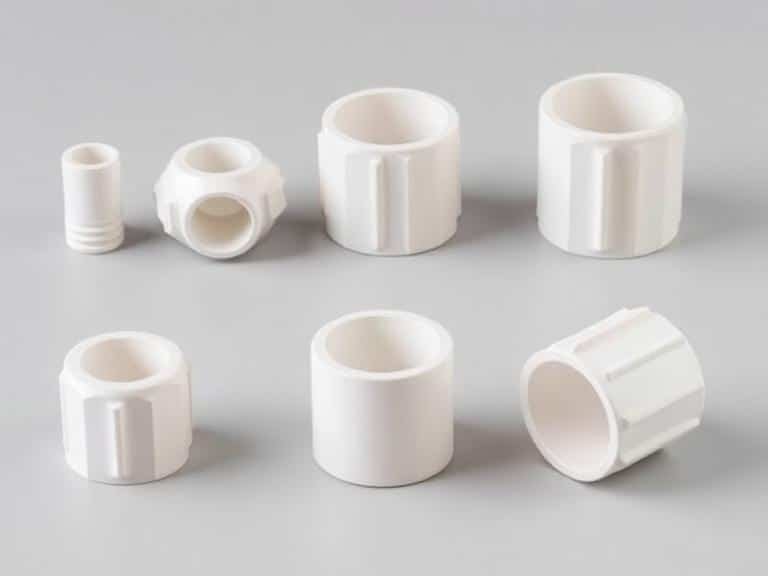
As industrial environments become increasingly extreme—characterized by higher temperatures, more corrosive reagents, and the need for micron-level precision—understanding the specific capabilities of various advanced ceramics examples is paramount for engineers. In this guide, we examine seven critical materials that are defining industrial capabilities in 2026, offering practical insights into their synthesis, application, and performance metrics.
Table of Contents
- 1. Alumina (Aluminum Oxide, Al₂O₃)
- 2. Zirconia (Zirconium Dioxide, ZrO₂)
- 3. Silicon Carbide (SiC)
- 4. Silicon Nitride (Si₃N₄)
- 5. Boron Nitride (BN)
- 6. Aluminum Nitride (AlN)
- 7. Piezoelectric Ceramics (PZT)
- Summary Comparison Table
- Frequently Asked Questions (FAQs)
- References
1. Alumina (Aluminum Oxide, Al₂O₃)
Alumina remains the most ubiquitous of the advanced ceramics examples due to its versatile balance of properties and cost-effectiveness. In industrial manufacturing, we typically work with purities ranging from 95% to 99.7%. Higher purity levels yield superior corrosion resistance and dielectric strength. Alumina’s primary strengths lie in its high hardness, excellent electrical insulation, and chemical stability in both oxidizing and reducing atmospheres.
From our experience, alumina is the default choice for high-voltage insulators and wear-resistant components. In 2026, the demand for precision-engineered alumina components has surged, particularly in the production of alumina ceramic tube manufacturers 2026 specifications. These tubes serve as critical furnace liners and thermocouple protection sheaths, capable of operating at continuous temperatures up to 1700°C. For those requiring standardized or tailored solutions, our industrial ceramic products catalog highlights the diverse geometries possible with this material.
2. Zirconia (Zirconium Dioxide, ZrO₂)
Often referred to as ceramic steel, Zirconia is unique among advanced ceramics examples for its high fracture toughness. Pure zirconia undergoes a volume expansion during cooling that causes cracking; therefore, it is typically stabilized with oxides like Yttria (Y₂O₃) or Magnesia (MgO). This yttria-stabilized zirconia (YSZ) utilizes a transformation toughening mechanism that arrests crack propagation, making it exceptionally resistant to impact and wear.
We recommend zirconia for applications involving high mechanical stress and abrasive environments. It is the material of choice for the medical industry (hip replacements) and high-pressure fluid handling. Specifically, in heavy-duty pumping applications, top ceramic plunger manufacturers utilize zirconia to prevent surface scoring and extend seal life. Its low thermal conductivity also makes it an excellent thermal barrier coating. For specialized sharpening and finishing, it is also utilized in the best ceramic honing rod options for professional-grade maintenance.
3. Silicon Carbide (SiC)
Silicon Carbide is a non-oxide ceramic that offers the highest hardness of all advanced ceramics examples except for diamond and boron carbide. Its superior thermal conductivity, combined with a low coefficient of thermal expansion, gives it remarkable thermal shock resistance. SiC maintains its mechanical strength at temperatures exceeding 1400°C and is virtually chemically inert.
In our Shenzhen facility, we often process Sintered Silicon Carbide (SSiC) for semiconductor wafer processing equipment and mechanical seal faces. Its ability to dissipate heat rapidly while maintaining dimensional stability is critical for the next generation of high-power electronics. For engineers looking for the the 5 best ceramic tubes for high temperature suppliers, Silicon Carbide is often the premium alternative to alumina when thermal cycling is frequent and aggressive.
4. Silicon Nitride (Si₃N₄)
Silicon Nitride is arguably the best all-around engineering ceramic for high-speed, high-temperature mechanical applications. It possesses a unique combination of high strength, toughness, and excellent thermal shock resistance. One of its most significant advantages is its low density (about one-third the weight of steel), which reduces centrifugal forces in rotating parts.
From our experience, silicon nitride is the gold standard for ceramic ball bearings used in electric vehicle motors and jet engines. These bearings can operate without lubrication and are immune to electrical pitting. As a custom precision ceramic parts supplier, we find that Si₃N₄ is increasingly requested for gas turbine components and welding nozzles where slag adhesion must be minimized.
5. Boron Nitride (BN)
Boron Nitride is often called white graphite due to its hexagonal crystal structure which allows for easy machining and excellent lubricity. Among advanced ceramics examples, BN stands out for its high dielectric strength and high thermal conductivity. It is one of the few ceramics that remains an electrical insulator while acting as an effective heat sink.
Hexagonal Boron Nitride (h-BN) is easily machined using standard metalworking tools, making it ideal for rapid prototyping of vacuum furnace components and crucible liners. In the electrical sector, the 7 best ceramic tube insulator manufacturers in 2026 utilize BN for high-power vacuum feedthroughs. Its non-wetting properties with molten metals also make it essential in aluminum and magnesium foundry applications.
6. Aluminum Nitride (AlN)
Aluminum Nitride is the premier material for thermal management in the semiconductor industry. It offers a thermal conductivity of up to 200 W/m·K (nearly ten times that of alumina) while maintaining excellent electrical insulation. Crucially, its coefficient of thermal expansion is closely matched to that of silicon wafers, minimizing mechanical stress during thermal cycling.
We recommend AlN for power electronics, LED packaging, and laser diodes. As heat flux densities in microchips continue to rise in 2026, the transition from alumina to aluminum nitride substrates has become a technical necessity for high-reliability systems. While more expensive to process due to its sensitivity to moisture during green-state manufacturing, its performance in heat dissipation is unmatched by other oxide ceramics.
7. Piezoelectric Ceramics (PZT)
Unlike the previous advanced ceramics examples that are chosen for structural or thermal roles, Piezoelectric ceramics (such as Lead Zirconate Titanate) are functional ceramics. They possess the unique ability to convert mechanical energy into electrical energy and vice versa. When a mechanical stress is applied, a voltage is generated; when an electric field is applied, the material undergoes physical deformation.
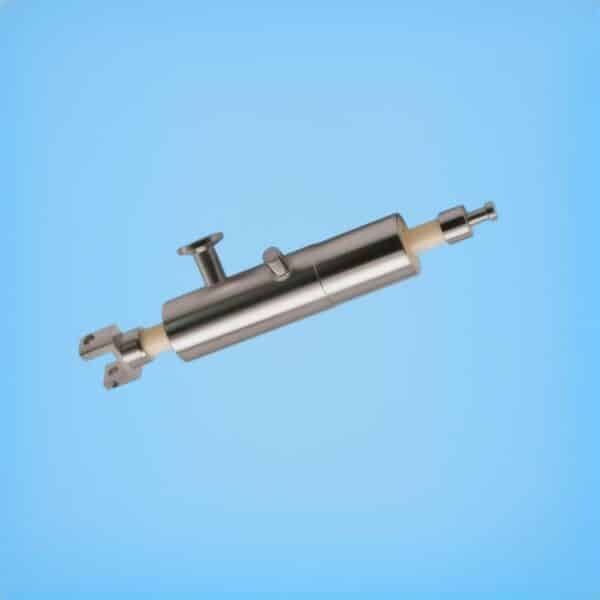
These materials are the heartbeat of modern sensing and actuation. They are found in ultrasonic transducers, inkjet print heads, fuel injectors, and sonar systems. In industrial automation, PZT actuators allow for sub-nanometer positioning accuracy. The complexity of PZT lies in the precise dopants used to tune its piezoelectric constants, requiring highly controlled cleanroom environments for production.
Summary Comparison Table
| Advanced Ceramic Example | Key Strength | Max Op Temp (°C) | Typical Application |
|---|---|---|---|
| Alumina (Al₂O₃) | Electrical insulation, cost | 1700°C | High-voltage insulators, furnace tubes |
| Zirconia (ZrO₂) | Fracture toughness, wear | 2400°C (Stabilized) | Pump plungers, dental implants |
| Silicon Carbide (SiC) | Hardness, thermal conductivity | 1600°C | Mechanical seals, wafer susceptors |
| Silicon Nitride (Si₃N₄) | Thermal shock, low density | 1200°C | Bearings, engine valves |
| Boron Nitride (BN) | Machinability, lubricity | 900°C (Air) / 2000°C (Inert) | Crucibles, heat sinks |
| Aluminum Nitride (AlN) | High thermal conductivity | 1370°C (Inert) | Semiconductor substrates, LED mounts |
| PZT (Piezoelectric) | Electromechanical coupling | ~300°C (Curie Point) | Sensors, ultrasonic cleaners |
Frequently Asked Questions (FAQs)
Why are advanced ceramics examples preferred over metals in high-temperature applications?
Advanced ceramics maintain their mechanical strength, stiffness, and chemical stability at temperatures where most metals would melt or oxidize. Furthermore, they offer superior wear resistance and can act as electrical insulators, which is impossible with standard metallic alloys.
What is the main challenge in manufacturing precision ceramic parts?
The primary challenge is shrinkage. During the sintering process, ceramic parts can shrink by 15-25% as the powder particles fuse. Achieving micron-level precision requires expert control over powder density and sintering profiles, often followed by diamond grinding for final finishing.
Is it possible to machine all advanced ceramics?
Most advanced ceramics must be machined in their “green” (unsintered) or “bisque” (partially sintered) state. Once fully sintered, they are so hard that only diamond-tipped tools or ultrasonic machining can be used. Boron Nitride and Macor are notable exceptions that can be machined in their fully dense state.
References
For further technical study on advanced ceramic materials and their industrial standards, we recommend the following authoritative resources:
- NIST Structural Ceramics Database – Comprehensive data on the properties of advanced structural ceramics.
- The American Ceramic Society (ACerS) – Leading organization for ceramic research and industry standards.
- Journal of the European Ceramic Society – Peer-reviewed research on advanced ceramics synthesis and applications.
In the evolving industrial landscape of 2026, the strategic implementation of these advanced ceramics examples allows companies to push the boundaries of what is possible in engineering. Whether it is the thermal management capabilities of Aluminum Nitride or the sheer mechanical resilience of Silicon Nitride, JuchangCeramic remains committed to delivering precision-manufactured components that meet these exacting standards. From our experience in Shenzhen, the future of technology is carved in ceramic.