
Silicon Carbide (SiC) stands as a cornerstone of modern material science, offering a rare combination of diamond-like hardness, exceptional thermal conductivity, and chemical inertness. As an advanced ceramic manufacturer, JuchangCeramic has observed an unprecedented surge in demand for SiC components across the semiconductor, aerospace, and chemical processing industries. From our experience, understanding how silicon carbide parts made is essential for engineers and procurement specialists who must navigate the trade-offs between different production methods, such as reaction bonding versus pressureless sintering.
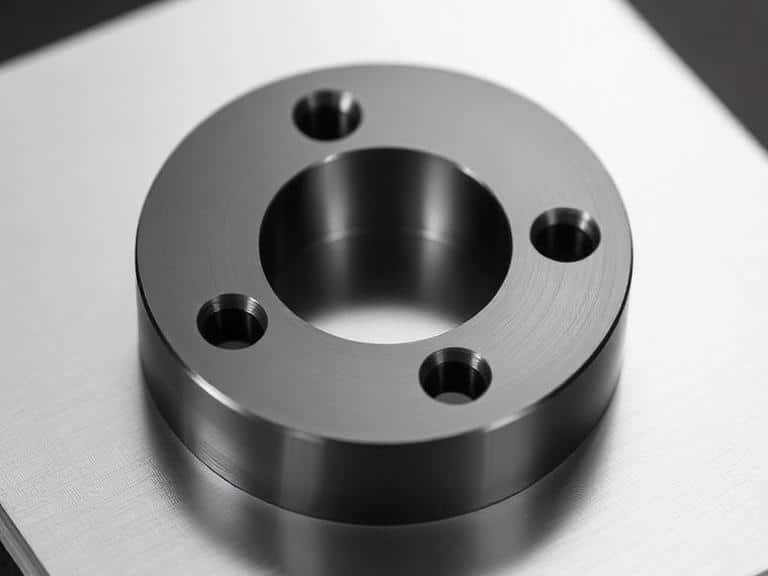
Based in Shenzhen, one of the world’s most sophisticated manufacturing hubs, JuchangCeramic specializes in the precision engineering of these materials. The manufacturing journey of a Silicon Carbide part is a multi-stage process that requires extreme temperatures, specialized atmospheres, and precision grinding. This guide will provide an authoritative look into the lifecycle of SiC production, detailing the technical nuances that define the quality of the final industrial component.
Table of Contents
- 1. Raw Material Synthesis: The Foundation of SiC
- 2. Shaping and Forming: From Powder to Green Body
- 3. Green Machining: Optimizing Pre-Sintered Geometry
- 4. The Sintering Phase: Reaction Bonding vs. Sintered SiC
- 5. Precision Finishing and Diamond Grinding
- 6. Industrial Applications and Material Performance
- 7. Summary of Manufacturing Techniques
- 8. Frequently Asked Questions
- 9. Technical References
1. Raw Material Synthesis: The Foundation of SiC
Silicon Carbide does not occur naturally in usable quantities on Earth; thus, the process begins with the Acheson process, a method developed over a century ago but refined significantly for modern electronics-grade ceramics. In this process, high-purity silica sand and petroleum coke (carbon) are heated in an electric resistance furnace to temperatures between 1700°C and 2500°C. The resulting chemical reaction produces high-quality SiC crystals.
For high-precision industrial parts, the purity of the starting powder is paramount. From our experience, the grain size distribution of the alpha-SiC or beta-SiC powder directly influences the density and mechanical strength of the finished part. We recommend that users specify the purity level, especially for applications involving semiconductors or chemical pump components where trace impurities can lead to premature failure. Once synthesized, the crystals are crushed, milled, and graded into specific particle sizes, often ranging from sub-micron to several hundred microns.
2. Shaping and Forming: From Powder to Green Body
The transition from loose powder to a solid part begins with forming, often referred to as creating a green body. The method chosen here is largely dictated by the part’s complexity and the required final density. Common methods include:
Dry Pressing and Isostatic Pressing
Dry pressing is ideal for simple geometries like discs or plates. However, for complex industrial components, we recommend Cold Isostatic Pressing (CIP). In CIP, the SiC powder is placed in a flexible mold and subjected to uniform high pressure in a liquid medium. This ensures a consistent green density throughout the part, which is critical for preventing warping during the sintering phase. JuchangCeramic frequently employs CIP for larger components such as high-temperature insulators and heavy-duty plungers.
Ceramic Injection Molding (CIM)
For small, intricate parts required in high volumes, CIM is the preferred method. By mixing SiC powder with a polymer binder, the material can be injected into a mold similar to plastic molding. This allows for complex features that would be impossible to achieve through standard pressing. However, the debinding process—removing the polymer—must be managed with extreme care to avoid internal cracks.
3. Green Machining: Optimizing Pre-Sintered Geometry
Silicon Carbide is notoriously difficult to machine after it has been sintered. Because the final sintered material is nearly as hard as diamond, machining it in its fully dense state is incredibly time-consuming and expensive. Therefore, we recommend green machining whenever possible. In this stage, the part is in its unsintered, chalk-like state. It can be turned, drilled, or milled using standard carbide or diamond-coated tools.
During green machining, engineers must account for the shrinkage factor. Depending on the sintering method, a part may shrink between 15% and 20% in linear dimensions. Accurate calculation of this shrinkage is what separates a world-class ceramic pump parts manufacturer from a standard supplier. Precision at the green stage reduces the amount of final diamond grinding needed, which drastically lowers the overall cost for the customer.
4. The Sintering Phase: Reaction Bonding vs. Sintered SiC
This is the most critical phase in determining the mechanical properties of silicon carbide parts made for industrial use. There are two primary sintering pathways utilized in modern manufacturing.
Reaction Bonded Silicon Carbide (RBSiC/SiSiC)
In reaction bonding, a green body composed of SiC and carbon is infiltrated with molten silicon at temperatures around 1450°C. The silicon reacts with the carbon to form additional SiC, which bonds the primary grains together. The advantage of this method is the near-zero shrinkage, allowing for very large and complex parts to be manufactured with high dimensional accuracy. However, RBSiC contains some residual free silicon (typically 8-15%), which limits its use in extremely high-temperature or highly corrosive alkaline environments. It is a common choice for ceramic tube applications in high heat environments where thermal shock resistance is vital.
Pressureless Sintered Silicon Carbide (SSiC)
SSiC is produced by sintering sub-micron SiC powder with small amounts of non-oxide sintering aids (like boron and carbon) at temperatures exceeding 2000°C in an inert atmosphere. This results in a single-phase material with nearly 100% density and no free silicon. SSiC offers superior corrosion resistance and higher hardness than reaction-bonded variants. From our experience, we recommend SSiC for the most demanding seal faces and chemical plungers. For those evaluating costs, refer to our ceramic plunger material selection guide for a deeper dive into the price-to-performance ratio.
5. Precision Finishing and Diamond Grinding
Once the sintering process is complete, the SiC part reaches its final hardness. Any remaining dimensional adjustments must be performed through diamond grinding. This involves using diamond-impregnated wheels to remove small amounts of material to achieve tolerances as tight as +/- 0.001mm. This phase also defines the surface finish, which is critical for components like seal rings or ceramic bearings.
We recommend specifying the surface roughness (Ra) early in the design process. Achieving a mirror finish through lapping adds significant cost. However, for high-friction applications, the reduced wear and extended lifespan of a polished SSiC surface provide a significant return on investment. JuchangCeramic utilizes high-precision CNC grinding stations to ensure that every industrial component meets the rigorous specifications of global technology manufacturing.
6. Industrial Applications and Material Performance
Silicon carbide parts made through these rigorous processes find themselves in the most hostile environments known to man. Their ability to maintain structural integrity at 1400°C makes them indispensable in the power generation and aerospace sectors. In the chemical industry, SiC’s resistance to acids and bases ensures the longevity of pumps and valves.
Furthermore, SiC serves as an exceptional electrical insulator in specific high-frequency and high-temperature contexts. For engineers looking for reliable insulation, exploring the best ceramic insulators for industrial use can provide insights into how SiC compares to alumina or zirconia. Additionally, the versatility of SiC is further evidenced in its widespread use in semiconductor wafers and kiln furniture. For a broader perspective on how these materials are changing the industry, see our expert guide on advanced industrial ceramics applications.
7. Summary of Manufacturing Techniques
| Process Stage | Common Method | Key Benefit | Professional Advice |
|---|---|---|---|
| Forming | Isostatic Pressing (CIP) | High density consistency | Best for large, thick-walled parts. |
| Pre-Sintering | Green Machining | Drastic cost reduction | Do 90% of shaping here to save on diamond grinding. |
| Sintering | Pressureless Sintering (SSiC) | Maximum chemical resistance | Recommended for high-acid/alkali seal environments. |
| Bonding | Reaction Bonding (RBSiC) | Zero shrinkage / large parts | Ideal for complex kiln furniture and large tubes. |
| Finishing | Diamond Grinding / Lapping | Micron-level precision | Essential for bearing and seal surfaces. |
8. Frequently Asked Questions
What is the main difference between Sintered SiC and Reaction Bonded SiC?
Sintered SiC (SSiC) is nearly 100% pure SiC with no residual silicon, providing higher hardness and corrosion resistance. Reaction Bonded SiC (RBSiC) contains 10-15% free silicon, which makes it easier to produce large, complex shapes with no shrinkage, but limits its performance in extremely high temperatures or corrosive environments.
Why are silicon carbide parts made using diamond grinding?
Silicon Carbide has a Mohs hardness of 9.5, which is second only to diamond. Conventional steel or carbide tools cannot cut it once it is sintered. Diamond-impregnated tools are the only effective means to achieve precise tolerances and smooth finishes on SiC parts.
Can SiC be used for complex 3D shapes?
Yes, through Ceramic Injection Molding (CIM) or complex green machining of isostatically pressed blocks. While the material is brittle and hard, modern CNC machining in the green state allows for significant complexity before the part is hardened during sintering.
Is Silicon Carbide resistant to thermal shock?
SiC has a very low thermal expansion coefficient and high thermal conductivity. This makes it exceptionally resistant to thermal shock compared to other ceramics like Alumina, which is why it is used so frequently in kiln furniture and heat exchanger tubes.
9. Technical References
- American Ceramic Society (ACerS) – Silicon Carbide Processing Standards. https://ceramics.org)
- Journal of the European Ceramic Society – Reaction Bonding Mechanisms in Silicon Carbide.
- National Institute of Standards and Technology (NIST) – Property Data for Advanced Ceramics. https://www.nist.gov)
- Shenzhen Industrial Technology Manufacturing Report 2026 – Pingshan District Manufacturing Hub.
At JuchangCeramic, we pride ourselves on being a professional manufacturer dedicated to the research, development, and production of advanced precision ceramic materials. Our facility in Shenzhen integrates the latest in sintering technology and diamond finishing to ensure that every silicon carbide part made under our roof meets the uncompromising standards of modern industry. Whether you are seeking solutions for chemical pumping, high-heat insulation, or aerospace bearings, SiC provides a performance threshold that few other materials can reach.