
In modern high-performance engineering, material limitations often dictate the ceiling of technological advancement. Metals degrade under harsh chemical exposure, and plastics warp under extreme thermal stress. This is where advanced technical ceramic solutions step in, offering unparalleled wear resistance, chemical inertness, and thermal stability. Compiling a comprehensive Industrial ceramic products list is essential for procurement managers and engineers seeking to upgrade their fluid control, semiconductor, battery manufacturing, and medical systems.
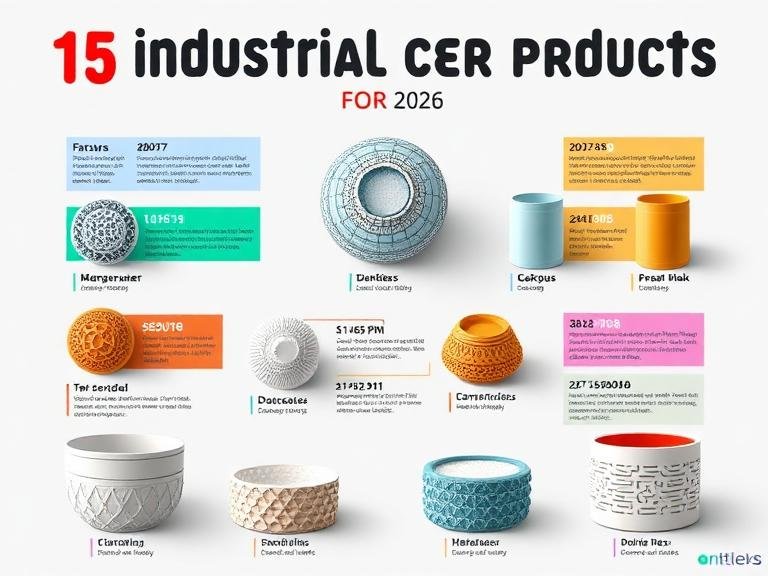
At JuchangCeramic, we focus rigorously on R&D, custom machining, and high-volume production for semiconductor, battery, and industrial applications. From our experience dealing with highly abrasive and corrosive environments, transitioning from legacy materials to technical ceramics consistently reduces system downtime and lowers the total cost of ownership. In this authoritative analysis, we present an extensively detailed Industrial ceramic products list, breaking down the top 15 components driving innovation across global sectors in 2026.
Table of Contents
- 1. The Necessity of Technical Ceramics in Modern Industry
- 2. Precision Fluid Control & Pumping Components
- 3. Medical & Biocompatible Ceramic Solutions
- 4. Semiconductor, Battery & General Industrial Ceramics
- 5. Summary Table: Industrial Ceramic Products List
- 6. Expert Recommendations for Material Selection
- 7. Frequently Asked Questions (FAQs)
- 8. Authoritative References
1. The Necessity of Technical Ceramics in Modern Industry
When reviewing any Industrial ceramic products list, it is crucial to understand the material science behind the components. Advanced ceramics, specifically Zirconia (ZrO2), Alumina (Al2O3), and Silicon Carbide (SiC), possess crystalline structures that grant them extreme hardness and thermal resistance. In fluidic systems, standard metal pumps suffer from cavitation and chemical pitting. Conversely, high-purity technical ceramics are chemically inert, meaning they do not react with highly concentrated acids, bases, or reactive solvents used in modern battery slurry extrusion or semiconductor etching processes.
We recommend evaluating your current maintenance cycles. If you are replacing metal valves or pump plungers more than twice a year due to wear or corrosion, consulting an Industrial ceramic products list and upgrading to a ceramic alternative is the most pragmatic engineering decision you can make.
2. Precision Fluid Control & Pumping Components
The foundation of any robust Industrial ceramic products list heavily features fluid control systems. The ability to dispense fluids with sub-microliter accuracy without cross-contamination is critical.
1. Ceramic Pump
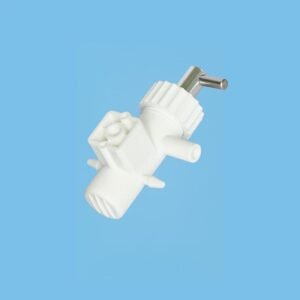
The standard Ceramic Pump serves as the backbone of chemical transfer systems. Manufactured from high-density alumina or zirconia, these pumps eliminate particulate shedding. In industries like pharmaceutical manufacturing, where particulate contamination can ruin entire batches, the zero-wear characteristics of a Ceramic Pump ensure strict compliance with international hygiene standards.
2. Ceramic plunger pump
Volumetric dispensing requires absolute precision. The Ceramic plunger pump operates with clearance fits measured in microns. Because ceramic has a near-zero coefficient of thermal expansion compared to steel, the plunger maintains its exact dimensional tolerances even under fluctuating operational temperatures. This guarantees that the volume of fluid dispensed remains constant over millions of cycles.
3. Ceramic Rotary Valve
A Ceramic Rotary Valve is deployed to direct fluid flows in high-pressure chromatography and industrial mixing lines. Metal valves score and leak over time due to abrasive particulates in the fluid. The extreme hardness of ceramic rotary valves allows them to shear through particulate matter without scratching the sealing surfaces, extending valve life exponentially.
4. Microliter Ceramic Metering Pump
For applications demanding absolute precision, such as electrolyte filling in lithium-ion battery production or reagent dispensing in analytical chemistry, the Microliter Ceramic Metering Pump is indispensable. This product dominates the top tier of our Industrial ceramic products list because it guarantees highly repeatable, ultra-low volume dispensing without the need for flexible diaphragms or elastomeric seals that degrade over time.
5. Miniature Ceramic Pump
As equipment footprints shrink, the demand for compact fluidics grows. The Miniature Ceramic Pump offers the same chemical and wear resistance as its larger counterparts but is engineered for integration into portable analytical devices, continuous inkjet printing systems, and compact cooling loops.
3. Medical & Biocompatible Ceramic Solutions
Any comprehensive Industrial ceramic products list must address the medical sector. Technical ceramics are inherently biocompatible, meaning they do not trigger immune responses or leach heavy metals into biological fluids.
6. Medical Ceramic Pump
The Medical Ceramic Pump is engineered specifically for IV fluid delivery, enteral feeding, and automated medication dispensing systems. Its smooth, non-porous surface prevents bacterial adhesion and biofilm formation, making it infinitely easier to sterilize via autoclaving or chemical flushing compared to stainless steel.
7. Dialysis Ceramic Pump
Perhaps the most critical entry on this Industrial ceramic products list is the Dialysis Ceramic Pump. Hemodialysis equipment must circulate blood and dialysate with zero risk of contamination or shear-induced hemolysis (rupturing of red blood cells). The frictionless operation of custom-machined ceramic components ensures safe, reliable, and continuous life-support functionality.
8. Ceramic Dental Implants and Prosthetics
Zirconia has revolutionized restorative dentistry. Its ivory-like color mimics natural teeth, and its high fracture toughness ensures it withstands the immense mechanical load of human mastication without the aesthetic drawbacks of titanium.
9. Bioceramic Surgical Instruments
Advanced scalpels and bone-cutting tools utilizing ceramic blades remain sharp significantly longer than surgical steel. Furthermore, they are non-magnetic, making them entirely safe for use within active MRI environments.
4. Semiconductor, Battery & General Industrial Ceramics
At JuchangCeramic, our R&D and high-volume production capabilities are heavily geared toward next-generation energy and computing technologies. This segment of our Industrial ceramic products list outlines components utilized in extreme manufacturing environments.
10. Ceramic Wafer Chucks
During photolithography and wafer inspection, silicon wafers must be held perfectly flat. Alumina and silicon carbide wafer chucks provide exceptional dimensional stability and thermal uniformity, preventing microscopic warping of the wafer during processing.
11. Ceramic End Effectors
Robotic arms that move silicon wafers between processing chambers use ceramic end effectors. These components resist the high temperatures of deposition chambers and do not generate particle dust that could short-circuit microscopic transistors.
12. Battery Extrusion Dies
The production of lithium-ion and solid-state batteries involves coating metallic foils with highly abrasive cathode and anode slurries. Ceramic extrusion dies maintain their precise gap tolerances despite the abrasive flow, ensuring uniform coating thickness and optimal battery energy density.
13. Ceramic Bearings
Silicon nitride ceramic bearings operate at higher speeds, require less lubrication, and function flawlessly in high-temperature or corrosive environments where steel bearings would seize immediately. They are heavily utilized in aerospace turbines and high-speed spindles.
14. Alumina Ceramic Substrates
Used as the foundational base for high-power electronics and LED lighting, alumina substrates provide excellent electrical insulation while effectively dissipating heat away from sensitive circuitry.
15. Zirconia Ceramic Cutting Blades
Industrial cutting of Kevlar, packaging films, and battery separators requires blades that do not dull quickly. Zirconia blades offer a cutting edge that outlasts steel by a factor of ten, reducing line stoppages for blade changes.
5. Summary Table: Industrial Ceramic Products List
| Product Category | Specific Ceramic Product | Primary Material Base | Key Industrial Application |
|---|---|---|---|
| Fluid Control | Ceramic Pump | Alumina / Zirconia | Chemical transfer, Pharmaceutical manufacturing |
| Fluid Control | Ceramic plunger pump | Zirconia | High-precision volumetric dosing |
| Medical | Medical Ceramic Pump | High-Purity Alumina | Automated medication dispensing |
| Medical | Dialysis Ceramic Pump | Zirconia | Hemodialysis fluid circulation |
| Fluid Control | Ceramic Rotary Valve | Alumina | High-pressure flow direction control |
| Fluid Control | Microliter Ceramic Metering Pump | Zirconia | Battery electrolyte filling, lab analytics |
| Fluid Control | Miniature Ceramic Pump | Alumina / Zirconia | Portable diagnostic equipment, printing |
| Semiconductor | Ceramic Wafer Chucks | Silicon Carbide | Wafer positioning and thermal control |
| Semiconductor | Ceramic End Effectors | Alumina | Robotic wafer transport in cleanrooms |
| Battery Mfg. | Battery Extrusion Dies | Zirconia | Abrasive slurry coating for electrodes |
6. Expert Recommendations for Material Selection
Navigating an extensive Industrial ceramic products list can be daunting without material science expertise. From our experience as a leading precision ceramics manufacturer, selecting the wrong ceramic substrate can lead to mechanical failure. We recommend adhering to the following guidelines:
If your application involves high physical impact or requires flexible fracture toughness, we recommend Yttria-Stabilized Zirconia (YSZ). Zirconia undergoes a phase transformation when stressed, effectively “closing” micro-cracks before they propagate. This makes it ideal for a Ceramic plunger pump operating under high pressure.
If your application demands extreme thermal conductivity or severe chemical resistance at a lower cost point, we recommend High-Purity Alumina (99.5%+). Alumina is the workhorse of the Industrial ceramic products list, perfect for a Ceramic Rotary Valve or Miniature Ceramic Pump dealing with corrosive acids.