
In the highly demanding world of industrial manufacturing, aerospace engineering, and precision medical equipment, mechanical components are routinely pushed to their absolute physical limits. Standard steel components, while foundational to modern machinery, often fail under the extreme stresses of high speeds, corrosive chemicals, and elevated temperatures. This is precisely where advanced ceramic technology intervenes. When our clients ask us how to resolve chronic mechanical failures, our answer frequently involves evaluating the fundamental materials used in their rotating equipment. Understanding what ceramic bearings are, and how they manipulate tribological forces, is critical for any engineer looking to optimize system longevity and performance.
Authored by JuchangCeramic. As a professional manufacturer located in Pingshan District, Shenzhen, Guangdong Province—one of China’s most important industrial and technology manufacturing regions—we are dedicated to the research, development, and production of advanced precision ceramic materials and industrial ceramic components. Our decades of material science expertise inform our rigorous approach to modern engineering challenges.
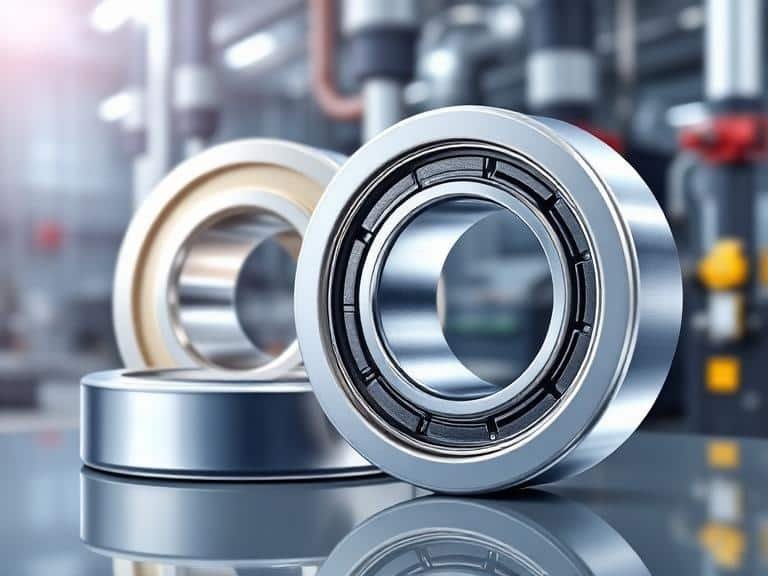
From our experience engineering advanced technical ceramics, the transition from traditional steel to technical ceramics is not merely a material substitution; it is a fundamental upgrade in mechanical efficiency. In this comprehensive guide, we will dissect the engineering behind ceramic bearings, explore their unique material properties, and detail exactly what ceramic bearings are used for across various high-performance industrial sectors.
Table of Contents
- 1. Understanding the Fundamentals of Ceramic Bearings
- 2. The Material Science Behind Ceramic Bearings
- 3. Key Advantages: Why We Recommend Ceramic Bearings
- 4. What Are Ceramic Bearings Used For? Industrial Applications
- 5. Integrating Precision Ceramics into Fluid Handling
- 6. Summary Table: Ceramic Bearings vs. Steel Bearings
- 7. Frequently Asked Questions (FAQs)
- 8. Industry and Academic References
1. Understanding the Fundamentals of Ceramic Bearings
To accurately define what ceramic bearings are, we must look at their construction. Ceramic bearings are rolling-element bearings where the rolling elements (balls or rollers) and sometimes the inner and outer races are manufactured from advanced technical ceramics rather than traditional chrome or stainless steel. There are two primary classifications of ceramic bearings utilized in modern industry:
- Hybrid Ceramic Bearings: These are the most common configuration. They feature steel inner and outer races but utilize ceramic balls. This hybrid approach offers a highly cost-effective balance, providing the high-speed and low-friction benefits of ceramic balls while retaining the heavy load-bearing structural integrity of steel races.
- Full Ceramic Bearings: In this configuration, the races, the rolling elements, and occasionally even the retainer (cage) are made entirely of ceramic materials. Full ceramic bearings are utilized in the most extreme environments where steel would instantly corrode, melt, or become magnetized.
We recommend full ceramic bearings exclusively for environments subjected to total submersion in corrosive chemicals, extreme vacuum conditions, or areas requiring absolute electrical insulation. The choice between hybrid and full configurations dictates the ultimate operational ceiling of the machinery.
2. The Material Science Behind Ceramic Bearings
Not all ceramics are identical. The pottery clay used in household items has no relation to the highly engineered technical ceramics utilized in mechanical components. At JuchangCeramic, our manufacturing processes in Shenzhen focus on refining raw powders into dense, flawless microstructures. The performance of ceramic bearings is directly linked to the specific chemical compound chosen for their fabrication. The three primary materials used include:
Silicon Nitride (Si3N4)
Silicon Nitride is the undisputed gold standard for ceramic bearings. It is distinctively dark gray or black and offers the highest fracture toughness of all bearing ceramics. Silicon Nitride balls are incredibly light, exceptionally hard, and possess a highly polished surface finish that drastically reduces friction. From our experience, when engineers specify ceramic bearings for high-speed spindles or aerospace turbines, they are almost exclusively referring to Silicon Nitride.
Zirconia (ZrO2)
Zirconia is a brilliant white ceramic characterized by its high density and thermal expansion coefficient, which is very similar to steel. This similarity makes Zirconia an excellent choice when full ceramic bearings must be press-fit into steel housings, as the materials will expand and contract at similar rates under thermal stress. Zirconia is highly favored in environments requiring extreme fracture toughness and load capacity.
Silicon Carbide (SiC)
Silicon Carbide is utilized primarily for its supreme resistance to corrosive chemicals and extreme heat. While it is more brittle than Silicon Nitride, full ceramic bearings made from SiC can operate in environments exceeding 1000 degrees Celsius. We frequently see SiC utilized in semiconductor manufacturing and aggressive chemical processing plants.
3. Key Advantages: Why We Recommend Ceramic Bearings
The industrial shift toward advanced materials is driven by hard operational data. While the initial procurement cost of ceramic bearings is higher than that of standard steel equivalents, the total cost of ownership (TCO) is vastly lower due to the following mechanical advantages.
Friction Reduction and High Speeds: Ceramic balls are perfectly spherical and significantly smoother than steel. Furthermore, they do not micro-weld to the steel races during operation—a primary cause of friction in traditional bearings. Because ceramic is roughly 40% less dense than steel, the centrifugal forces generated at high RPMs are drastically reduced. This allows hybrid ceramic bearings to operate at speeds 30% to 50% faster than their steel counterparts without overheating.
Corrosion and Chemical Resistance: Steel rusts; ceramics do not. Full ceramic bearings are impervious to water, saltwater, strong acids, and alkalis. This makes them indispensable in marine environments and chemical processing facilities where standard lubricants would be washed away or chemically compromised.
Electrical Insulation: In electric vehicle (EV) motors and large industrial generators, stray electrical currents frequently arc through the bearings, causing a phenomenon known as electrical pitting or fluting. This arcing destroys the raceway. Because ceramics are natural insulators, ceramic bearings act as an absolute barrier to electrical arcing, prolonging the life of the motor indefinitely.
4. What Are Ceramic Bearings Used For? Industrial Applications
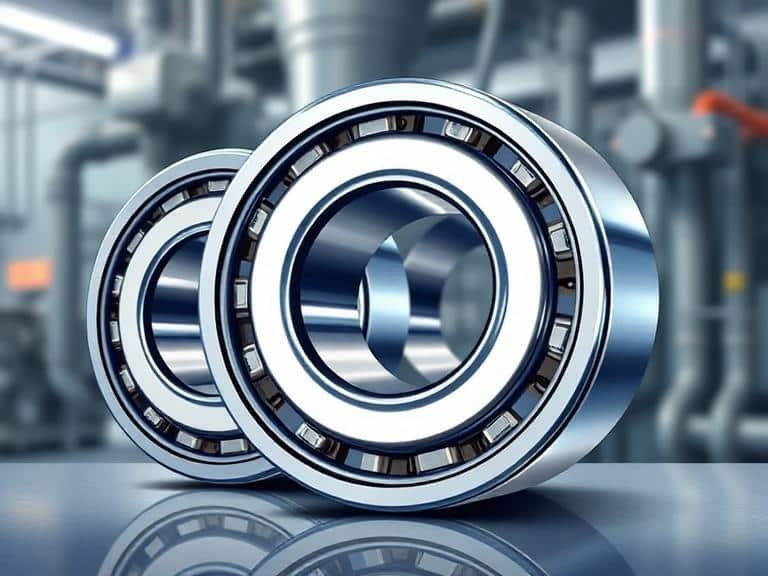
Understanding what ceramic bearings are used for requires examining industries where failure is not an option. The unique properties of these materials solve complex engineering bottlenecks.
Aerospace and High-Performance Automotive
In aerospace, weight reduction and reliability are paramount. Ceramic bearings are used in aircraft instrumentation, gyroscopes, and turbine engines where temperatures fluctuate wildly and vacuum conditions cause traditional lubricants to vaporize. Similarly, in high-performance racing and electric vehicles, hybrid ceramic bearings reduce rotational mass, thereby increasing drivetrain efficiency and battery range.
Medical and Pharmaceutical Manufacturing
The medical field demands absolute sterility and precision. Standard bearings require grease, which acts as a contaminant in cleanroom environments. Ceramic bearings can run completely dry (without lubrication), making them perfect for MRI scanners (due to their non-magnetic properties) and high-speed dental drills. In life-saving fluid management, such as the mechanisms powering our Medical Ceramic Pump systems, the non-reactive nature of ceramics ensures that biological fluids remain uncontaminated during transfer.
Chemical Processing and Fluid Handling
Refineries and chemical plants pump highly abrasive and corrosive slurries daily. The bearings supporting the pump impellers must survive environments that dissolve lesser metals. The inherent chemical inertness of advanced ceramics is why fluid handling engineers rely heavily on them.
5. Integrating Precision Ceramics into Fluid Handling
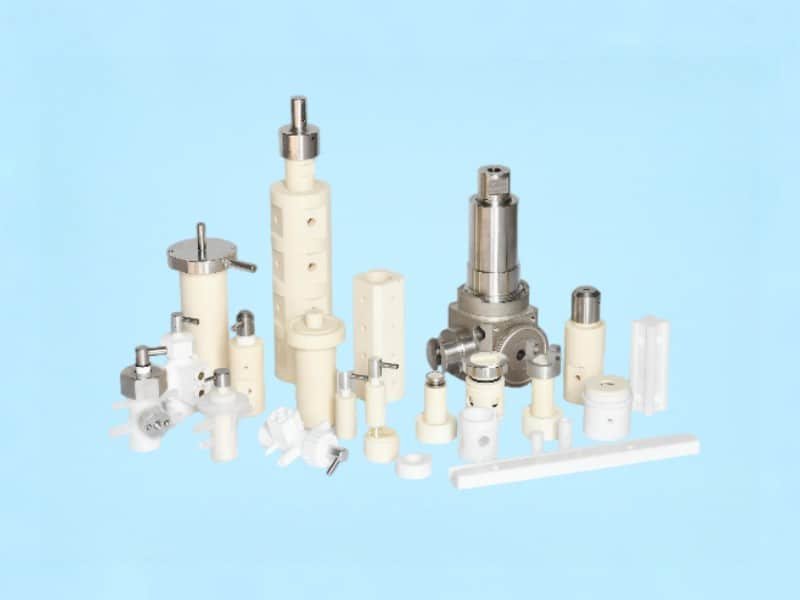
At JuchangCeramic, we apply the exact same material science principles that make ceramic bearings so successful into the fluid dynamics sector. The hardness, low friction, and chemical resistance required for a bearing to survive 50,000 RPMs are the identical properties required for a pump to precisely meter corrosive chemicals over millions of cycles.
For instance, our Ceramic Pump series utilizes advanced alumina and zirconia to ensure zero wear and zero chemical reactivity. In high-pressure dosing applications, the tight tolerances achieved in our Ceramic plunger pump designs perfectly mirror the exact sphericity found in high-grade ceramic bearings. Furthermore, in specialized healthcare applications, our Dialysis Ceramic Pump relies on the non-porous, sterile nature of precision ceramics to safely handle blood and dialysate fluids without fear of particle shedding.
For engineers requiring bespoke geometries that incorporate bearing-like surfaces, we offer comprehensive manufacturing of any Custom Ceramic part. From our experience, bridging the gap between standard rotating equipment and customized ceramic fluid control leads to unparalleled system reliability.
6. Summary Table: Ceramic Bearings vs. Steel Bearings
To assist procurement engineers and system designers in making an informed decision, we have compiled a comparison matrix outlining the operational differences between traditional steel and advanced ceramic bearings.
| Performance Metric | Standard Steel Bearings | Ceramic Bearings (Hybrid/Full) |
|---|---|---|
| Maximum Rotational Speed | Moderate to High | Extremely High (30-50% faster than steel) |
| Weight / Density | Heavy (High centrifugal force) | Lightweight (Approx. 40% lighter) |
| Corrosion Resistance | Poor (Requires constant lubrication/sealing) | Excellent (Impervious to rust and most acids) |
| Electrical Conductivity | Conductive (Prone to electrical arcing/fluting) | Insulating (Prevents electrical damage entirely) |
| Lubrication Requirements | High (Grease or oil mandatory) | Minimal to None (Can run completely dry) |
| Thermal Expansion | High (Expands significantly with heat) | Low (Maintains tight tolerances at high temps) |
7. Frequently Asked Questions (FAQs)
Do ceramic bearings require lubrication?
It depends on the application, but generally, ceramic bearings require significantly less lubrication than steel bearings. Because the ceramic balls are perfectly smooth and do not micro-weld to the raceways, full ceramic bearings can often run completely dry in cleanroom or vacuum environments. Hybrid ceramic bearings usually utilize a very light oil or a specialized grease to protect the steel races, but they operate efficiently with much less lubricant volume.
Are ceramic bearings fragile or prone to shattering?
While ceramics are classified as brittle materials compared to ductile steel, technical ceramics like Silicon Nitride have incredibly high fracture toughness. Under normal to severe rotational loads, they will not shatter. However, they are sensitive to improper installation. Striking them with a steel hammer during a press-fit installation can cause micro-fractures. We recommend proper thermal expansion fitting or specialized mechanical presses for installation.
Why are ceramic bearings more expensive than steel?
The cost difference is driven by the manufacturing process. Technical ceramic powders must be sintered at extremely high temperatures and pressures. Afterward, achieving the perfect spherical shape of the rolling elements requires hundreds of hours of diamond-abrasive lapping and polishing. The extreme hardness of the material makes machining difficult and time-consuming. However, the extended lifespan and reduced maintenance costs often offset the initial investment.
8. Industry and Academic References
To further your understanding of tribology, advanced materials science, and the engineering standards governing technical ceramics, we recommend consulting the following authoritative sources: