
In the high-volume, precision-demanding environment of meat processing, edge retention is not merely a matter of convenience; it is a critical factor in workplace safety and operational efficiency. The standard stainless steel honing rod, while adequate for realigning a rolled edge, fails to address the microscopic abrasion required to maintain modern high-carbon butcher knives. This is where advanced technical ceramics dominate. Choosing the right ceramic sharpening steel for butcher applications involves understanding the underlying material hardness, grit composition, and shatter resistance.
From our experience engineering advanced technical ceramics at JuchangCeramic, the structural integrity of a sintered alumina or zirconia rod dictates its performance on the cutting block. A premium ceramic sharpening steel for butcher use must possess a Mohs hardness significantly higher than the Rockwell hardness (HRC) of the knife steel, typically resting at 9 on the Mohs scale. We recommend transitioning to a ceramic sharpening steel for butcher environments because ceramics simultaneously hone the edge back into alignment while microscopically removing fatigued steel, restoring the knife’s bite without removing excessive material.
In this authoritative guide, we leverage our metallurgical and ceramic engineering expertise to evaluate the 9 best ceramic sharpening steel for butcher professionals available in 2026. We will also dissect the manufacturing science behind these tools, ensuring you make a procurement decision grounded in industrial reality.
Table of Contents
- Summary Table: Top 9 Ceramic Sharpening Steels
- The Material Science: Why Ceramics Outperform Steel
- Detailed Review: The 9 Best Ceramic Sharpening Steel for Butcher Use
- Expert Buying Guide: Key Engineering Parameters
- JuchangCeramic: Advancing Industrial Ceramic Solutions
- Frequently Asked Questions (FAQs)
- Academic and Industry References
Summary Table: Top 9 Ceramic Sharpening Steels
To assist procurement managers and culinary professionals in their decision-making process, we have compiled a technical matrix of the top-rated models. When evaluating a ceramic sharpening steel for butcher applications, pay close attention to the grit rating and the core material structure.
| Rank | Brand & Model | Rod Length | Core Material | Estimated Grit | Best Application |
|---|---|---|---|---|---|
| 1 | Idahone Fine Ceramic Honing Rod | 12 Inches | High-Alumina Ceramic | 1200 Grit | Overall Butcher Daily Honing |
| 2 | Mac Knife Black Ceramic Steel | 10.5 Inches | Sintered Black Ceramic | 2000 Grit | Ultra-Fine Edge Polish |
| 3 | Messermeister Ceramic Rod | 12 Inches | Alumina Composite | 1000 Grit | Heavy-Duty Meat Processing |
| 4 | Wusthof Ceramic Sharpening Steel | 10 Inches | White Alumina | 1000 Grit | European High-Carbon Knives |
| 5 | Zwilling J.A. Henckels Ceramic | 12 Inches | Precision Sintered Ceramic | 1200 Grit | Commercial Kitchen Environments |
| 6 | DMT Ceramic Steel | 12 Inches | Alumina over Steel Core | 2200 Grit | Shatter-Resistant Requirements |
| 7 | Victorinox Ceramic Honing Steel | 10 Inches | Micro-crystalline Ceramic | 1000 Grit | Boning and Skinning Knives |
| 8 | Lansky 8-Inch Ceramic | 8 Inches | Alumina Oxide | 800 Grit | Compact/Mobile Butcher Stations |
| 9 | Noble Home & Chef Ceramic Rod | 11.5 Inches | High-Density Ceramic | 1500 Grit | High-Volume Poultry Processing |
The Material Science: Why Ceramics Outperform Steel
Understanding the effectiveness of a ceramic sharpening steel for butcher operations requires a look into tribology and materials science. Standard steel honing rods are typically hardened to HRC 62-64. While sufficient for softer knives, modern butcher knives frequently exceed HRC 60. A steel rod cannot abrade steel of a similar hardness; it can only push it. Conversely, industrial ceramics, primarily composed of aluminum oxide (alumina) or zirconium dioxide (zirconia), possess a hardness equivalent to HRC 80+.
From our experience in technical manufacturing, the micro-structure of sintered ceramics provides thousands of microscopic cutting teeth. When you draw a blade across a ceramic sharpening steel for butcher applications, these teeth shear off fatigued, microscopic burrs while concurrently aligning the healthy steel. To understand the foundational properties of these materials, we recommend reading our technical breakdown on what is alumina ceramics. By selecting a ceramic sharpening steel for butcher use, operators bridge the gap between simple honing and active sharpening, significantly extending the time between heavy whetstone sessions.
Detailed Review: The 9 Best Ceramic Sharpening Steel for Butcher Use
1. Idahone Fine Ceramic Honing Rod
The Idahone 12-inch model represents the pinnacle of American-made technical ceramics in the culinary sphere. Manufactured from high-purity alumina, this rod offers a 1200-grit surface that strikes the perfect balance between material removal and edge alignment. We recommend this as the premier ceramic sharpening steel for butcher professionals who handle large primal cuts, as the 12-inch length accommodates lengthy scimitars and cimeters safely.
2. Mac Knife Black Ceramic Steel
Black ceramics often incorporate different binding agents that increase their grit rating. The Mac Knife Black Ceramic provides a near 2000-grit polish. This is the ideal ceramic sharpening steel for butcher applications involving delicate slicing, such as fish processing or fine charcuterie, where a highly refined, razor-sharp micro-bevel is required rather than a toothy edge.
3. Messermeister Ceramic Rod
Messermeister utilizes an extremely dense alumina composite that resists loading (clogging with steel particles) better than many competitors. Its rugged construction makes it a highly durable ceramic sharpening steel for butcher floors where tools are subjected to heavy daily impact and continuous use.
4. Wusthof Ceramic Sharpening Steel
Wusthof’s proprietary sintering process yields a rod that perfectly complements heavy European steel. While slightly shorter at 10 inches, its ergonomics and predictable abrasion rate make it a reliable ceramic sharpening steel for butcher tasks centered around breaking down whole carcasses with stiff boning knives.
5. Zwilling J.A. Henckels Ceramic
Known for their strict metallurgical standards, Zwilling offers a ceramic rod that provides excellent tactile feedback. The user can distinctly feel the burr being removed. This tactile response is crucial when evaluating a ceramic sharpening steel for butcher use, as it prevents over-sharpening and premature blade wear.
6. DMT Ceramic Steel
One inherent flaw of pure ceramic rods is their brittleness; if dropped on a concrete floor, they will shatter. DMT solves this by coating an unbreakable steel core with an advanced alumina ceramic layer. This composite engineering makes it the most robust ceramic sharpening steel for butcher environments where drops are inevitable.
7. Victorinox Ceramic Honing Steel
Victorinox Fibrox knives are staples in the meatpacking industry. Their branded ceramic steel is engineered specifically to interact with their proprietary stainless steel blends. It serves as an exceptional, cost-effective ceramic sharpening steel for butcher lines utilizing high volumes of standard commercial cutlery.
8. Lansky 8-Inch Ceramic
While an 8-inch rod is generally too short for breaking knives, the Lansky serves perfectly for small, precise boning and pairing knives. Its compact nature makes it an excellent supplementary ceramic sharpening steel for butcher professionals operating in tight, restricted workspaces.
9. Noble Home & Chef Ceramic Rod
Offering a 1500-grit rating and a vibration-dampening core, this rod provides a smooth stroke that prevents micro-chipping on harder Japanese-style butcher knives. It is a highly capable ceramic sharpening steel for butcher operations requiring a high degree of edge refinement on specialized poultry processing blades.
Expert Buying Guide: Key Engineering Parameters
When our engineering team evaluates the utility of a ceramic sharpening steel for butcher environments, we focus on three strict operational parameters. We recommend applying these criteria to your procurement process to ensure maximum return on investment.
- Rod Length: Safety dictates that the honing rod should be at least two inches longer than the blade being sharpened. For a standard 10-inch butcher’s cimeter, a 12-inch ceramic sharpening steel for butcher use is mandatory to prevent the blade tip from slipping past the guard and causing injury.
- Grit / Surface Roughness: Ceramics are measured in grit, much like sandpaper. A 800-1000 grit rod is aggressive, ideal for restoring dull edges. A 1200-2000 grit rod acts as a polisher, maintaining an already sharp edge. For general meat processing, a 1200-grit ceramic sharpening steel for butcher tasks is the optimal median.
- Material Purity: The effectiveness of the rod relies on the purity of the alumina powder used prior to sintering. Low-grade ceramics contain impurities that create inconsistent high spots, which can chip a knife’s edge. High-purity ceramics, akin to the precision ceramic components for pumps we manufacture, guarantee uniform abrasion across the entire length of the rod.
JuchangCeramic: Advancing Industrial Ceramic Solutions
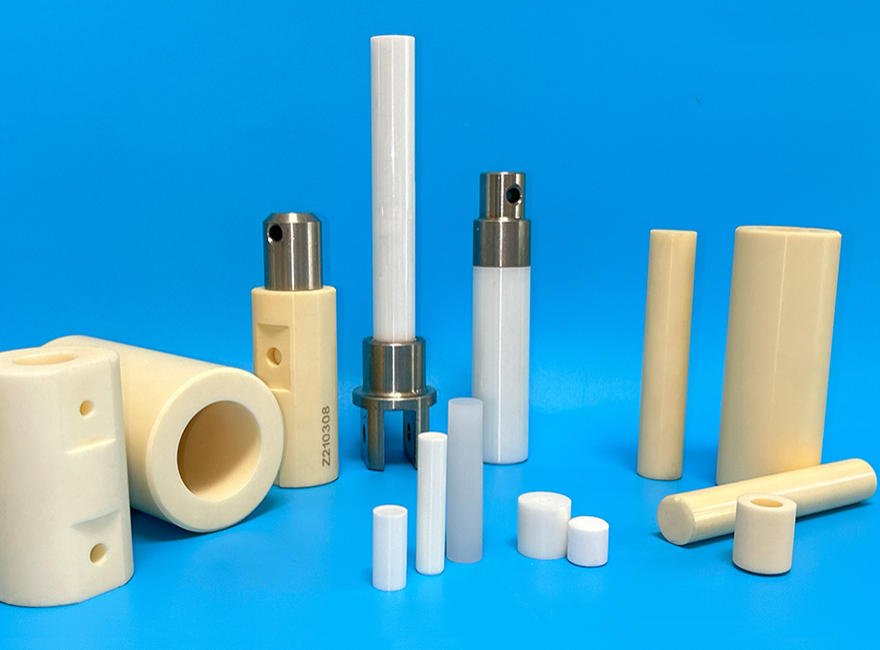
While the culinary industry benefits greatly from advanced materials, the scope of technical ceramics extends far beyond the butcher block. At JuchangCeramic, our core expertise lies in developing extreme-environment components. The same structural density that makes a perfect ceramic sharpening steel for butcher use is what allows our products to excel in high-pressure industrial applications.
We are a leading ceramic pump parts manufacturer, providing the global market with components that resist severe chemical corrosion and mechanical wear. For engineers designing fluid handling systems, our comprehensive ceramic plunger price guide 2026 provides vital procurement data. We continually analyze zirconia vs alumina ceramic components to ensure our clients receive the exact mechanical properties required for their specialized equipment.
Furthermore, our structural components are utilized in diverse sectors. From understanding the widespread ceramic rod applications in manufacturing to assisting engineers with the ceramic plunger holder design guide, JuchangCeramic stands as a premier wear resistant ceramic parts supplier. For projects demanding absolute exactitude, our high precision zirconia ceramic parts deliver unmatched tolerances.
Frequently Asked Questions (FAQs)
Academic and Industry References
To ensure our insights remain at the forefront of material science and metallurgical engineering, we adhere to the standards and research published by leading global institutions. For further reading on the mechanics of abrasive wear and technical ceramics, we recommend consulting the following authoritative sources: