
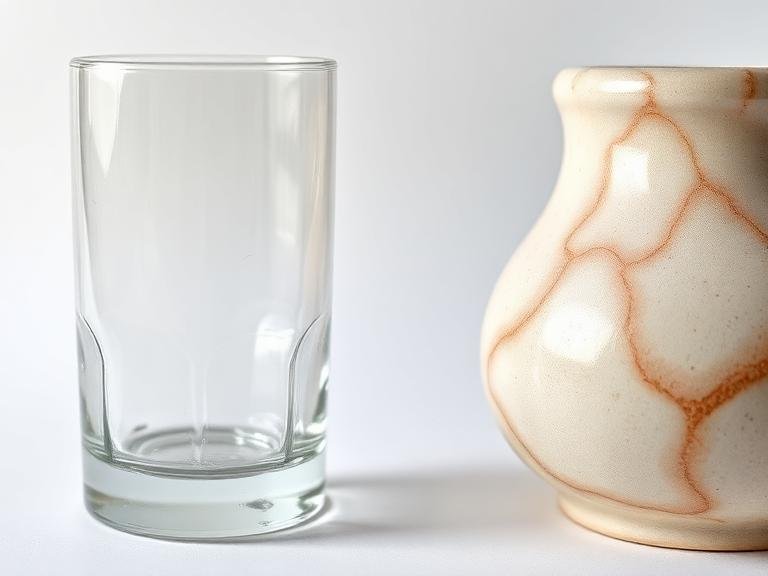
In the realm of materials science and industrial manufacturing, silicates and oxides form the foundation of countless applications. However, a common point of confusion among procurement officers and mechanical engineers alike revolves around the fundamental differences between glass and ceramics. While they may appear superficially similar in certain domestic applications, their behavior under extreme thermal, mechanical, and chemical stress is radically divergent.
About the Author: JuchangCeramic is a professional manufacturer dedicated to the research, development, and production of advanced precision ceramic materials and industrial ceramic components. Located in Pingshan District, Shenzhen, Guangdong Province—one of the most important industrial and technology manufacturing regions in China—we provide cutting-edge solutions for global engineering challenges.
From our experience at JuchangCeramic, selecting the incorrect material for a high-stress application can lead to catastrophic system failures, costly downtime, and severe safety hazards. To assist our clients and the broader engineering community, we have compiled a definitive technical analysis detailing the 6 differences between glass and ceramics. By understanding their atomic structures, thermal limits, and manufacturing processes, you can make highly informed decisions for your next industrial project.
Table of Contents
- Summary Table: Glass vs. Advanced Ceramics
- 1. Atomic Structure: Amorphous vs. Crystalline
- 2. Thermal Properties and Heat Resistance
- 3. Mechanical Strength and Fracture Toughness
- 4. Optical Properties and Light Transmission
- 5. Manufacturing and Processing Techniques
- 6. Industrial Applications and Wear Environments
- Integrating Industrial Ceramic Solutions
- Frequently Asked Questions (FAQs)
- Academic and Industry References
Summary Table: Glass vs. Advanced Ceramics
To provide a clear, high-level overview before diving into the deep technical analysis of the differences between glass and ceramics, we have prepared the following comparative matrix.
| Property / Characteristic | Glass | Advanced Industrial Ceramics |
|---|---|---|
| Atomic Structure | Amorphous (Random, non-crystalline) | Crystalline (Highly ordered molecular lattice) |
| Melting Behavior | Gradual softening (Glass transition temperature) | Definite, extremely high melting point |
| Mechanical Strength | Brittle, low tensile strength, prone to scratching | Exceptional hardness, high compressive strength |
| Optical Clarity | Inherently transparent | Typically opaque or translucent |
| Manufacturing Process | Melting, blowing, floating, molding | Powder compaction, pressing, high-temperature sintering |
| Primary Use Cases | Windows, optics, consumer containers | Wear parts, high-temperature insulators, industrial pumps |
1. Atomic Structure: Amorphous vs. Crystalline
The most profound of the differences between glass and ceramics lies at the microscopic level. The atomic structure dictates almost every physical property the material will exhibit in a real-world environment.
Glass is classified as an amorphous solid. When glass is manufactured, the molten silica is cooled so rapidly that the molecules do not have the time to align themselves into an ordered, repeating pattern. Instead, they are frozen in a random, chaotic liquid-like state. This lack of a crystalline lattice is what gives glass its transparency, but it is also the root cause of its structural vulnerability.
Conversely, advanced ceramics possess a highly ordered crystalline structure. During the manufacturing process, the molecules align into rigid, repeating three-dimensional lattices. This tightly packed molecular bonding grants ceramics their immense structural stability. If you are exploring how this structure affects specific compounds like aluminum oxide, we highly recommend reading our engineering ceramics material guide for a deeper dive into crystalline behavior.
2. Thermal Properties and Heat Resistance
When operating in environments subject to extreme temperatures, understanding the thermal differences between glass and ceramics is non-negotiable. Glass does not have a distinct melting point. Instead, it has a glass transition temperature. As heat is applied, glass gradually softens, losing its structural integrity long before it turns into a liquid pool. Furthermore, standard glass is highly susceptible to thermal shock; sudden temperature changes cause rapid expansion or contraction, leading to immediate shattering.
Advanced ceramics, however, thrive in extreme thermal environments. Because of their crystalline bonds, ceramics require massive amounts of thermal energy to break their molecular connections. They possess distinct, exceptionally high melting points, often exceeding 2,000 degrees Celsius. Additionally, technical ceramics exhibit low coefficients of thermal expansion, making them virtually immune to thermal shock. For operations requiring continuous exposure to extreme heat, we outline the best choices in our review of ceramic tube applications in high heat environments and our analysis of the best ceramic insulators for industrial use.
3. Mechanical Strength and Fracture Toughness
In mechanical engineering, the structural differences between glass and ceramics dictate their utility in load-bearing and high-friction applications. Glass is inherently brittle. It possesses low tensile strength and is highly susceptible to surface scratching and abrasive wear. Once a micro-fracture initiates on a glass surface, the amorphous structure offers no resistance to crack propagation, resulting in catastrophic failure.
Industrial ceramics are engineered specifically to combat these weaknesses. Advanced materials such as zirconia and silicon nitride boast extraordinary compressive strength and hardness levels that rival diamonds. The crystalline lattice halts crack propagation, providing remarkable fracture toughness. This makes ceramics the superior choice for high-wear environments. To see how this strength is applied in heavy industry, review our ceramic rod vs metal rod comparison and explore the profound benefits of ceramic bearings in high-RPM machinery.
4. Optical Properties and Light Transmission
One of the most visually obvious differences between glass and ceramics involves light transmission. The random, amorphous atomic arrangement of glass allows photons of light to pass through without being scattered or absorbed. This optical clarity makes glass irreplaceable for lenses, windows, and display screens.
Because ceramics are crystalline, the boundaries between the microscopic crystals (grain boundaries) scatter light. As a result, the vast majority of traditional and advanced industrial ceramics are opaque. While specialized translucent ceramics do exist (such as those used in high-intensity discharge lamps or dental crowns), achieving optical transparency in ceramics requires extremely complex and expensive processing to eliminate porosity and grain boundary scattering.
5. Manufacturing and Processing Techniques
From our experience at JuchangCeramic, the complexity of fabrication highlights major differences between glass and ceramics. Glass manufacturing involves melting silica sand and other additives into a viscous liquid, which can then be poured, blown, or floated onto a bed of molten tin to create flat sheets. The process is continuous and highly scalable for bulk consumer products.
Fabricating precision ceramics is entirely different. Industrial ceramics begin as ultra-fine, highly purified chemical powders. These powders are mixed with binders, pressed into a “green” shape under immense pressure, and then fired in a kiln at extreme temperatures—a process known as sintering. Sintering causes the powder particles to fuse together without completely melting. Because ceramics are so hard after sintering, achieving precise final tolerances requires diamond-tipped grinding tools. For projects requiring exact specifications, we offer comprehensive custom ceramic machining services to meet the strictest engineering tolerances.
6. Industrial Applications and Wear Environments
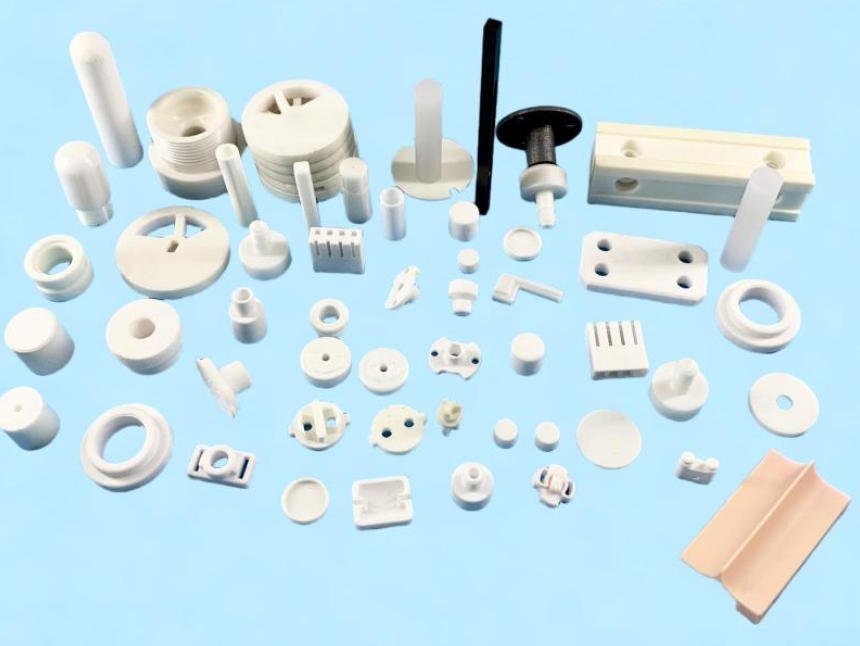
The culmination of these physical and chemical traits defines the final differences between glass and ceramics: their end-use applications. Glass is perfectly suited for architecture, consumer packaging, laboratory beakers, and optical devices where transparency and chemical inertness at room temperature are required.
However, when standard materials fail, industry relies on advanced ceramics. In the fluid control sector, where abrasive slurries and corrosive chemicals destroy metal and glass alike, ceramics are indispensable. We recommend utilizing our industrial ceramic solutions for pumps to extend equipment lifespans dramatically. Furthermore, when evaluating internal pump mechanics, understanding the ceramic plunger vs metal plunger dynamic and referencing a proper ceramic plunger material selection guide is critical for minimizing maintenance downtime.
Integrating Industrial Ceramic Solutions
Recognizing the profound differences between glass and ceramics is the first step toward optimizing your manufacturing operations. Advanced ceramics offer a pathway to higher efficiency, extreme longevity, and capabilities that traditional materials simply cannot support. If you are looking to integrate these materials into your workflow, we invite you to explore our comprehensive breakdown of advanced industrial ceramics applications.
Frequently Asked Questions (FAQs)
Can glass be converted into a ceramic?
Yes, through a specialized process involving controlled crystallization. The resulting material is known as a glass-ceramic (e.g., induction stovetops). It begins as an amorphous glass but is heat-treated to encourage the growth of micro-crystals within the glass matrix, significantly increasing its thermal shock resistance and mechanical strength.
Why are ceramics more expensive than glass?
The raw materials for advanced ceramics (like high-purity alumina or zirconia powders) are expensive to synthesize. Furthermore, the differences between glass and ceramics in manufacturing—specifically the energy-intensive high-temperature sintering process and the need for diamond tooling for post-sinter machining—drive up production costs.
Which material is better for electrical insulation?
Both materials are excellent electrical insulators at room temperature. However, advanced ceramics are vastly superior in high-temperature or high-voltage industrial environments, where glass would soften or suffer from electrical breakdown.
How do the differences between glass and ceramics affect chemical resistance?
While glass (specifically borosilicate) offers excellent resistance to most acids, it degrades rapidly when exposed to hydrofluoric acid or strong hot alkalis. Advanced technical ceramics, particularly alumina and silicon carbide, offer superior, comprehensive chemical resistance across a much wider pH and temperature range.
Academic and Industry References
To ensure our clients have access to authoritative data regarding materials science, we recommend consulting the following academic and governmental resources: