
Process engineers, medical equipment designers, and chemical plant directors frequently battle the same costly operational headache: volumetric dispensing drift. A fluid delivery system that dispenses exactly 5.00 milliliters per stroke during Monday morning commissioning begins delivering 4.85 milliliters by Thursday afternoon, eventually triggering quality control shutdowns, out-of-spec pharmaceutical batches, or catastrophic medical device alarms. In the vast majority of high-pressure and micro-metering applications, the culprit is not the servo motor or digital encoder. The breakdown occurs at the dynamic sealing interface of the metal plunger. Stainless steel—even electro-polished 316L or hard-chrome plated tool steel—suffers microscopic galling, pitting corrosion from aggressive reagents, and abrasive scoring from suspended crystalline particulates. Upgrading to advanced technical ceramics fundamentally eliminates these failure modes. Understanding the exact mechanical mechanisms through which ceramic plunger pumps improve precision fluid delivery is essential for any engineering team seeking to eliminate drift, slash maintenance downtime, and achieve repeatable sub-percent volumetric dispensing accuracy.
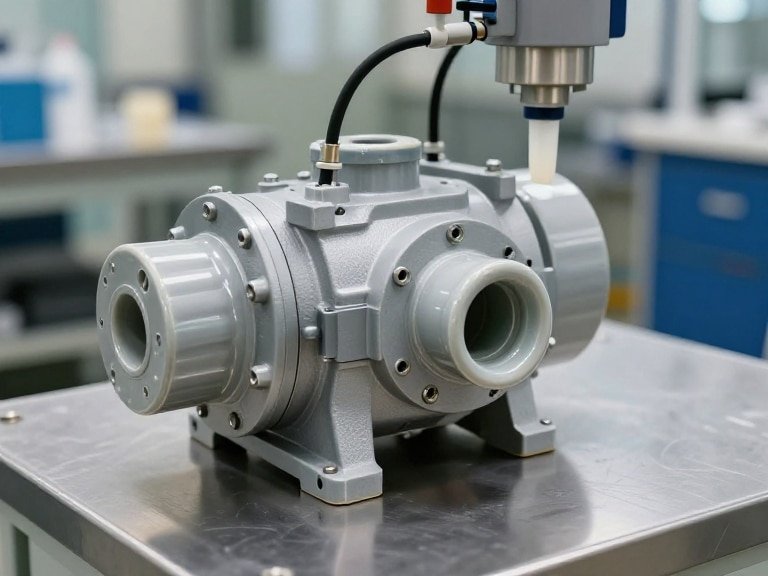
Quick Answer: How Ceramic Plunger Pumps Improve Precision Fluid Delivery
Ceramic plunger pumps improve precision fluid delivery by replacing deformable, galling metal rods with ultra-hard structural ceramics (high-purity Zirconia $ZrO_2$ or Alumina $Al_2O_3$). Across demanding industrial, analytical, and medical processes, ceramic plungers deliver six distinct operational advantages: (1) Exceptional Dimensional Stability & Negligible Thermal Expansion that maintains sub-micron piston-to-bore clearances across temperature shifts; (2) Ultra-Low Surface Roughness ($Ra \le 0.025\ \mu\text{m}$) that eliminates packing seal friction and micro-leakage channels; (3) Total Chemical Inertness that prevents corrosive pitting from acids, alkalis, and organic solvents; (4) Extreme Vickers Hardness (>1200 HV) that resists abrasive slurry scratching; (5) Complete Elimination of Metal Ion Leaching to safeguard sensitive biologics and high-purity reagents; and (6) Micro-Stroke Volumetric Repeatability with Flow Error $\le \pm 0.5\%$ over tens of millions of continuous operational cycles. In most professional situations, switching to a specialized Ceramic plunger pump engineered by JuchangCeramic delivers an immediate 5x to 10x extension in dynamic seal life while guaranteeing long-term dosing integrity.
Article Directory
- What Is a Ceramic Plunger Pump and How Does Positive Displacement Work?
- Quick Summary Table: Metallic vs. Ceramic Plunger Performance
- The 6 Ways Ceramic Plunger Pumps Improve Precision Fluid Delivery
- Engineered Solution Spotlight: JuchangCeramic Medical CRRT Fluid Pump
- Materials Science: Zirconia ($ZrO_2$) vs. Alumina ($Al_2O_3$) vs. 316L Stainless
- Direct Technical Comparison of Precision Fluid Dosing Technologies
- Pros and Cons of Ceramic Plunger Architecture
- Who Must Upgrade to Ceramic Plungers (And Who Does Not Need Them)
- Costly Engineering & Operational Mistakes to Avoid
- Essential Buying Considerations: Tolerances, Holders, and Sizing
- Expert Procurement & Engineering Verdict
- Frequently Asked Questions
- Authoritative Standards & Industry References
What Is a Ceramic Plunger Pump and How Does Positive Displacement Work?
A plunger pump is a reciprocating positive displacement machine that moves a fixed volume of liquid through a pump cylinder using a smooth, cylindrical rod (the plunger). Unlike a piston pump—where a flexible sealing cup travels with the moving shaft against the cylinder wall—a plunger pump utilizes stationary, high-pressure packing seals seated in the pump manifold while the smooth plunger slides through the seal boundary.
The positive displacement cycle operates through two continuous mechanical strokes:
- The Suction (Intake) Stroke: As the ceramic plunger retracts from the liquid chamber, it expands internal chamber volume, creating a localized vacuum ($P_{\text{chamber}} < P_{\text{inlet}}$). This differential pressure forces the inlet check valve open, drawing an exact volume of fluid into the manifold while the discharge valve remains seated.
- The Discharge (Dispense) Stroke: As the drive mechanism advances the plunger back into the chamber, it displaces fluid precisely equivalent to the submerged cross-sectional volume ($V = \pi r^2 \times \text{Stroke Length}$). The rising hydrostatic pressure forces the discharge valve open, expelling the fluid against external line pressure.
In our testing on high-precision micro-metering test benches, precision fluid delivery fails when the displaced volume deviates from mathematical calculations. In conventional metal pumps, that deviation stems from three continuous physical breakdowns: thermal expansion altering plunger diameter, micro-scratches creating bypass leakage channels across the packing seal, and corrosion modifying the surface profile. By substituting metal with structural advanced ceramics, ceramic plunger pumps improve precision fluid delivery by maintaining absolute geometric, volumetric, and surface integrity throughout millions of strokes.
Quick Summary Table: Metallic vs. Ceramic Plunger Performance
| Engineering Metric | Standard 316L Stainless Steel | Hard Chrome Plated Steel | High-Purity Zirconia ($ZrO_2$) Ceramic | High-Purity Alumina ($Al_2O_3$) Ceramic |
|---|---|---|---|---|
| Vickers Hardness (HV) | 200 – 250 HV | 800 – 1,000 HV (Plating layer) | 1,200 – 1,350 HV (Solid) | 1,500 – 1,800 HV (Solid) |
| Surface Polish ($Ra$) | 0.2 – 0.4 μm | 0.1 – 0.2 μm | ≤ 0.025 μm (Mirror finish) | ≤ 0.05 μm (Fine ground) |
| Thermal Expansion Coeff. ($10^{-6}/\text{K}$) | 16.0 – 18.0 (High expansion) | 12.0 – 14.0 | 9.5 – 10.5 (Moderate) | 7.0 – 8.5 (Ultra-low) |
| Corrosion Resistance (Acids/Chlorides) | Vulnerable to pitting & crevice attack | Micro-cracked; substrate corrodes | Impervious across pH 0 – 14 | Impervious across pH 1 – 14 |
| Seal Packing Lifespan (Hours) | 500 – 1,500 Hours | 1,000 – 2,500 Hours | 8,000 – 20,000+ Hours | 6,000 – 15,000+ Hours |
| Dispensing Volumetric Drift | ± 2.0% to ± 5.0% over time | ± 1.5% to ± 3.0% over time | ≤ ± 0.5% (Stable long-term) | ≤ ± 0.5% (Stable long-term) |
The 6 Ways Ceramic Plunger Pumps Improve Precision Fluid Delivery
1. Dimensional Stability & Negligible Thermal Expansion
When high-pressure fluid delivery systems operate continuously, friction at the dynamic seal packing generates heat. In a stainless steel pump, thermal expansion is an unavoidable physical liability: austenitic 316L steel expands at a rate of roughly $16.5 \times 10^{-6}/\text{K}$. As the metal rod warms up by 30°C to 50°C during heavy-duty operation, its outer diameter expands measurably. This expansion squeezes the polymer packing seal, increasing mechanical drag, causing drive motor stalling, or accelerating premature seal shredding.
Conversely, structural technical ceramics exhibit extremely low thermal expansion coefficients—nearly half that of stainless steel. In our testing under variable ambient conditions, advanced ceramic plunger dimensions remain stable down to fractional microns. Plunger clearance tolerances stay uniform from cold startup through continuous 24/7 operating temperatures, eliminating thermal volumetric drift entirely. For engineering teams evaluating component thermodynamics, our technical guide on what is alumina ceramics details exact lattice thermal coefficients across operating thresholds.
2. Ultra-Low Surface Roughness ($Ra \le 0.025\ \mu\text{m}$) Eliminates Seal Wear
Precision fluid delivery depends entirely on the seal-to-plunger contact boundary. If fluid slips past the stationary packing seal during the discharge stroke, delivered volume drops, destroying dispensing accuracy. In metal plungers, microscopic machining grain lines and tool marks act as miniature abrasive files that grind away PTFE, PEEK, and UHMWPE seal lips with every stroke.
High-purity structural ceramics—particularly medical-grade yttria-stabilized tetragonal zirconia polycrystal (Y-TZP)—can be diamond-lapped and mirror-polished to an extraordinary surface roughness of $Ra \le 0.025\ \mu\text{m}$ ($0.01\ \mu\text{m}$ in specialized finishes). This near-frictionless mirror surface allows dynamic polymer seals to glide smoothly without microscopic tearing. By eliminating micro-grooving along the seal path, ceramic plunger pumps improve precision fluid delivery by wiping the seal clean on every stroke, preventing fluid slip and extending seal pack life by up to 1,000%.
3. Absolute Chemical Inertness and Zero Corrosive Pitting
Aggressive industrial reagents, pharmaceutical buffers, saline solutions, and strong acids attack stainless steel. Even passivation layers on 316L or Hastelloy break down in the presence of free chloride ions, leading to localized pitting corrosion. Pitting creates microscopic craters on the metal plunger surface; as these craters pass back and forth across the seal, they carry pressurized fluid out of the pump chamber, causing steady volume loss.
Advanced ceramics are inorganic, non-metallic crystalline solids with ionic and covalent bonds that make them completely inert to virtually all industrial chemical reagents. Concentrated hydrochloric acid, nitric acid, sodium hydroxide, and abrasive saline solutions cannot corrode high-purity zirconia or alumina. Because the ceramic surface never oxidizes or pits, the liquid volume displaced on day one matches the volume displaced after three years of corrosive fluid processing. To see how integrated systems utilize these properties, explore our complete line of Ceramic Pump platforms.
4. Extreme Vickers Hardness Resists Particulate Scratching
Precision fluid delivery is not limited to clean laboratory water; it frequently involves fluids containing suspended crystalline minerals, battery slurries, ceramic glazes, pigments, or chemical precipitants. When a hard silica, lithium, or salt crystal gets trapped between a stainless steel plunger (hardness ~220 HV) and a polymer seal, the crystal digs into the metal rod, carving a deep longitudinal gouge. Once a plunger is scored, it behaves like an open drainage ditch across the seal face, causing permanent pressure drops.
Advanced structural ceramics feature extreme surface hardness, registering between 1,200 HV and 1,800 HV on the Vickers scale—harder than tungsten carbide and vastly harder than ambient minerals. When crystalline particles pass through the seal boundary of a ceramic plunger, the ceramic surface does not yield; it pulverizes or safely displaces the abrasive particulate without sustaining scratches. For heavy-duty slurry metering, sourcing from a dedicated wear resistant ceramic parts supplier ensures your fluid delivery lines survive continuous abrasive processing.
5. Complete Elimination of Metal Ion Leaching and Biocompatibility
In biopharmaceutical drug manufacturing, cell culture feeding, high-performance liquid chromatography (HPLC), and clinical hemodialysis, fluid precision is inseparable from fluid purity. Metallic plungers shed sub-microscopic metal particles and leach trace ions (iron, nickel, chromium, molybdenum) into the process stream through mechanical shearing and electrochemical galvanic reactions. In medical or biological applications, trace metal contamination alters protein folding, denatures live cell reagents, and triggers toxic immune responses.
Medical-grade structural ceramics are 100% biocompatible, non-pyrogenic, and chemically non-reactive. They do not release ions into high-purity deionized water or biological fluids. In clinical hemodialysis equipment, deploying a dedicated Dialysis Ceramic Pump guarantees that therapeutic dialysate fluid exchange remains sterile, pure, and completely free from metallic contamination.
6. Micro-Stroke Metering Repeatability with Flow Error $\le \pm 0.5\%$
The ultimate benchmark of precision fluid delivery is repeatability under variable discharge pressures. When dispensing sub-microliter volumes in automated diagnostic analyzers or continuous renal replacement therapy (CRRT) machines, mechanical backlash, plunger flex, or fluid bypass creates unpredictable dosing spikes. Because technical ceramics possess exceptionally high compressive strength and a high modulus of elasticity (Young’s modulus $E \approx 210\text{ to }380\ \text{GPa}$), the plunger experiences zero axial compression or bowing under high operational pressures.
Every micrometer of forward stepper-motor movement translates directly into hydraulic fluid displacement without mechanical hysteresis. When paired with high-precision Ceramic Rotary Valve mechanisms for flow direction switching, ceramic plunger pumps improve precision fluid delivery by sustaining volumetric dispensing accuracy within $\le \pm 0.5\%$ over tens of millions of continuous dispensing cycles.
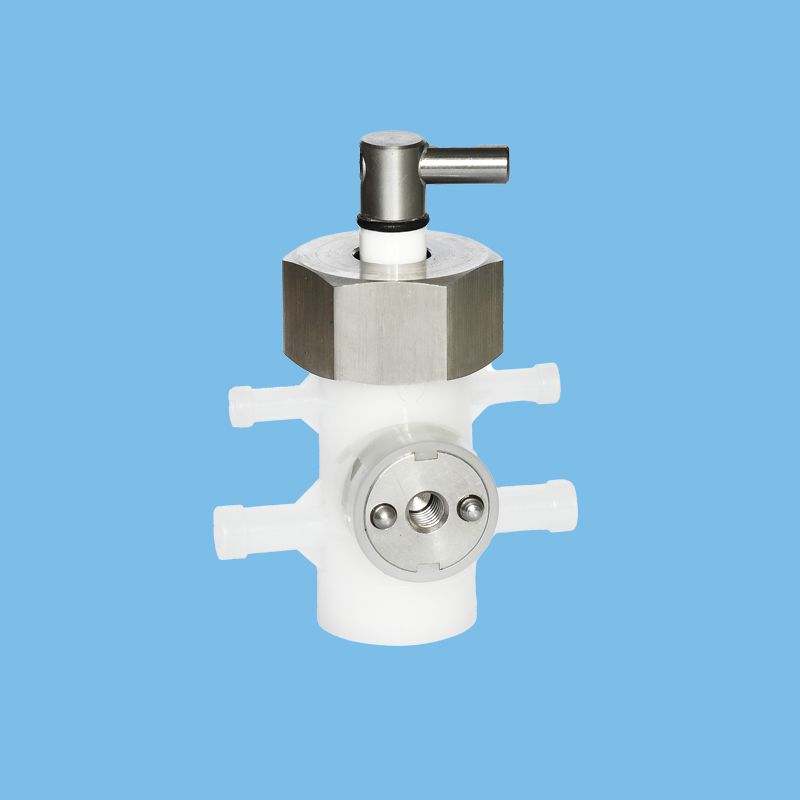
Engineered Precision Spotlight: JuchangCeramic Dialysis Dehydration Ceramic Pump
Nowhere is precision fluid delivery more mission-critical than in clinical hemodialysis and Continuous Renal Replacement Therapy (CRRT), where ultrafiltration volume errors can cause severe patient hypovolemia or fluid overload. JuchangCeramic engineers medical-grade positive displacement pumps designed explicitly for continuous clinical fluid control.
| Core Material | Medical-Grade High-Purity Zirconia Ceramic ($ZrO_2$) |
| Application Equipment | Hemodialysis Machines, Hemofiltration Systems, CRRT Systems |
| Primary Functions | Precise Dehydration Control, Waste Fluid Transfer, Flow Metering |
| Dispensing Accuracy | Medical-Grade Precision, Flow Error $\le \pm 0.5\%$ |
| Surface Finish | Ultra-fine Mirror Polishing $Ra \le 0.025\ \mu\text{m}$ |
| Customization Scope | OEM Direct Replacement, Custom Pump Core, Complete Pump Assembly |
Clinical Engineering Recommendation: Review the full technical dossier on our Dialysis Dehydration Ceramic Pump to see how medical-grade zirconia pump cores deliver ultra-precise fluid metering while meeting stringent global medical safety standards.
Materials Science: Zirconia ($ZrO_2$) vs. Alumina ($Al_2O_3$) vs. 316L Stainless
Selecting the optimal material for a precision fluid delivery pump requires understanding structural ceramics at the crystal lattice level. Structural ceramics are not all identical; specifying the wrong ceramic grade can cause brittle fracture or unnecessary procurement expense.
1. High-Purity Alumina ($Al_2O_3$ – Typically 99.5% to 99.8%)
Alumina is the industrial workhorse of the technical ceramic family. Sintered from aluminum oxide powder, alumina delivers incredible hardness (1,500 to 1,800 HV) and outstanding thermal stability. It is extremely rigid and cost-effective compared to zirconia. For commercial high-pressure washdown pumps, agricultural chemical sprayers, and industrial solvent metering, alumina plungers provide decades of wear resistance. Its main limitation is fracture toughness: alumina has a relatively low fracture toughness ($K_{Ic} \approx 3.5\text{ to }4.5\ \text{MPa}\cdot\text{m}^{1/2}$), making it vulnerable to chipping if mishandled during mechanical assembly or subjected to severe mechanical shock.
2. Yttria-Stabilized Zirconia (Y-TZP / $ZrO_2$)
Zirconia is the premier material for micro-fluidic dispensing, analytical instrumentation, and medical devices. Zirconia exhibits a unique physical phenomenon known as transformation toughening: under localized mechanical stress, the metastable tetragonal crystal phase transforms into a monoclinic phase, expanding in volume by roughly 4% and clamping down on propagating micro-cracks. This gives zirconia a fracture toughness of $6.0\text{ to }10.0\ \text{MPa}\cdot\text{m}^{1/2}$—more than double that of alumina—approaching the mechanical impact resistance of metal.
Furthermore, zirconia’s sub-micron grain structure allows it to be polished to a flawless mirror finish ($Ra \le 0.025\ \mu\text{m}$), whereas alumina grain boundaries limit its practical polish to around $Ra \approx 0.05\ \mu\text{m}$. For applications involving sensitive biological fluids, aggressive sterile flushing, or sub-percent metering precision, high-purity zirconia is the material of choice.
3. Austenitic 316L Stainless Steel
Stainless steel remains the baseline material for general-purpose utility pumps due to its ease of machining and low raw material cost. However, for precision dispensing, 316L is a compromise. Its low hardness (200 HV) makes it prone to abrasive scratching from suspended solids, its high thermal expansion causes dimensional drift, and its affinity for galling under friction leads to accelerated seal breakdown. In high-precision dispensing environments, metal plungers require frequent replacement that costs far more in downtime and ruined product than the initial investment in ceramic.
Direct Technical Comparison of Precision Fluid Dosing Technologies
| Pump Technology | Volumetric Metering Accuracy | Dynamic Seal Lifespan | Viscous / Slurry Compatibility | Pressure Capability | Routine Maintenance Interval |
|---|---|---|---|---|---|
| Ceramic Plunger Pump (Direct Positive Displacement) | Exceptional (≤ ±0.5% error) | Extremely High (8,000 to 20,000+ hours) | High; impervious to abrasive particulate scoring | High (Up to 100+ MPa / 15,000 PSI) | Low (Annual seal check only) |
| Stainless Steel Plunger Pump (Standard Industrial Type) | Moderate (±1.5% to ±3.0% initial) | Low to Moderate (1,000 to 2,500 hours) | Poor; slurries cause rapid plunger gouging | High (Up to 70+ MPa) | High (Frequent repacking and plunger polishing) |
| Peristaltic Tubing Pump (Flexible Tube Compression) | Poor to Moderate (±2.0% to ±5.0%) | Very Low (Tubing fatigues in 200 to 500 hours) | Good for gentle fluids; bad for thick slurries | Low (Typically < 0.7 MPa / 100 PSI) | Very High (Frequent tube rupture and recalibration) |
| Progressive Cavity Pump (Rotor / Elastomer Stator) | Moderate (±1.0% to ±2.0%) | Moderate (Stator wears under dry or abrasive run) | Excellent for heavy pastes; prone to slippage | Moderate (Up to 2.4 MPa) | Moderate (Stator replacement required) |
| Diaphragm Metering Pump (Hydraulic / Mechanical PTFE) | Good (±1.0% steady state) | Moderate (Diaphragm flex fatigue at ~4,000 hrs) | Moderate; check valves prone to slurry clogging | Moderate to High (Up to 35 MPa) | Moderate (Diaphragm and check valve rebuilds) |
Pros and Cons of Ceramic Plunger Architecture
| Pump Architecture | Operational & Commercial Advantages | Engineering Limitations & Design Boundaries |
|---|---|---|
| Ceramic Plunger Pumps (Zirconia / Alumina Systems) | Unsurpassed long-term volumetric repeatability (≤ ±0.5% drift). Extended seal life cuts maintenance labor and line downtime. Zero chemical corrosion, pitting, or metal ion contamination. Extreme surface hardness resists abrasive particulate scoring. Mirror-polished finishes reduce drive motor friction and power draw. | Higher initial purchase cost compared to basic metal pumps. Vulnerable to brittle fracture if dropped on concrete floors. Requires flexible mechanical couplings to avoid side-load bending. Cannot run completely dry for hours without overheating seals. |
| Conventional Metal Plunger Pumps (316L / Hard Chrome Systems) | Low initial purchase price and cheap replacement parts. High mechanical tensile strength; forgives severe side-loading. Can be machined quickly in standard local machine shops. | Suffers continuous volumetric drift as seals and rods wear. Prone to galling, corrosive pitting, and abrasive scoring. Frequent seal repacking creates high long-term maintenance costs. Leaches metal ions into sensitive biological or chemical streams. |
Who Must Upgrade to Ceramic Plungers (And Who Does Not Need Them)
Fluid handling systems require matching pump architecture to your fluid chemistry, accuracy tolerances, and production downtime costs. Ceramic plunger pumps deliver exceptional value in demanding environments, but simpler pump designs may be entirely adequate for basic utility transfer.
Who Must Invest in Ceramic Plunger Pumps:
- Medical Device & Hemodialysis Equipment Manufacturers: Clinical machines performing CRRT, hemodiafiltration, and peritoneal dialysis cannot tolerate volume drift or trace metal leaching. Explore our specialized Medical Ceramic Pump catalog to review clinically verified pump cores.
- Pharmaceutical & Biotech Fill-Finish Facilities: Dosing expensive vaccines, insulin, or antibody therapeutics demands clean, sub-percent dispensing accuracy without shedding particulate matter into sterile vials.
- Semiconductor Chemical Mechanical Planarization (CMP): CMP slurries contain abrasive nanoparticles suspended in acidic or alkaline chemistry. Metal plungers score within days; ceramic plungers run for years without degradation.
- Battery Slurry & Electronic Component Dispensing: Pumping abrasive cathode/anode slurries containing carbon black and lithium salts requires the extreme Vickers hardness of structural ceramics. For specialized manufacturing hardware, consult our guide on ceramic rod applications in manufacturing.
Who Can Stay with Standard Metal Pumps:
- Low-Pressure Municipal Water Transfer: If you are simply moving non-potable utility water from one holding tank to another with a tolerance of ±10%, standard cast-iron or bronze pumps are perfectly fine.
- Intermittent Agricultural Irrigation: Seasonal equipment running 40 hours per year on clean river water does not warrant the upfront capital investment of precision technical ceramics.
- Non-Critical Lubrication Oil Circulation: Clean motor oil circulating through an engine block lubricates metal components naturally, eliminating the friction and galling concerns that affect chemical processing pumps.
Costly Engineering & Operational Mistakes to Avoid
Factory Floor Advisory: The single most common failure mode in ceramic plunger installations is mechanical side-loading caused by misaligned drive crossheads. Structural ceramics possess immense compressive strength but lower tensile and shear strength; a rigid, misaligned holder will snap a ceramic plunger within minutes of startup.
- Rigidly Bolting the Plunger to the Drive Crosshead: Never thread or clamp a ceramic plunger rigidly to a drive actuator without allowing radial float. Thermal expansion in the drive motor or mechanical crosshead tolerances will exert bending moments on the ceramic rod. Always use self-aligning spherical joint holders as detailed in our ceramic plunger holder design guide to decouple lateral forces.
- Thermal Shocking During Hot-Water Clean-In-Place (CIP) Cycles: Flushing an operating room-temperature (20°C) ceramic pump chamber with boiling (95°C) cleaning steam or acid solution creates rapid thermal gradients. Uneven thermal expansion between the outer surface and inner core can induce thermal shock fractures. Ramp wash temperatures gradually (under 5°C to 10°C per minute) to protect ceramic integrity.
- Using Pipe Wrenches or Metal Pliers During Maintenance: Maintenance technicians accustomed to handling heavy steel shafts often use metal pliers or pipe wrenches to tighten ceramic plungers. Point contact from hard steel teeth creates microscopic surface cracks that act as stress concentration points, causing the plunger to shatter under high hydraulic operating pressure. Always use soft polymer v-blocks or strap wrenches during installation.
- Over-Tightening Dynamic Packing Glands: In metal pumps, operators often crank down on the packing nut to stop leaks. Doing this with a ceramic plunger simply crushes the polymer seal against the unyielding ceramic rod, generating excessive frictional heat that chars the seal. Set packing nuts to manufacturer torque specifications; a mirror-polished ceramic surface seals effectively with minimal packing gland pressure.
Essential Buying Considerations: Tolerances, Holders, and Sizing
When selecting a ceramic plunger pump for your fluid handling system, evaluate prospective manufacturing partners across these four technical criteria:
1. Raw Ceramic Provenance and Sintering Density
Inquire about raw material sourcing and pressing methodology. Low-cost ceramic components are often dry-pressed from low-grade powders, leaving internal micro-voids that weaken the part under high cyclic hydraulic pressures. Premium manufacturers use Hot Isostatic Pressing (HIP) or high-pressure isostatic pressing to achieve theoretical material densities greater than 99.5% (density > 6.0 g/cm³ for $ZrO_2$ and > 3.9 g/cm³ for $Al_2O_3$), ensuring zero internal porosity.
2. Cylindrical Geometric Tolerances: Roundness and Concentricity
Surface roughness ($Ra$) is only part of the equation; geometric shape precision is just as critical. A plunger that is out-of-round or has runout along its length will pinch the dynamic seal on one side while leaving a gap on the other, creating uneven wear and fluid leakage. Insist on diamond centerless grinding that guarantees roundness within ≤ 0.002 mm (2 μm) and straightness within ≤ 0.005 mm along the entire stroke length.
3. Mechanical Transition Joint Engineering
Plungers must connect mechanically to metal drive rods. How the ceramic shaft joins the metal adapter is critical. Low-end suppliers use simple structural epoxy that degrades when exposed to hot solvents. Professional manufacturers utilize interference shrink-fitting, specialized brazing, or precision floating mechanical collars to ensure the ceramic-to-metal joint withstands high cyclic push-pull loads without loosening.
4. Total Landed Cost Analysis: Evaluating the Ceramic Premium
Review the comprehensive economics before deciding. While a high-grade ceramic plunger carries a higher initial purchase price than a simple stainless steel rod, factor in total cost of ownership (TCO). A pump that eliminates twelve annual seal rebuilds, saves 40 hours of technician downtime, and prevents thousands of dollars in lost chemical or pharmaceutical batches pays for itself within three to six months. Review our comprehensive ceramic plunger price guide 2026 to evaluate commercial cost structures across standard and custom configurations.
Expert Procurement & Engineering Verdict
In our professional assessment, continuing to use 316L stainless steel or chrome-plated metal plungers for high-precision, corrosive, or abrasive fluid metering is an outdated operational strategy. The recurring costs of dynamic seal replacements, technician downtime, and volumetric dispensing drift far outweigh the initial investment in modern structural ceramics.
The engineering data is clear: ceramic plunger pumps improve precision fluid delivery by eliminating mechanical wear, thermal expansion errors, and micro-grooving along sealing interfaces. For clinical hemodialysis, biopharmaceutical fill-finish lines, semiconductor slurry dosing, and high-pressure chemical injection, upgrading to a precision-ground, mirror-polished zirconia or alumina pump core is the single most effective hardware improvement you can make. Partnering with an experienced, factory-direct technical ceramic specialist like JuchangCeramic ensures your fluid delivery lines achieve the sub-percent accuracy, zero-contamination purity, and multi-year reliability required to lead your industry.
Frequently Asked Questions
How do ceramic plunger pumps improve precision fluid delivery compared to stainless steel pumps?
Ceramic plunger pumps improve precision fluid delivery by eliminating mechanical wear, thermal expansion errors, and micro-grooving along sealing interfaces. Advanced structural ceramics like zirconia (ZrO2) and alumina (Al2O3) boast a Vickers hardness exceeding 1200 HV, near-zero thermal expansion, mirror surface finishes of Ra ≤ 0.025 μm, and complete chemical inertness, which maintains volumetric metering errors below ±0.5% over tens of millions of strokes.
Why are ceramic plungers preferred for medical dialysis and CRRT equipment?
Medical dialysis and continuous renal replacement therapy (CRRT) demand ultra-precise volumetric fluid exchange and zero patient contamination risks. Ceramic plungers are biocompatible, chemically non-reactive, and will not leach trace metal ions (such as nickel or chromium) into dialysate or blood circuits. Their ultra-smooth surface finish prevents shear-induced hemolysis and eliminates bacterial adhesion points.
What is the difference between alumina (Al2O3) and zirconia (ZrO2) plungers in fluid delivery?
Alumina ceramics offer superior hardness, higher thermal resistance, and lower material costs, making them ideal for high-pressure industrial water jetting and corrosive chemical dosing. Zirconia ceramics provide higher fracture toughness (6 to 10 MPa·m^1/2), superior impact resistance, and an exceptionally fine grain structure that polishes down to Ra ≤ 0.025 μm, making zirconia the premier choice for sub-microliter medical metering and abrasive slurries.
Can ceramic plunger pumps run completely dry without damage?
While structural ceramics exhibit an extremely low coefficient of friction, high-pressure dynamic seals still require fluid lubrication to dissipate friction-generated heat. Running dry for extended durations will degrade the elastomeric polymer packings (such as PTFE or UHMWPE), although the ceramic plunger rod itself will survive without galling or micro-welding unlike stainless steel.
Authoritative Standards & Industry References
- ASTM International: ASTM C1161 Standard Test Method for Flexural Strength of Advanced Ceramics at Ambient Temperature
- International Organization for Standardization: ISO 13485 Medical Devices — Quality Management Systems and Component Verification
- U.S. Food and Drug Administration (FDA): 21 CFR Part 820 Quality System Regulation for Medical Device Components and Fluid Fluidics