
Precision Ceramic Manufacturing addresses these challenges by producing components with carefully controlled material properties, dimensions and surface finishes. For pump manufacturers, the benefit is not simply using a harder material. It is engineering the plunger, sleeve, valve or metering component to maintain its function under the actual operating conditions.
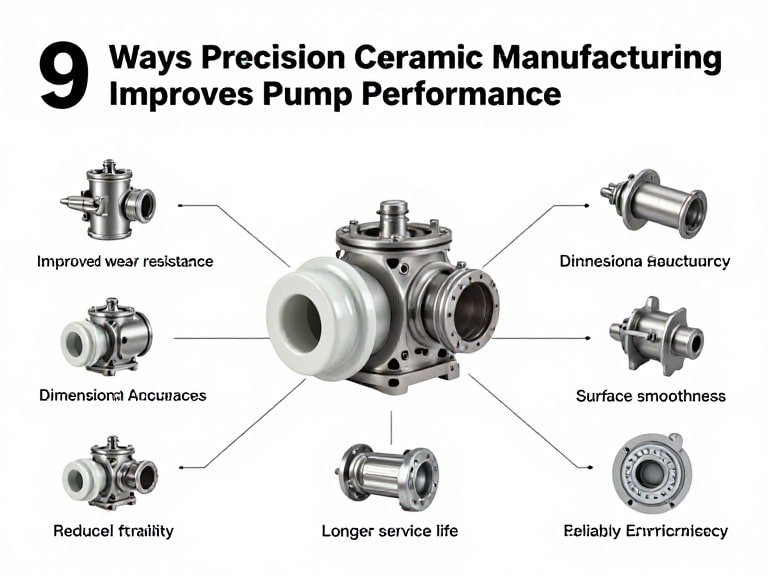
Quick Answer: How Does Precision Ceramic Manufacturing Improve Pump Performance?
Precision Ceramic Manufacturing improves pump performance by producing components with high hardness, wear resistance, chemical stability, dimensional accuracy and carefully controlled surface finishes. When the ceramic grade and component geometry are correctly selected, ceramic plungers, sleeves and valves can help reduce wear, maintain sealing clearances, improve dosing consistency and extend service intervals.
The most practical benefits are:
- Less abrasive wear in demanding fluid-handling applications.
- More stable clearances between moving components.
- Better resistance to many corrosive chemicals.
- More consistent metering in precision dosing systems.
- Reduced contamination risk in suitable fluid-contact applications.
- Longer component service life when the material and design match the operating conditions.
Our recommendation is to consider precision ceramics when component wear, chemical attack or dimensional instability is limiting pump reliability. They are not automatically the best choice for every pump: ceramic brittleness, impact loading, thermal shock and material compatibility must be evaluated before specifying a component.
What Is Precision Ceramic Manufacturing?
Precision Ceramic Manufacturing is the controlled production of ceramic components to meet defined material, dimensional, mechanical and surface requirements. Unlike ordinary pottery or general-purpose ceramic products, engineering ceramics are manufactured for technical applications where properties such as hardness, wear resistance, electrical insulation, chemical stability and dimensional consistency matter.
Common engineering ceramic materials include alumina, zirconia, silicon carbide and silicon nitride. Each has a different balance of hardness, toughness, thermal properties and chemical resistance. Selecting the right material is therefore just as important as controlling the manufacturing process.
How Does Precision Ceramic Manufacturing Work?
The manufacturing route depends on the material and component geometry, but a typical process involves several stages:
- Material selection: Choose an engineering ceramic according to the fluid, temperature, pressure, wear mechanism and mechanical loads.
- Powder preparation: Ceramic powders are prepared and processed to achieve the required composition and consistency.
- Forming: The component is shaped using an appropriate forming process, such as pressing, injection molding, extrusion or another suitable method.
- Sintering: Controlled heating densifies the ceramic body and develops its mechanical properties.
- Precision machining: Grinding, lapping and other finishing operations bring critical dimensions and surface characteristics within specification.
- Inspection: Components are checked against drawing requirements, dimensional tolerances and applicable quality criteria.
For pump components, the finishing stage is particularly important. A ceramic plunger may have excellent material properties, but if its diameter, straightness, roundness or surface finish is unsuitable, the pump may still leak, wear unevenly or deliver inconsistent flow.
What Makes Precision Ceramics Different from Conventional Ceramics?
Conventional ceramics are often designed for appearance, insulation or general structural use. Engineering ceramics are selected and processed for defined operating conditions. Their specifications may include material composition, density, hardness, fracture toughness, porosity, dimensional tolerances and surface roughness.
In most professional situations, a pump manufacturer should specify the component’s function first and then choose the ceramic material and manufacturing route. Simply asking for a “high-hardness ceramic part” is not enough to guarantee performance.
9 Ways Precision Ceramic Manufacturing Improves Pump Performance
1. Improves Wear Resistance in Abrasive Applications
Abrasive particles can gradually damage pump plungers, sleeves, valve seats and other fluid-contact components. As surfaces wear, clearances change and pump performance becomes less predictable. In severe cases, leakage increases and the pump requires repeated component replacement.
Engineering ceramics such as alumina and silicon carbide offer high hardness and can provide strong resistance to many abrasive wear mechanisms. When the material is properly selected and the mating surfaces are correctly finished, ceramic components can maintain their working dimensions longer than less wear-resistant alternatives.
Practical example: A dosing pump handling a suspension containing fine mineral particles may experience progressive plunger and sleeve wear. A properly engineered ceramic pair can reduce dimensional deterioration and help maintain a more stable sealing interface.
Our recommendation: If abrasive wear is your main problem, evaluate the particle size, concentration, hardness and flow conditions before selecting the ceramic grade. High hardness alone does not guarantee long service life if the component design creates impact or edge loading.
2. Maintains More Consistent Dimensional Accuracy
Precision pumps depend on controlled clearances. Small dimensional changes can affect leakage, volumetric efficiency and metering repeatability. This is especially important in microliter dosing systems and medical fluid-handling equipment.
Precision Ceramic Manufacturing uses controlled forming, sintering and finishing processes to produce components with defined dimensions. Precision grinding and lapping can improve the geometry and surface characteristics of plungers, sleeves and other mating parts.
Practical example: In a metering pump, an inconsistent plunger diameter can change the effective clearance between the plunger and cylinder. This may cause variations in delivered volume, particularly when the pump operates at low flow rates.
Our recommendation: Specify the critical dimensions and geometric tolerances on the component drawing. Do not rely on general descriptions such as “high precision” without a measurable inspection standard.
3. Reduces Corrosion Problems in Chemical Pumping
Metal components can be attacked by certain acids, alkalis, solvents and process chemicals. Corrosion may damage the component surface, contaminate the fluid or alter the geometry of a sealing interface.
Many engineering ceramics have excellent chemical stability in selected environments. Alumina and silicon carbide are widely considered for demanding fluid-contact applications, although their compatibility depends on the chemical concentration, temperature, pressure and exposure conditions.
Practical example: A chemical dosing pump operating continuously in a corrosive process may experience frequent replacement of conventional wetted components. A compatible ceramic component can reduce chemical degradation and improve operating consistency.
Our recommendation: Never approve a ceramic grade based on a broad claim such as “acid resistant.” Provide the supplier with the exact chemical composition, concentration, temperature and cleaning conditions. Compatibility must be verified for the complete operating environment.
4. Helps Maintain Stable Pump Sealing Performance
Sealing performance depends on the condition and geometry of mating surfaces. Scratches, wear, dimensional variation and surface damage can increase leakage or make pump output less stable.
Precision ceramic plungers and sleeves can provide hard, dimensionally controlled working surfaces. When their geometry, surface finish and mating materials are correctly specified, they can help maintain a stable clearance and reduce wear-related changes in sealing performance.
However, ceramic components do not eliminate the need for correct seal design. The pump may still require elastomer seals, backup rings or other sealing elements depending on pressure, fluid and operating conditions.
Our recommendation: Evaluate the plunger, sleeve, seal and housing as one functional assembly. A ceramic upgrade that ignores the mating seal design may deliver little improvement.
5. Supports More Accurate Metering and Dosing
In precision dosing applications, repeatability matters as much as maximum flow rate. A pump must deliver a consistent volume over repeated cycles, sometimes at extremely small displacement levels.
Dimensional consistency and wear resistance can help ceramic metering components maintain their operating geometry. This is valuable in laboratory instruments, analytical equipment, medical fluid systems and industrial chemical dosing.
Practical example: A microliter metering pump used in analytical equipment may be sensitive to small changes in plunger clearance. A precision-finished ceramic plunger can help reduce one source of mechanical variation, provided the drive system, valves and fluid properties are also controlled.
Our recommendation: If dosing accuracy is the priority, evaluate the complete pump’s repeatability, linearity, leakage and calibration results. Do not assume that installing a ceramic plunger alone will guarantee a specific dosing accuracy.
6. Reduces Contamination Risk in Suitable Fluid Systems
In medical, laboratory and certain high-purity industrial applications, fluid-contact materials must be selected carefully. Corrosion products, material wear particles and unwanted chemical interactions can compromise the process.
Dense, properly finished engineering ceramics can offer chemically stable fluid-contact surfaces in suitable applications. Their low tendency to corrode in compatible environments can help reduce certain contamination sources.
Nevertheless, ceramic material selection is not a substitute for complete system validation. Surface porosity, manufacturing residues, cleaning procedures, sterilization conditions, seals and the rest of the fluid path must all be considered.
Our recommendation: For medical and high-purity systems, request material traceability, surface inspection information and evidence that the complete component assembly meets the applicable customer and regulatory requirements.
7. Improves Performance Stability Over Repeated Operating Cycles
Pumps used in industrial production may operate for long periods with frequent starts, stops and repeated dosing cycles. Component wear, temperature changes and mechanical loads can gradually affect performance.
Precision ceramic components can provide stable material properties under suitable operating conditions. Their hardness and wear resistance may help reduce changes in critical dimensions over repeated cycles.
However, ceramics are brittle compared with many metals. Shock loads, misalignment, excessive bending stress and sudden temperature changes can cause cracking or fracture. A ceramic component must be supported correctly and operated within its design limits.
Our recommendation: For high-cycle pumps, review fatigue-related loading, assembly alignment, impact protection and operating temperature. The component should be designed for the actual duty cycle, not just the nominal pressure rating.
8. Can Reduce Maintenance Frequency and Lifecycle Cost
Frequent replacement of worn pump components creates more than a parts expense. It also involves labor, production interruptions, cleaning, recalibration and sometimes lost batches or delayed orders.
If a precision ceramic component lasts longer under the same operating conditions, it may reduce the frequency of maintenance interventions. This can be particularly valuable in continuous production or applications where pump downtime affects the entire process.
Practical example: A chemical processing facility that repeatedly replaces worn plungers may benefit from evaluating a ceramic alternative. The decision should be based on actual replacement intervals and the cost of downtime, not simply the purchase price of the new component.
Our recommendation: Compare lifecycle cost over a defined operating period. Include component price, service life, labor, downtime, inspection and replacement costs. A more expensive ceramic part is worthwhile when its verified performance reduces total operating expenditure.
9. Enables More Demanding Pump Designs and Specialized Applications
Modern pumps increasingly serve applications requiring compact dimensions, controlled dosing, chemical compatibility and long-term dimensional stability. Engineering ceramics allow designers to specify material properties that may be difficult to achieve with conventional metals or polymers in certain operating environments.
Precision Ceramic Manufacturing also supports custom geometries and application-specific component designs. This can help pump manufacturers develop specialized plungers, sleeves, valve components, metering parts and other functional ceramics.
Practical example: A manufacturer developing a compact dosing pump may need a small plunger with a controlled diameter, smooth surface and high wear resistance. A custom ceramic component can be engineered around the pump’s dimensional and operating requirements.
Our recommendation: Consider custom ceramics when standard components cannot meet your required dimensions, material compatibility or service-life target. For a new design, involve the ceramic manufacturer early enough to review tolerances, wall thickness, stress concentration and manufacturability.
Which Ceramic Materials Are Used in Precision Pump Components?
Choosing the correct material is one of the most important decisions in Precision Ceramic Manufacturing. Alumina, zirconia and silicon carbide are not interchangeable. Their properties differ, and the correct choice depends on the pump’s fluid, mechanical loading and operating environment.
Alumina Ceramic
Alumina is widely used in engineering ceramic components because it combines high hardness, wear resistance, electrical insulation and chemical stability in many environments. It is a common option for ceramic plungers, sleeves, valve parts and other precision components.
For many general industrial metering applications, alumina is a sensible starting material. However, the required purity, density, surface finish and operating environment must be considered.
Zirconia Ceramic
Zirconia is valued for its relatively high fracture toughness compared with many other engineering ceramics. It can be useful where a component needs a combination of wear resistance and improved resistance to crack propagation.
Its suitability depends on the zirconia formulation, stabilizer system, temperature and chemical environment. Buyers should confirm the actual material grade rather than specifying zirconia as a generic category.
Silicon Carbide Ceramic
Silicon carbide offers high hardness, strong wear resistance and useful thermal properties. It is considered for demanding applications involving abrasion, heat and selected corrosive environments.
Its use should be evaluated carefully where mechanical shock, impact or complex machining requirements are involved. Component design and manufacturing quality remain critical.
Material Selection Summary
| Material | Key characteristics | Potential pump applications | Important considerations |
|---|---|---|---|
| Alumina | High hardness, wear resistance, electrical insulation and chemical stability in many environments | Plungers, sleeves, valve parts and metering components | Grade, purity, porosity, surface finish and chemical compatibility |
| Zirconia | Relatively high fracture toughness among common engineering ceramics | Precision moving components and selected wear applications | Formulation, stabilizer system, temperature and chemical exposure |
| Silicon carbide | High hardness, wear resistance and useful thermal properties | Selected abrasive and demanding chemical applications | Impact loading, component geometry and machining requirements |
For pump applications, material selection should be based on a documented engineering review. If your component operates in a chemically aggressive liquid or under high mechanical loads, request a compatibility assessment and provide the actual operating data.
Precision Ceramic vs Metal vs Polymer Pump Components
Precision ceramics are not automatically superior to metal or polymer components. Each material family has a useful role. The correct decision depends on the failure mechanism you are trying to solve.
| Evaluation factor | Engineering ceramics | Metal components | Polymer components |
|---|---|---|---|
| Hardness and abrasion resistance | Often excellent, depending on ceramic grade | Varies by alloy and surface treatment | Generally lower than engineering ceramics |
| Chemical resistance | Excellent in many selected environments, but chemistry-specific | Depends strongly on alloy and corrosion conditions | Can be excellent for compatible chemicals |
| Impact resistance | Generally limited by brittleness | Often good, depending on alloy and design | Can be useful where flexibility is required |
| Dimensional stability | Good when properly manufactured and operated within design limits | Depends on thermal expansion, loading and wear | May be affected by creep, swelling and temperature |
| Precision surface finishing | Can achieve very fine finishes through grinding and lapping | Can be machined and finished accurately | Depends on material and manufacturing process |
| Typical purchasing consideration | Higher machining and handling requirements may increase cost | Material grade, corrosion protection and wear treatment | Compatibility, creep, swelling and temperature limits |
| Best reason to choose | Wear, chemical stability and controlled working dimensions | Mechanical toughness and structural strength | Flexibility, lower friction in some designs and cost-sensitive applications |
Practical decision: If your current metal plunger fails because of corrosion or abrasive wear, a ceramic alternative deserves evaluation. If the component is exposed to repeated impact or bending, metal may remain the safer choice. If flexibility, low cost or a particular chemical compatibility is the priority, an appropriate polymer may be more suitable.
Pros and Cons of Precision Ceramic Pump Components
| Advantages | Limitations |
|---|---|
| High hardness and strong wear resistance in suitable applications | Brittleness makes impact and tensile loading important design concerns |
| Good chemical stability in many selected fluid environments | Compatibility must be verified for the exact chemistry and temperature |
| Precision grinding and lapping can produce controlled dimensions and surface finishes | Achieving tight tolerances may require specialized machining and inspection |
| Can help maintain clearances and reduce wear-related performance changes | Incorrect mating-part design can still cause leakage or premature damage |
| May reduce maintenance frequency and lifecycle costs | Initial component costs may be higher than conventional alternatives |
| Supports specialized and compact precision pump designs | Complex custom geometries can increase development time and manufacturing cost |
We recommend precision ceramics when their material properties solve a measurable operating problem. We do not recommend changing to ceramics simply because they are perceived as a premium material. If your current component already provides sufficient service life and reliability, the upgrade may not justify its cost.
Which Pump Applications Benefit Most from Precision Ceramic Manufacturing?
Ceramic Plunger Pumps
Ceramic plungers are relevant to pumps where wear resistance, dimensional stability and fluid compatibility are important. The plunger surface and mating sleeve influence leakage, friction and service life.
For manufacturers evaluating this technology, explore ceramic plunger pump solutions and assess the material and component design against the actual operating pressure, fluid and duty cycle.
Medical and Dialysis Pumps
Medical fluid systems may require stable dosing, carefully selected fluid-contact materials and consistent component quality. Ceramic components can be useful in selected pump designs, but the complete device must satisfy the applicable validation, cleaning and regulatory requirements.
Review the medical ceramic pump and dialysis ceramic pump categories when evaluating precision ceramic applications in medical equipment.
Microliter Metering Pumps
Small-volume dosing systems are sensitive to dimensional variation, leakage and wear. Precision ceramic plungers and sleeves may help maintain the geometry required for repeatable metering.
For these applications, examine microliter ceramic metering pumps and verify the actual flow range, repeatability and calibration requirements.
Ceramic Rotary Valves
Rotary valve components can experience friction, wear and chemical exposure. Ceramic parts may be suitable where controlled surface contact and chemical stability are important, provided the design accounts for brittle-material limitations.
See the ceramic rotary valve category for an example of this component application.
Other Industrial Ceramic Applications
Engineering ceramics are used in many industrial components beyond pumps, including bearings, electrical insulators, tubes and wear parts. Their suitability depends on the operating environment and the function of each component.
For broader material research, review what ceramic bearings are used for and explore an industrial ceramic products list.
How Precision Ceramic Components Are Manufactured
Precision Ceramic Manufacturing involves more than shaping a ceramic blank. The manufacturing process must control material quality, densification, geometry and finishing so that the final component can perform its intended function.
Material Preparation and Forming
Manufacturing begins with selecting the correct ceramic powder and preparing it for forming. Powder characteristics, additives and processing conditions affect the consistency of the finished body.
Depending on the component geometry and production volume, manufacturers may use pressing, extrusion, ceramic injection molding or other forming techniques. The forming method must suit the component’s dimensions and required material properties.
Sintering and Densification
Sintering uses controlled heat to develop the ceramic’s final structure. Temperature, time, atmosphere and material composition can affect density, shrinkage and mechanical performance.
Because ceramic components shrink during sintering, manufacturers must account for dimensional changes when designing the initial blank. This is particularly important for precision plungers, sleeves and other cylindrical components.
Grinding, Lapping and Surface Finishing
After sintering, precision machining may be needed to achieve the required diameter, roundness, straightness and surface finish. Diamond grinding and lapping are commonly used for hard engineering ceramic components.
For pump parts, the final surface is a functional feature. A rough or geometrically inconsistent plunger may increase friction, damage a seal or affect the leakage rate.
Inspection and Quality Control
Inspection should be linked directly to the component drawing. Depending on the application, relevant checks may include:
- Material composition and grade identification.
- Density and porosity assessment.
- Diameter, length and dimensional tolerances.
- Roundness, cylindricity and straightness.
- Surface roughness and visible surface defects.
- Crack inspection and other applicable non-destructive checks.
- Batch traceability and inspection documentation.
For precision pump components, a supplier should be able to explain how each critical dimension is measured and what inspection records are provided with the finished parts.
How to Choose a Precision Ceramic Manufacturer
Choosing the right manufacturing partner is as important as choosing the ceramic material. A supplier may have good general ceramic production capabilities but limited experience with pump components that require close dimensional control and matched mating surfaces.
1. Check Experience with Similar Components
Ask whether the manufacturer has produced ceramic plungers, sleeves, valve parts or other components with comparable dimensions and tolerances. Experience with unrelated ceramic products does not necessarily demonstrate pump-component capability.
When comparing suppliers, a guide to top ceramic plunger manufacturers can help you identify potential companies for further technical evaluation.
2. Request Material Specifications
Ask for the exact ceramic grade, composition, density, hardness and relevant mechanical properties. If the application involves chemicals, request information supporting compatibility with the actual fluid and operating conditions.
Do not accept an unexplained material label. Different grades within the same ceramic family can have different properties and manufacturing characteristics.
3. Confirm Dimensional and Surface-Finish Capabilities
Provide a technical drawing with critical dimensions, tolerances and surface requirements. Ask the supplier to confirm which features it can inspect and what measurement methods it uses.
For pump components, dimensional inspection should include the features that control the fit and movement of mating parts. A general certificate without the required measurements may not be sufficient.
4. Evaluate Custom Manufacturing Capability
Standard catalog parts can reduce development time, but specialized pump designs often require custom dimensions or geometries. A suitable manufacturer should be able to review drawings, discuss manufacturability and identify potential design risks before production.
For custom projects, consider a custom precision ceramic parts supplier that can support the project from drawing review through manufacturing and inspection.
5. Review Quality Systems and Traceability
Ask about documented quality procedures, inspection equipment, batch identification, nonconformance handling and record retention. If your application has specific regulatory or customer requirements, verify them before production begins.
ISO 9001 certification may provide evidence of a quality management system, but it does not by itself prove that a particular ceramic component meets your drawing or application requirements. Product acceptance criteria must still be defined and inspected.
6. Ask About Prototyping and Production Scaling
A manufacturer should explain how it handles samples, pilot batches and repeat orders. Prototype approval should establish the dimensions, material and inspection criteria that will be maintained during mass production.
For OEM pump manufacturers, consistency between sample approval and subsequent production batches is essential. Ask how process changes are controlled and communicated.
7. Compare Communication and Technical Support
Evaluate how quickly the supplier responds to engineering questions. A good manufacturing partner should be able to discuss material selection, tolerances, geometry and practical production constraints, not simply quote a unit price.
Is Precision Ceramic Manufacturing Worth the Cost?
Precision ceramic components may have a higher initial purchase price than conventional metal or polymer alternatives, especially when the design requires tight tolerances, complex geometry or extensive finishing. However, the purchase price alone does not determine whether the component is economical.
The correct calculation is total cost over the component’s operating life. Consider the following factors:
- Replacement frequency: How often does the current component fail or exceed its wear limit?
- Maintenance labor: How much time is required to remove, inspect and replace the part?
- Production downtime: What does an unplanned pump shutdown cost?
- Product quality: Does component wear create dosing errors, leakage or rejected batches?
- Contamination risk: Could corrosion or wear particles affect the process or finished product?
- Inspection and qualification: What testing is required to approve the ceramic alternative?
For example, suppose a conventional pump component requires replacement several times a year. A ceramic alternative may cost more per unit but last substantially longer under the same operating conditions. If the reduced maintenance and downtime exceed the price difference, the upgrade can make commercial sense.
However, this should be established through operating data or a controlled trial. Do not assume a ceramic part will always last longer. Poor alignment, unsuitable chemistry or impact loading can cause premature failure.
For a purchasing benchmark, review a ceramic plunger price guide and compare the quoted specifications, material grade, tolerances and inspection scope rather than comparing unit prices in isolation.
JuchangCeramic: Custom Precision Ceramic Manufacturing for Pump Components
For pump manufacturers and industrial equipment companies, sourcing a precision ceramic component is an engineering decision, not simply a materials purchase. The supplier must understand the intended function, component geometry, material requirements and inspection criteria.
JuchangCeramic provides OEM and custom manufacturing solutions for precision ceramic parts, pumps and components. Whether customers have complete technical drawings or an initial product concept, the manufacturing process can begin with reviewing the requirements and identifying a suitable production approach.
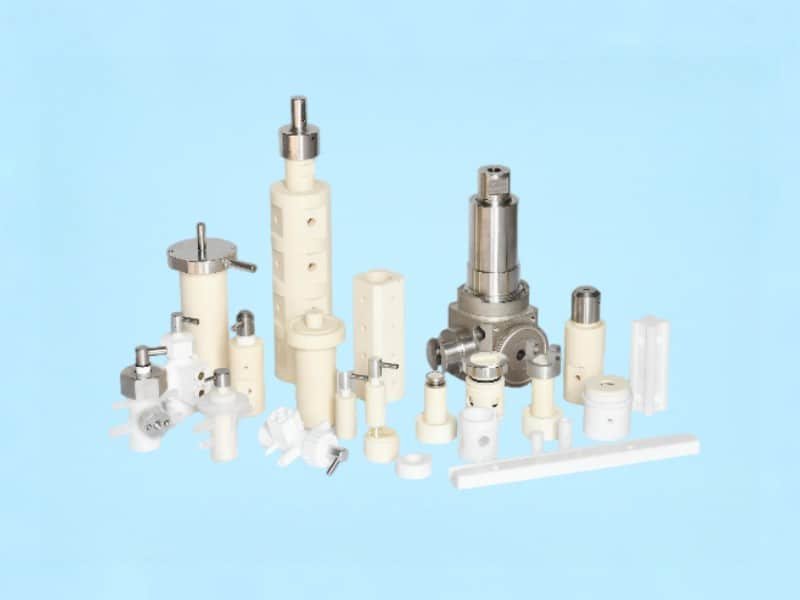
Custom Ceramic Manufacturing Services
JuchangCeramic delivers professional OEM and custom manufacturing solutions for precision ceramic parts, pumps and components. Customers can submit complete drawings or discuss an initial concept to begin the technical review and quotation process.
Explore custom precision ceramic manufacturing services for project-specific components and OEM requirements.
What Information Should You Send for a Custom Ceramic Quotation?
To receive a useful quotation, provide as much of the following information as possible:
- Component drawing or sample part.
- Required ceramic material or target material properties.
- Critical dimensions and tolerances.
- Surface roughness requirements.
- Operating pressure and temperature.
- Fluid type, concentration and chemical exposure.
- Expected quantity for prototypes and production orders.
- Inspection, packaging and traceability requirements.
If the material has not yet been selected, provide the pump’s operating conditions and the problem you want to solve. This allows the manufacturer to assess whether alumina, zirconia, silicon carbide or another material is appropriate.
For pump OEMs, we recommend approving a representative sample and its inspection report before moving into repeat production. This helps establish a documented reference for subsequent batches.
Common Mistakes When Specifying Precision Ceramic Pump Components
Choosing a Material Based Only on Hardness
Hardness is important for wear resistance, but it is not the only factor. Fracture toughness, chemical compatibility, thermal behavior and component geometry can be equally important. A very hard material may still fail if it is exposed to impact or excessive tensile stress.
Ignoring the Mating Component
A ceramic plunger works as part of a pump assembly. Its sleeve, seal, housing and alignment all influence performance. Replacing only one component without reviewing the complete interface may not solve the original problem.
Using Vague Tolerance Requirements
Terms such as “high precision” and “smooth surface” are not measurable acceptance criteria. Provide actual dimensional tolerances and surface-finish requirements on the drawing.
Assuming All Ceramics Resist Every Chemical
Chemical resistance varies by material and operating environment. Always confirm the exact chemical composition, concentration, temperature and exposure conditions.
Overlooking Ceramic Brittleness
Engineering ceramics can perform well under suitable compressive and wear conditions, but they are less tolerant of impact and tensile stress than many metals. Assembly procedures, support geometry and alignment must be controlled.
Comparing Suppliers Only by Unit Price
Two quotations may describe different material grades, tolerances, finishing processes and inspection requirements. Compare the complete technical specification before deciding which offer is more economical.
Expert Recommendation: When Should You Upgrade to Precision Ceramic Components?
From our experience with precision ceramic applications, the strongest reason to upgrade is a clearly identified failure mechanism. If your pump suffers from abrasive wear, chemical corrosion, dimensional deterioration or unstable metering, precision ceramics deserve serious consideration.
We recommend the following approach:
- For abrasive fluids: Investigate alumina or silicon carbide options after reviewing particle characteristics and wear conditions.
- For precision dosing: Prioritize dimensional consistency, surface finish and matched plunger-sleeve geometry.
- For corrosive chemicals: Verify material compatibility using the exact fluid concentration and operating temperature.
- For medical and laboratory systems: Review the complete fluid path, cleaning requirements, material traceability and applicable validation obligations.
- For high-cycle industrial pumps: Evaluate wear life, alignment, shock loading and the cost of unplanned maintenance.
- For new pump designs: Involve the ceramic manufacturer early to optimize material choice, component geometry and manufacturability.
For beginners, start with the component that causes the most frequent maintenance problem rather than redesigning the entire pump. For commercial users, compare lifecycle cost and verify the improvement through operating data. For demanding applications, insist on material documentation, dimensional inspection and a defined acceptance standard.
Precision Ceramic Manufacturing is worth the investment when it solves a measurable performance problem. The best result comes from matching the material, geometry, manufacturing process and pump design—not from selecting ceramic components simply because they sound more advanced.
Frequently Asked Questions About Precision Ceramic Manufacturing
1. What is Precision Ceramic Manufacturing?
Precision Ceramic Manufacturing is the controlled production of engineering ceramic components with specified material properties, dimensions and surface finishes. It commonly involves powder preparation, forming, sintering, precision grinding, lapping and inspection. In pump applications, it is used to produce components such as plungers, sleeves, valve parts and metering elements.
2. How do ceramic components improve pump performance?
Ceramic components can improve wear resistance, chemical stability and dimensional consistency. When properly designed and manufactured, they may help reduce leakage, maintain working clearances, improve dosing repeatability and extend component service intervals.
3. Which ceramic material is best for pump plungers?
Alumina is a common option for wear-resistant pump components. Zirconia may be considered where higher fracture toughness is important, while silicon carbide can be suitable for selected abrasive and demanding chemical applications. The correct material depends on the fluid, pressure, temperature, mechanical loading and required surface finish.
4. Are ceramic pump components better than stainless steel?
Not in every application. Ceramics can offer better hardness and wear resistance in suitable conditions, while stainless steel generally offers greater tolerance to impact and mechanical deformation. Chemical compatibility also depends on the exact ceramic grade or steel alloy. Select the material according to the actual failure mechanism and operating conditions.
5. Can precision ceramics improve metering accuracy?
They can help by maintaining consistent component dimensions and reducing wear-related changes in clearances. However, overall dosing accuracy also depends on the pump design, drive mechanism, valves, fluid properties, calibration and operating conditions.
6. Are ceramic plungers suitable for corrosive liquids?
Some ceramic grades have strong resistance to selected corrosive environments. However, no ceramic should be assumed compatible with every acid, alkali or solvent. The exact chemical composition, concentration, temperature and exposure conditions must be reviewed before selection.
7. Why are precision ceramic components more expensive than standard parts?
Engineering ceramics require specialized powder processing, controlled sintering and precision finishing. Tight tolerances may require additional grinding, lapping and inspection. The higher purchase price can be justified when longer service life or reduced downtime lowers total operating cost.
8. How do I choose a custom precision ceramic manufacturer?
Evaluate experience with similar components, material expertise, dimensional machining capability, surface finishing, inspection equipment, quality procedures and production consistency. Provide drawings and operating conditions, then request a documented quotation and sample approval process.
9. Can ceramic components be manufactured according to custom drawings?
Yes. Custom engineering ceramic parts can be manufactured to application-specific drawings, subject to material and process feasibility. The supplier should review critical dimensions, wall thickness, geometry, tolerances and manufacturing constraints before confirming the design.
10. How can I reduce the risk of ceramic component failure?
Choose a suitable ceramic grade, avoid excessive impact and tensile stress, control assembly alignment, specify appropriate mating surfaces and verify chemical compatibility. A documented inspection process and correct operating conditions are also essential for reliable performance.
References
- The American Ceramic Society – Technical and educational resources covering engineering ceramics, ceramic materials and advanced ceramic applications.
- ISO 20430:2020 – Plastics and Rubber Machines: Injection Moulding Machines – Safety Requirements – An example of a machinery-specific international safety standard. Pump manufacturers should identify the standards applicable to their own equipment and application.
- ASTM International – Standards and technical specifications covering ceramic materials, testing methods and engineering product evaluation.