
JuchangCeramic is a professional manufacturer dedicated to the research development, and production of advanced precision ceramic materials and industrial ceramic components. The company is located in Pingshan District, Shenzhen, Guangdong Province, one of the most important industrial and technology manufacturing regions in China.
In high-pressure fluid handling systems, the catastrophic failure of a pumping component is not merely an inconvenience; it represents severe downtime, massive revenue loss, and potential safety hazards. From our experience, many engineers default to standard stainless steel or chrome-plated plungers without analyzing the long-term cost of abrasive wear and chemical degradation. This is where advanced technical ceramics change the engineering landscape. Understanding the various types of ceramic plungers and their specific uses is absolutely critical for designing resilient metering, dosing, and high-pressure pumping systems.
As industry demands push the limits of pressure, temperature, and chemical aggression, selecting the correct precision ceramic components for pumps becomes a highly specialized task. Not all ceramics are engineered identically. A material formulated for extreme thermal shock may perform poorly against abrasive slurries. In this comprehensive technical guide, we will strictly define the 8 types of ceramic plungers and their specific uses, providing you with the authoritative data needed to optimize your pump performance.
Table of Contents
- Summary Table: Ceramic Plunger Types
- 1. High-Purity Alumina (Al2O3) Ceramic Plungers
- 2. Zirconia Toughened Alumina (ZTA) Plungers
- 3. Yttria-Stabilized Zirconia (YSZ) Plungers
- 4. Silicon Carbide (SiC) Ceramic Plungers
- 5. Silicon Nitride (Si3N4) Plungers
- 6. Steatite Ceramic Plungers
- 7. Metal-Ceramic Composite Plungers
- 8. Microporous Ceramic Plungers
- Expert Material Selection Guide
- Frequently Asked Questions (FAQs)
- References & Industry Standards
Summary Table: Ceramic Plunger Types
To provide immediate clarity before we examine the specific material properties, we have compiled a summary matrix. This table acts as a ceramic plunger pump components overview, allowing plant managers and procurement engineers to quickly align material types with their target applications.
| Ceramic Material | Primary Characteristic | Specific Target Use Case |
|---|---|---|
| High-Purity Alumina (95%-99%) | Excellent wear resistance, cost-effective | Standard high-pressure water washers, basic chemical dosing |
| Zirconia Toughened Alumina (ZTA) | Enhanced fracture toughness over standard Alumina | Mining slurry transfer, abrasive mud pumping |
| Yttria-Stabilized Zirconia (YSZ) | Extreme fracture toughness, high bending strength | Hydraulic fracturing (fracking) pumps, homogenizers |
| Silicon Carbide (SiC) | Exceptional chemical inertness, high thermal conductivity | Highly concentrated acids, extreme high-temperature fluids |
| Silicon Nitride (Si3N4) | Unmatched thermal shock resistance | Aerospace fluid metering, cryogenic pumping systems |
| Steatite | Superior electrical insulation, low friction | Pharmaceutical dispensing, electrically isolated fluid lines |
| Composite (Metal-Ceramic) | Combines ceramic wear resistance with metal tensile strength | Heavy-duty industrial hydraulic presses with lateral loads |
| Microporous Ceramic | Controlled porosity for air/fluid dynamics | Vacuum chucking equipment, specialized gas-liquid separation |
Detailed Analysis: Types of Ceramic Plungers and Their Specific Uses
To maximize pump lifespan, engineers must match the mechanical and thermal properties of the plunger to the fluid dynamics of the system. We recommend analyzing the following eight categories closely. For broader industry context, you can also review advanced industrial ceramics applications.
1. High-Purity Alumina (Al2O3) Ceramic Plungers
Alumina is the workhorse of the technical ceramics industry. Typically formulated between 95% and 99.8% purity, alumina plungers offer an outstanding balance of high Vickers hardness (around 1500 HV) and cost-efficiency. They are chemically inert to most alkalis and mild acids. From our experience, we recommend 99% alumina plungers for standard commercial high-pressure washer pumps and municipal water treatment dosing systems. Their specific use lies in environments where abrasive wear from particulate matter in water is the primary cause of pump failure. They drastically outperform stainless steel, often extending maintenance intervals by 500%.
2. Zirconia Toughened Alumina (ZTA) Plungers
While standard alumina is exceptionally hard, it can be brittle under impact. ZTA solves this by dispersing zirconia particles within the alumina matrix. When a microscopic crack attempts to propagate through ZTA, the zirconia particles undergo a phase transformation that expands their volume, effectively “pinching” the crack shut. This results in significantly higher fracture toughness. We strongly recommend ZTA plungers for heavy industrial applications, particularly in Mineral Processing Mining Equipment where pumps must move dense, highly abrasive mud and tailings. The specific use of ZTA is handling abrasive slurries where standard alumina might chip under particulate impact.
3. Yttria-Stabilized Zirconia (YSZ) Plungers
When evaluating the types of ceramic plungers and their specific uses, YSZ represents the apex of mechanical strength. Yttria stabilizes the tetragonal phase of zirconia at room temperature, yielding a material with a fracture toughness (up to 8-10 MPa·m1/2) that rivals some metals. Because of its incredible strength and perfectly smooth surface finish (which reduces packing seal wear), YSZ is the mandatory choice for ultra-high-pressure applications. Its specific uses include oil and gas hydraulic fracturing (fracking) pumps, dairy and pharmaceutical high-pressure homogenizers, and waterjet cutting systems operating upwards of 60,000 PSI.
4. Silicon Carbide (SiC) Ceramic Plungers
Silicon Carbide is nearly as hard as a diamond and possesses exceptional chemical inertness. Unlike oxide ceramics (Alumina and Zirconia), SiC is a non-oxide ceramic, giving it absolute resistance to highly concentrated acids (including hydrofluoric acid) and extreme alkaline environments. Furthermore, SiC has excellent thermal conductivity. We specify Silicon Carbide plungers for the petrochemical and specialized chemical manufacturing industries. Their specific use is transferring boiling, highly corrosive chemical compounds where any other metal or ceramic would dissolve, pit, or fail due to thermal expansion.
5. Silicon Nitride (Si3N4) Plungers
Silicon Nitride is renowned for its unparalleled resistance to severe thermal shock. You can heat a Si3N4 component to 1000°C and drop it into cold water without it fracturing. Additionally, it has a very low coefficient of friction and high wear resistance, similar to the well-documented benefits of ceramic bearings used in high-speed machinery. We recommend Silicon Nitride plungers for aerospace fluid metering systems, cryogenic pumping, and specialized automotive fuel injection testing rigs. Its specific use is in environments experiencing rapid, extreme temperature fluctuations where dimensional stability is non-negotiable.
6. Steatite Ceramic Plungers
Steatite is a magnesium silicate ceramic. While it does not possess the extreme hardness of Zirconia or Silicon Carbide, it offers excellent dielectric properties (electrical insulation) and can be machined to incredibly tight tolerances at a lower manufacturing cost. Its specific use is primarily found in precision pharmaceutical dispensing pumps and medical fluid transfer systems. Because it generates very low friction against PTFE seals and operates smoothly under low mechanical loads, it is ideal for preventing fluid contamination in sterile environments.
7. Metal-Ceramic Composite Plungers
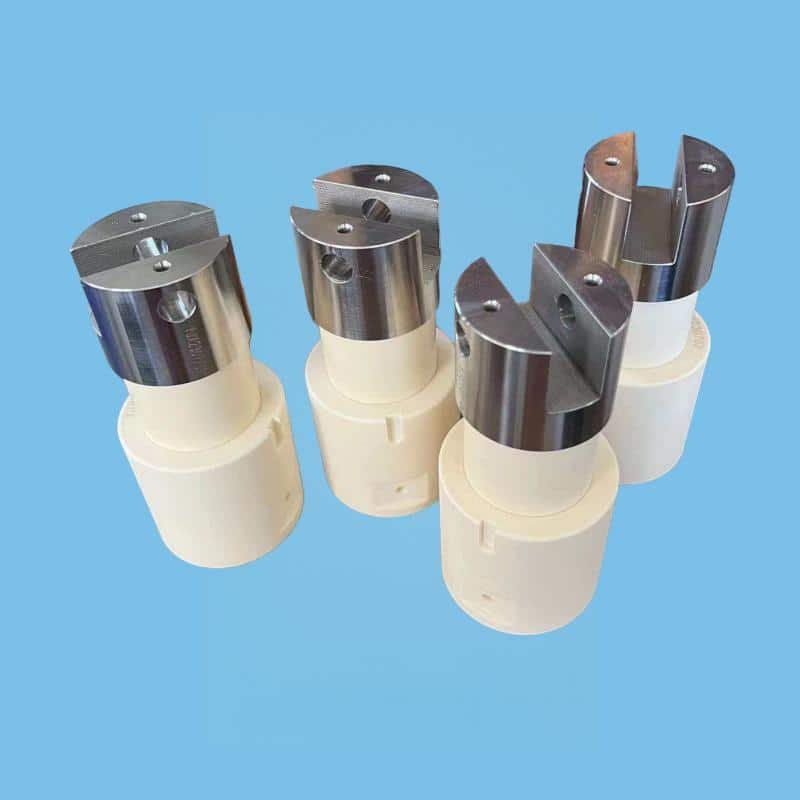
A pure ceramic plunger performs flawlessly under compressive stress but can fail if subjected to severe lateral (bending) forces caused by misaligned pump crossheads. Metal-ceramic composite plungers resolve this engineering dilemma. They feature a high-tensile stainless steel core chemically or mechanically bonded to a thick outer sleeve of Alumina or Zirconia. From our experience, we specify these composite plungers for massive, heavy-duty industrial hydraulic presses and legacy pumping equipment where perfect axial alignment cannot be guaranteed. This hybrid approach represents a critical evolution in the types of ceramic plungers and their specific uses.
8. Microporous Ceramic Plungers
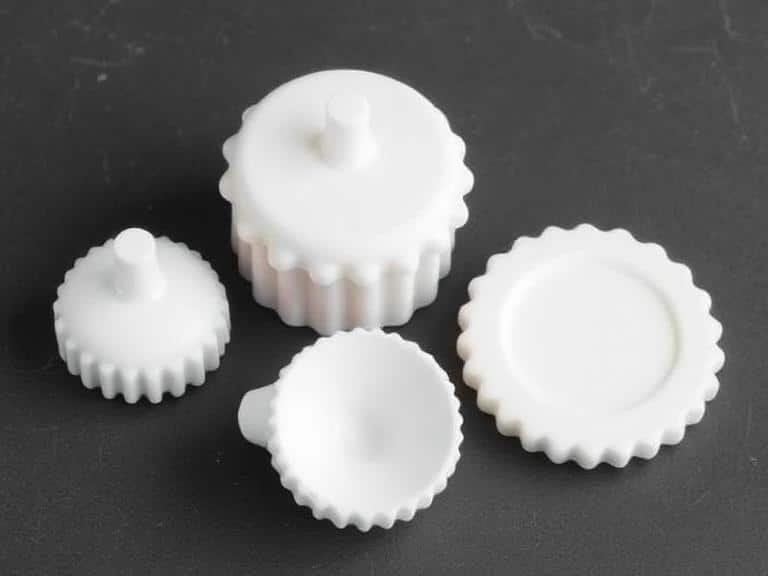
Unlike the fully dense ceramics listed above, microporous ceramic plungers are intentionally engineered with a controlled porosity network. They are not used to push high-pressure water. Instead, their specific use is in vacuum chucking systems in semiconductor manufacturing and precision gas-liquid separation pumps. The microscopic pores allow air or gas to pass through the plunger face while blocking liquids or generating a uniform vacuum grip on delicate silicon wafers without causing physical damage.
Expert Material Selection Guide: Optimizing Pump Performance
When consulting our ceramic plunger material selection guide, procurement teams often struggle between choosing Alumina or Zirconia. This is the most common decision in the pump manufacturing sector. To make an informed choice, you must clearly understand the operational environment.
If your pump operates at pressures below 5,000 PSI, pumps relatively clean fluids, and operates continuously without severe mechanical shock, 99% Alumina is the most cost-effective and reliable choice. However, if your system exceeds 10,000 PSI, pumps fluids containing abrasive sand, or experiences frequent cavitation and pressure spikes, investing in Yttria-Stabilized Zirconia is mandatory. The initial procurement cost of Zirconia is higher, but the reduction in packing seal replacement and pump downtime yields a massive return on investment. For a deeper technical breakdown of these two base materials, review our guide on zirconia vs alumina ceramic components. Ultimately, integrating these components into high-end Precision Ceramic Pumps ensures your industrial fluid transfer systems remain online, efficient, and profitable.
Frequently Asked Questions (FAQs)
Why do ceramic plungers outlast stainless steel plungers?
Ceramic materials, particularly Alumina and Zirconia, possess a Vickers hardness rating that is exponentially higher than hardened stainless steel. This extreme hardness prevents abrasive particles in the fluid from scoring or scratching the plunger surface. When a metal plunger gets scratched, it shreds the packing seals, causing leaks. A ceramic plunger retains its mirror-like finish, preserving the seals and extending the overall pump lifespan by up to ten times.
Can ceramic plungers handle dry running?
No. While ceramics have lower friction coefficients than metals, running a high-pressure pump completely dry will rapidly generate immense friction heat between the ceramic plunger and the elastomer packing seals. The seals will melt and fail long before the ceramic is damaged, but the sudden localized heat followed by cold fluid re-entry can cause thermal shock. We recommend always ensuring proper fluid lubrication.
How does chemical corrosion affect different types of ceramic plungers and their specific uses?
Oxide ceramics (Alumina and Zirconia) are highly resistant to most standard industrial chemicals and water degradation. However, if your process involves highly concentrated hydrofluoric acid or boiling caustic soda, oxide ceramics can experience grain boundary corrosion. In these extreme chemical scenarios, you must specify non-oxide ceramics like Silicon Carbide (SiC), which remain totally inert under brutal chemical attacks.
References & Industry Standards
To ensure the highest level of engineering accuracy regarding the types of ceramic plungers and their specific uses, we base our material formulations and recommendations on data from the following authoritative bodies:
- National Institute of Standards and Technology (NIST) – Advanced Materials Data
- U.S. Department of Energy (DOE) – Industrial Pumping Efficiency Guidelines
- The American Ceramic Society – Technical Ceramic Properties and Testing Standards
In conclusion, treating all ceramic components as identical commodities is a critical engineering flaw. By thoroughly understanding the 8 types of ceramic plungers and their specific uses, plant operators can radically decrease maintenance budgets, eliminate hazardous chemical leaks, and maximize production uptime. At JuchangCeramic, we remain committed to engineering precision components that solve the industry’s most punishing fluid dynamics challenges.