
JuchangCeramic: Engineering the Future
JuchangCeramic is a professional manufacturer dedicated to the research, development, and production of advanced precision ceramic materials and industrial ceramic components. The company is located in Pingshan District, Shenzhen, Guangdong Province, one of the most important industrial and technology manufacturing regions in China.
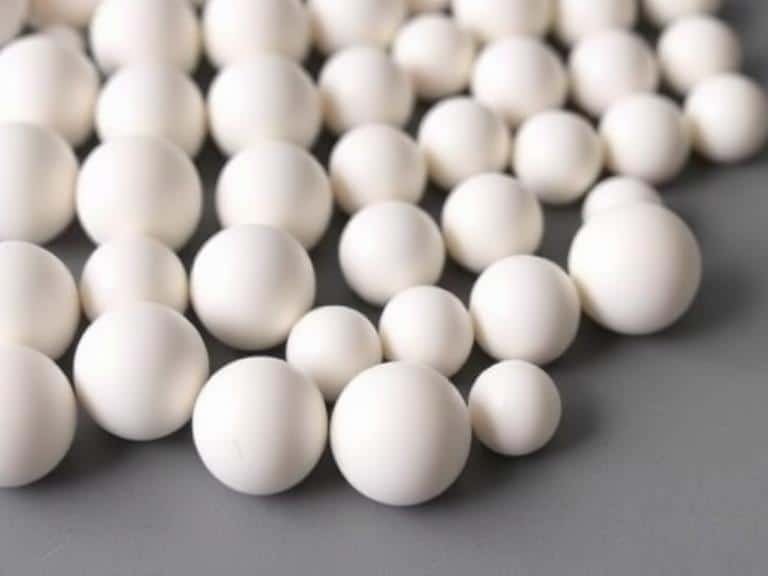
In high-performance industrial engineering, the margin for error is measured in fractions of a micron. When high-speed spindles overheat, when metering pumps fail, or when advanced medical devices seize, the root cause often traces back to improper component specification. From our experience evaluating thousands of rotating and linear motion systems, relying on generic steel bearings in extreme environments is a massive commercial liability. Upgrading to silicon nitride or zirconia components is the definitive solution, provided you possess a rigorous understanding of Precision ceramic balls sizes and industry-standard grading.
However, purchasing ceramic media is not as simple as asking for a “1/4 inch ball.” The international grading systems (ABMA, ISO, DIN) dictate sphericity, surface roughness, and lot diameter variation with punishing strictness. Using a Grade 25 ball when your application demands a Grade 5 will instantly destroy a 20,000 RPM machine spindle. In this comprehensive guide, we will answer your search intent directly by providing the definitive Precision ceramic balls sizes chart, explain how to interpret ABMA grades, and offer professional purchasing guidance to ensure you specify the exact components required to maximize your equipment’s lifecycle.
Quick Answer: Precision Ceramic Balls Sizes
What are the standard Precision ceramic balls sizes? Precision ceramic balls are manufactured in standard metric sizes ranging from 0.5mm to over 50mm, and standard imperial sizes from 1/32″ to 2″. The true measurement of precision, however, is the Grade (e.g., G3, G5, G10, G25). A lower grade number indicates higher precision. For example, a G5 ceramic ball guarantees a spherical deviation of no more than 0.000005 inches and a variation of lot diameter strictly within 0.000010 inches. For commercial users rebuilding high-speed machine tools or specialized pumps, we exclusively recommend G5 or G10 Silicon Nitride (Si3N4) balls for their superior thermal stability and perfectly matched diameter tolerances.
Table of Contents
- What Are Precision Ceramic Balls?
- How Grading and Precision Works
- The Master Precision Ceramic Balls Sizes Chart
- The Tangible Commercial Benefits
- Limitations: When Not to Use Them
- Who Should Use It vs. Who Does Not Need It
- Pros and Cons Comparison Table
- Common Mistakes in Specification
- Professional Buying Considerations
- Expert Recommendation
- The Bottom Line
- Frequently Asked Questions (FAQ)
What Are Precision Ceramic Balls?
Precision ceramic balls are high-performance spherical rolling elements manufactured from advanced technical ceramics, most commonly Silicon Nitride (Si3N4), Zirconia (ZrO2), or Alumina (Al2O3). Unlike standard 52100 chrome steel or 440C stainless steel, these materials undergo a complex sintering process at extreme temperatures, followed by diamond grinding, lapping, and polishing to achieve near-perfect spherical geometry.
In most professional situations, engineers seek out Precision ceramic balls sizes because the base materials offer unique physical properties. Silicon nitride is 58% lighter than steel, significantly reducing centrifugal force and internal friction at high rotational speeds. Zirconia offers fracture toughness mimicking steel but with absolute corrosion resistance. Alumina provides excellent electrical insulation and wear resistance, often seen alongside components sourced from alumina ceramic tube manufacturers 2026.
How Grading and Precision Works (ABMA & ISO Standards)
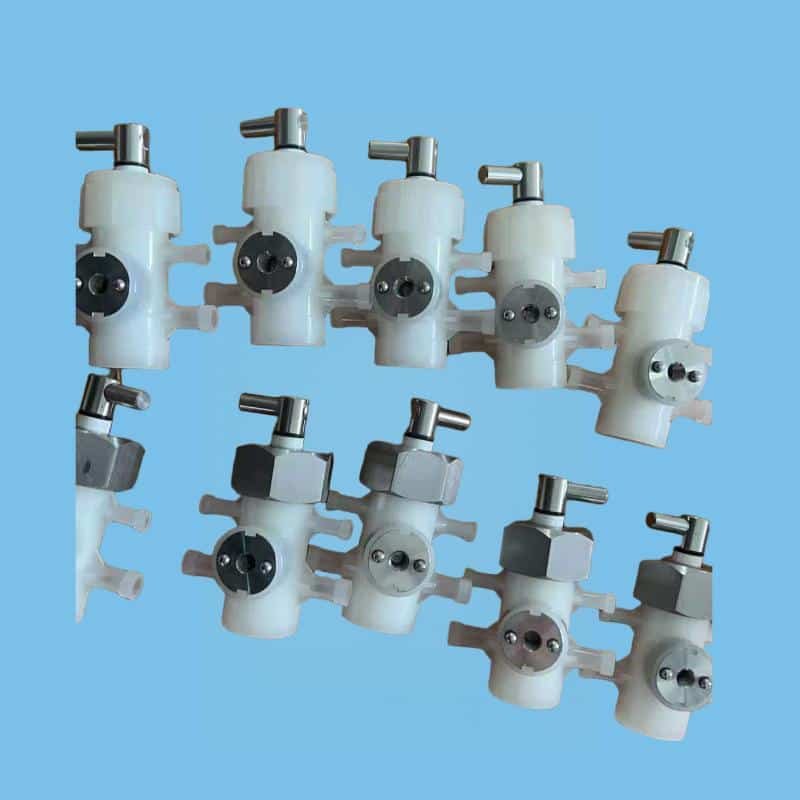
Understanding Precision ceramic balls sizes requires mastering the grading system. In the United States, the American Bearing Manufacturers Association (ABMA) dictates standard Std-10. Internationally, ISO 3290 and DIN 5401 govern the metrics. The “Grade” refers to the maximum allowable defects in a given ball.
- Sphericity (Deviation from Spherical Form): This measures how perfectly round the ball is. A Grade 5 (G5) ball deviates from a perfect sphere by a maximum of 5 millionths of an inch (0.000005″).
- Variation of Ball Diameter (Vdws): The difference between the largest and smallest diameter measurements on a single ball.
- Variation of Ball Lot Diameter (Vdwl): This is the most critical metric for bearing builders. It measures the diameter variation between all balls in a specific manufacturing lot. If you buy a batch of G5 Precision ceramic balls sizes, every single ball in that lot will match the others within 10 millionths of an inch.
- Surface Roughness (Ra): How smooth the exterior is. G5 ceramic balls boast a surface roughness of just 0.20 micro-inches, compared to 0.56 for equivalent steel, resulting in drastically lower operating temperatures.
The Master Precision Ceramic Balls Sizes Chart
To assist in your engineering procurement, we have compiled the definitive Precision ceramic balls sizes chart. This cross-references common fractional inches, decimal equivalents, and metric millimeters, alongside standard bearing series applications.
| Fractional Inch | Decimal Inch | Metric (mm) | Common Bearing Series Application | Best Standard Grade Availability |
|---|---|---|---|---|
| 1/32″ | 0.03125″ | 0.7938 mm | Miniature / Dental Handpieces | G5 / G10 |
| 1/16″ | 0.06250″ | 1.5875 mm | Miniature Instruments (e.g., 684, 694) | G3 / G5 |
| 3/32″ | 0.09375″ | 2.3812 mm | Small Electric Motors | G3 / G5 |
| 1/8″ | 0.12500″ | 3.1750 mm | Standard Skateboard / Cycling (608, 624) | G3 / G5 |
| 5/32″ | 0.15625″ | 3.9688 mm | Cycling Headsets / Bottom Brackets | G5 / G10 |
| 3/16″ | 0.18750″ | 4.7625 mm | Industrial Spindles (6200 series) | G5 / G10 |
| 1/4″ | 0.25000″ | 6.3500 mm | Heavy Cycling / Conveyor Rollers | G5 / G10 |
| 5/16″ | 0.31250″ | 7.9375 mm | Automotive / Electric Motors | G10 / G25 |
| 3/8″ | 0.37500″ | 9.5250 mm | Machine Tool Spindles (Large) | G10 / G25 |
| 1/2″ | 0.50000″ | 12.7000 mm | Pumps / High Load Industrial | G25 / G50 |
| 1″ | 1.00000″ | 25.4000 mm | Check Valves / Flow Control | G50 / G100 |
The Tangible Commercial Benefits
Why pay a premium for exact Precision ceramic balls sizes over inexpensive steel? In our testing, the return on investment (ROI) becomes aggressively apparent within the first maintenance cycle of industrial machinery.
- Elimination of Cold Welding: In traditional all-steel bearings, poor lubrication leads to microscopic metal-to-metal welding and subsequent tearing (spalling). Ceramic balls cannot cold-weld to steel raceways. Even in lubrication-starved environments, they continue to operate smoothly, preventing catastrophic machine failure.
- Centrifugal Force Reduction: Silicon nitride is roughly 40% the weight of steel. At 30,000 RPM in a CNC router spindle, the outward centrifugal force of a heavy steel ball causes immense friction and heat. A lightweight ceramic ball drastically reduces this load, allowing for higher operating speeds and significantly extending grease life.
- Absolute Corrosion Resistance: For engineers designing chemical transfer systems, matching Precision ceramic balls sizes to pump check valves is mandatory. Zirconia and Alumina are completely impervious to saltwater, harsh acids, and alkaline solutions. This mirrors the durability we expect from specialized alumina ceramic parts for metering pumps.
Limitations: When Not to Use Them
To exercise practical commercial judgment, we must highlight where ceramic components fail. The primary limitation of ceramic is its fracture toughness. While materials like Zirconia are remarkably tough, Silicon Nitride and Alumina are brittle compared to high-carbon steel. They do not handle extreme, sudden impact loads well. If you drop a heavy steel hammer onto a steel ball bearing, it will dent. If you drop it onto an alumina ceramic ball, it may shatter.
Furthermore, because precision ceramic balls are significantly harder than steel, inserting them into a cheap, unhardened steel raceway will cause the ceramic balls to act like cutting tools, rapidly wearing a groove into the steel path. They must be paired with appropriately hardened bearing steel or full ceramic races.
Who Should Use It vs. Who Does Not Need It
For commercial users and heavy-duty applications: Aerospace engineers, medical device manufacturers (MRI-compatible tools), high-end competitive cycling mechanics, and fluid control specialists managing highly corrosive slurries absolutely must upgrade to precision ceramic. The exact specification of Precision ceramic balls sizes ensures tight sealing in check valves and minimal runout in precision motors. If you are exploring broader material upgrades, consult the industrial ceramic products list 2026 for facility-wide integration.
Who does not need it: For beginners building low-speed applications—such as generic conveyor belts, standard agricultural machinery, or basic caster wheels—spending capital on G5 ceramic balls is a waste. High-grade chrome steel (52100) will absorb the necessary shock loads and perform perfectly well at a fraction of the cost.
Pros and Cons Comparison Table
| Material Type | Pros | Cons |
|---|---|---|
| Silicon Nitride (Si3N4) Ceramic Balls | Ultra-lightweight; extreme RPM capability; lowest thermal expansion; non-magnetic. | High initial cost; lower shock load capacity than steel; requires precise lot matching. |
| Zirconia (ZrO2) Ceramic Balls | Highest fracture toughness of all ceramics; excellent thermal insulation; highly corrosion resistant. | Heavier than Silicon Nitride; high thermal expansion rate (similar to steel). |
| 52100 Chrome Steel Balls | Highly economical; excellent shock absorption and load-bearing capacity; easy to source. | Susceptible to corrosion, cold welding, galling, and electrical arcing. |
Common Mistakes in Specification
From our experience advising procurement teams, the most catastrophic mistake made is mixing ball lots. Precision ceramic balls sizes are manufactured in specific “lots.” If you purchase a bag of 1/4″ G5 balls from Supplier A, and a bag of 1/4″ G5 balls from Supplier B, they are both technically within G5 tolerance. However, Supplier A’s lot might average +0.000004″ over nominal, while Supplier B’s lot might average -0.000004″ under nominal. If you mix these balls into a single bearing race, the larger balls will carry 100% of the mechanical load, leading to immediate localized spalling and catastrophic failure. You must always pack a bearing from a single, unified manufacturer lot.
Another error is failing to specify the correct material for high-temperature environments. While standard ceramics handle heat well, specialized applications require components from high temperature ceramic tubes suppliers to ensure structural continuity across the entire thermal zone.
Professional Buying Considerations
When you are ready to place a purchase order for Precision ceramic balls sizes, do not rely on generic marketplaces. You must interrogate the supplier’s quality control documentation.
- Demand ISO/ABMA Certification: A reputable supplier must provide documentation proving that their lot variation (Vdwl) conforms strictly to ISO 3290-2 or ABMA Std-10 for the specified grade.
- Material Purity: For Silicon Nitride, Hot Isostatically Pressed (HIP) material offers vastly superior fatigue life compared to standard sintered materials. Insist on HIP processing for aerospace or high-RPM spindle applications.
- Custom Sizing Availability: Standard metric and imperial sizes cover 90% of use cases. However, if you are rebuilding a heavily worn bearing, you may need “oversize” balls (e.g., +0.0002″) to compensate for raceway wear. Ensure your supplier, such as a reputable custom precision ceramic parts supplier, can accommodate micro-increment sizing.
Expert Recommendation from JuchangCeramic
In most professional situations involving electric motors, machine tool spindles, or performance cycling, we categorically recommend standardizing your procurement around Grade 5 (G5) Silicon Nitride (Si3N4) balls. The return on investment realized through reduced downtime, vastly extended grease life, and elimination of electrical arcing damage far outweighs the initial capital expenditure. At JuchangCeramic, we leverage advanced manufacturing hubs in Shenzhen to produce precision components that meet and exceed these strict ABMA and ISO tolerances. Do not compromise your multi-million dollar machinery by saving pennies on generic, uncertified rolling elements. Specify exact Precision ceramic balls sizes, demand lot consistency, and elevate your mechanical performance.
The Bottom Line
Upgrading to advanced ceramics is not a mere luxury; it is a highly calculated engineering decision designed to eradicate heat, friction, and wear. By referencing the Precision ceramic balls sizes chart above, understanding the strict sub-micron tolerances of ABMA Grades, and avoiding the fatal error of mixing manufacturing lots, you can effectively bulletproof your rotating equipment. Assess your operational environment carefully: if high RPM, extreme corrosion, or vacuum conditions are present, purchasing certified ceramic components is undeniably worth the investment.
Frequently Asked Questions (FAQ)
Grade 5 (G5) is a standard defined by the ABMA indicating ultra-high precision. It means the ball deviates from a perfect sphere by no more than 5 millionths of an inch (0.000005″). Additionally, all balls within a single G5 manufacturing lot will have a diameter variation of no more than 10 millionths of an inch (0.000010″).
No, they are rarely interchangeable in high-precision environments. While 1/8″ (0.125 inches) is technically 3.175mm, putting a 3.175mm ball into a raceway engineered strictly for a 3.000mm or 3.500mm metric ball will alter the contact angle and internal clearance, leading to premature bearing failure. Always use the exact specified unit of measurement.
Ceramic balls, particularly Silicon Nitride, have a much smoother surface finish (lower Ra value) and are significantly harder than steel. Because they are dissimilar materials, ceramic balls cannot cold-weld to steel raceways when lubrication fails. Their lower mass also drastically reduces centrifugal forces and internal heat generation at high RPMs.
Authoritative References & Industry Standards
- International Organization for Standardization (ISO) 3290-2 – Specifies requirements for finished silicon nitride balls for rolling bearings, detailing dimensional and geometric tolerances.
- American Bearing Manufacturers Association (ABMA) – Establishes standard Std-10 for metal and ceramic balls, defining the ABEC scale, sphericity grades, and lot variations.
- ASTM International – Provides global consensus standards for the testing, material composition, and mechanical properties of advanced technical ceramics, ensuring structural integrity in high-stress applications.
For more insights on upgrading industrial pump systems, review our analysis on top 8 ceramic plunger manufacturers in the world 2026 or explore maintaining your tooling with the best ceramic honing rod options.