
Designing industrial components requires a profound shift in engineering mindset when transitioning from metals to advanced technical ceramics. Far too often, mechanical engineers send us CAD files that treat alumina or zirconia exactly like stainless steel. This is the single fastest way to multiply your manufacturing costs by a factor of ten, or worse, guarantee catastrophic component failure in the field. To succeed, you must utilize specific design ideas for ceramic parts that respect the extreme hardness, inherent brittleness, and severe shrinkage rates that define the ceramic manufacturing process.
At JuchangCeramic, we deliver professional OEM and custom manufacturing solutions for precision ceramic parts, pumps, and components. Whether you have complete drawings or just an idea, we transform your requirements into high-performance products with accurate quotation and reliable production. In this guide, we break down our most guarded commercial and practical judgments, providing you with actionable design ideas for ceramic parts that balance elite mechanical performance with realistic manufacturability.
Quick Answer: The Golden Rule of Ceramic Design
Keep it simple, symmetrical, and completely free of sharp internal angles. Because technical ceramics shrink up to 20% during the high-temperature sintering process, complex geometries warp and crack. Furthermore, once sintered, ceramics can only be machined using expensive diamond grinding wheels.
- Do: Specify generous radii, maintain uniform wall thickness, and design for modular assemblies.
- Do Not: Include internal threads, sharp 90-degree internal corners, or demand extremely tight tolerances (like +/- 0.001mm) on non-critical surfaces.
Table of Contents
- What It Is: Designing for Advanced Ceramics
- How It Works: The Manufacturing Reality
- The 7 Best Design Ideas for Ceramic Parts
- Benefits of Optimizing Your Design
- Limitations of Ceramic Materials
- Who Should Use It & Who Does Not Need It
- Common Mistakes in Ceramic Engineering
- Commercial Buying Considerations
- Summary and Comparison Tables
- Expert Recommendation
- The Bottom Line
- Frequently Asked Questions
What It Is: Designing for Advanced Ceramics
When we discuss design ideas for ceramic parts, we are not talking about aesthetics or artistic pottery. We are talking about Design for Manufacturability (DFM) applied to technical ceramics like Alumina (Al2O3), Zirconia (ZrO2), and Silicon Carbide (SiC). These materials boast extreme wear resistance, chemical inertness, and thermal stability. However, they lack the ductility of metals. They cannot deform to relieve stress; instead, they fracture.
Implementing proper design ideas for ceramic parts means engineering your components to minimize stress concentrations and avoid features that require aggressive post-sintering machining. This involves utilizing specific geometric principles, understanding material shrinkage, and embracing modularity over monolithic designs.
How It Works: The Manufacturing Reality
To understand why certain design ideas for ceramic parts are mandatory, you must understand how a wear resistant ceramic parts supplier actually manufactures these components. The process typically begins by pressing ceramic powder into a “green” state. In this state, the material is soft and resembles chalk. It is easily machined using standard tools.
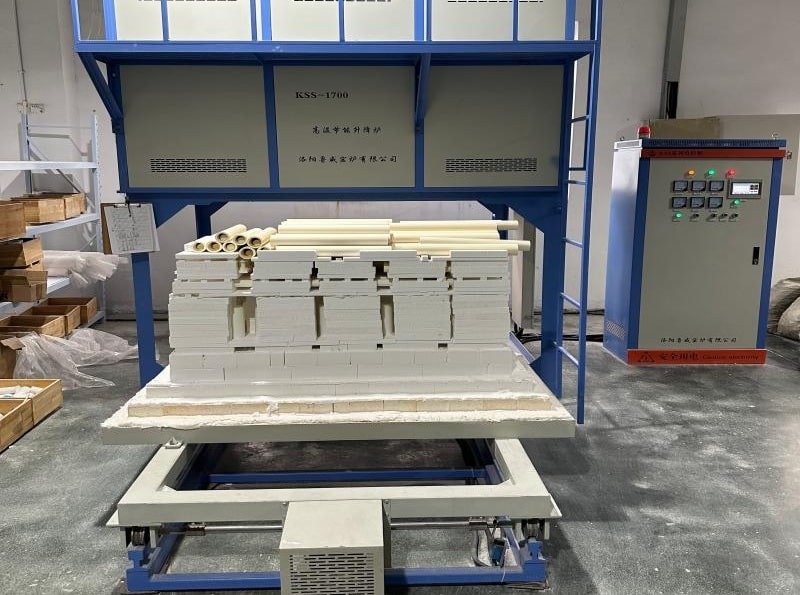
Next, the part is placed into a sintering furnace at temperatures exceeding 1,500°C. During this phase, the ceramic particles fuse together, and the part shrinks volumetrically by 15% to 25%. If your design features uneven wall thicknesses, the thinner sections will shrink faster than the thicker sections, causing the part to warp or tear itself apart. Once sintered, the ceramic is almost as hard as a diamond. If you require tighter tolerances than the “as-fired” shrinkage allows, the part must undergo diamond grinding—an incredibly slow, expensive, and laborious process.
The 7 Best Design Ideas for Ceramic Parts
From our experience consulting with aerospace, medical, and industrial engineers globally, the following seven design ideas for ceramic parts will save you massive amounts of money and lead to a superior final product.
1. Eliminate Sharp Internal Corners (Maximize Radii)
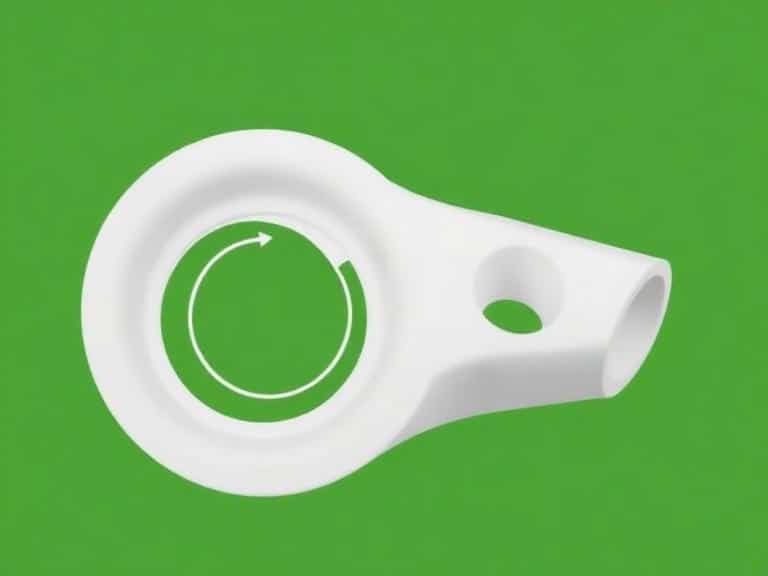
In most professional situations involving metals, a sharp internal 90-degree corner is easily cut with an end mill. In ceramics, a sharp internal corner acts as a massive stress riser. When the part undergoes thermal shock or mechanical load, a crack will inevitably propagate from that sharp corner. Always utilize generous fillets and radii (minimum of 0.5mm to 1.0mm) on all internal and external corners. This distributes stress evenly and drastically reduces part failure during the sintering phase.
2. Maintain Uniform Wall Thickness
As mentioned, uneven shrinkage is the enemy of ceramic manufacturing. If you design a part with a very thick base and very thin walls, the cooling and shrinkage rates will differ wildly, resulting in severe distortion. One of the best design ideas for ceramic parts is to hollow out thick sections or redesign the component to ensure a consistent cross-sectional thickness throughout the entire profile.
3. Avoid Internal Threads Completely
Machining internal threads into green ceramics is possible, but the threads will shrink and warp during sintering, destroying the pitch accuracy. Grinding threads into fired ceramics is astronomically expensive. We recommend bypassing ceramic threads entirely. Instead, design a smooth through-hole and use a metal threaded insert, or utilize a clamping flange mechanism to hold the ceramic part in place.
4. Minimize “As-Fired” Tolerance Requirements
Do not apply standard metalworking tolerances (e.g., +/- 0.01mm) to your entire ceramic drawing. Determine which specific surfaces actually interface with other components, and apply tight tolerances only to those critical areas. Leave non-mating surfaces with “as-fired” tolerances (typically +/- 2% of the dimension). This drastically reduces the amount of expensive post-sintering diamond grinding required.
5. Design for Modularity Over Monolithic Blocks
One of the most practical design ideas for ceramic parts is modularity. If you have a massive, complex component, do not try to manufacture it as a single piece of solid Zirconia. It will be incredibly expensive and prone to hidden internal defects. Instead, break the design into smaller, simple ceramic geometries—like pins, tubes, and flat plates—and press-fit or epoxy them into a steel or aluminum housing. This gives you the wear resistance of ceramics exactly where you need it, backed by the structural toughness of metal.
6. Implement Proper Hole Design Rules
Holes in ceramics require strict placement rules. Never place a hole too close to the edge of the part, as the thin wall remaining will likely break during firing. A general rule of thumb is that the distance from the edge of a hole to the edge of the part should be at least equal to the diameter of the hole. Furthermore, always chamfer the edges of the hole to prevent chipping during assembly or operation.
7. Leverage Draft Angles for Dry Pressing
If your ceramic parts are going to be mass-produced via dry powder pressing, you must design for mold release. Incorporate a draft angle of 1 to 2 degrees on all vertical surfaces. This allows the compacted powder to be ejected from the mold without shearing or cracking the green part before it makes it to the furnace.
Benefits of Optimizing Your Design
When you aggressively apply these design ideas for ceramic parts, the commercial benefits are immediate. First, your unit cost plummets because you eliminate unnecessary diamond machining. Second, you drastically reduce the manufacturer’s scrap rate—meaning shorter lead times and more reliable supply chains for you. Finally, you unlock the true potential of advanced industrial ceramics applications, achieving components that can outlast hardened steel by a factor of fifty in severe wear environments.
Limitations of Ceramic Materials
We believe in absolute engineering honesty: ceramics are not the solution for everything. They possess zero plastic deformation. If a heavy impact load or severe bending moment is applied, the part will not bend; it will shatter. If your application involves high-velocity impacts or severe shock loading, even the best high precision zirconia ceramic parts (which are the toughest of the technical ceramics) may fail compared to tool steels.
Who Should Use It & Who Does Not Need It
For commercial users and heavy-duty applications: If you are dealing with abrasive slurry pumping, extreme chemical corrosion, high-voltage electrical insulation, or environments exceeding 1,000°C, technical ceramics are absolutely necessary. Reviewing our ceramic plunger pump components overview demonstrates how vital these materials are in the oil and gas sector.
Who does not need it: For beginners or hobbyists building low-impact, room-temperature assemblies, technical ceramics are massive overkill and an unnecessary expense. Stick to aluminum, standard steels, or engineered plastics like PEEK.
Common Mistakes in Ceramic Engineering
In our testing and quoting processes, the most common mistake is over-tolerancing. Engineers apply a blanket +/- 0.005mm tolerance to a ceramic tube application in high heat environments where a +/- 1.0mm tolerance would have functioned perfectly. That simple CAD error transforms a $50 part into a $500 part.
Another profound mistake is attempting to press-fit a metal shaft into a ceramic bore without accounting for thermal expansion. Metals expand when heated much faster than ceramics. If the assembly gets hot, the expanding metal shaft will generate immense hoop stress from the inside out, instantly cracking the ceramic housing.
Commercial Buying Considerations
When selecting a ceramic pump parts manufacturer or custom components supplier, you must look for a partner capable of assisting you with DFM. An excellent supplier will review your drawings and push back, suggesting where to add radii or where to loosen tolerances to save you money.
Ensure the manufacturer has in-house dry pressing, CIP (Cold Isostatic Pressing), and precise 5-axis diamond grinding capabilities. Transparency regarding their material grades—such as offering a clear ceramic plunger material selection guide detailing the difference between 95% Alumina and 99.8% Alumina—is crucial for your final application’s success.
Summary and Comparison Tables
Quick Summary Table: Metal vs. Ceramic Design Principles
| Design Feature | Standard Metal Design | Advanced Ceramic Design |
|---|---|---|
| Internal Corners | Sharp 90° cuts acceptable. | Must have minimum 0.5mm radii to prevent cracking. |
| Threads | Easily tapped directly into part. | Avoid completely. Use metal threaded inserts or flanges. |
| Wall Thickness | Variable thickness is generally fine. | Must be uniform to prevent warping during sintering. |
| Tolerances | Tight tolerances everywhere. | “As-fired” where possible; grind only mating surfaces. |
Comparison Table: Alumina vs. Zirconia Design Flexibility
| Material | Fracture Toughness | Hardness | Design Implications |
|---|---|---|---|
| Alumina (Al2O3) | Moderate (3-5 MPa·m½) | Very High (HV 1500+) | Extremely rigid. Requires strictest adherence to avoiding stress risers. Ideal for best ceramic insulators for industrial use. |
| Zirconia (ZrO2) | High (8-10 MPa·m½) | High (HV 1200+) | Phase transformation toughening allows it to absorb minor impacts. Better suited for sharp edges (like ceramic knives). |
Buying Guide Table: Checklist for Ceramic Component Sourcing
| Step | Action Item | Why It Matters |
|---|---|---|
| 1 | Separate “As-Fired” and “Ground” tolerances clearly on CAD drawings. | Saves thousands of dollars in unnecessary diamond grinding time. |
| 2 | Verify material purity (e.g., 95% vs 99% Alumina). | Lower purity is cheaper but contains glass phases that lower chemical resistance. |
| 3 | Request DFM feedback before prototyping. | A good manufacturer will spot cracking risks before the first batch is fired. |
Expert Recommendation
The JuchangCeramic Verdict
In most professional situations, treating technical ceramics as “just another metal” is the quickest path to project failure. We strongly recommend that engineers utilize the expertise of specialized manufacturers during the initial CAD phase. For instance, evaluating the benefits of ceramic bearings reveals that their success lies entirely in geometry and precision grinding. At JuchangCeramic, we urge you to embrace modularity. Break your massive, complex designs into smaller, simpler ceramic parts that can be easily pressed, sintered, and fitted into metal housings. This hybrid approach guarantees the wear resistance of ceramics while leveraging the structural ductility of metals, significantly lowering your total project costs.
The Bottom Line
Implementing correct design ideas for ceramic parts is non-negotiable for commercial manufacturing. By maximizing corner radii, strictly managing wall thicknesses, eliminating internal threads, and isolating tight tolerances only to critical mating surfaces, you bypass the catastrophic failures associated with thermal shrinkage and brittleness. Partner with an experienced OEM like JuchangCeramic to transform your drawings into highly efficient, manufacturable, and enduring technical ceramic components.
Frequently Asked Questions
Can you tap threads into fired ceramic parts?
No, you cannot tap threads into fired technical ceramics using standard taps. The material is too hard and will destroy the tap immediately. Threads must be diamond-ground, which is exceedingly expensive and prone to chipping. We always recommend using smooth bores and inserting metal threaded helicoils or using external clamping methods instead.
What is an “as-fired” tolerance in ceramic manufacturing?
An “as-fired” tolerance refers to the natural dimensional accuracy of the ceramic part directly out of the sintering furnace, before any diamond grinding is applied. Because the part shrinks up to 20% during firing, the standard “as-fired” tolerance is usually around +/- 1% to 2% of the overall dimension.
Why do my ceramic parts keep cracking during production?
Cracking during production is almost always linked to poor design ideas for ceramic parts. The most common culprits are sharp internal corners acting as stress risers, or severely uneven wall thicknesses that cause different sections of the part to shrink and cool at vastly different rates during the sintering process.
Authoritative Industry References
- American Ceramic Society (ACerS) – The leading international organization dedicated to the advancement of ceramics and glass science, engineering, and manufacturing principles.
- International Organization for Standardization (ISO) – ISO Standards for Advanced Ceramics (ICS 81.060.30), detailing strict classifications, testing methods, and material properties for technical ceramics globally.
- National Institute of Standards and Technology (NIST) – Materials Science and Engineering Division data providing rigorous scientific analysis on the fracture mechanics and thermal properties of advanced structural ceramics.