
In the highly competitive world of metal casting and foundry operations, the margin between a profitable production run and a catastrophic scrap rate is often measured in microscopic impurities. Non-metallic inclusions, slag, and turbulent flow are the primary enemies of mechanical integrity in cast metal components. From our experience auditing foundries globally, relying solely on traditional gating system design to manage metal purity is an outdated and highly inefficient strategy. If you want to eliminate subsurface defects and drastically improve the machinability of your final castings, you must intervene at the pouring stage.
This brings us to the most critical consumable in modern metallurgy: the ceramic foam filter. In most professional situations, integrating these filters into your gating system is not merely an optional upgrade; it is a fundamental requirement for producing high-grade aerospace, automotive, and industrial castings. In this comprehensive guide, we dissect the engineering behind the ceramic foam filter, explain how to select the precise formulation for your specific metal, and provide commercial and practical judgment to help you streamline your purchasing decisions.

Quick Answer: What is a Ceramic Foam Filter?
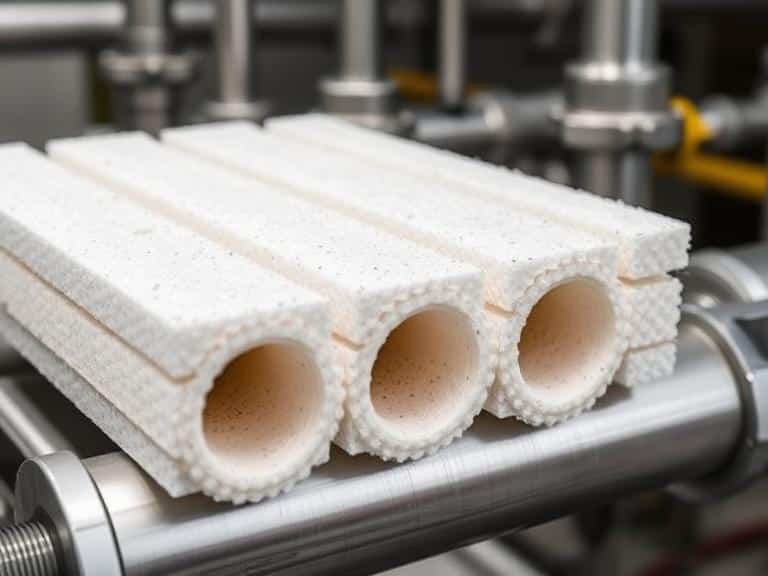
A ceramic foam filter (CFF) is a highly porous, three-dimensional reticulated ceramic matrix used primarily in the metallurgical industry. It is installed within the gating system of a mold to trap non-metallic inclusions, slag, and dross as molten metal passes through it. Beyond physical filtration, its complex internal structure forces the molten metal to change direction constantly, converting turbulent flow into smooth, laminar flow. This prevents mold erosion, reduces air entrapment, and significantly enhances the mechanical properties and surface finish of the final cast component.
Table of Contents
- How a Ceramic Foam Filter Works
- Benefits of Implementing CFFs
- Limitations and Operational Risks
- Who Should Use It & Who Does Not Need It
- Material Types: Alumina, SiC, and Zirconia
- Pros and Cons Table
- Comparison Table: CFF vs. Extruded Filters
- Common Mistakes in Foundry Application
- Buying Considerations and PPI Guide
- Expert Recommendation
- The Bottom Line
- Frequently Asked Questions (FAQ)
- References
How a Ceramic Foam Filter Works
To understand the superiority of a ceramic foam filter, you must understand its unique manufacturing process. It begins with an open-cell polyurethane foam template. This template is heavily impregnated with a specialized liquid ceramic slurry. The coated foam is then dried and fired in a high-temperature kiln. During firing, the polyurethane template burns away entirely, leaving behind a rigid, three-dimensional ceramic skeleton that perfectly replicates the original foam’s structure.
When molten metal impacts the filter, it undergoes two distinct phases of filtration. The first is cake filtration. Large particles of slag and dross are physically too large to enter the pores and accumulate on the front face of the filter, forming a “filter cake.” The second, and more crucial phase, is depth filtration. As the liquid metal navigates the tortuous, labyrinth-like internal pathways of the filter, smaller microscopic impurities collide with and adhere to the ceramic walls through physical adsorption and chemical affinity. This dual-action mechanism is why CFFs outperform simple 2D mesh screens.
Benefits of Implementing CFFs
We recommend integrating ceramic foam filters into your process not just for cleanliness, but for overall operational economics. The benefits extend far beyond simply catching dirt.
- Turbulence Reduction: Molten metal entering a mold at high velocity is highly turbulent, which causes air entrapment and oxidization. The CFF acts as a choke, slowing the velocity and converting the flow to a smooth, laminar stream.
- Improved Machinability: Hard non-metallic inclusions act like microscopic cutting tools against your CNC machinery. By removing these inclusions, foundries experience significantly extended tool life during the post-casting machining phase.
- Increased Yield: By smoothing the flow and catching defects early, the rejection rate of finished castings plummets. This directly impacts the bottom line, turning a high-scrap operation into a profitable one.
- Simplified Gating Systems: Because the filter acts as a flow regulator, foundries can often reduce the complexity and size of their runner systems, increasing the overall metal yield per pour.
Limitations and Operational Risks
Despite their incredible utility, these filters require precise handling. The primary limitation is their mechanical fragility at room temperature. Dropping a filter or forcefully wedging it into a poorly designed print can cause it to chip. If ceramic chips fall into the mold cavity, the filter itself becomes the source of a catastrophic inclusion defect.
Furthermore, ceramic foam filters are susceptible to thermal shock. When 1500°C molten iron hits a room-temperature ceramic matrix, the rapid expansion can cause the filter to crack. Foundries must carefully calculate gating ratios to ensure the metal hits the filter at the correct angle and velocity to mitigate this shock.
Who Should Use It & Who Does Not Need It
For commercial users: Foundries producing safety-critical components—such as automotive engine blocks, aerospace turbine housings, heavy machinery axles, and high-pressure hydraulic pumps—must use ceramic foam filters. In these sectors, a single inclusion can cause a structural failure under stress. If you are manufacturing parts that require advanced industrial ceramics applications or high-tolerance metal counterparts, filtration is mandatory.
Who does not need it: For beginners or small-scale artisanal foundries pouring non-critical, decorative items (like cast iron park benches or basic aluminum paperweights), the cost of precision filtration may not be justified. In low-stress aesthetic castings, basic gating design and surface skimming are usually sufficient.
Material Types: Alumina, SiC, and Zirconia
You cannot use a one-size-fits-all approach when purchasing filters. The temperature and chemical composition of your molten metal dictate the exact ceramic material you must use. If you are exploring engineering ceramics material guide specifications, the core three are:
- Alumina Ceramic Foam Filter (Al2O3): Colored pure white. It has a maximum working temperature of roughly 1200°C. This is exclusively used for aluminum and aluminum alloy castings.
- Silicon Carbide Ceramic Foam Filter (SiC): Colored dark grey or black. With a working temperature up to 1500°C, SiC is the industry standard for ductile iron, grey iron, and copper alloy castings. It offers excellent thermal shock resistance.
- Zirconia Ceramic Foam Filter (ZrO2): Colored yellow. This is the apex of filtration technology, capable of withstanding temperatures up to 1700°C. For heavy-duty applications involving carbon steel, stainless steel, and superalloys, Zirconia is the only material that will not melt or disintegrate. This mirrors the durability required in high precision zirconia ceramic parts used in extreme industrial environments.
Pros and Cons Table
| Pros of Ceramic Foam Filters | Cons of Ceramic Foam Filters |
|---|---|
| Traps microscopic inclusions via deep bed filtration. | Highly brittle; requires careful storage and handling. |
| Converts turbulent metal flow into laminar flow. | Can cause flow restriction if incorrectly sized (choking). |
| Dramatically reduces post-casting machining costs. | Adds a consumable cost to every single casting poured. |
| Available in materials suited for all major alloys. | Improper placement can lead to thermal shock failure. |
Comparison Table: CFF vs. Extruded Filters vs. Fiberglass Mesh
| Feature | Ceramic Foam Filter (CFF) | Extruded Ceramic Filter | Fiberglass Mesh |
|---|---|---|---|
| Filtration Mechanism | Cake + Depth (3D Path) | Cake only (Straight 2D Path) | Cake only (Large 2D holes) |
| Flow Control (Laminar) | Excellent | Moderate | Poor |
| Efficiency of Impurity Removal | Very High (Captures micro-inclusions) | Medium (Only catches particles larger than the cell size) | Low (Only catches large slag) |
| Cost per Unit | Highest | Medium | Lowest |
Common Mistakes in Foundry Application
In our testing, the vast majority of filtration failures are not the fault of the filter, but of the foundry engineer. The most egregious mistake is designing a filter print (the seating area in the mold) that is exactly the same size as the filter. Ceramic expands when heated. If the filter is wedged perfectly tight into the sand mold, the thermal expansion of the incoming metal will crush the ceramic, sending debris directly into the casting.
Another common failure is pouring directly onto the face of the filter. Direct impingement creates massive thermal and mechanical shock. The gating system must be designed so that the molten metal fills an unpressurized runner basin before gently rising or flowing horizontally into the filter face.
Buying Considerations and PPI Guide
When selecting a ceramic foam filter, the most critical specification beyond the material type is the PPI (Pores Per Inch). This dictates the porosity and flow rate. A higher PPI means smaller holes, resulting in finer filtration but a slower flow rate.
Buying Guide Table: Selecting the Right PPI
| Porosity (PPI) | Target Application / Alloy | Flow Characteristic |
|---|---|---|
| 10 PPI | Ductile Iron, Large Steel Castings | Fast flow, captures only large slag and dross. |
| 20 PPI | Grey Iron, Standard Aluminum | Moderate flow, excellent general-purpose filtration. |
| 30 PPI | High-quality Aluminum, Copper Alloys | Slower flow, traps medium-to-fine inclusions. |
| 40 – 60 PPI | Premium Aerospace Aluminum, Thin-wall castings | Very restrictive flow, supreme micro-filtration capability. |
Expert Recommendation
In most professional situations, treating filters as a generic commodity is a fast track to inconsistent casting yields. We strongly advise against purchasing unverified, low-density foams that crumble upon inspection. Quality matters immensely when dealing with extreme temperatures.
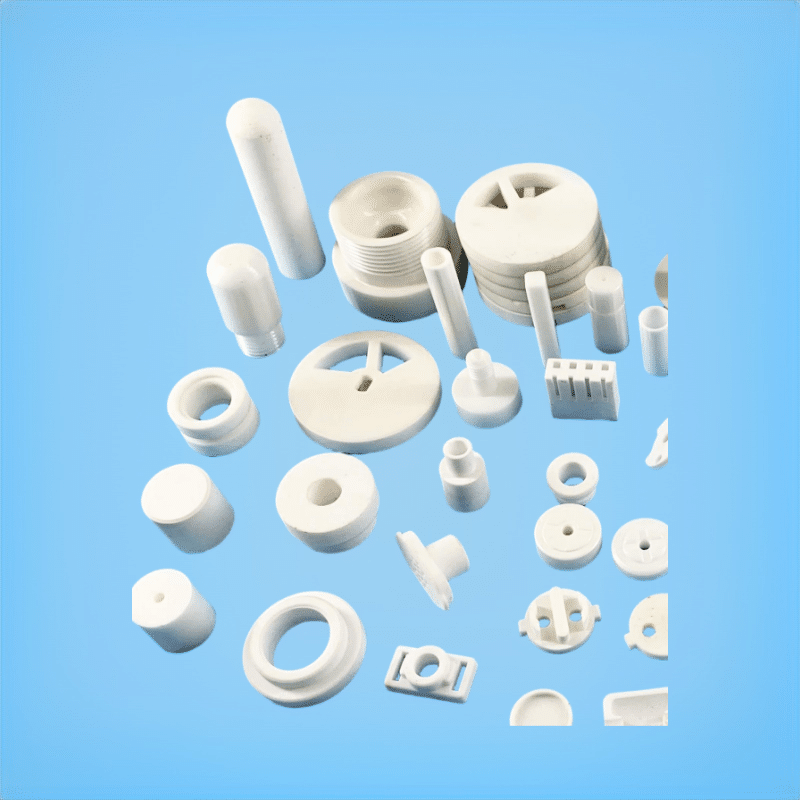
JuchangCeramic is a professional manufacturer dedicated to the research, development, and production of advanced precision ceramic materials and industrial ceramic components. Located in Pingshan District, Shenzhen—China’s premier manufacturing hub—we engineer ceramics that do not fail under pressure. Whether you require robust filtration solutions, highly specialized ceramic tube applications in high heat environments, or bespoke custom ceramic machining services, partnering with a dedicated industrial ceramic manufacturer ensures your supply chain is fortified with technically superior materials. Explore our broader industrial ceramic solutions for pumps to see our commitment to engineering excellence.
The Bottom Line
Understanding what a ceramic foam filter is, and executing its implementation correctly, separates amateur casting operations from world-class foundries. By utilizing the tortuous 3D path of an Alumina, SiC, or Zirconia matrix, you effectively strip away the non-metallic inclusions that compromise structural integrity and destroy CNC tooling. While they require careful handling and precise gating design to prevent thermal shock, the dramatic reduction in scrap rates and the vastly improved mechanical properties of the final product make ceramic foam filters one of the most commercially viable investments in modern metallurgy.
Frequently Asked Questions
Can a ceramic foam filter be reused?
No. Ceramic foam filters are strictly single-use consumables. Once molten metal passes through the filter, the impurities are permanently trapped within the ceramic matrix, and the remaining metal solidifies inside the pores as it cools. Reusing a filter is physically impossible.
What happens if I use the wrong PPI for my metal casting?
If you use a PPI that is too high (pores too small), the filter will restrict the flow of metal too severely, causing a “choke.” This leads to incomplete mold filling, cold shuts, and misruns. If you use a PPI that is too low, the metal flows too quickly and microscopic impurities will pass right through, defeating the purpose of the filter.
Why did my ceramic foam filter break during pouring?
Filter breakage is almost always caused by extreme thermal shock (pouring hot metal directly and forcefully onto a cold filter face) or mechanical crushing (designing the mold print too tightly without accounting for the thermal expansion of the ceramic). Proper gating design that allows the metal to gently enter the filter face is essential.
Authoritative References & Industry Standards
To ensure our operational advice aligns with global metallurgical standards, we reference data and guidelines established by the following authoritative bodies: