
For decades, the industrial and commercial heating sectors relied almost exclusively on exposed metallic resistance wires—primarily nichrome or tungsten alloys. While inexpensive and easy to manufacture, these bare metal coils suffer from severe, unavoidable thermodynamic flaws. When exposed to oxygen at extreme temperatures, metal oxidizes, scales, and eventually burns out. Furthermore, a bare wire creates harsh, localized hotspots that cause uneven thermal distribution. From our experience at JuchangCeramic, engineering fluid control and thermal solutions for global manufacturers, continuing to rely on outdated exposed wire technology in modern precision equipment is an unacceptable operational liability. The solution lies in advanced materials science, specifically the integration of a ceramic heater coil.
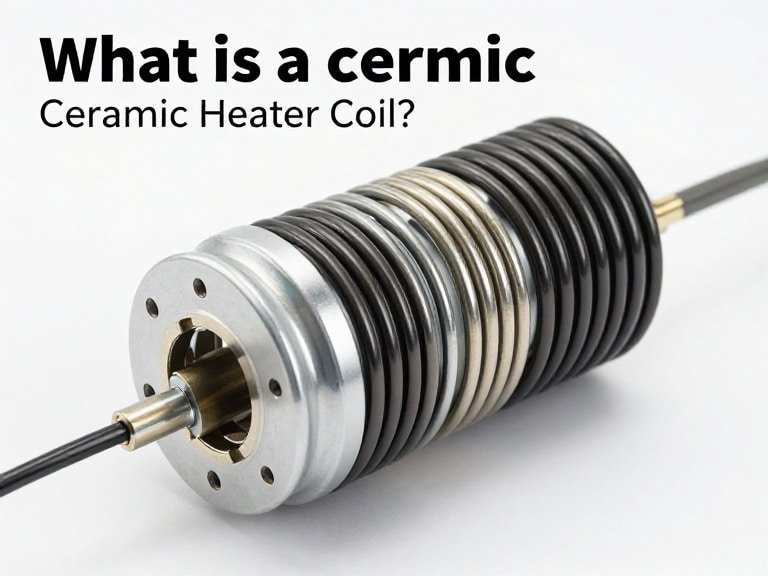
In most professional situations, upgrading your thermal infrastructure requires a fundamental understanding of how technical ceramics interact with electrical resistance. You must use commercial and practical judgment: treating a high-purity alumina heater exactly as you would a cheap metal element will lead to catastrophic thermal shock and mechanical failure. However, when engineered and deployed correctly, a ceramic heater coil provides absolute temperature stability, immunity to chemical corrosion, and a lifespan that eclipses traditional metals by thousands of hours. In this definitive guide, we take a rigid, expert stance on the mechanics of technical ceramic heating. We will define exactly what this technology is, dissect its thermodynamic advantages, expose the critical installation mistakes most engineers make, and provide you with a bulletproof blueprint for procuring the right thermal components for your hardware.
Quick Answer: The Engineering Reality
If you need to understand the mechanics of a ceramic heater coil immediately, here is the technical summary:
- The Definition: A ceramic heater coil is an advanced thermal assembly where a highly resistive metal wire (the heat source) is either fully embedded within or tightly wound around a technical ceramic matrix (typically Alumina or Silicon Nitride).
- The Core Advantage: By shielding the metal wire inside an inert ceramic body, the metal cannot oxidize (burn out) from atmospheric exposure. The ceramic absorbs the fierce, localized heat of the wire and radiates it evenly as uniform infrared heat.
- The Best Applications: It is universally required for environments demanding extreme purity, chemical resistance, and long-term continuous high-temperature operation without maintenance downtime.
We recommend that any manufacturer currently experiencing frequent burnout failures with standard metal heaters immediately transition to a fully embedded ceramic architecture. The reduction in maintenance downtime alone justifies the initial capital expenditure.
Table of Contents
- What It Is: The Anatomy of a Ceramic Heater Coil
- How It Works: Thermodynamics and Resistivity
- The Definitive Benefits
- Limitations and Structural Risks
- Who Should Specify This Technology
- Who Does Not Need It
- Common Engineering Mistakes
- Expert Buying Considerations
- Summary and Comparison Tables
- Expert Recommendation & Integrated Solutions
- Frequently Asked Questions
What It Is: The Anatomy of a Ceramic Heater Coil
To properly specify a ceramic heater coil, you must first strip away the consumer-grade marketing jargon. In heavy industry, a ceramic heater is not just a piece of clay wrapped in wire. It is a highly engineered composite device. The core of the system relies on high-purity technical ceramics. When evaluating our engineering ceramics material guide, you will see that Alumina (Al2O3) and Silicon Nitride (Si3N4) are the dominant base materials used due to their exceptionally high dielectric strength (electrical insulation) combined with excellent thermal conductivity.
There are two primary architectural designs for a ceramic heater coil:
- The Embedded Matrix (MCH – Metal Ceramics Heater): A tungsten or molybdenum paste is printed onto thin sheets of raw (green) alumina ceramic. These sheets are laminated together and co-fired in a high-temperature kiln. The result is a solid, monolithic ceramic block with the heating element completely sealed inside, permanently protected from oxygen and moisture.
- The Supported Coil (Bobbin Heater): A thick, fluted ceramic rod is manufactured, and a heavy-gauge nichrome heating wire is wound through the grooves on the exterior. This is often used for massive industrial furnaces where the element must radiate intense heat directly into a chamber. For context on structural variations, referencing a ceramic rod vs metal rod comparison highlights why ceramic supports will not warp or melt under thermal load like metal supports do.
How It Works: Thermodynamics and Resistivity
How a ceramic heater coil works is governed by the principles of Joule heating. When an electrical current is forced through the highly resistive internal metal track, the electrical energy encounters friction, converting into raw thermal energy. If this were a bare wire in the open air, the heat would be concentrated at the surface of the wire, creating a harsh, localized hot spot that immediately begins to react with atmospheric oxygen.
However, because the wire is integrated with a ceramic body, the thermodynamics change completely. The technical ceramic acts as a massive thermal sponge. It rapidly absorbs the aggressive, concentrated heat from the internal wire and diffuses it across the entire surface area of the ceramic component. The ceramic then emits this energy as highly efficient, uniform far-infrared heat. Furthermore, because technical ceramics are flawless electrical insulators, the exterior surface of the heater can be in direct physical contact with conductive liquids or metal plates without causing an electrical short circuit. This specific trait is why a Ceramic Pump can handle heated fluids safely.
The Definitive Benefits
In our testing and daily auditing of thermal systems, the deployment of a ceramic heater coil provides undeniable operational advantages over bare metal equivalents.
Absolute Immunity to Oxidation: The most frequent cause of heater failure is oxidation. At 800°C, bare metal reacts with oxygen, becoming brittle and snapping. An embedded ceramic heater coil completely seals the metal element from the atmosphere. It cannot oxidize, extending its lifespan from months to years.
Chemical Inertness and Purity: Standard metal heaters shed microscopic flakes of oxidized metal into the surrounding environment as they age. This is catastrophic in medical and semiconductor applications. High-purity alumina is chemically inert; it will not react with acidic or alkaline fluids, and it will not contaminate the medium it is heating. This is why a Medical Ceramic Pump or a Dialysis Ceramic Pump relies exclusively on ceramic components for fluid warming and transfer.
Unmatched Watt Density: Because the ceramic body dissipates heat so efficiently, engineers can pack significantly more electrical wattage into a much smaller physical footprint without melting the internal wire. This allows for the miniaturization of high-power thermal devices.
Limitations and Structural Risks
We must use commercial and practical judgment: technical ceramics are not invincible. The primary limitation of any ceramic heater coil is its vulnerability to severe mechanical impact and aggressive thermal shock. Unlike a steel tube that will merely dent if dropped, a ceramic element will shatter. Furthermore, while embedded alumina heaters (MCH) handle heat well, if you apply maximum voltage to a cold ceramic heater without a programmed ramp-up sequence, the rapid expansion of the internal metal track can physically crack the rigid ceramic casing from the inside out.
Who Should Specify This Technology
For Commercial Users and Heavy-Duty Applications: Engineers designing plastic injection molding nozzles, semiconductor wafer heating plates, industrial fluid heating baths, and high-end consumer appliances (like premium espresso machines) must utilize a ceramic heater coil. Additionally, if you are moving highly corrosive heated fluids, pairing a ceramic heater with a Ceramic plunger pump or a Ceramic Rotary Valve guarantees a fully inert fluid path.
Who Does Not Need It
For Low-Temperature, Disposable Applications: If you are manufacturing a cheap, disposable consumer product that only requires heating to 100°C for short bursts, the engineering complexity and higher capital cost of an embedded ceramic heater are unnecessary. A basic PTC (Positive Temperature Coefficient) aluminum heater or a cheap wire coil is financially sufficient for disposable goods.
Common Engineering Mistakes
From our experience consulting on failed thermal systems, the most catastrophic mistake engineers make is improper physical mounting. Because a ceramic heater coil expands slightly when heated, hard-mounting it with rigid steel clamps will cause the ceramic to crush and fracture as it attempts to expand. You must utilize compliant mounting hardware (such as high-temperature springs or ceramic fiber gaskets) to allow for thermal expansion. Similar mechanical empathy is required when transitioning from metal to ceramic wear parts, as detailed in our ceramic plunger vs metal plunger analysis.
Secondly, engineers frequently fail to tune their PID (Proportional-Integral-Derivative) temperature controllers. Supplying 100% raw power to an ambient ceramic heater creates a massive thermal gradient. You must program a “soft start” sequence that gently ramps the voltage up over several seconds to protect the structural integrity of the ceramic matrix.
Expert Buying Considerations
When you are ready to procure a ceramic heater coil, you must specify the exact dielectric strength required for your application. A poorly manufactured ceramic heater will allow “leakage current” to pass through the ceramic body at high temperatures, creating a severe shock hazard. You must demand high-purity (96% or higher) alumina to guarantee absolute electrical insulation.
Furthermore, standard off-the-shelf sizes rarely fit precision machinery perfectly. You must partner with a facility that offers custom ceramic machining services to ensure the heater is engineered specifically for your dimensional footprint, whether it is for a large extrusion die or a Miniature Ceramic Pump application. Structural support pieces adjacent to the heater should also be evaluated; utilizing a Zirconia Ceramic Structural Part offers immense fracture toughness near high-heat zones.
Summary and Comparison Tables
Comparison Table: Ceramic Heater Coil vs. Exposed Metal Wire
| Performance Metric | Ceramic Heater Coil (MCH) | Exposed Metal Coil (Nichrome) |
|---|---|---|
| Oxidation Resistance | Absolute Immunity (Embedded) | Very Poor (Oxidizes rapidly in air) |
| Temperature Uniformity | Excellent (Ceramic diffuses heat evenly) | Poor (Creates severe localized hot spots) |
| Electrical Insulation | Perfect (Surface is non-conductive) | Zero (Live wire requires physical standoff) |
| Chemical Inertness | Extremely High (Will not contaminate fluids) | Low (Sheds oxidized metallic flakes) |
Pros and Cons of Ceramic Heating Technology
| Pros (Why you must upgrade) | Cons (The operational reality) |
|---|---|
| Exponentially longer operational lifespan reduces machine downtime. | Highly brittle; will shatter if subjected to blunt force impact. |
| Allows for extremely high watt-densities in miniaturized spaces. | Requires compliant mounting hardware to accommodate thermal expansion. |
| Zero off-gassing and no metallic contamination of the heated medium. | Higher initial capital expenditure compared to bare wire elements. |
| Can be safely submerged in specific fluids due to high dielectric strength. | Susceptible to internal cracking if full voltage is applied without a soft-start. |
Expert Recommendation & Integrated Solutions
Is the engineering effort required to integrate a ceramic heater coil actually worth the investment? Emphatically, yes. The era of accepting frequent heater burnouts as a standard operational cost is over. We recommend that commercial manufacturers immediately redesign their thermal architecture to accommodate embedded technical ceramics. For applications requiring hyper-precise thermal and fluid control, integrating these heaters alongside a Microliter Ceramic Metering Pump provides an unparalleled, maintenance-free system.
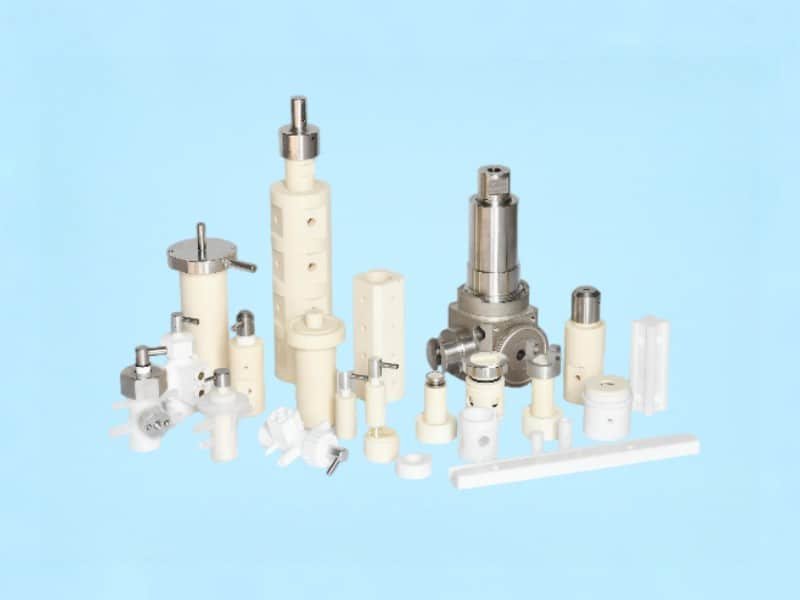
If you are re-evaluating your entire fluid and thermal management pipeline, we highly advise browsing our comprehensive catalog of industrial ceramic solutions for pumps to discover how advanced materials can completely eradicate your current mechanical failure points.
Frequently Asked Questions
What is a ceramic heater coil?
A ceramic heater coil is an advanced thermal component where a highly resistive metallic heating element (such as tungsten or nichrome) is either fully embedded inside a monolithic block of technical ceramic, or tightly wrapped around a fluted ceramic core. This architecture protects the metal from oxidation while leveraging the ceramic’s superior thermal mass to distribute heat evenly as infrared energy.
Why do ceramic heater coils last longer than bare metal coils?
In most professional situations, bare metal wire oxidizes and becomes severely brittle when exposed to oxygen at high temperatures, eventually snapping. By embedding the heating element inside an inert ceramic matrix, the metal is physically sealed away from oxygen and corrosive environments, exponentially increasing the operational lifespan of the heater.
Are ceramic heater coils safe for medical applications?
Yes, absolutely. Because high-purity technical ceramics are chemically inert, they do not off-gas toxic fumes and they do not shed oxidized metallic flakes into the fluid stream. This makes embedded ceramic heaters the preferred, and often mandatory, heating method for critical healthcare equipment, such as dialysis fluid warmers, blood analyzers, and pharmaceutical fluid processing.
Can a ceramic heater coil crack during operation?
Yes. If a ceramic heater is hard-mounted with rigid steel brackets that do not allow for natural thermal expansion, or if massive voltage is applied instantaneously to a freezing cold ceramic element (thermal shock), the ceramic matrix can physically fracture. Proper PID controller “soft-start” programming and compliant mounting hardware easily prevent this issue.
Industry References & Authoritative Engineering Guidelines
To ensure our materials science guidance and thermodynamic advice align with the strictest global engineering standards, JuchangCeramic references the protocols established by the following authoritative organizations:
- ASTM International: The global standards organization that develops and publishes the rigorous consensus technical standards (such as ASTM C108) for testing the thermal conductivity, dielectric strength, and thermal shock resistance of advanced technical ceramics. Review ASTM Ceramic Standards
- The American Ceramic Society (ACerS): The premier global organization for the advancement of ceramics, providing peer-reviewed research on the metallurgy of co-fired tungsten-alumina assemblies and the tribology of industrial ceramic applications. Review ACerS Engineering Data
- Institute of Electrical and Electronics Engineers (IEEE): The world’s largest technical professional organization, offering peer-reviewed operational standards and best practices for the safe implementation of high-watt-density industrial heating elements and PID control logic. Review IEEE Thermal Control Standards