
Designing a miniature ceramic pump is not simply a matter of reducing the dimensions of a conventional pump. At small scales, clearance, surface finish, material compatibility, fluid properties, manufacturing tolerances, and assembly quality have a much greater influence on performance. A design that works reliably in a larger pump can become unstable when compressed into a compact housing.
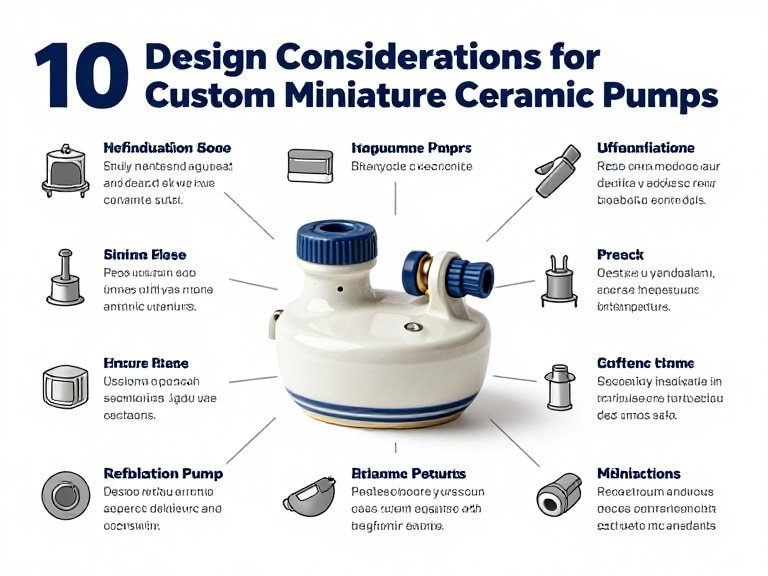
Direct Answer: What Makes a Miniature Ceramic Pump Design Successful?
A successful miniature ceramic pump balances four requirements: controlled fluid delivery, chemical and mechanical durability, dimensional consistency, and manufacturability. These requirements must be considered together. Selecting an extremely hard ceramic material will not solve poor sealing geometry. Increasing the drive force will not compensate for an unsuitable fluid path. Tightening every tolerance without understanding the manufacturing process can increase cost without improving the finished pump’s useful performance.
From our experience with precision ceramic component requirements, the most effective approach is to begin with the application rather than a preferred material or existing pump model. Engineers should establish the operating envelope first, then select the pump structure, ceramic grades, mating components, and manufacturing tolerances around that envelope.
For a compact dosing instrument, repeatable displacement and low leakage may be the priority. For a medical fluid-handling device, biocompatibility, cleaning procedures, and documented validation may become equally important. For an industrial chemical system, chemical resistance and wear performance can outweigh the need for extremely low flow rates.
| Design consideration | Primary engineering question | Why it matters |
|---|---|---|
| 1. Application requirements | What must the pump deliver? | Establishes the operating envelope and performance targets. |
| 2. Fluid compatibility | What chemical and physical properties does the fluid have? | Prevents corrosion, contamination, swelling, and performance changes. |
| 3. Ceramic material | Which ceramic grade suits the load and environment? | Influences wear, strength, chemical resistance, and cost. |
| 4. Pump architecture | Which mechanism provides the required flow? | Determines displacement, control, pulsation, and integration. |
| 5. Dimensional tolerances | Which dimensions control performance? | Directly affects clearance, leakage, and repeatability. |
| 6. Surface finish | Which contact surfaces need precision finishing? | Influences friction, wear, sealing, and particle generation. |
| 7. Sealing and leakage | How will fluid be contained? | Protects dosing accuracy, safety, and surrounding equipment. |
| 8. Drive and actuation | How will the pump be powered and controlled? | Determines speed, force, response, and system compatibility. |
| 9. Manufacturing and assembly | Can the design be produced consistently? | Controls yield, cost, interchangeability, and production risk. |
| 10. Testing and validation | How will performance be demonstrated? | Confirms that the design meets actual application requirements. |
- Define the application and performance requirements
- Understand fluid properties and compatibility
- Select the right ceramic material
- Choose the correct pump architecture
- Control dimensions and tolerances
- Specify surface finish and contact geometry
- Design sealing and leakage control
- Match the drive and actuation system
- Design for manufacturing and assembly
- Validate performance under real conditions
- Compare miniature pump design options
- Common design mistakes and buying advice
- How JuchangCeramic supports custom ceramic manufacturing
- Frequently asked questions
1. Define the Application and Performance Requirements Before Choosing a Pump
The first design decision should be the operating requirement, not the pump’s external dimensions. A miniature pump may look compact and mechanically simple, but its internal components must meet a precise combination of flow, pressure, accuracy, and operating-life requirements.
Establish the operating envelope
Before requesting a quotation or beginning detailed engineering, document the following:
- Flow rate: Specify the minimum, nominal, and maximum flow rates, including whether continuous flow or intermittent dosing is required.
- Discharge pressure: Define normal operating pressure, peak pressure, and any pressure fluctuations.
- Dosing accuracy: State the acceptable error for a single dose and the repeatability required across multiple cycles.
- Operating frequency: Explain whether the pump runs continuously, periodically, or only during short dispensing cycles.
- Installation space: Provide maximum dimensions, mounting interfaces, connection positions, and available maintenance access.
- Service life: Estimate the number of operating cycles or total running hours expected before maintenance or replacement.
These figures should be realistic rather than aspirational. A design that achieves an impressive laboratory flow rate but cannot maintain it after repeated operation is not a successful commercial design.
Consider the actual operating scenario
A miniature pump used in an analytical instrument may operate at very low flow rates with frequent start-stop cycles. A pump integrated into a portable medical device may face space, noise, cleaning, and power restrictions. An industrial dosing system may need to handle more aggressive fluids and longer operating periods.
In most professional situations, we recommend preparing an application specification before discussing detailed geometry. It reduces redesign, makes supplier quotations more comparable, and helps engineers identify conflicting requirements early.
2. Understand Fluid Properties and Chemical Compatibility
Fluid characteristics are among the most underestimated considerations for custom miniature ceramic pumps. The same pump geometry may behave differently when handling water, solvents, viscous liquids, abrasive suspensions, or chemically aggressive media.
Identify the properties that affect pump performance
- Viscosity: High-viscosity fluids increase flow resistance and may require different clearances, drive capacity, or operating speeds.
- Corrosiveness: Acids, alkalis, solvents, and other chemicals can affect ceramic grades, metals, adhesives, and elastomer seals differently.
- Particle content: Suspended solids and abrasive particles can accelerate wear, obstruct small passages, or interfere with sealing.
- Temperature: Temperature changes can influence fluid viscosity, component dimensions, seal behavior, and material strength.
- Gas content: Entrained air or dissolved gas can cause unstable dosing, loss of prime, or inconsistent displacement.
- Purity requirements: Some analytical and medical applications require strict control of extractables, contamination, and particle generation.
A ceramic component may have excellent resistance to a particular chemical, but that does not mean the complete pump is chemically compatible. The housing, shaft, valve elements, seals, bonding materials, and connection fittings must also be assessed.
For applications that need accurate low-volume dispensing, compare the available microliter ceramic metering pump designs. The appropriate solution depends on the fluid, required dose, and control system rather than the smallest nominal pump size alone.
3. Select the Right Ceramic Material for the Operating Conditions
Ceramic material selection affects mechanical strength, wear resistance, chemical stability, dimensional behavior, and production cost. It is one of the most important decisions in a custom miniature ceramic pump project.
Alumina and zirconia are common engineering ceramic options, but neither should be selected simply because it is widely used. Their properties differ, and the correct choice depends on the component’s geometry, loading, fluid exposure, and manufacturing requirements.
Alumina ceramic
Alumina is frequently considered for components that require hardness, wear resistance, electrical insulation, and good chemical stability across suitable environments. It is often a practical option for precision ceramic plungers, sleeves, and structural parts where cost and performance need to be balanced.
Zirconia ceramic
Zirconia offers high strength and fracture toughness relative to many other technical ceramics. It may be appropriate for components exposed to demanding mechanical loads, impact risks, or particular wear conditions. However, grade selection and environmental conditions still matter. Zirconia is not automatically the best material for every fluid-handling application.
| Material consideration | Alumina ceramic | Zirconia ceramic |
|---|---|---|
| Typical engineering strengths | Hardness, wear resistance, electrical insulation | High strength and fracture toughness |
| Potential pump applications | Plungers, sleeves, precision wear components | Loaded structural parts and selected wear components |
| Design focus | Grade purity, finish, geometry, and brittleness management | Grade stabilization, environmental conditions, and geometry |
| Cost considerations | Often a cost-effective technical ceramic option | Can involve higher material and processing costs |
| Selection warning | Do not assume every alumina grade has identical properties | Do not assume zirconia is universally more durable |
For a deeper material evaluation, review this engineering ceramics material guide. If the design includes a precision plunger, the ceramic plunger material selection guide can also help frame the relationship between material grade, component specification, and manufacturing cost.
Do not select material by hardness alone
Hardness is useful, but it is not a complete pump design criterion. A ceramic component must also tolerate its actual mechanical loading, geometry, thermal environment, and assembly conditions. Ceramics are generally less tolerant of tensile stress and impact than many metals. Sharp internal corners, uneven clamping, and concentrated loads can create avoidable fracture risks.
We recommend asking the manufacturer to justify the proposed ceramic grade against the actual operating conditions. A material recommendation without a stated reason is not enough for a critical miniature pump component.
4. Choose the Correct Pump Architecture
The pump mechanism determines how fluid enters, moves through, and exits the system. Choosing the wrong architecture can create unnecessary complexity even when the ceramic components themselves are well manufactured.
Common approaches include reciprocating plunger mechanisms, metering pump arrangements, rotary valve structures, and application-specific microfluidic designs. Each has a different balance of displacement control, flow continuity, sealing requirements, and integration complexity.
Reciprocating ceramic plunger design
A plunger pump moves a precision plunger through a controlled stroke. Depending on the valve and chamber arrangement, this movement draws fluid into the chamber and discharges it through an outlet. The design can be suitable for controlled dosing and applications where defined displacement per cycle is important.
However, performance depends on the plunger geometry, cylinder clearance, valve response, drive control, and fluid properties. A miniature plunger pump needs careful coordination between these features.
Explore ceramic plunger pump configurations when the application requires a reciprocating precision pumping mechanism.
Rotary ceramic valve design
A rotary valve uses rotating elements to control fluid pathways. It may be appropriate for switching, routing, or metering functions in compact fluid systems. The key design questions include port geometry, sealing interfaces, rotational torque, wear, and leakage between channels.
For systems that require controlled fluid routing, compare the ceramic rotary valve approach before committing to a reciprocating architecture.
Match architecture to the real requirement
A common mistake is choosing a pump based on a competitor’s product dimensions without checking whether its internal operating principle suits the application. Two miniature pumps with similar external dimensions may have very different flow behavior, pressure capability, and control requirements.
For beginners, it is better to define the required function and operating envelope before comparing models. For commercial users, the choice should also account for maintenance, spare parts, production repeatability, and total cost over the intended service life.
5. Control Dimensional Tolerances and Internal Clearances
Dimensional tolerance is especially important in miniature ceramic pumps because small geometric deviations can represent a significant proportion of the working clearance. The result may be excessive leakage, increased friction, unstable displacement, or premature wear.
Identify performance-critical dimensions
Not every dimension needs the tightest possible tolerance. The engineering team should identify which dimensions directly influence pump performance, such as:
- Plunger diameter and straightness.
- Cylinder bore diameter, roundness, and cylindricity.
- Clearance between moving and stationary components.
- Valve seat geometry and contact alignment.
- Port location, diameter, and internal transition geometry.
- Mounting interfaces and alignment features.
These dimensions should be specified using a clear drawing and an appropriate geometric dimensioning and tolerancing approach. A general tolerance note is not a substitute for defining critical functional relationships.
Why tighter tolerances are not always better
Reducing clearance may improve leakage control in some designs, but it can also increase friction, sensitivity to particles, and the risk of seizure under thermal or mechanical variation. Increasing clearance may reduce friction but allow more internal leakage and reduce volumetric performance.
The objective is not to achieve the smallest possible clearance. It is to establish a functional clearance that remains reliable across manufacturing variation, operating temperature, fluid properties, and expected wear.
6. Specify Surface Finish and Contact Geometry
Surface finish affects friction, sealing behavior, wear, and particle generation. In a miniature pump, these effects can become more noticeable because the working surfaces are small and the clearances are limited.
Plunger surfaces, cylinder bores, valve seats, and sliding interfaces may require precision grinding, lapping, or other finishing processes depending on the design. The required finish should be defined by function rather than by choosing an arbitrary low roughness value.
Where surface quality matters most
- Sliding interfaces: Surface irregularities can increase friction and accelerate wear.
- Sealing surfaces: Poor contact geometry can create leakage paths even when nominal dimensions appear correct.
- Valve seats: Flatness, contact pattern, and alignment influence shutoff performance.
- Fluid passages: Burrs, chips, and rough transitions can trap particles or interfere with flow.
Surface finish should be evaluated together with geometry and material pairing. Two surfaces with similar roughness values can behave differently depending on hardness, contact pressure, lubrication, and operating conditions.
For components exposed to repeated movement, the benefits of ceramic bearings may be relevant when evaluating wear and friction in the broader mechanical assembly. However, a bearing solution should not be added unless the mechanism actually requires it.
7. Design Sealing and Leakage Control Carefully
Leakage is not merely a maintenance concern. In a precision dosing system, it can directly affect delivered volume and repeatability. In a chemical-handling device, leakage may create contamination or safety risks. In a medical instrument, fluid containment and cleanability may be essential design requirements.
Consider the complete sealing system
Depending on the pump architecture, sealing may involve precision ceramic-to-ceramic interfaces, elastomer seals, valve seats, gaskets, or other mechanical arrangements. Each option has limitations.
Elastomer seals can provide useful compliance, but compatibility depends on the fluid, temperature, compression, and expected service life. Rigid ceramic interfaces can offer excellent wear characteristics in suitable designs, but they demand accurate geometry and controlled assembly.
Separate internal leakage from external leakage
Internal leakage occurs when fluid passes between regions that should be hydraulically separated. It can reduce volumetric efficiency and dosing accuracy. External leakage occurs when fluid escapes from the pump assembly or its connections. Both need to be evaluated, but the causes and corrective actions are different.
We recommend defining an allowable leakage rate and a test method at the beginning of the project. Do not leave leakage performance as a subjective statement such as “no visible leakage.” The required limit should reflect the application and measurement capability.
8. Match the Drive and Actuation System to the Pump
A precision ceramic pump cannot deliver predictable performance if its drive system is poorly matched. The motor, actuator, transmission, controller, and mechanical alignment all influence the movement of the pumping element.
Key drive-system considerations
- Stroke or rotation control: The actuator must provide the required movement range and repeatability.
- Force and torque: The drive must overcome fluid pressure, friction, and dynamic loads without excessive stress on ceramic parts.
- Speed control: Operating speed affects flow rate, pulsation, response time, and wear.
- Position feedback: Where accurate displacement is important, feedback may improve control and detect abnormal movement.
- Vibration and noise: The mounting and drive arrangement should prevent unwanted vibration from affecting measurement or user experience.
- Power consumption: Portable equipment may prioritize low power demand, while industrial equipment may prioritize continuous-duty performance.
Do not compensate for a poor mechanical design by simply increasing motor power. Excessive drive force can damage ceramic components, overload seals, or increase wear. The correct solution is to understand the force profile and optimize the mechanism, clearances, and control strategy.
9. Design for Manufacturing, Assembly, and Repeatable Quality
A custom miniature ceramic pump must be manufacturable at the required quality level and commercial volume. A technically impressive prototype is not enough if the production process cannot reproduce its critical dimensions consistently.
Evaluate the manufacturer’s process capability
Ask how the supplier manages ceramic powder preparation, forming, sintering, machining, grinding, lapping, cleaning, inspection, and final assembly. The exact process route depends on the ceramic material and component geometry.
For miniature components, manufacturing challenges often include:
- Maintaining dimensional consistency after sintering.
- Preventing cracks, chips, and edge damage during handling.
- Achieving repeatable bore and plunger geometry.
- Controlling surface finish on functional contact areas.
- Removing machining residue and contamination.
- Ensuring that assembled parts maintain alignment and specified clearances.
Request evidence, not only a capability statement
A supplier may claim precision ceramic machining capability, but a serious project requires more detail. Request representative inspection reports, sample parts, material specifications, process-control information, and details of how nonconforming components are handled.
For production projects, clarify whether the quoted price includes tooling, prototype development, inspection, assembly, and packaging. A low component price can become expensive if it excludes necessary engineering work or produces a high rejection rate.
When evaluating a ceramic pump parts manufacturer, consider the ability to support the entire component lifecycle rather than only the machining operation.
10. Validate the Pump Under Real Operating Conditions
Testing is where the design specification becomes evidence. A pump should not be approved solely because its dimensions match a drawing or because it performs well during a short demonstration.
Validation should reproduce the actual application as closely as practical. This includes the intended fluid or a justified representative fluid, operating temperature, pressure, drive settings, installation orientation, and duty cycle.
Recommended validation checks
| Test | What it evaluates | Typical decision purpose |
|---|---|---|
| Flow-rate test | Delivered flow across the operating range | Confirms whether the pump meets capacity requirements. |
| Dosing repeatability test | Variation between repeated doses | Determines suitability for precision dispensing. |
| Pressure test | Performance and containment under defined pressure | Checks the operating pressure envelope. |
| Leakage test | Internal and external leakage | Identifies sealing or clearance problems. |
| Endurance test | Performance change over repeated cycles | Evaluates wear and long-term stability. |
| Temperature test | Performance at relevant temperature conditions | Identifies thermal sensitivity and material mismatch. |
| Fluid compatibility evaluation | Changes after exposure to the actual medium | Checks for degradation, contamination, or dimensional effects. |
| Particle and cleanliness inspection | Contamination and wear debris | Supports applications with strict fluid-purity requirements. |
Set acceptance criteria before testing begins. For example, define the acceptable flow variation, leakage limit, pressure range, and number of operating cycles. If the pump is intended for a regulated medical application, the validation plan must also be aligned with the device manufacturer’s quality and regulatory responsibilities.
For medical applications, a medical ceramic pump should be evaluated in the context of the complete medical device, including fluid-path materials, cleaning, sterilization where applicable, and documented risk management. A ceramic material alone does not make a pump medically approved.
Comparison: Which Miniature Ceramic Pump Design Is Best for Your Application?
There is no single pump architecture that is best for every miniature fluid-handling system. The correct selection depends on the required flow behavior, pressure, fluid, accuracy, and integration constraints.
| Design approach | Typical strengths | Potential limitations | Best suited to |
|---|---|---|---|
| Reciprocating ceramic plunger pump | Controlled displacement and precision dosing potential | Can produce pulsating flow; valve and clearance design are critical | Metering, dosing, and controlled fluid delivery |
| Rotary ceramic valve arrangement | Compact fluid routing and switching functions | Port alignment and sealing interfaces require careful design | Fluid distribution and switching systems |
| Microliter metering pump | Designed around very small-volume delivery requirements | Highly sensitive to fluid properties, calibration, and contamination | Analytical instruments and precision dosing |
| Conventional miniature pump with polymer or metal wetted parts | May offer lower initial cost and simpler sourcing | Material wear or chemical compatibility may limit use in some applications | Less demanding applications where ceramic performance is unnecessary |
For a compact medical fluid-handling system, a dialysis-related application may need specialized flow and compatibility requirements. Compare the dialysis ceramic pump category when defining that application, but verify the complete device requirements rather than assuming that a general miniature pump is interchangeable.
Pros and Cons of Custom Miniature Ceramic Pumps
Custom ceramic pumps can solve problems that standard components cannot, but customization is not automatically the most economical route. The decision should be based on measurable operating benefits and the cost of developing and maintaining a custom component.
| Advantages | Limitations and trade-offs |
|---|---|
| Can be tailored to specific flow, pressure, dimensions, and connection requirements. | Requires engineering time, design coordination, and prototype validation. |
| Selected ceramic grades provide strong wear resistance and useful chemical stability. | Ceramic grades are not universally compatible with every fluid or environment. |
| Precision ceramic surfaces can support controlled clearances and repeatable movement. | Precision grinding and finishing can increase manufacturing cost. |
| Can support compact equipment where space is limited. | Small internal passages may be sensitive to particles and contamination. |
| May improve service life in applications where conventional wetted materials wear or degrade. | Actual service life must be demonstrated under representative operating conditions. |
| Offers flexibility in material, geometry, and interface design. | Design changes after tooling or validation may be expensive. |
Common Mistakes When Designing or Buying a Custom Miniature Ceramic Pump
1. Starting with dimensions instead of performance
Providing only an external size and asking a manufacturer to make a pump that fits is insufficient. Define flow, pressure, fluid, accuracy, and operating life first. Dimensions should be optimized around the required performance.
2. Assuming all technical ceramics are interchangeable
Alumina, zirconia, and other engineering ceramics have different mechanical and chemical characteristics. Specify the actual grade and require material documentation where performance depends on it.
3. Ignoring the non-ceramic parts
Seals, housings, adhesives, metal fittings, and tubing can become the weakest point in an otherwise durable ceramic pump. Assess the entire wetted path.
4. Requesting extremely tight tolerances without a functional reason
Unnecessary precision can increase cost and reduce production yield. Identify critical dimensions and define tolerances according to performance requirements.
5. Treating prototype performance as proof of production consistency
A successful prototype does not prove that hundreds or thousands of units will perform identically. Ask how the supplier controls batch variation and verifies critical features.
6. Testing with the wrong fluid
Water testing can be useful for basic functional checks, but it may not predict performance with a viscous, abrasive, chemically aggressive, or temperature-sensitive fluid. Validate with the actual medium or a technically justified substitute.
7. Choosing the lowest quotation without comparing scope
One supplier may quote only the ceramic parts, while another includes engineering review, inspection, assembly, and testing. Compare equivalent deliverables before making a purchasing decision.
How to Choose a Custom Miniature Ceramic Pump Manufacturer
For commercial users, supplier selection is as important as the initial design. The manufacturer must understand precision ceramics and the functional requirements of fluid-handling components. A supplier that only produces general ceramic shapes may not have the process controls needed for a close-tolerance pump assembly.
Questions to ask before placing an order
- Which ceramic materials and grades can you manufacture for this application?
- Can you produce the required bore, plunger, flatness, roundness, and surface finish?
- Which inspection methods are used for critical dimensions?
- Can you review our drawings and identify design-for-manufacturing risks?
- Can you manufacture prototypes before moving to production quantities?
- How are ceramic chips, cracks, and dimensional nonconformities controlled?
- Can you provide material certificates and inspection reports where required?
- What are the expected tooling, sampling, production, and delivery lead times?
- Can you support design revisions and repeat orders?
- What information is included in the quotation, and what is excluded?
Compare suppliers by total project cost
The lowest unit price is not necessarily the lowest project cost. A more useful comparison includes tooling, engineering support, sample development, inspection, assembly, rejection rate, delivery reliability, and replacement-part availability.
For low-volume projects, a supplier with flexible prototyping and engineering support may be more valuable than one offering a low mass-production price but limited design assistance. For established commercial production, process stability, repeatability, and documented quality controls become increasingly important.
When Is a Custom Ceramic Pump Worth the Investment?
Custom manufacturing makes sense when standard pump products cannot meet a critical requirement. That may include unusual installation dimensions, specialized fluid compatibility, controlled micro-volume delivery, a specific ceramic wear surface, or a mechanical interface that must fit an existing device.
It is less attractive when a standard pump already meets the application requirements and the expected production volume is too low to justify engineering and tooling costs.
| Project situation | Recommended approach | Commercial reasoning |
|---|---|---|
| Standard flow and pressure requirements | Evaluate an existing pump first | Avoids unnecessary development and tooling expense. |
| Unique dimensions or connection interfaces | Consider a custom design | May reduce integration compromises and assembly complexity. |
| Demanding wear or chemical conditions | Evaluate ceramic wetted components | Potentially reduces replacement frequency if compatibility is validated. |
| Very low-volume prototype | Start with a feasibility sample | Limits financial exposure before design approval. |
| High-volume commercial production | Validate process capability and total cost | Small differences in yield and cycle time can materially affect cost. |
| Regulated medical application | Develop with documented risk and validation requirements | Material choice alone does not establish regulatory suitability. |
Our recommendation is to use a staged development process: application review, concept selection, drawing review, prototype production, functional testing, design revision, and production approval. This is usually more economical than committing to full production before the design has been validated.
How JuchangCeramic Supports Custom Ceramic Manufacturing
JuchangCeramic provides OEM and custom manufacturing solutions for precision ceramic parts, pumps, and components. For projects involving miniature ceramic pumps, the value of a manufacturing partner lies in translating application requirements and engineering drawings into components that can be produced and inspected consistently.
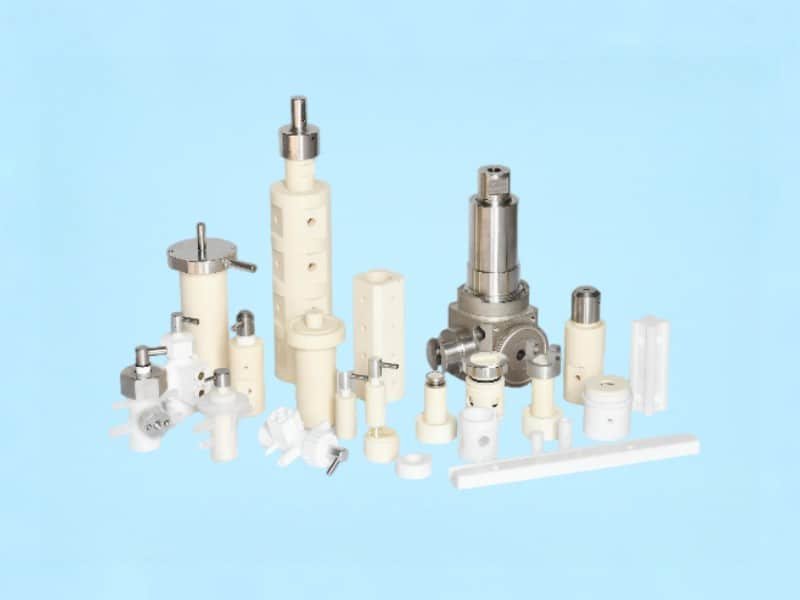
Custom Ceramic Manufacturing Services
JuchangCeramic supports custom precision ceramic components for customers with complete drawings or an initial product concept. The manufacturing process can be discussed around required dimensions, ceramic material, component geometry, and intended application.
For a miniature ceramic pump project, prepare your drawings, fluid specifications, target performance, operating environment, and expected order quantity before requesting a technical review.
Explore JuchangCeramic custom precision ceramic parts and OEM manufacturing services.
We recommend involving the manufacturer before the design is fully frozen. Early feedback can identify difficult geometries, unnecessary tolerance requirements, and potential assembly problems while changes are still manageable.
JuchangCeramic’s broader advanced industrial ceramics applications provide additional context for evaluating precision ceramic components across different industrial environments. The final design, however, should always be based on the specific pump’s fluid, mechanical, and operating requirements.
Expert Recommendation: A Practical Design Checklist
Before approving a custom miniature ceramic pump design, use this checklist to confirm that the engineering and purchasing teams have addressed the most important decisions.
- Application and intended use are clearly documented.
- Required flow rate, pressure, and dosing accuracy are specified.
- Fluid composition, viscosity, temperature, and particle content are known.
- All wetted materials have been assessed for compatibility.
- Ceramic material and grade are justified by operating conditions.
- Pump architecture matches the required flow behavior and control method.
- Critical dimensions and functional tolerances are identified.
- Surface finish requirements are defined for working interfaces.
- Internal and external leakage criteria are measurable.
- Drive force, speed, power, and feedback requirements are established.
- Manufacturing and inspection methods are agreed upon.
- Prototype and production validation plans have acceptance criteria.
- Quotation scope, tooling, lead time, and quality documentation are clear.
The best miniature ceramic pump is not necessarily the smallest, hardest, or most expensive option. It is the design that meets the actual operating requirements with an acceptable level of risk and a sustainable total cost.
Frequently Asked Questions About Custom Miniature Ceramic Pumps
1. What are the main considerations for custom miniature ceramic pumps?
The main considerations are application requirements, fluid compatibility, ceramic material selection, pump architecture, dimensional tolerances, surface finish, sealing, drive control, manufacturability, and validation. These factors should be evaluated together because a change in one area can affect the performance of the complete pump.
2. Which ceramic material is best for a miniature ceramic pump?
There is no universal best material. Alumina is often considered for hardness, wear resistance, and chemical stability in suitable environments. Zirconia may be appropriate where higher strength and fracture toughness are important. The correct grade depends on fluid compatibility, mechanical loads, temperature, component geometry, and cost.
3. Are ceramic pumps suitable for medical equipment?
Ceramic pumps can be considered for medical equipment when their material properties and fluid-handling performance meet the device requirements. The complete fluid path, seals, cleaning process, sterilization conditions where applicable, contamination controls, and regulatory validation must also be assessed. A ceramic component alone does not make a pump medically approved.
4. Why are dimensional tolerances so important in miniature ceramic pumps?
Small internal clearances influence leakage, friction, displacement, and repeatability. A minor dimensional variation can represent a significant percentage of the working clearance in a miniature mechanism. Critical dimensions should therefore be defined and measured using suitable inspection methods.
5. Can a custom miniature ceramic pump handle corrosive liquids?
Some ceramic grades offer useful chemical resistance, but compatibility must be evaluated for the specific liquid, concentration, temperature, and exposure time. Seals, housings, fittings, adhesives, and other wetted components must also be checked. Never assume the entire pump is compatible simply because its plunger or cylinder is ceramic.
6. Is a custom ceramic pump more expensive than a standard pump?
It often has higher initial engineering, sampling, and tooling costs. However, customization may be commercially justified when standard pumps cannot meet the required dimensions, fluid compatibility, wear performance, or dosing accuracy. Compare total project cost and expected service performance rather than unit price alone.
7. What information should I provide when requesting a custom miniature ceramic pump quotation?
Provide application details, drawings or sketches, required flow and pressure, fluid composition, operating temperature, target accuracy, installation dimensions, expected service life, annual quantity, and any applicable cleanliness or regulatory requirements. If drawings are not available, a detailed functional specification is a useful starting point.
8. How should a miniature ceramic pump be tested before mass production?
Testing should include flow rate, dosing repeatability, pressure performance, leakage, endurance, temperature behavior, and fluid compatibility as relevant to the application. Define measurable acceptance criteria before testing and confirm that the production process can reproduce the validated design.
References
The following authoritative resources provide useful background for engineering ceramics, quality management, and medical-device risk considerations. They are supporting references, not substitutes for application-specific pump testing or regulatory assessment.
- The American Ceramic Society — Technical ceramics, material science, and ceramic engineering resources.
- ISO 12176-1 — Standard relating to equipment for thermoplastics piping systems; useful as a standards reference for relevant piping equipment context, not a miniature pump design specification.
- U.S. Food and Drug Administration: Medical Devices — Regulatory and quality-system resources relevant to medical-device manufacturers and component integration.
Final takeaway: The most reliable custom miniature ceramic pump projects begin with a clear application specification and finish with documented performance validation. Material selection matters, but it cannot compensate for poor pump architecture, uncontrolled tolerances, unsuitable seals, or inadequate testing. Work with a manufacturer that can discuss both ceramic processing and the functional requirements of the complete component, and validate the design before scaling production.