
In modern industrial engineering, catastrophic equipment failure is rarely caused by the raw material itself, but rather by how that material is specified, manufactured, and deployed. When engineers source structural ceramics, they frequently default to zirconia due to its reputation as “ceramic steel.” However, simply ordering a generic zirconia component is a commercial liability. From our experience at JuchangCeramic, the true Performance of Zirconia Ceramic Parts is highly volatile, heavily dependent on trace stabilization chemistry, sintering profiles, and microscopic surface lapping.
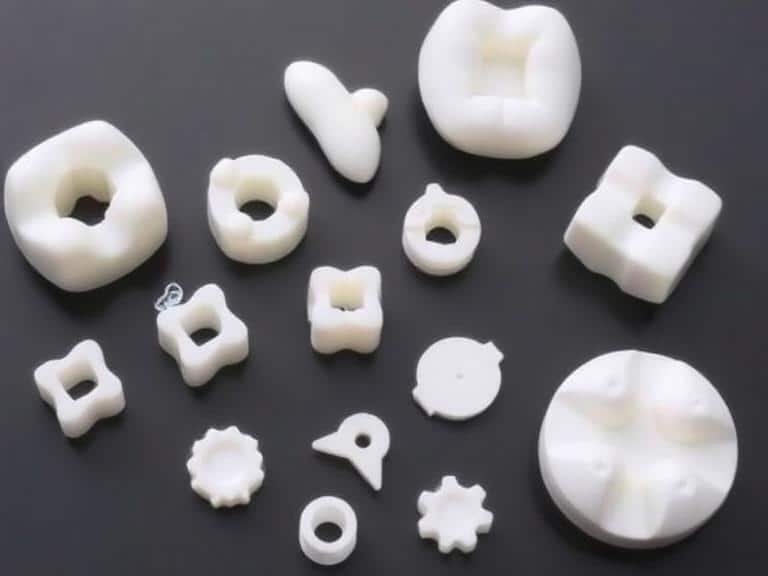
We see manufacturers consistently bleed capital by purchasing cheap, poorly densified zirconia components that degrade prematurely in high-humidity or high-stress environments. In this comprehensive practitioner’s guide, we will strip away the generic marketing brochures and analyze the exact thermodynamic, mechanical, and environmental variables you must evaluate. We will detail what drives optimal performance and, more importantly, whether zirconia is actually worth upgrading to for your specific industrial application.
Quick Answer: What drives zirconia performance?
The Performance of Zirconia Ceramic Parts is primarily dictated by its stabilization phase (usually Yttria or Magnesia). Because pure zirconia cracks upon cooling due to volume expansion, stabilizers lock it into a toughened tetragonal phase. Performance relies heavily on achieving high sintered density (minimum 6.0 g/cm³), avoiding low-temperature degradation (LTD) in high-humidity environments, and maintaining precise surface roughness (Ra) values. For heavy-duty applications like metering pump plungers, a premium Yttria-Stabilized Zirconia (YSZ) processed via Cold Isostatic Pressing (CIP) is mandatory.
Table of Contents
- What It Is: The Science of Zirconia
- How It Works: Transformation Toughening
- The 10 Performance Factors
- Commercial Benefits
- Limitations and Hidden Risks
- Who Should Use Zirconia
- Who Does Not Need Zirconia
- Common Procurement Mistakes
- Critical Buying Considerations
- Expert Recommendation
- Summary and Comparison Tables
- Frequently Asked Questions
What It Is: The Science of Zirconia
Zirconia (zirconium dioxide, ZrO2) is an advanced technical ceramic. Unlike traditional alumina, pure zirconia cannot be manufactured into solid structural parts because it undergoes a massive phase transformation (and a 4-5% volume expansion) as it cools from the sintering furnace. This expansion shatters the part from the inside out. To make it usable, material scientists mix in a stabilizing oxide—most commonly Yttria (Y2O3) or Magnesia (MgO). This creates Partially Stabilized Zirconia (PSZ) or Tetragonal Zirconia Polycrystal (TZP).
How It Works: Transformation Toughening
Zirconia achieves its legendary fracture toughness through a mechanism called “transformation toughening.” When a micro-crack begins to form under stress, the stress energy triggers the microscopic zirconia crystals at the tip of the crack to change their shape (from tetragonal to monoclinic). This transformation causes a localized volume expansion that physically pinches the crack shut, stopping it from propagating. It acts as an internal shock absorber, making it vastly superior to standard brittle ceramics.
The 10 Factors That Influence the Performance of Zirconia Ceramic Parts
In most professional situations, the difference between a part that lasts ten years and one that shatters in ten days comes down to the following ten variables.
1. Stabilizer Type and Concentration
The choice between Yttria (Y-TZP) and Magnesia (Mg-PSZ) fundamentally alters performance. Yttria provides the highest flexural strength and finest grain size, making it ideal for sharp cutting blades and medical components. Magnesia provides better resistance to thermal shock and hydrothermal degradation, making it superior for fluid handling in steam environments.
2. Powder Purity and Particle Size
If you purchase from a generic supplier, you often receive contaminated powders. Trace impurities like silica or sodium create glassy phases at the grain boundaries, which severely weaken the material at higher temperatures. Sub-micron, high-purity powder is non-negotiable for high-end applications like ceramic rod applications in manufacturing.
3. Forming Method: Cold Isostatic Pressing (CIP) vs. Dry Pressing
How the raw powder is compressed into its “green” state dictates the final sintered density. Uniaxial dry pressing creates density gradients (weak spots). CIP subjects the powder to uniform liquid pressure from all directions, resulting in homogeneous density and ensuring uniform shrinkage during firing. Always demand CIP for high-stress structural parts.
4. Sintering Temperature and Duration
Sintering is a delicate thermodynamic balance. If the temperature is too low, the part remains porous and weak. If sintered too high or for too long, the microscopic grains grow too large, destroying the transformation toughening effect. A meticulously controlled sintering profile is required to maintain the critical sub-micron grain structure.
5. Low-Temperature Degradation (LTD)
This is the Achilles heel of Y-TZP. When exposed to warm water or steam (typically between 150°C and 300°C), water molecules penetrate the ceramic lattice and force a premature phase transformation. This causes the surface to micro-crack and flake away, destroying the part’s finish. If your application involves hot moisture, you must specify an alumina-doped zirconia or Mg-PSZ to mitigate LTD.
6. Machining Tolerances and Surface Finish (Ra)
Because zirconia is incredibly hard, post-sintering machining requires diamond grinding wheels. Poor machining induces micro-stresses on the surface, serving as initiation points for cracks. For dynamic applications, such as a fluid pump, you must mandate ultra-fine lapping. Seeking out top ceramic plunger manufacturers ensures that the surface roughness (Ra) is low enough to avoid destroying soft polymer seals.
7. Operating Temperatures
Zirconia is not meant for ultra-high temperature continuous exposure. While it acts as a phenomenal thermal insulator, its flexural strength drops off a cliff above 800°C as the phase structure destabilizes. If your application exceeds this threshold, you should investigate what is alumina ceramics as a high-temperature alternative.
8. Chemical Environment Exposure
While generally highly inert, the Performance of Zirconia Ceramic Parts can be compromised by highly concentrated hot acids (like hydrofluoric acid). You must cross-reference your specific fluid chemistry with the manufacturer to ensure no grain boundary leaching occurs.
9. Impact and Mechanical Loading
Although it is “ceramic steel,” it is still a ceramic. It handles massive compressive loads brilliantly but struggles with severe point-impact tensile stress. The design of the component must eliminate sharp internal corners (stress risers) and implement generous radii to distribute loads evenly.
10. Mating Component Clearances
Zirconia expands and contracts differently than steel or aluminum. When fitting a zirconia plunger into a stainless steel housing, the thermal expansion mismatch can cause the part to bind or crack as the machine heats up. Proper clearance engineering is essential for dynamic assemblies.
Benefits of Specifying High-Grade Zirconia
We recommend zirconia primarily for its unmatched wear resistance and fracture toughness. It outlasts hardened steel, tungsten carbide, and standard alumina in high-friction environments. Its extremely low thermal conductivity also makes it an excellent thermal barrier component. Furthermore, its smooth, non-porous surface is highly biocompatible and resists bacterial adhesion, which is vital for food and pharmaceutical dosing.
Limitations and Hidden Risks
Zirconia is heavy (density > 6.0 g/cm³) and significantly more expensive to manufacture and machine than alumina. As discussed, its vulnerability to Low-Temperature Degradation in humid environments requires specialized formulations, which further drives up costs. It is not a universal replacement for all metals; it requires intelligent integration.
Who Should Use It
For commercial users operating high-pressure fluid dispensing systems, battery manufacturing, semiconductor handling, or medical tooling, zirconia is a game-changer. It is the definitive choice for metering pump plungers, wire drawing capstans, and high-wear bearings. If you need to understand specific bearing applications, review what are ceramic bearings used for to see where zirconia excels.
Who Does Not Need It
For beginners or low-budget industrial applications where standard abrasion is low, or for environments featuring continuous temperatures exceeding 1000°C (like kiln furniture), zirconia is the wrong choice. In high-heat, low-impact scenarios, utilizing alumina ceramic parts for metering pumps or kiln supports is vastly more cost-effective.
Common Mistakes in Procurement
The most devastating mistake engineers make is treating all zirconia as equal. Buying on price alone guarantees you will receive poorly stabilized YSZ that will degrade in a matter of months. Another common error is failing to specify edge chamfers on engineering drawings; sharp edges on zirconia will chip during installation. Always consult a robust ceramic plunger price guide 2026 to understand the true cost of precision machining.
Buying Considerations
When approaching a custom precision ceramic parts supplier, demand transparency. Ask for material density reports (reject anything under 6.0 g/cm³ for Y-TZP). Request verification of their CIP processing capabilities and diamond lapping machinery. Ensure they have established quality control protocols for dimensional verification, as rework on fired ceramics is financially crippling.
Summary and Comparison Tables
| Factor | Impact on Zirconia Performance | Ideal Parameter |
|---|---|---|
| Stabilizer Type | Determines fracture toughness and LTD resistance. | 3 mol% Yttria (Y-TZP) for strength; Magnesia for steam. |
| Forming Method | Controls density and internal flaws. | Cold Isostatic Pressing (CIP). |
| Grain Size | Governs the transformation toughening effect. | Sub-micron (typically 0.3 – 0.5 µm). |
| Surface Finish | Prevents micro-cracking and seal wear. | Ra less than 0.1 µm for dynamic seals. |
| Specification | Zirconia (Y-TZP) | Alumina (99.5%) |
|---|---|---|
| Fracture Toughness | Excellent (8-10 MPa·m½) | Low (4-5 MPa·m½) |
| Flexural Strength | Very High (900-1200 MPa) | Moderate (300-400 MPa) |
| Max Operating Temp | Lower (~800°C) | Very High (~1600°C) |
| Relative Cost | High | Low to Moderate |
| Pros | Cons |
|---|---|
| Unmatched fracture toughness among ceramics. | Vulnerable to Low-Temperature Degradation (LTD) in steam. |
| Extreme wear resistance extends component lifespan. | High raw material and diamond machining costs. |
| Thermal expansion coefficient matches closely with steel. | Heavy weight limits use in lightweight aerospace applications. |
| Excellent chemical inertness and biocompatibility. | Loses structural strength at prolonged extreme temperatures. |
Expert Recommendation
In our testing, the Performance of Zirconia Ceramic Parts is absolute when manufactured correctly, but highly volatile when corners are cut. We strongly advise against purchasing “off-the-shelf” zirconia components for critical industrial machinery. You must partner with a specialized manufacturer capable of engineering the raw powder stabilization, pressing method, and final lapping to your exact operational environment.
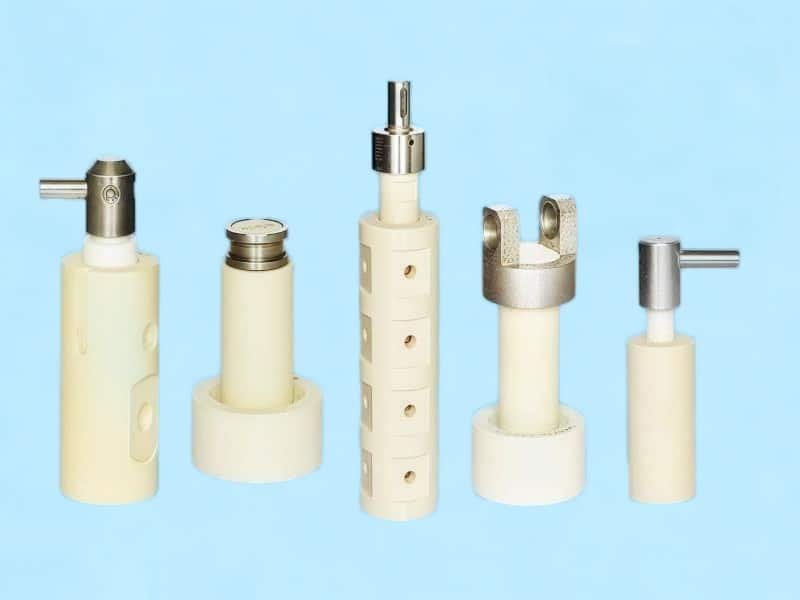
Custom Ceramic Manufacturing Services
JuchangCeramic delivers professional OEM and custom manufacturing solutions for precision ceramic parts, pumps, and components. Whether you have complete drawings or just an idea, we transform your requirements into high-performance products with accurate quotation and reliable production.
Explore Our Custom Zirconia Capabilities Here
Frequently Asked Questions
What causes zirconia ceramic to fail prematurely?
Premature failure in zirconia is usually caused by Low-Temperature Degradation (aging in hot, humid environments), improper sintering leading to large grain sizes, or poor machining that leaves micro-cracks on the surface. Selecting the wrong stabilizer for the environment is a primary culprit.
Is zirconia better than alumina for industrial pumps?
For high-pressure, heavy-duty applications, yes. Zirconia possesses higher flexural strength and fracture toughness than alumina, preventing the plungers from shattering under impact stress. However, if the pumped fluid is extremely hot and corrosive, high-purity alumina may be preferred.
Can you machine zirconia after it has been fired?
Yes, but it is extremely difficult and expensive. Because fully sintered zirconia is exceptionally hard, it can only be machined using specialized diamond grinding and lapping tools. Standard CNC metal tooling will immediately dull or break against sintered zirconia.
What does YTZP stand for?
YTZP stands for Yttria-Stabilized Tetragonal Zirconia Polycrystal. It is the most common and strongest form of structural zirconia, utilizing yttrium oxide to lock the crystal structure into a metastable phase at room temperature, enabling transformation toughening.
Authoritative Industry References
To ensure robust engineering principles and accurate material science, this guide references standards and research from the following authoritative bodies:
- ASTM International – Advanced Ceramics Standards – Specifications for mechanical properties and testing of technical ceramics.
- The American Ceramic Society (ACerS) – Global association providing peer-reviewed research on zirconia phase transformation and stabilization.
- National Institute of Standards and Technology (NIST) – Materials Science division data on ceramic fracture toughness and metrology.