
In the high-stakes world of precision fluid metering, traditional check valves are the ultimate point of failure. Diaphragm pumps and standard plunger pumps rely entirely on tiny balls, springs, and elastomer seats to dictate the directional flow of fluids. The moment a single particulate of slurry, crystallized salt, or viscous chemical lodges into that check valve, the pump loses its volumetric accuracy, cavitates, or fails completely. This fundamental engineering flaw costs manufacturing facilities millions of dollars in downtime and scrapped production batches annually. If your process requires micro-liter precision with abrasive or viscous media, you cannot rely on valves.
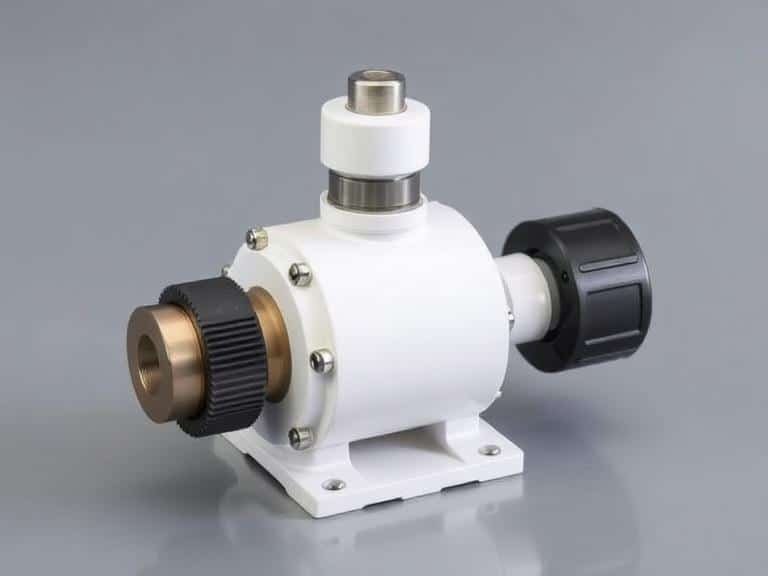
From our experience engineering advanced ceramic fluidic solutions at JuchangCeramic, the definitive answer to this vulnerability is the valveless piston pump. By entirely eliminating the intake and discharge valves, this unique architectural design removes the primary cause of metering failure. In this comprehensive guide, we will strip away the academic jargon and explain precisely what a valveless piston pump is, the ingenious mechanical synchronization that makes it work, and why upgrading your fluidic paths to utilize high precision zirconia ceramic parts within these pumps is non-negotiable for modern manufacturing.
Quick Answer: What is a Valveless Piston Pump?
A valveless piston pump is a highly precise positive displacement metering pump that uses a single, uniquely modified cylindrical piston to perform both the pumping and valving functions simultaneously. By synchronizing rotary and reciprocating (back-and-forth) motion, a flat cut-out on the piston aligns sequentially with the inlet and outlet ports. This mechanical action actively draws fluid in and pushes it out, eliminating the need for traditional check valves. It is the absolute industry standard for dispensing high-viscosity, particulate-laden, or highly corrosive fluids with a volumetric accuracy of better than 1%.
Table of Contents
- Direct Answer: Do You Need This Technology?
- How It Works: The Mechanics of Synchronized Motion
- Unmatched Benefits of Valveless Architecture
- Limitations to Consider
- Who Should Use a Valveless Piston Pump
- Who Does Not Need It
- Common Mistakes in Pump Procurement
- Strict Buying Considerations
- Expert Recommendation
- Summary and Comparison Tables
- Frequently Asked Questions
Direct Answer: Do You Need This Technology?
Yes, if you are attempting to meter critical fluids, a valveless piston pump is overwhelmingly worth upgrading to. Standard pumps rely on fluid pressure to push a ball off a seat to open a valve. Viscous fluids (like heavy cosmetics or battery slurries) do not flow fast enough to seat those valves properly, resulting in catastrophic loss of prime and inaccurate dosing. A valveless piston pump mechanically forces the fluid path open and closed, taking the physical properties of the fluid entirely out of the equation. If accuracy and zero-clog reliability dictate your bottom line, this pump is mandatory equipment.
How It Works: The Mechanics of Synchronized Motion
To understand the brilliance of a valveless piston pump, you must visualize a piston that does not just move up and down, but also spins. The piston features a milled flat section (a duct) at its working end. The pump head (the cylinder) features two ports: an inlet and an outlet.
As the motor drives the pump, a specialized pivoting mechanism causes the piston to rotate 360 degrees while simultaneously stroking inward and outward. During the backward (suction) stroke, the flat cut-out on the rotating piston aligns precisely with the inlet port, creating a cavity that draws fluid into the cylinder. As the stroke reverses to push forward (discharge), the piston rotates so the flat cut-out now aligns exclusively with the outlet port. The fluid is mechanically forced out. Because the piston physically blocks the opposing port during each stroke cycle, there is zero backflow. The clearance between the piston and the cylinder is typically machined to micron-level tolerances, acting as an absolute fluid seal without the use of elastomeric O-rings.
Unmatched Benefits of Valveless Architecture
The primary benefit of a valveless piston pump is absolute volumetric consistency. You can expect a Coefficient of Variation (CV) of 0.5% or better over millions of cycles. Because there are no internal check valves, there is nothing to clog, stick, or fatigue. This makes the pump completely immune to the suspended solids found in abrasive chemical slurries.
Furthermore, by utilizing advanced materials, these pumps become chemically inert. In our testing, deploying a valveless piston pump equipped with components from a trusted wear resistant ceramic parts supplier ensures that the pump can handle aggressive acids, solvents, and alkaline solutions that would dissolve stainless steel in weeks.
Limitations to Consider
We must use commercial and practical judgment: this technology has distinct limitations. A valveless piston pump is a precision micro-metering device. It is not designed for bulk fluid transfer. If your process requires moving hundreds of gallons per minute, this is the wrong architecture. Furthermore, the initial capital expenditure for a valveless piston pump is significantly higher than a generic diaphragm pump due to the extreme precision machining required to create the ceramic piston and cylinder sets.
Who Should Use a Valveless Piston Pump
For commercial users operating in the medical diagnostics, pharmaceutical, cosmetic, and advanced energy sectors, this pump is the industry standard. For heavy-duty applications like lithium-ion battery manufacturing, where highly abrasive conductive slurries must be metered onto foil substrates with microscopic precision, the valveless piston pump is the only architecture capable of surviving the abrasion without losing accuracy.
Who Does Not Need It
For beginners setting up simple hydroponic nutrient dosers, or facilities doing basic wastewater transfer, a valveless piston pump is a massive over-allocation of budget. Standard peristaltic pumps or basic check-valve diaphragm pumps are entirely adequate for low-precision, non-abrasive water transfer applications.
Common Mistakes in Pump Procurement
The most devastating mistake engineers make when sourcing a valveless piston pump is selecting the wrong piston and cylinder material. Many attempt to save money by ordering 316 stainless steel components. When metering abrasive particulate fluids, the metal piston will rapidly score and scratch. Once the microscopic clearance between the piston and cylinder is compromised, the pump loses its seal, resulting in “slip” (internal leaking) and a total loss of volumetric accuracy.
To prevent this, you must specify technical ceramics. We strongly advise reading a engineering ceramics material guide to understand why alumina and zirconia are impervious to mechanical scoring compared to steel.
Strict Buying Considerations
When executing a procurement strategy, you must evaluate the manufacturer’s capability to hold micron-level tolerances. The “valveless” seal relies entirely on the diametrical clearance between the piston and the cylinder bore. Ask your supplier for their surface roughness (Ra) and cylindricity specifications. We recommend sourcing directly from a specialized ceramic pump parts manufacturer that controls the entire grinding and lapping process in-house. Review the ceramic plunger vs metal plunger dynamic to ensure your fluid compatibility matches your hardware.
Expert Recommendation
In most professional situations where precision dosing is the bottleneck of your manufacturing line, upgrading to a ceramic-based valveless piston pump will immediately stabilize your process. Do not compromise on the wetted materials. If you are dealing with extreme wear, we advise utilizing high-density Zirconia for the pump internals. JuchangCeramic excels in manufacturing these critical, ultra-precise geometries, ensuring your valveless pumps operate flawlessly for hundreds of millions of cycles.
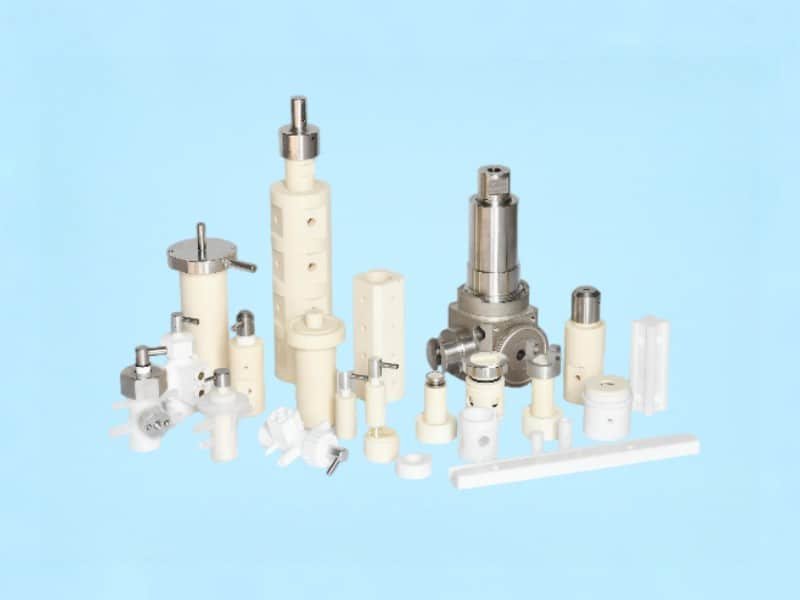
Custom Ceramic Manufacturing Services
To achieve the zero-clearance seal required in a valveless piston pump, you need uncompromising material science and precision grinding.
JuchangCeramic delivers professional OEM and custom manufacturing solutions for precision ceramic parts, pumps, and components. Whether you have complete CAD drawings or just an operational concept, we transform your requirements into high-performance products with accurate quotation and highly reliable production schedules. We specialize in the ultra-tight tolerances required for valveless metering technology.Explore Custom Ceramic Solutions
Summary and Comparison Tables
| Feature | Specification / Description |
|---|---|
| Operating Principle | Synchronized rotary and reciprocating motion. |
| Valving Mechanism | Mechanical alignment of piston flat with inlet/outlet ports (No check valves). |
| Typical Accuracy | Better than 0.5% Coefficient of Variation (CV). |
| Best Wetted Materials | Alumina (Al2O3) or Zirconia (ZrO2) Ceramics. |
| Primary Applications | Medical dispensing, battery slurry, cosmetics, aggressive chemicals. |
| Metric | Valveless Piston Pump | Check Valve Diaphragm Pump | Peristaltic Pump |
|---|---|---|---|
| Clog Resistance | Extreme (Mechanically forced open/closed) | Poor (Balls stick on valve seats) | Good (No internal valves) |
| Long-Term Precision | Excellent (Ceramics do not wear or stretch) | Moderate (Diaphragms stretch over time) | Poor (Tubing degrades and flattens) |
| Viscous Fluid Handling | Excellent | Poor (Valves fail to seat fast enough) | Moderate (Depends on tubing stiffness) |
| Maintenance Frequency | Very Low (Millions of cycles) | High (Frequent valve/seal replacement) | Very High (Frequent tubing replacement) |
| Pros (Advantages) | Cons (Limitations) |
|---|---|
| Total elimination of check valves prevents clogging and vapor lock. | Significantly higher initial capital expenditure. |
| Ceramic internals provide near-diamond hardness for abrasive fluids. | Not suitable for high-volume bulk fluid transfer. |
| Valveless architecture allows for instant, reversible flow. | Requires precision alignment; highly sensitive to improper assembly torque. |
| Maintains sub-1% accuracy over millions of continuous strokes. | May require specialized stepper or servo motors for micro-stepping control. |
Frequently Asked Questions
How does a valveless piston pump prevent leaking without O-rings?
The seal in a valveless piston pump is achieved through extreme precision machining. The ceramic piston and ceramic cylinder are ground and lapped to fit together with a clearance of only a few microns. This micro-clearance is smaller than the fluid molecules can easily navigate under standard pressures, creating a capillary fluid seal that entirely eliminates the need for degradable elastomeric O-rings or mechanical lip seals.
Can a valveless piston pump run dry?
In most professional situations, running any pump dry is not recommended. However, if the valveless piston pump is equipped with advanced technical ceramics like Zirconia or Alumina, it can briefly survive dry running much better than standard metal pumps. Because ceramics have an incredibly low coefficient of friction and excellent thermal stability, they will not instantly gall or cold-weld together like dry stainless steel components would.
Why is ceramic better than stainless steel for a valveless piston pump?
Ceramic is fundamentally superior because of its hardness and chemical inertness. When a valveless pump meters abrasive fluids, a stainless steel piston will quickly develop micro-scratches. These scratches destroy the micron-level fluid seal, causing the pump to lose accuracy. Technical ceramics are nearly as hard as diamonds, making them immune to abrasive scoring and ensuring the pump’s volumetric precision lasts for years without degradation.
Authoritative Industry References
To ensure engineering rigor and compliance with global manufacturing standards, our technical evaluations reference data from the following authoritative bodies:
- International Organization for Standardization (ISO) – ISO 9001 and specific fluid power systems standards governing the manufacturing tolerances required for high-precision positive displacement pumps.
- U.S. Food and Drug Administration (FDA) – Regulatory guidelines dictating the material compliance and volumetric precision required for fluidic pumps used in medical diagnostics and pharmaceutical compounding.
- American Society of Mechanical Engineers (ASME) – Peer-reviewed engineering data regarding advanced ceramic tribology, diametrical clearance sealing mechanics, and fluid dynamics in valveless rotary architectures.
For more insights on integrating these pumps into diverse environments, explore our guide on advanced industrial ceramics applications.