
In the relentless pursuit of manufacturing efficiency, engineers frequently encounter the devastating limitations of traditional metallurgy. When 316 stainless steel galls under friction, and when tungsten carbide catastrophically fractures due to sheer brittleness, industrial operations grind to an expensive halt. Continuing to replace failed metal parts in highly corrosive or abrasive environments is a failure of commercial strategy. To eliminate downtime, modern fluidic and structural engineering has aggressively pivoted toward advanced technical ceramics.
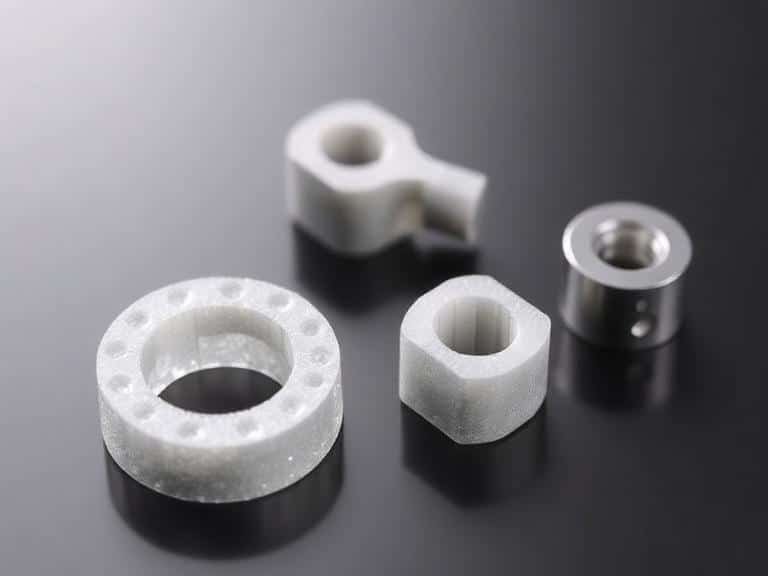
From our experience engineering advanced fluid delivery systems at JuchangCeramic, understanding the Reasons Zirconia Is Used for High-Precision components is the dividing line between standard equipment and world-class reliability. Zirconia is not your grandmother’s porcelain; it is colloquially known in the industry as ceramic steel. It possesses a unique metallurgical-like characteristic that actively prevents crack propagation. In most professional situations, specifying zirconia over alumina or steel is the only way to achieve sub-micron tolerances that survive millions of cycles. In this definitive guide, we strip away the academic jargon and detail exactly why this material dominates high-end manufacturing, and whether you should upgrade your systems immediately.
Quick Answer: Why Zirconia Dominates High-Precision Engineering
The core Reasons Zirconia Is Used for High-Precision structural components revolve around its unique transformation toughening mechanism. When a microscopic crack attempts to form, the crystal structure of the zirconia expands, actively pinching the crack shut. Beyond this unparalleled fracture toughness, zirconia provides: extreme wear resistance, total chemical inertness, a thermal expansion coefficient that matches steel (allowing for seamless metal-ceramic interference fits), flexural strength exceeding 1000 MPa, biocompatibility, and the ability to be machined to Ra 0.1 surface finishes. For commercial users requiring zero-leakage fluid metering or wear-proof tooling, Yttria-stabilized zirconia (Y-TZP) is the ultimate material upgrade.
Table of Contents
- What It Is: The Anatomy of Ceramic Steel
- How It Works: Transformation Toughening
- The 7 Reasons Zirconia Is Used for High-Precision Components
- Commercial Benefits of Upgrading
- Limitations and Hidden Risks
- Who Should Use Zirconia
- Who Does Not Need It
- Common Procurement Mistakes
- Strict Buying Considerations
- Expert Recommendation from JuchangCeramic
- Summary and Comparison Tables
- Frequently Asked Questions
What It Is: The Anatomy of Ceramic Steel
Zirconia (Zirconium Dioxide, ZrO2) in its raw state undergoes disruptive volume changes when heated and cooled, causing it to shatter. To make it industrially viable, manufacturers dope the zirconia with stabilizers like Yttrium Oxide (Y2O3) or Magnesium Oxide (MgO). This creates Yttria-Stabilized Tetragonal Zirconia Polycrystal (Y-TZP) or Magnesia-Partially Stabilized Zirconia (Mg-PSZ).
Y-TZP is the specific grade used for ultra-precise structural engineering. It features the highest flexural strength of any monolithic advanced ceramic. Unlike alumina, which is highly porous and brittle, stabilized zirconia acts dynamically under stress. If you review our comprehensive engineering ceramics material guide, you will see that while alumina is excellent for high-temperature electrical insulation, zirconia is the undisputed king of mechanical load-bearing and wear.
How It Works: Transformation Toughening
To understand why zirconia outlasts steel, you must understand its microscopic defense mechanism. Standard ceramics fail catastrophically; once a micro-crack starts, it shatters the part. Zirconia is different. In most professional situations, when a zirconia component is subjected to severe mechanical stress (such as a heavy impact or extreme friction), the localized stress triggers a phase transformation in the crystal lattice right at the tip of the crack.
The crystals transform from a tetragonal phase to a monoclinic phase. This transformation is accompanied by a 3% to 5% volume expansion. This microscopic swelling literally pinches the crack shut, arresting its propagation entirely. This phenomenon, known as transformation toughening, is why zirconia is highly fracture-resistant and why it is trusted in applications where catastrophic failure would mean millions of dollars in assembly line downtime.
The 7 Reasons Zirconia Is Used for High-Precision Components
1. Unmatched Fracture Toughness
As detailed above, transformation toughening gives zirconia a fracture toughness (K1c) of 8 to 10 MPa·m1/2, which is significantly higher than alumina. This allows engineers to design thin-walled Zirconia Ceramic Structural Part assemblies that endure high cyclic loading without shattering.
2. Extreme Wear Resistance and Hardness
With a Vickers hardness exceeding 1200 HV, zirconia laughs at abrasive particulate. In our testing, when pumping chemical slurries containing suspended solids, stainless steel plungers score and leak within weeks. A Ceramic plunger pump made of zirconia will maintain its micron-level seal for hundreds of millions of strokes without measurable degradation.
3. Coefficient of Thermal Expansion (CTE) Matching Steel
This is a critical, often overlooked engineering advantage. Zirconia has a CTE of approximately 10.5 x 10^-6 /°C, which is remarkably close to that of steel. This means you can heat-shrink a steel collar onto a zirconia shaft, and as the assembly heats up and cools down during operation, the two materials will expand and contract at nearly the same rate. This prevents the ceramic from cracking under compression or slipping loose.
4. Superior Chemical Inertness
Zirconia does not rust, oxidize, or degrade when exposed to aggressive acids, strong alkalis, or corrosive organic solvents. For heavy-duty applications in petrochemical refining or semiconductor wafer cleaning, metal components dissolve. Zirconia remains pristine, ensuring zero chemical contamination of the process fluid.
5. Sub-Micron Surface Finish Machinability
High-precision components require flawless surfaces to prevent fluid bypass without using degradable elastomeric O-rings. Zirconia possesses a remarkably fine grain structure (often less than 0.5 microns). This allows manufacturers to lap and polish the material to a mirror-like Ra 0.1 surface finish. This is why the tightest clearances in a Microliter Ceramic Metering Pump are exclusively achievable using zirconia.
6. Exceptional Biocompatibility
Zirconia is entirely non-cytotoxic and does not provoke an immune response or release heavy metal ions into the bloodstream. This makes it the absolute gold standard for a Medical Ceramic Pump or a Dialysis Ceramic Pump, where maintaining the absolute purity of blood or intravenous fluids is a matter of life and death.
7. Non-Magnetic and Electrically Insulating
Unlike steel or tungsten carbide, zirconia is entirely non-magnetic and acts as an excellent electrical insulator at room temperatures. In analytical equipment, magnetic resonance imaging (MRI) environments, or high-voltage electronic assembly lines, using zirconia tools and Ceramic Rotary Valve systems prevents electromagnetic interference and catastrophic short circuits.
Commercial Benefits of Upgrading
For commercial users, the decision to migrate to zirconia components is a pure return-on-investment (ROI) calculation. The initial capital expenditure for a zirconia component is generally three to five times higher than its 316 stainless steel counterpart. However, the operational lifespan is routinely twenty to fifty times longer. You eliminate the cost of replacement parts, but more importantly, you eliminate the massive revenue losses associated with un-planned machine downtime and unscheduled maintenance teardowns.
Limitations and Hidden Risks
We must use commercial and practical judgment: zirconia is not a magic bullet for every application. It has a high specific density (over 6.0 g/cm3), making it heavy compared to alumina or silicon nitride. Furthermore, specific grades of Y-TZP are susceptible to Low-Temperature Degradation (LTD) when exposed to high-temperature steam (such as in an autoclave) over prolonged periods. If your application involves continuous 200°C steam, you must specify a specialized alumina-doped zirconia or a different ceramic entirely to prevent spontaneous surface roughening.
Who Should Use Zirconia
We recommend zirconia structural components for engineers designing analytical medical equipment, high-pressure fluid dispensing valves, automated wire drawing dies, and deep-sea exploration housings. If you are reading our ceramic rod vs metal rod comparison, you will see that anywhere extreme wear intersects with the need for zero-tolerance alignment, zirconia is the mandatory choice.
Who Does Not Need It
For beginners building low-pressure hobbyist robotics, or facilities pumping clean, non-abrasive water at ambient temperatures, paying the premium for a zirconia Ceramic Pump is a waste of budget. Standard stainless steel or engineered plastics like PEEK will serve these mild environments perfectly well at a fraction of the cost.
Common Procurement Mistakes
The most catastrophic mistake procurement teams make is treating technical ceramics like metal. You cannot simply take a blueprint for a steel part and send it to a ceramic manufacturer. Zirconia cannot accommodate sharp 90-degree internal corners, threads, or thin knife-edges; these will act as stress concentrators and induce failure during the firing process. You must work with your manufacturer to redesign the part specifically for ceramic manufacturing, utilizing chamfers and generous internal radii.
Strict Buying Considerations
When sourcing zirconia components, demand raw material transparency. The global market is flooded with impure zirconia powders that contain massive silica glass phases, leading to premature failure. Ensure your supplier utilizes high-purity Japanese or premium European raw powders. Furthermore, verify the manufacturer’s finishing capabilities. Firing the ceramic is only half the battle; the true cost and precision come from the diamond grinding and lapping process. If you require components for high-voltage isolation, you might also want to review the best ceramic insulators for industrial use to see if alumina is a better fit for purely electrical applications.
Expert Recommendation from JuchangCeramic
From our experience engineering fluidic solutions that cannot afford to fail, we firmly state that upgrading high-wear metal components to Y-TZP zirconia is the fastest way to modernize a production line. If you are struggling with recurring maintenance issues due to abrasion, corrosion, or galling, stop reordering the same failing metal parts. We recommend partnering with a vertically integrated manufacturer who understands green machining, precision sintering, and sub-micron diamond lapping.
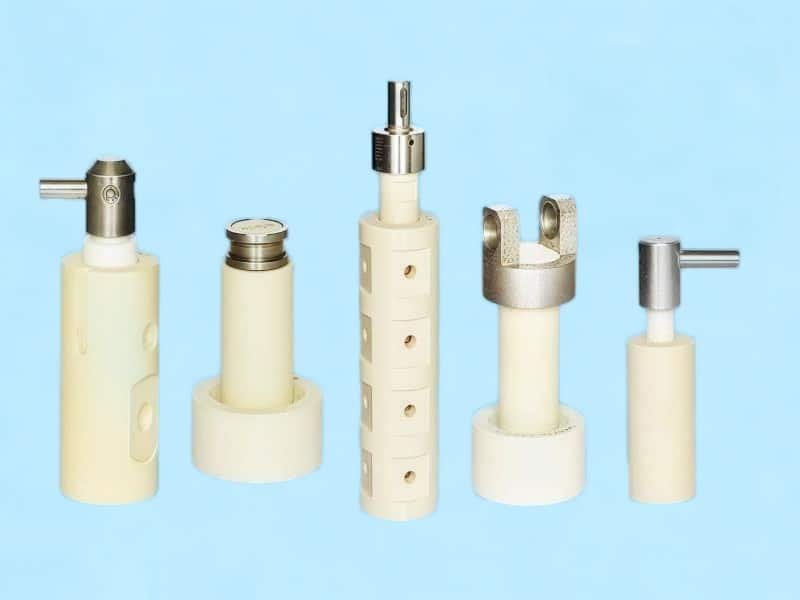
Custom Ceramic Manufacturing Services
JuchangCeramic delivers professional OEM and custom manufacturing solutions for precision ceramic parts, pumps, and components. Leveraging the superior physical properties of Y-TZP Zirconia and ultra-pure Alumina, we engineer parts that survive where metals fail.
- Uncompromising Precision: Grinding and lapping tolerances held to sub-micron accuracy for zero-leakage fluidic seals.
- Material Mastery: Utilizing only premium, certified raw ceramic powders to guarantee transformation toughening reliability.
- End-to-End Engineering: Whether you have complete CAD drawings or just a conceptual idea, we transform your requirements into high-performance products.
- Industry Agnostic: Serving medical, pharmaceutical, battery slurry, and petrochemical sectors globally.
Summary and Comparison Tables
| Property Category | Technical Specification | Why It Matters Commercially |
|---|---|---|
| Flexural Strength | > 1000 MPa | Allows for load-bearing structural designs without shattering. |
| Fracture Toughness | 8 – 10 MPa·m1/2 | Actively resists cracking from impacts (Transformation Toughening). |
| Hardness (Vickers) | > 1200 HV | Provides extreme immunity to abrasive wear and scratching. |
| Thermal Expansion | ~10.5 x 10^-6 /°C | Matches steel, allowing for reliable interference fits. |
| Surface Finish | Ra 0.1 μm or better | Creates frictionless seals for microliter dosing pumps. |
| Feature | Zirconia (Y-TZP) | Alumina (99.5%) | 316 Stainless Steel |
|---|---|---|---|
| Fracture Toughness | Excellent (Highest of ceramics) | Poor (Highly brittle) | Supreme (Ductile) |
| Wear Resistance | Supreme | Excellent | Poor (Prone to galling) |
| Chemical Resistance | Excellent | Supreme | Moderate (Corrodes in halides) |
| Thermal Shock Resistance | Good | Moderate | Excellent |
| Density / Weight | Heavy (~6.0 g/cm3) | Light (~3.9 g/cm3) | Heavy (~8.0 g/cm3) |
| Pros (Advantages) | Cons (Limitations) |
|---|---|
| Eliminates abrasive wear in high-friction environments, extending lifespan 20x over steel. | High initial capital expenditure due to diamond-tooling machining costs. |
| Matches the thermal expansion of steel, enabling easy hybrid metal-ceramic assemblies. | Susceptible to Low-Temperature Degradation (LTD) in continuous high-pressure steam. |
| Completely chemically inert, ensuring zero contamination in medical and pharmaceutical fluidics. | Heavy material; not suitable where extreme lightweighting is the primary engineering goal. |
| Incredible surface finish capabilities allow for valveless, seal-less pump designs. | Cannot be manufactured with sharp 90-degree internal angles or fine threads. |
Frequently Asked Questions
Is Zirconia stronger than steel?
It depends on how you define strength. Zirconia is significantly harder and more wear-resistant than steel, and its compressive strength is astronomical. However, steel is ductile, meaning it will bend before it breaks. Zirconia, despite being the toughest ceramic, is still fundamentally brittle compared to metal; it will not bend, but it can shatter under an extreme, localized impact that would only dent steel.
What is Transformation Toughening in Zirconia?
Transformation toughening is a phase-change mechanism unique to specific grades of zirconia (like Y-TZP). When a microscopic crack begins to form due to stress, the crystal structure at the tip of the crack transforms from a tetragonal shape to a monoclinic shape. This transformation causes the crystal to expand by 3% to 5% in volume, physically pinching the crack shut and stopping it from spreading.
Can you thread a Zirconia ceramic part?
In most professional situations, machining threads directly into zirconia is highly discouraged. The sharp roots of a thread act as severe stress concentrators, which can lead to failure when torqued. Instead, we recommend using threaded metal inserts, bonding a metal collar, or utilizing press-fits/shrink-fits, taking advantage of zirconia’s steel-like coefficient of thermal expansion.
Authoritative Industry References
To ensure our engineering guidelines align with global material science standards, we reference data from the following authoritative bodies:
- National Institute of Standards and Technology (NIST) – Federal laboratory providing foundational data on the fracture mechanics and phase transformation behaviors of advanced technical ceramics.
- The American Ceramic Society (ACerS) – The premier academic and professional organization dedicated to the study, application, and industrial advancement of engineered ceramics and glasses.
- International Organization for Standardization (ISO) – Global standards governing the biological evaluation of medical devices (ISO 10993) and the mechanical testing parameters for fine ceramics.