
Determining the precise Ceramic crucible temperature range is not a matter of guesswork; it is the fundamental baseline of metallurgical and chemical processing. When commercial laboratories and foundries push refractory materials past their thermal limits, the result is catastrophic failure. Crucibles do not simply crack; they melt, deform, and contaminate the expensive alloys or high-purity chemicals they are holding. To operate safely and profitably, you must understand the exact thermal thresholds of different ceramic compositions.
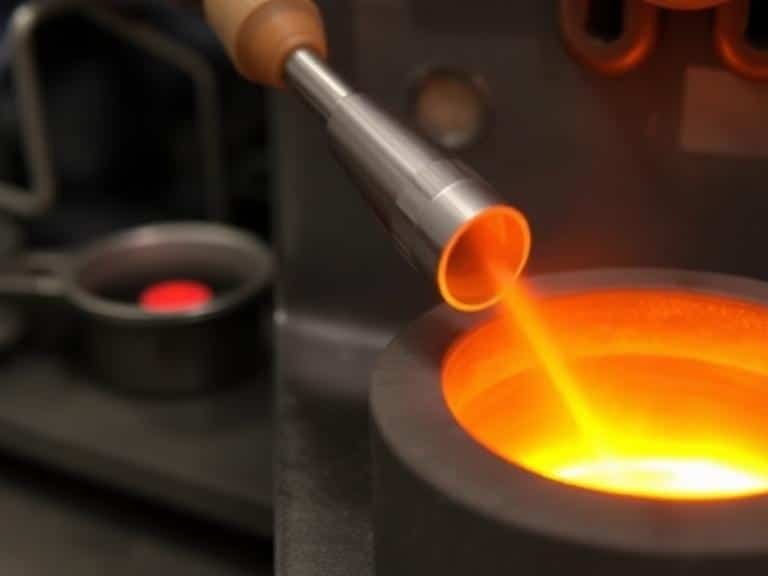
From our experience engineering advanced technical ceramics at JuchangCeramic, we see engineers routinely select the wrong crucible material for their specific thermal profile. Assuming that all “ceramics” can withstand 2000 degrees Celsius is a severe industrial miscalculation. In this uncompromising guide, we will dissect the specific temperature limits of alumina, zirconia, and silicon carbide. We will provide commercial and practical judgment on thermal shock, ramp rates, and exactly how to select the right refractory vessel for your melting parameters.
Quick Answer: Operating Thermal Limits
The safe operating Ceramic crucible temperature range is strictly dictated by its material composition. You must adhere to these maximum continuous operating limits:
- Alumina (99% Al2O3): Safe continuous operation up to 1600°C. Absolute maximum peak limit of 1750°C.
- Zirconia (Yttria-Stabilized): Safe continuous operation up to 2100°C. Designed for extreme heavy-duty melting.
- Silicon Carbide (SiC): Safe continuous operation up to 1500°C. Exceptional thermal shock resistance for rapid heating.
- Fused Silica / Quartz: Safe continuous operation up to 1050°C. Highly resistant to sudden temperature changes.
In most professional situations, we recommend leaving a 100°C safety margin below the absolute maximum temperature to prevent creep deformation and premature crucible failure over repeated cycles.
Table of Contents
- What Defines the Ceramic Crucible Temperature Range?
- How High-Temperature Ceramics Work
- Comparison Table: Crucible Materials
- Commercial Benefits of Proper Selection
- Limitations and Hard Truths (Thermal Shock)
- Who Should Use High-Temp Crucibles
- Common Mistakes in Heating Cycles
- Pros and Cons Table
- Expert Buying Considerations
- Expert Recommendation: JuchangCeramic
- Frequently Asked Questions (FAQ)
What Defines the Ceramic Crucible Temperature Range?
The Ceramic crucible temperature range is the strict thermal spectrum within which a specific refractory vessel maintains its mechanical strength, chemical inertness, and structural integrity. A crucible is subjected to two distinct thermal metrics: the maximum continuous operating temperature and the peak softening point. If you surpass the maximum continuous limit, the ceramic begins to experience “creep”—a slow, permanent deformation under mechanical stress at high temperatures. If you hit the softening point, the crystalline structure breaks down, and the crucible collapses.
The range is dictated entirely by the purity of the raw materials. Understanding what is alumina ceramics is critical here. A 99.7% pure alumina crucible can withstand 1700°C, whereas an 85% alumina crucible will begin to vitrify and deform at 1400°C due to the lower-melting glass binders used in its formulation.
How High-Temperature Ceramics Work
Advanced ceramics achieve their massive thermal resistance through incredibly strong ionic and covalent atomic bonds. Unlike metals, which have a “sea of electrons” allowing them to conduct heat and melt at lower thresholds, ceramics lock their atoms in rigid, dense crystalline lattices. This lattice requires an immense amount of thermal energy to break apart.
However, this rigidity comes with a severe tradeoff: zero ductility. When you expose a ceramic crucible to a rapid temperature change, the outside expands faster than the inside. Because the material cannot stretch, it fractures. This is known as thermal shock. In our testing, understanding the nuances between zirconia vs alumina ceramic components reveals that while zirconia handles higher absolute temperatures, specific formulations of alumina or silicon carbide often handle rapid thermal cycling better.
Comparison Table: Crucible Materials by Temperature Range
| Crucible Material | Safe Continuous Temp | Absolute Peak Temp | Thermal Shock Resistance | Best Industrial Application |
|---|---|---|---|---|
| 99% High-Purity Alumina | 1600°C | 1750°C | Poor (Requires slow ramp) | Calcination, precious metal melting. |
| Yttria-Stabilized Zirconia | 2000°C | 2100°C | Moderate | Superalloy melting, extreme high-temp labs. |
| Silicon Carbide (SiC) | 1450°C | 1550°C | Excellent | Induction melting, non-ferrous foundries. |
| Fused Quartz / Silica | 1050°C | 1200°C | Outstanding | Rapid heating applications, glass processing. |
Commercial Benefits of Proper Selection
Selecting a crucible with a Ceramic crucible temperature range that vastly exceeds your target melting point yields significant operational advantages. First, you drastically extend the consumable lifespan of the vessel. A 1700°C rated crucible running continuously at 1300°C will last exponentially longer than a 1400°C rated crucible running at 1300°C.
Second, you ensure metallurgical purity. When you operate right at the thermal limit of a cheap crucible, the inner wall begins to break down, leaching microscopic ceramic particles into your melt. For commercial users casting medical-grade titanium or high-purity gold, a contaminated melt is a complete financial loss. Upgrading to high precision zirconia ceramic parts or pure alumina prevents this contamination.
Limitations and Hard Truths (Thermal Shock)
It does not matter if your crucible is rated for 1750°C. If you violate the thermal ramp rate, the crucible will shatter immediately. Alumina crucibles must be heated and cooled at a strictly controlled rate, typically 3°C to 5°C per minute. The limitation of extreme temperature tolerance is almost always a heightened vulnerability to thermal shock. You cannot rush physics.
Who Should Use High-Temp Crucibles
For heavy-duty applications: We recommend extreme high-temperature crucibles (Alumina and Zirconia) for university material science labs, aerospace metallurgical foundries, and chemical manufacturing facilities conducting powder calcination. If your operation is evaluating the broader industrial ceramic products list 2026, securing high-purity crucibles is the baseline for upgrading your facility’s capabilities.
Who Does Not Need Them
For beginners: If you are a hobbyist melting aluminum (660°C) or brass (900°C) in a backyard forge, you do not need a 99% pure alumina or zirconia crucible. The slow heating and cooling requirements will frustrate you, and a simple clay-graphite or silicon carbide crucible is far cheaper, highly resistant to thermal shock, and perfectly adequate for low-temperature base metals.
Common Mistakes in Heating Cycles
Aside from thermal shock, another profound error is ignoring chemical compatibility at peak temperatures. At 1500°C, certain fluxes, alkalis, and transition metals become highly reactive. If you attempt to melt a highly basic slag in an acidic quartz crucible at high temperatures, the crucible will dissolve from the inside out, regardless of its thermal rating. You must cross-reference your melt’s chemistry with the crucible’s base material.
Pros and Cons of High-Temp Ceramic Crucibles
| Pros (Advantages) | Cons (Limitations) |
|---|---|
| Handles extreme environments (up to 2100°C for Zirconia). | Highly susceptible to thermal shock (must ramp slowly). |
| Chemically inert to most molten metals and corrosive acids. | High initial procurement cost for 99%+ purity models. |
| Does not contaminate the melt with carbon (unlike graphite). | Brittle structure; easily damaged by physical impact or tongs. |
| Maintains rigid structural strength at peak temperatures. | Requires programmable furnaces to control cooling rates safely. |
Expert Buying Considerations
When you prepare to procure crucibles, you must demand a Certificate of Analysis (COA) proving the purity percentage. A vendor selling “Alumina Crucibles” without specifying if it is 85%, 95%, or 99.7% is hiding the true Ceramic crucible temperature range. The higher the purity, the higher the temperature resistance and the chemical inertness.
Furthermore, ensure the manufacturer has experience creating dense, non-porous ceramics. A porous crucible will absorb molten material, causing it to crack upon cooling. You should only partner with an established custom precision ceramic parts supplier capable of executing advanced isostatic pressing and high-temperature sintering to achieve near-zero porosity.
Expert Recommendation: Partnering with JuchangCeramic
In most professional situations, trusting generic catalog ceramics for critical thermal processing is a massive operational risk. We strongly advise sourcing your crucibles and high-temperature components directly from a specialized manufacturer capable of engineering the exact geometry and purity your application demands.
Custom Ceramic Manufacturing Services
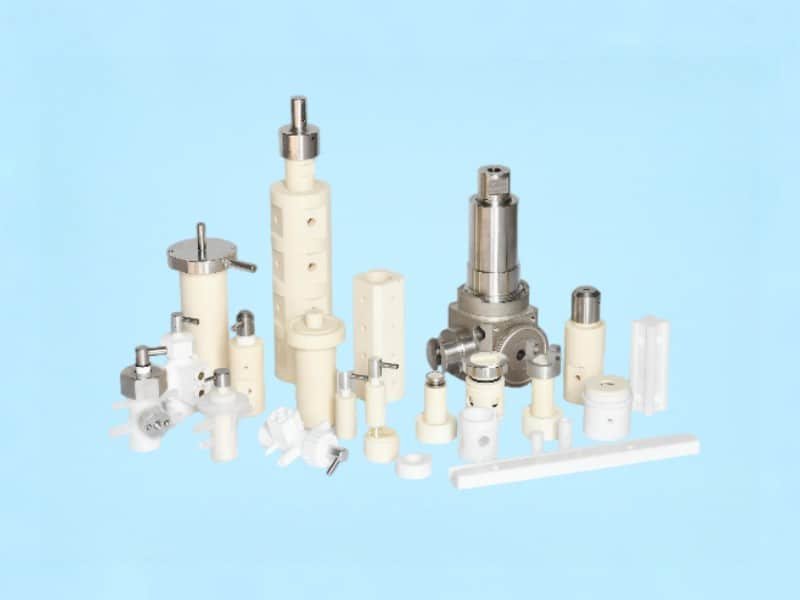
JuchangCeramic delivers professional OEM and custom manufacturing solutions for precision ceramic parts, pumps, and components. Whether you have complete drawings or just an idea, we transform your requirements into high-performance products with accurate quotation and reliable production.
Our deep engineering capability ensures that whether you are sourcing high-temperature crucibles, ceramic rod applications in manufacturing, or complex ceramic plunger holder design profiles, you receive components that strictly adhere to your required thermal and mechanical tolerances.
Frequently Asked Questions (FAQ)
How fast can I heat up an alumina ceramic crucible?
To prevent thermal shock, high-purity alumina crucibles should generally be heated and cooled at a rate not exceeding 5°C per minute. For very large or thick-walled crucibles, this rate should be reduced to 2°C to 3°C per minute. Sudden exposure to high heat will cause immediate cracking.
Why did my ceramic crucible crack while cooling?
Cooling is just as stressful on a ceramic crystalline structure as heating. If you open a furnace door at 1500°C or pull the crucible out into room-temperature air, the exterior cools and contracts instantly while the interior remains expanded. This violent thermal gradient fractures the crucible. Always allow the crucible to cool slowly inside the closed furnace.
Can zirconia crucibles withstand higher temperatures than alumina?
Yes. Yttria-stabilized zirconia crucibles can operate safely up to 2100°C in oxidizing atmospheres, significantly outperforming alumina’s maximum continuous limit of roughly 1600°C to 1700°C. Zirconia is the premier choice for extreme-temperature superalloy melting.
Authoritative Industry References
To ensure our metallurgical and ceramic engineering guidelines meet the highest global standards, we reference data from the following authoritative organizations:
- ASTM International: Standard Test Methods for Thermal Conductivity and Thermal Expansion of Advanced Ceramics (ASTM C1470 / C372). Visit ASTM
- International Organization for Standardization (ISO): Global standards for fine ceramics, including specific testing parameters for flexural strength at elevated temperatures (ISO 17565). Visit ISO
- The American Ceramic Society (ACerS): The premier scientific organization dedicated to the study, application, and thermal properties of advanced technical ceramics and refractory materials. Visit ACerS