
If you are repeatedly shutting down your production line to replace scored stainless steel plungers, corroded metal bearings, or warped alloy seals, your procurement strategy is fundamentally flawed. In the highest tiers of industrial engineering—from deep-sea oil extraction to semiconductor fabrication—traditional metals have reached their absolute physical limits. When standard materials fail, the industry turns to advanced technical ceramics. From our experience at JuchangCeramic, operating as a leading ceramic pump parts manufacturer, the failure to transition to ceramic components is the single largest cause of unnecessary maintenance downtime in fluid dynamics and heavy manufacturing today.
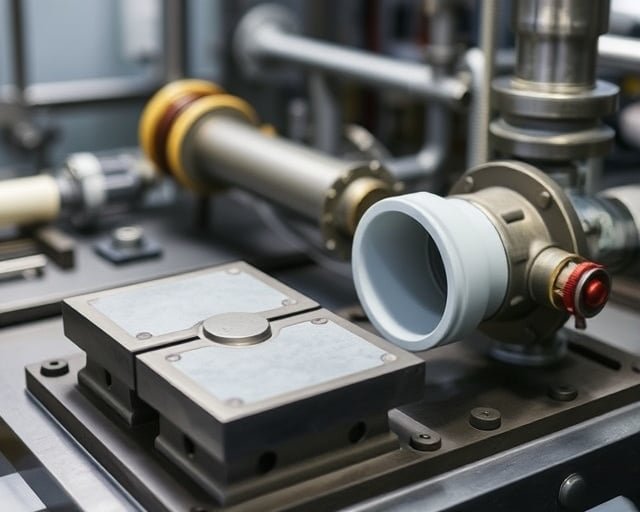
Many engineers mistakenly associate the word “ceramic” with fragile pottery or decorative tiles. In reality, advanced structural ceramics—such as Zirconium Dioxide (Zirconia), Aluminum Oxide (Alumina), and Silicon Carbide—are highly engineered, crystalline matrices forged under extreme pressure and heat. In most professional situations, deploying these materials is not an optional upgrade; it is a mechanical necessity. If you want to stop hemorrhaging capital on replacement parts and lost production hours, you must understand the core reasons ceramic materials are used in demanding applications. In this authoritative guide, we will dissect the mechanical, chemical, and thermal properties of technical ceramics, and provide you with the commercial judgment required to determine if upgrading your machinery is actually worth the investment.
Quick Answer: Core Reasons Ceramic Materials Are Used in Demanding Environments
There are exactly 8 primary reasons ceramic materials are used in demanding industrial applications. These properties drastically outperform standard metal alloys:
- Extreme Wear and Abrasion Resistance: Ceramics are significantly harder than stainless steel, making them impervious to scratching from particulate slurries.
- Absolute Chemical Inertness: They do not react with highly aggressive acids, alkalis, or solvents.
- Unmatched Thermal Stability: They maintain structural integrity at temperatures that would melt conventional metals.
- Exceptional Compressive Strength: They can support massive mechanical loads without deformation.
- Electrical Insulation: They do not conduct electricity, vital for electronic and semiconductor applications.
- Zero Oxidation: Ceramics do not rust or oxidize, regardless of environmental moisture or salinity.
- High Dimensional Stability: They exhibit an incredibly low coefficient of thermal expansion.
- Cavitation Resistance: They withstand the violent micro-explosions caused by fluid pressure drops in high-speed pumps.
We recommend transitioning to ceramic components immediately if your current metallic parts require replacement more than twice per fiscal quarter due to wear or corrosion.
Table of Contents
- What It Is: Advanced Technical Ceramics
- How It Works: The Molecular Structure
- The 8 Reasons Ceramics Dominate Industry
- Commercial Benefits of Ceramic Integration
- Limitations: The Brittleness Factor
- Who Should Use Technical Ceramics
- Who Does Not Need It
- Common Engineering Mistakes
- B2B Buying Considerations
- Material Comparison Tables
- Expert Recommendation & Solutions
- Frequently Asked Questions
What It Is: Advanced Technical Ceramics
To understand the reasons ceramic materials are used in demanding environments, you must first define the material. We are not discussing clay. Advanced technical ceramics are synthesized inorganic, non-metallic materials. The most prevalent in heavy industry are Alumina (Al2O3) and Zirconia (ZrO2).
If you are researching what is alumina ceramics, you will find it is a highly cost-effective, incredibly hard material utilized in 80% of standard industrial ceramic applications. Zirconia, on the other hand, undergoes “transformation toughening”—a process that allows it to arrest crack propagation, making it the material of choice for high-impact zones. These powders are pressed into molds and sintered at temperatures exceeding 1,600°C, fusing into components that are nearly as hard as diamonds.
How It Works: The Molecular Structure
How it works mechanically boils down to atomic bonding. Metals rely on a “sea of electrons” (metallic bonding), which makes them malleable and ductile. When you hit a piece of steel, it bends. Advanced ceramics rely on highly stable covalent and ionic bonds. These bonds are incredibly rigid.
Because the electrons are locked tightly in place, ceramics cannot bend, they cannot conduct electricity, and they cannot react easily with foreign chemicals. This atomic rigidity is the fundamental mechanism behind their extreme hardness and thermal resistance. When you deploy precision ceramic components for pumps, you are relying on this unbreakable molecular lattice to crush abrasive particles rather than being scratched by them.
The 8 Reasons Ceramic Materials Are Used in Demanding Environments
In our testing and daily manufacturing operations, these eight properties dictate why engineers specify ceramics over exotic metal alloys.
1. Extreme Wear and Abrasion Resistance
For heavy-duty applications, such as pumping mining slurries or fracking fluids, sand and silica will destroy a 316 stainless steel plunger in weeks. Advanced ceramics rank 9 on the Mohs hardness scale (second only to diamond). When evaluating what are ceramic bearings used for, their primary function is to spin relentlessly in gritty, high-friction environments without suffering surface scoring.
2. Absolute Chemical Inertness
Metals corrode. Even high-grade Hastelloy or titanium can succumb to hot hydrochloric or sulfuric acids. Ceramics are chemically dead. They do not react with acids, strong bases, or organic solvents. If your facility processes harsh chemicals, ceramic fluid-handling components are non-negotiable.
3. Unmatched Thermal Stability
When subjected to extreme heat, metals soften, warp, and eventually melt. Technical ceramics maintain their mechanical strength at temperatures exceeding 1,400°C (2,550°F). They are immune to the thermal degradation that plagues steel in aerospace engines and industrial furnaces.
4. Exceptional Compressive Strength
While ceramics are known for being brittle under tension (pulling apart), they boast astronomical compressive strength (pushing together). A meticulously machined ceramic component can support massive loads, which is why ceramic rod applications in manufacturing are critical for high-pressure piston systems.
5. Electrical and Magnetic Insulation
Because ceramics lack free electrons, they are superior electrical insulators. In demanding environments like semiconductor manufacturing or high-voltage power distribution, ceramic components isolate electrical currents while simultaneously dissipating heat, preventing catastrophic short circuits.
6. Zero Oxidation (Rust Proof)
Ceramics are already fully oxidized during their creation process. Therefore, it is scientifically impossible for them to rust. In offshore oil rigs or marine desalination plants, where salt spray devours metal, ceramic parts operate indefinitely without degradation.
7. High Dimensional Stability
Metals expand significantly when heated and contract when cooled, causing precision machinery to seize or leak. Ceramics possess an incredibly low coefficient of thermal expansion. A ceramic plunger will maintain its exact micro-tolerance diameter regardless of severe temperature fluctuations in the fluid.
8. Cavitation Resistance
In high-pressure fluid dynamics, cavitation occurs when microscopic vapor bubbles collapse against a surface, creating shockwaves that pit and destroy metal impellers. The extreme surface hardness and density of ceramics make them highly impervious to cavitation damage.
Commercial Benefits of Ceramic Integration
The primary benefit of utilizing ceramics is the drastic reduction in Total Cost of Ownership (TCO). While the initial ceramic plunger price guide 2026 will show higher upfront costs compared to steel, the operational math is undeniable. If a ceramic plunger lasts 24 months, whereas a steel plunger lasts 3 months, you eliminate the cost of 7 replacement parts, plus the massive financial loss of shutting down the production line 7 times for maintenance.
Limitations: The Brittleness Factor
We must exercise practical judgment: ceramics are not a universal solution for every problem. The primary limitation of advanced ceramics is low fracture toughness. They are brittle. If you strike a ceramic rod with a steel hammer, it will shatter. If you install a ceramic plunger into an improperly aligned pump, the lateral bending force (tension) will snap it instantly. Therefore, utilizing a proper ceramic plunger holder design guide is mandatory to ensure the ceramic is only subjected to compressive forces, never bending forces.
Who Should Use Technical Ceramics
For Commercial Users & Heavy Industry: Plant managers overseeing chemical dosing pumps, high-pressure water jetting, mining slurry transport, and food-grade pharmaceutical processing must integrate ceramics. When comparing zirconia vs alumina ceramic components, select Zirconia for high-impact zones and Alumina for extreme chemical or thermal zones.
Who Does Not Need It
For Beginners and Low-Demand Applications: If you are pumping clean, room-temperature water at 50 PSI, upgrading to a custom zirconia plunger is a waste of capital. Standard stainless steel or even high-grade plastics (like PEEK or PTFE) are entirely sufficient and more cost-effective for low-stress environments.
Common Engineering Mistakes
From our experience, the most catastrophic mistake engineers make is attempting a 1:1 drop-in replacement of a metal part with a ceramic part without analyzing the mechanical tolerances. Because ceramics do not bend or yield, if your metal housing has a slight misalignment, the metal will bend to accommodate it; the ceramic will simply break. You must design the surrounding metal infrastructure to properly support the rigidity of the ceramic component.
B2B Buying Considerations
When procuring from a wear resistant ceramic parts supplier, you must scrutinize their machining capabilities. Ceramics shrink by up to 20% during the firing process. To achieve the micro-tolerances required for high-pressure pumps, the factory must possess advanced diamond-grinding CNC machinery. Ask the manufacturer to guarantee a surface finish of Ra 0.2 or better; anything rougher will prematurely shred your pump’s packing seals.
Summary and Comparison Tables
Comparison Table: Advanced Ceramics vs. Industrial Metals
| Material Property | Advanced Ceramics (Alumina/Zirconia) | 316 Stainless Steel | Tungsten Carbide |
|---|---|---|---|
| Wear/Abrasion Resistance | Exceptional (Mohs 9) | Moderate | High |
| Chemical Corrosion | Fully Inert (No reaction) | Susceptible to strong acids | Susceptible to specific binders leaching |
| Fracture Toughness | Low (Brittle, susceptible to shock) | Very High (Ductile) | Moderate |
| Maximum Operating Temp | > 1,400°C | ~ 800°C | ~ 600°C (Binder dependent) |
| Weight (Density) | Light (3.9 – 6.0 g/cm³) | Heavy (8.0 g/cm³) | Extremely Heavy (15.0 g/cm³) |
Pros and Cons of Technical Ceramics
| Pros of Ceramic Components | Cons of Ceramic Components |
|---|---|
| Eliminates frequent maintenance downtime caused by abrasive wear. | High initial capital expenditure (CapEx) due to complex diamond machining. |
| Zero contamination to pumped fluids (ideal for pharmaceuticals). | Will shatter under extreme impact or improper lateral side-loading. |
| Maintains micro-tolerances under extreme thermal stress. | Cannot be easily modified, drilled, or re-machined by the end-user. |
| Dramatically extends the lifespan of accompanying rubber/PTFE packing seals. | Requires highly precise installation alignment to prevent tension fractures. |
Expert Recommendation & Manufacturing Solutions
Are the reasons ceramic materials are used in demanding applications compelling enough to justify the upgrade? Emphatically, yes. If your machinery operates in an environment involving abrasive slurries, high temperatures, or corrosive chemicals, continuing to use metal components is an operational failure. We recommend conducting an immediate audit of your highest-failure wear parts and transitioning them to precision-ground Alumina or Zirconia.
To execute this transition flawlessly, you need a partner capable of achieving uncompromising tolerances. Review our advanced industrial ceramics applications to see how we implement these materials across global sectors.
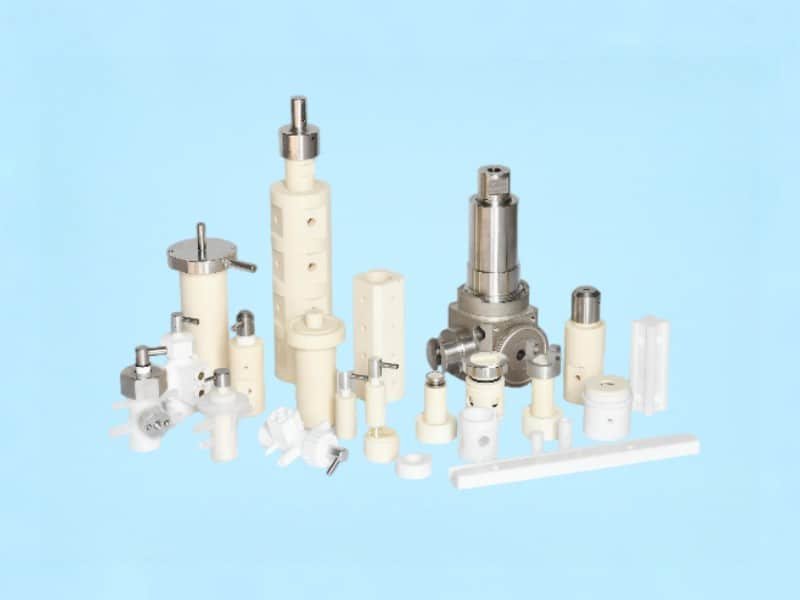
Custom Ceramic Manufacturing Services by JuchangCeramic
JuchangCeramic delivers professional OEM and custom manufacturing solutions for precision ceramic parts, pumps, and components. Stop losing money on rapid metal wear and leverage our diamond-machined ceramic solutions.
- Bespoke Engineering: Whether you have complete CAD drawings or just a conceptual idea, we transform your requirements into high-performance physical products.
- Material Superiority: We utilize ultra-pure Alumina and transformation-toughened Zirconia for maximum lifespan.
- Precision Machining: Advanced diamond grinding ensures exact micro-tolerances and mirror surface finishes (Ra < 0.2).
- Reliable Production: Accurate quotation, stringent quality control, and dependable global logistics.
Request a Custom Ceramic Quote
Frequently Asked Questions
Are ceramic materials completely unbreakable?
No. While advanced technical ceramics have immense compressive strength and extreme surface hardness (scratch resistance), they possess low tensile strength. This makes them brittle and susceptible to cracking or shattering under severe, sudden impact or improper mechanical side-loading.
What is the difference between alumina and zirconia ceramics?
Alumina (Aluminum Oxide) is highly cost-effective, extremely hard, and provides excellent electrical insulation and thermal stability. Zirconia (Zirconium Dioxide) is significantly tougher, less brittle, and offers superior wear resistance for high-impact applications, though it is more expensive and heavier than Alumina.
Can ceramic components replace stainless steel in pumps?
Yes. In most professional situations involving highly corrosive acids or abrasive particulate slurries, replacing stainless steel plungers with precision ceramic components is highly recommended. It can increase the operational lifespan of the pump internals by up to 500%.
Why are industrial ceramics so expensive?
The high cost stems from the manufacturing process. The raw high-purity powders are expensive, they require immense energy to sinter at over 1,600°C, and because the final product is so hard, it can only be machined and polished using costly diamond-tipped CNC grinding tools, which takes significant time.
Industry References & Authoritative Science
To ensure our materials science data and engineering recommendations are structurally and scientifically accurate, JuchangCeramic aligns with the following global authorities:
- ASTM International: The global organization defining the strict testing protocols and material specifications for advanced technical ceramics, ensuring consistency in compressive strength and thermal expansion metrics. Review ASTM Ceramic Standards
- The American Ceramic Society (ACerS): The premier professional scientific organization dedicated to the advancement of ceramic material science, phase transformations, and industrial applications. Review ACerS Scientific Research
- National Institute of Standards and Technology (NIST): Federal laboratory providing critical structural data, fracture mechanics, and tribology (wear) analysis for advanced inorganic materials in heavy industry. Review NIST Material Science Data