
In the ruthless environment of modern continuous manufacturing, friction is your absolute worst enemy. Whether you are spooling fine copper wire for electric vehicle motors or guiding synthetic nylon yarn in a high-speed textile mill, the quality of your guiding components dictates your overall profitability. When a wire snaps or a yarn frays, the entire production line stops. This is why partnering with a verified, top-tier ceramic eyelets supplier is not a minor operational detail; it is a critical strategic imperative.
From our experience auditing countless manufacturing facilities, engineers often overlook the microscopic contact points in their machinery. They spend millions on automated winding machines but install cheap, poorly polished steatite eyelets to save a few pennies. The result? Catastrophic material degradation and massive downtime. In this comprehensive guide, we strip away the marketing noise to explain exactly how to evaluate a ceramic eyelets supplier, which materials actually perform under extreme duress, and how to make a practical buying decision that protects your bottom line.
Quick Answer: What Makes a Trustworthy Ceramic Eyelets Supplier?
A trusted ceramic eyelets supplier is a manufacturer that provides precision-engineered wire and textile guides made from high-purity Alumina (95%-99%) or Zirconia. These suppliers guarantee ultra-smooth surface finishes (Ra values below 0.2) and exact dimensional tolerances to eliminate friction, static buildup, and material fraying during high-speed routing. To ensure you are getting commercial-grade components, you must vet the supplier for strict quality control, advanced diamond-polishing capabilities, and access to an extensive industrial ceramic products list 2026.
Table of Contents
- What Are Ceramic Eyelets and How Do They Work?
- The Commercial Benefits of Premium Ceramic Guides
- Limitations of Ceramic Eyelets
- Zirconia vs. Alumina: Material Comparison
- Who Should Use Premium Eyelets (and Who Does Not Need Them)
- Common Sourcing Mistakes
- Buying Considerations: Vetting Your Supplier
- Expert Recommendation
- Frequently Asked Questions (FAQ)
- Authoritative References
What Are Ceramic Eyelets and How Do They Work?
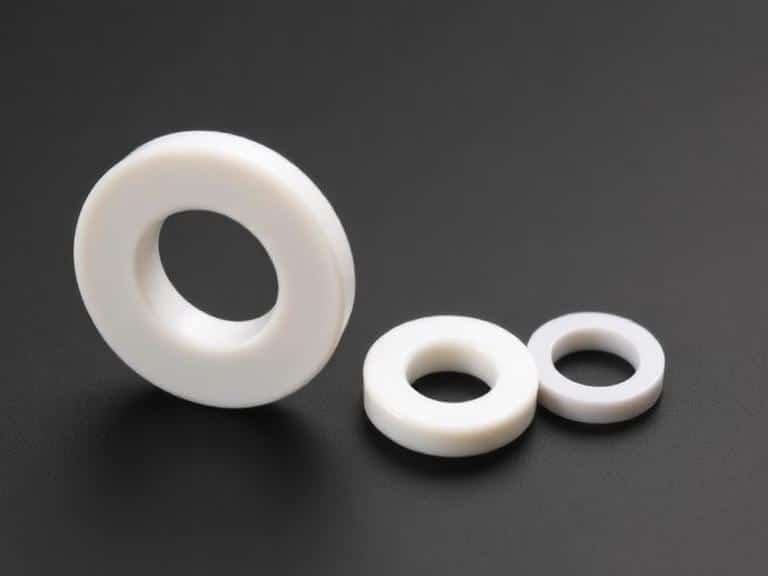
A ceramic eyelet (also known as a ceramic guide, ring, or bead) is a passive, donut-shaped component used to route linear materials—such as wire, cable, thread, or optical fiber—through a manufacturing machine. They are inserted into metal brackets or machine housings to provide a flawless, low-friction transition point where the material changes direction.
How it works is a matter of material science and surface topography. When a copper wire travels at 30 meters per second, it acts like a microscopic saw blade against whatever it touches. If it touches steel, the steel will wear down, creating sharp grooves that eventually strip the insulation off the wire. Advanced ceramics, specifically high-purity alumina and zirconia, possess incredible hardness (often reaching 9 on the Mohs scale, just below a diamond). When a reliable ceramic eyelets supplier diamond-polishes the inner radius of the eyelet, it creates a surface so hard and smooth that the passing wire glides over it seamlessly without generating excessive heat or static electricity.
| Specification | Standard Requirement | Why It Matters |
|---|---|---|
| Inner Diameter (ID) Finish | Ra less than 0.2 to 0.4 microns | Prevents micro-abrasions on passing wire or yarn. |
| Hardness | Mohs 8.5 to 9.0 (Vickers HV 1500+) | Resists grooving and extends the lifespan of the guide. |
| Dimensional Tolerance | +/- 0.05 mm | Ensures strict alignment within the machine mounting bracket. |
| Dielectric Strength | High electrical insulation | Prevents static discharge during high-speed synthetic yarn spinning. |
The Commercial Benefits of Premium Ceramic Guides
In most professional situations, upgrading your guiding components is the most cost-effective machinery improvement you can make. The commercial benefits directly impact your manufacturing yield.
First, premium eyelets drastically reduce machine downtime. Constantly stopping a textile loom to re-thread a broken yarn destroys daily output targets. By eliminating the friction that causes breakages, your machines run continuously. Second, they protect product integrity. In enameled copper wire production, a rough guide will scratch the microscopic insulating enamel, leading to short circuits in the final electric motor. A polished ceramic eyelet preserves this coating perfectly.
Furthermore, sourcing from a dedicated wear resistant ceramic parts supplier ensures exceptional longevity. While metal guides might require replacement every three months, a high-purity alumina eyelet can last for years under the exact same operational stress, drastically reducing your maintenance overhead and spare parts inventory.
Limitations of Ceramic Eyelets
Despite their superior wear resistance, ceramic eyelets are not flawless. You must employ practical judgment when integrating them into your factory floor. The primary limitation of any advanced ceramic is its inherent brittleness. While they boast massive compressive strength, they have very low tensile strength and poor impact resistance.
If a heavy metallic knot or a severely tangled wire violently strikes the ceramic guide at high speed, the eyelet can shatter. Similarly, during machine maintenance, if a technician drops a ceramic eyelet onto a concrete floor, it will likely chip or break. They cannot handle blunt force trauma. Additionally, machining ceramics into highly complex, non-standard shapes is extremely expensive because it requires diamond tooling after the sintering process.
Zirconia vs. Alumina: Material Comparison
When selecting a ceramic eyelets supplier, you will immediately face a choice of material. The two industry standards are Alumina (Aluminum Oxide) and Zirconia (Zirconium Dioxide). Understanding what is alumina ceramics compared to zirconia is critical for making an informed buying decision.
In our testing, 95% or 99% Alumina is the workhorse of the industry. It is highly cost-effective, extremely hard, and provides excellent electrical insulation. It is the default choice for the textile industry and standard wire routing. Zirconia, on the other hand, exhibits a phenomenon called transformation toughening, making it significantly less brittle than Alumina. Zirconia eyelets are characterized by a highly polished, often yellowish or pristine white appearance, and offer the lowest possible friction coefficient.
| Feature | Alumina (95% – 99%) | Zirconia (Y-TZP) |
|---|---|---|
| Primary Use Case | Textiles, standard wire, standard cables | High-tension wire drawing, abrasive metals |
| Wear Resistance | Excellent | Superior |
| Fracture Toughness | Low (Brittle) | High (Resists chipping) |
| Surface Finish Quality | Very Good | Exceptional (Mirror-like) |
| Cost Profile | Economical | Premium |
If you are routing abrasive steel cables or running high-tension copper winding machines, you must demand high precision zirconia ceramic parts. If you are guiding cotton or polyester threads, Alumina is more than sufficient.
Who Should Use Premium Ceramic Eyelets (and Who Does Not Need Them)
For commercial users: Any facility engaged in high-speed wire drawing, cable extrusion, textile spinning, coil winding, or fiber optic routing absolutely must use premium ceramic eyelets. The speed and tension inherent in these processes will destroy metal guides in a matter of days. If your operation falls under advanced industrial ceramics applications, partnering with a top-tier supplier is non-negotiable.
Who does not need it: For beginners operating low-speed, manual hobbyist looms, or low-tension, intermittent wire routing setups where the material moves less than a few meters per minute, premium zirconia eyelets are overkill. Standard plastic or cheap steatite guides will suffice without damaging your budget.
Common Mistakes When Sourcing from a Ceramic Eyelets Supplier
The most common mistake purchasing managers make is treating ceramic eyelets as a generic commodity. Buying solely on the lowest price per piece guarantees disaster. Cheap suppliers skip the final, most expensive manufacturing step: diamond polishing. A ceramic eyelet that has not been properly polished is essentially a circular piece of sandpaper. It will shred your yarn and strip your wire.
Another major error is failing to specify the exact inner radius profile. The entry and exit angles of the eyelet must be smoothly contoured. If the supplier provides an eyelet with sharp internal edges, the material will catch and break during slight angle deviations.
| Sourcing Method | Pros | Cons |
|---|---|---|
| Direct Ceramic Eyelets Supplier (Manufacturer) | Access to custom tooling, strict quality control, lower bulk pricing, direct engineering support. | Higher minimum order quantities (MOQs), longer initial lead times for custom molds. |
| Third-Party Trading Company | Low MOQs, fast shipping for standard catalog items, consolidated purchasing. | High markup, zero control over raw material purity, inconsistent batch quality. |
Buying Considerations: How to Vet a Ceramic Eyelets Supplier
To secure a reliable supply chain, you must vet your supplier ruthlessly. Ask them technical questions. A legitimate supplier should be able to provide detailed material data sheets, including density, hardness, and maximum operating temperatures.
| Evaluation Criteria | What to Demand | Why It is Critical |
|---|---|---|
| Surface Polish Verification | Ask for Ra (Roughness Average) measurement reports. | Without a documented Ra below 0.4, you risk buying abrasive, unfinished guides. |
| Material Purity | Certification of 95%+ Alumina or Y-TZP Zirconia. | Impurities cause weak spots and premature fracturing under thermal or mechanical stress. |
| Customization Capability | Ability to manufacture bespoke shapes from technical drawings. | Your machinery may require specific mounting grooves or flanges not found in standard catalogs. |
| Production Capacity | Evidence of scalable kilns and CNC polishing equipment. | Ensures the supplier can meet your demand as your production scales without bottlenecking. |
Expert Recommendation for 2026
For heavy-duty applications where precision is the absolute dividing line between profit and scrap, you cannot rely on unverified online marketplaces. You need a dedicated manufacturing partner that understands the thermodynamics and mechanical stresses of high-speed routing.
Why We Recommend JuchangCeramic
JuchangCeramic is a professional manufacturer dedicated to the research development, and production of advanced precision ceramic materials and industrial ceramic components. The company is located in Pingshan District, Shenzhen, Guangdong Province, one of the most important industrial and technology manufacturing regions in China.
We strongly advise commercial buyers to consolidate their supply chain with a factory like JuchangCeramic. Their ability to deliver flawless, diamond-polished zirconia and alumina eyelets directly mitigates friction-induced downtime. Stop wasting money on cheap guides that destroy your final product. Invest in precision ceramics and watch your overall equipment effectiveness (OEE) skyrocket.
Frequently Asked Questions (FAQ)
How do I know if my ceramic eyelets are worn out?
In most professional situations, you will notice an increase in wire dust, yarn fraying, or unexpected tension spikes in your machinery. Visually, a worn ceramic eyelet will show a distinct, dull groove where the material has slowly eroded the polished surface over millions of cycles.
Can I use ceramic eyelets for high-temperature applications?
Yes. Advanced ceramics like high-purity alumina can withstand extreme temperatures, often exceeding 1,500 degrees Celsius, without losing their structural integrity or experiencing thermal expansion issues, making them ideal for high-heat manufacturing environments.
Is it better to use a ceramic eyelet or a metal roller guide?
We recommend ceramic eyelets for tight spaces and extremely high-speed, continuous routing where static components are required. Metal roller guides are better for very thick cables or materials that require a massive bending radius where static friction would be too great for a fixed eyelet.
References
To ensure industry compliance and further your understanding of advanced ceramic materials, we recommend consulting the following authoritative organizations:
- International Organization for Standardization (ISO) – For global standards on advanced technical ceramics and manufacturing tolerances.
- The American Ceramic Society (ACerS) – For peer-reviewed research on the material properties of Zirconia and Alumina.
- ASTM International – For standardized test methods regarding the hardness, density, and surface roughness of fine industrial ceramics.