
In the highly competitive world of industrial equipment manufacturing, the failure of a single mechanical component can bring an entire production line to a catastrophic halt. For decades, engineers relied on hardened steel, titanium, and exotic metal alloys to solve problems of wear, heat, and corrosion. However, we have reached the metallurgical limits of these materials. When subjected to extreme abrasion, aggressive chemical attacks, or operating temperatures exceeding 1000 degrees Celsius, metals warp, gall, rust, and ultimately fail. To survive in these brutal environments, forward-thinking engineers must pivot away from metal. This is the exact moment they Choose Custom Ceramic Manufacturing.
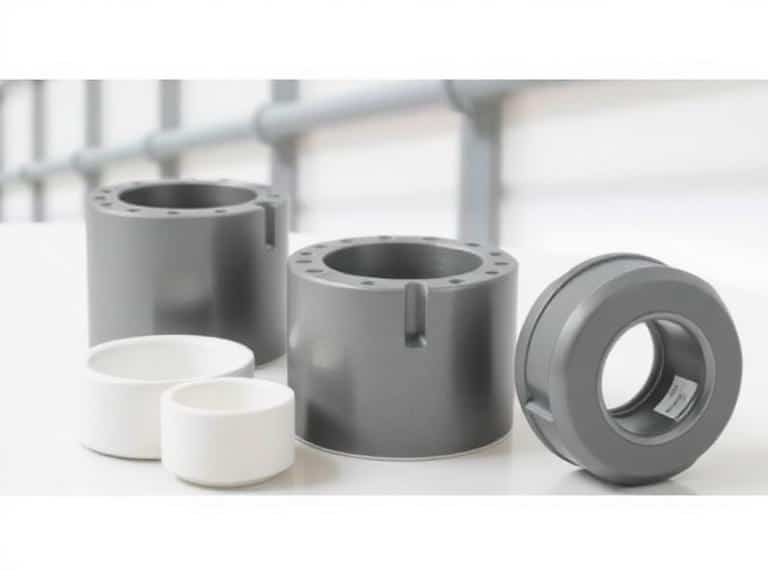
From our experience engineering advanced technical components at JuchangCeramic, treating ceramics as a mere substitute for metal is a profound error. Advanced technical ceramics—such as Zirconia, Alumina, and Silicon Carbide—represent a fundamental upgrade in material science. They are not off-the-shelf commodities; they are highly engineered solutions tailored to specific failure points. If you are struggling with chronic equipment downtime, seal failures, or abrasive wear, understanding why industry leaders Choose Custom Ceramic Manufacturing will revolutionize your product’s reliability and your company’s profitability. In this practitioner’s guide, we will brutally dissect the seven reasons why metal is obsolete in heavy-duty applications, how custom ceramics solve these issues, and whether the investment is actually worth your capital.
Quick Answer: The Engineering Shift
Equipment builders Choose Custom Ceramic Manufacturing because advanced ceramics deliver performance metrics that metals simply cannot achieve. The core reasons include: 1) Extreme Wear Resistance that extends component lifespan by up to 10x; 2) Absolute Chemical Inertness preventing corrosion in harsh acids; 3) Superior Thermal Stability allowing operation above 1500°C without warping; 4) Exceptional Electrical and Magnetic Isolation; 5) Micron-Level Dimensional Accuracy via diamond grinding; 6) Elimination of Galling (cold-welding) in moving parts; and 7) A Drastically Lower Total Cost of Ownership (TCO) due to eliminated maintenance downtime. We recommend technical ceramics for any application where metal components chronically fail.
Table of Contents
- What is Custom Technical Ceramic Manufacturing?
- How It Works: The Manufacturing Process
- The 7 Reasons to Choose Custom Ceramic Manufacturing
- Benefits and Limitations of Advanced Ceramics
- Who Should Use It & Who Does Not Need It
- Common Mistakes in Ceramic Procurement
- Strategic Buying Considerations
- Essential Comparison Tables
- Expert Recommendation from JuchangCeramic
- Frequently Asked Questions (FAQ)
What is Custom Technical Ceramic Manufacturing?
Do not confuse technical ceramics with the pottery or porcelain used in consumer goods. Advanced industrial ceramics are synthesized from highly purified chemical powders. Materials such as Aluminum Oxide (Alumina) and Zirconium Oxide (Zirconia) are engineered at the molecular level. Custom manufacturing means that rather than forcing a standard catalog part into your equipment, a wear resistant ceramic parts supplier produces a bespoke component matching your exact CAD drawings, engineered specifically to solve a localized failure mechanism.
To fully grasp this concept, you must review an engineering ceramics material guide. These materials possess a crystalline structure that grants them Vickers hardness ratings exponentially higher than the hardest tool steels, making them indispensable for modern engineering.
How It Works: The Manufacturing Process
In most professional situations, the process to Choose Custom Ceramic Manufacturing involves a rigorous, multi-stage production cycle. It begins with “green machining.” The highly pure ceramic powder is mixed with a binder and pressed into a solid blank under immense isostatic pressure. While in this relatively soft “green” state, the part is CNC machined close to its final dimensions.
The critical phase is sintering. The green part is fired in a high-temperature kiln (often exceeding 1600°C). During sintering, the binders burn off, and the ceramic particles fuse together, shrinking the part by roughly 20% while achieving absolute density and hardness. Finally, the sintered part undergoes “hard machining.” Because the material is now harder than steel, it can only be ground and lapped using specialized diamond tooling to achieve dimensional tolerances of ±0.001 mm and mirror-like surface finishes (Ra 0.2 μm). This capability is why engineers rely on precision ceramic components for pumps and fluid control systems.
The 7 Reasons Equipment Manufacturers Choose Custom Ceramic Manufacturing
1. Extreme Wear Resistance and Hardness
Abrasive wear is the primary enemy of fluid handling and mechanical systems. When pumping slurries or operating in dusty environments, metal components score, groove, and degrade rapidly. Advanced ceramics like Alumina and Zirconia are among the hardest materials on earth, second only to diamonds. When you compare a ceramic plunger vs metal plunger, the ceramic variant simply ignores abrasive particles, extending the operational life of the pump by a factor of five to ten.
2. Absolute Chemical Inertness
Stainless steel and Hastelloy rely on passive oxide layers to prevent corrosion. When exposed to hydrochloric acid, caustic chemicals, or aggressive solvents, these layers strip away, leading to rapid pitting and structural failure. Technical ceramics are inherently inert. They do not react with acids, alkalis, or organics. This makes ceramic plunger pump components overview essential reading for engineers in the petrochemical and pharmaceutical sectors.
3. Superior Thermal Stability
Metals warp, expand, and lose tensile strength under extreme heat. If you are designing components for aerospace, semiconductor manufacturing, or induction heating, thermal expansion destroys tight mechanical tolerances. Technical ceramics possess an incredibly low coefficient of thermal expansion and can operate continuously at temperatures exceeding 1500°C without losing structural integrity. Exploring ceramic tube applications in high heat environments demonstrates their supremacy over refractory metals.
4. Exceptional Electrical and Magnetic Isolation
In high-voltage equipment and precision instrumentation, conductive metal parts create massive liabilities, including electrical arcing and magnetic interference. Alumina and Zirconia are phenomenal electrical insulators and are completely non-magnetic. Utilizing the best ceramic insulators for industrial use ensures that structural supports do not short-circuit expensive electrical systems.
5. Micron-Level Dimensional Accuracy
Because sintered ceramics are so hard, they do not deform under the pressure of grinding tools. This allows manufacturers to achieve tolerances that are impossible with ductile metals. When you order high precision zirconia ceramic parts, you can specify geometric tolerances down to single-digit microns. This level of precision is mandatory for high-pressure dosing pumps and aerospace valves where zero-leakage is required.
6. Elimination of Galling and Cold Welding
When two unlubricated metal surfaces slide against each other under high pressure, they micro-weld and tear apart—a process known as galling. Because ceramics are non-metallic, they physically cannot cold-weld to metal or to other ceramics. A detailed ceramic rod vs metal rod comparison will highlight how ceramics drastically reduce friction and eliminate the need for heavy liquid lubrication in sliding mechanisms.
7. Drastically Lower Total Cost of Ownership (TCO)
The upfront cost of a custom ceramic part is undeniably higher than a CNC-machined steel part. However, equipment manufacturers look at the Total Cost of Ownership. If a $50 steel part fails every two months, it costs the end-user thousands of dollars in maintenance labor and halted production lines. A $200 ceramic part that lasts three years pays for itself almost immediately. Understanding this financial metric is clear when reviewing a ceramic plunger material selection guide.
Benefits and Limitations of Advanced Ceramics
The operational benefits of utilizing a ceramic pump parts manufacturer are clear: unprecedented longevity, purity of processed chemicals, and the ability to operate in environments that instantly destroy traditional materials. Check any advanced industrial ceramics applications list, and you will see the dominance of these materials.
However, we must apply commercial and practical judgment: ceramics are not invincible. The primary limitation is their brittleness. Unlike ductile metals, ceramics cannot absorb high-energy, blunt-force impacts or severe tensile stretching. If you drop a ceramic plunger on a concrete floor, it will shatter. They must be engineered to operate under compressive loads, and the mating metal components must be designed to avoid point-loading the ceramic. Reviewing a ceramic plunger holder design guide is critical to prevent mechanical fracturing during assembly.
Who Should Use It & Who Does Not Need It
For commercial users and heavy-duty applications: If you build high-pressure water jetting equipment, chemical metering pumps, semiconductor wafer handling systems, or medical diagnostic devices, you must Choose Custom Ceramic Manufacturing. The benefits of ceramic bearings and plungers are mandatory to remain competitive in these high-stakes industries.
Who does not need it: For beginners or manufacturers building low-cost, disposable consumer goods where parts rarely face high heat or abrasion, investing in custom diamond-ground ceramics is a massive waste of capital. Standard injection-molded plastics or basic aluminum alloys are perfectly adequate.
Common Mistakes in Ceramic Procurement
In our testing and industry observation, the most catastrophic mistake engineers make is attempting a 1-to-1 dimensional swap from metal to ceramic. You cannot take a CAD file for a steel component, hand it to a ceramic manufacturer, and expect it to work. Ceramics require generous radii on internal corners to prevent stress risers, and they cannot be traditionally threaded. You must work with your manufacturing partner to redesign the part specifically for ceramic material properties.
Another profound error is selecting the wrong grade of material. Many buyers fail to understand zirconia vs alumina ceramic components. Alumina is highly cost-effective and chemically resistant, but Zirconia is significantly tougher and fracture-resistant. Specifying Alumina when your application involves minor mechanical shock will result in premature part failure.
Strategic Buying Considerations
When evaluating manufacturers, demand proof of their post-sintering machining capabilities. Any factory can press green powder, but achieving a mirror-polished Ra 0.2 μm surface finish on Zirconia requires elite, multi-axis diamond grinding equipment. Furthermore, ensure the manufacturer offers a transparent batch-tracking system to guarantee consistent density and shrinkage rates across high-volume orders.
Essential Comparison Tables
| Engineering Challenge | The Metal Reality | The Custom Ceramic Solution |
|---|---|---|
| Severe Abrasion | Scores, grooves, and loses tolerances rapidly. | Vickers hardness >1500 prevents surface scratching. |
| Chemical Corrosion | Pits and rusts when oxide layer is stripped. | 100% chemically inert; immune to acids and alkalis. |
| Extreme Heat (>1000°C) | Warps, softens, and melts. | Maintains structural integrity and dimensions perfectly. |
| High Friction (Sliding) | Galls and cold-welds without heavy lubrication. | Naturally low friction; cannot cold-weld to metal. |
| Metric | Custom Technical Ceramics (Alumina/Zirconia) | Stainless Steel (316L) |
|---|---|---|
| Hardness & Wear Resistance | Exceptional (Near Diamond Hardness) | Moderate (Susceptible to abrasive wear) |
| Thermal Expansion | Very Low (Maintains shape under heat) | High (Expands and changes dimensions) |
| Fracture Toughness (Impact) | Low to Moderate (Brittle under tensile shock) | Excellent (Ductile, will dent before breaking) |
| Electrical Conductivity | Zero (Excellent Insulator) | High (Conducts electricity) |
| The Pros (Advantages) | The Cons (Disadvantages) |
|---|---|
| Drastically extends equipment lifespan and MTBF. | Higher initial procurement and tooling costs. |
| Eliminates contamination in high-purity fluid lines. | Cannot be easily modified or re-machined once sintered. |
| Allows equipment to operate in hostile, high-heat environments. | Brittle nature requires careful handling during assembly. |
| Lowers overall Total Cost of Ownership (TCO). | Longer manufacturing lead times (4-8 weeks). |
| Material Type | Primary Characteristic | Best Industrial Application |
|---|---|---|
| Alumina (95%-99.9%) | Highly cost-effective, excellent electrical insulation, very hard. | High-voltage insulators, standard wear plates, high-heat tubes. |
| Zirconia (YSZ) | Exceptional fracture toughness, highest wear resistance, smoother finish. | High-pressure metering pump plungers, precision bearings, shear blades. |
Expert Recommendation from JuchangCeramic
In most professional situations, the decision to transition from metal to advanced ceramics is the defining factor in market dominance. You cannot promise your clients equipment reliability if you are building machines with materials known to degrade. We strongly recommend identifying the single highest-failure component in your current equipment lineup and replacing it with a custom-engineered Zirconia or Alumina part.
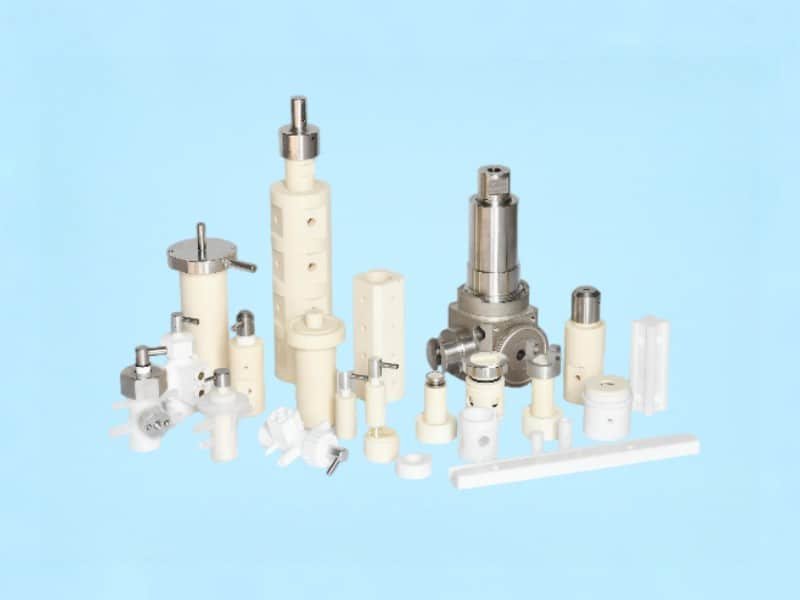
Custom Ceramic Manufacturing Services
JuchangCeramic delivers professional OEM and custom manufacturing solutions for precision ceramic parts, pumps, and components. Whether you have complete drawings or just an idea, we transform your requirements into high-performance products with accurate quotation and reliable production.
- Dimensional Accuracy: ±0.001 mm
- Surface Finish: Ra 0.2 μm
- Production Consistency: High stability batch production
Explore Custom Manufacturing Options
By partnering with JuchangCeramic, you bypass the learning curve of ceramic engineering. Our team will review your CAD models, apply Design for Manufacturability (DFM) principles, and deliver components that solve your most aggressive abrasive and thermal challenges.
Frequently Asked Questions (FAQ)
Are custom ceramic components fragile?
While traditional ceramics are brittle, advanced technical ceramics like Yttria-Stabilized Zirconia (YSZ) possess high fracture toughness. In most professional situations involving compressive loads and wear, they vastly outperform steel. However, they remain susceptible to sharp, blunt-force tensile impacts.
How long does it take to manufacture custom ceramic parts?
From our experience, the lead time for custom ceramic manufacturing is typically 4 to 8 weeks. This accounts for tooling, green machining, the lengthy sintering process, and final diamond grinding to achieve micron-level tolerances.
Is custom ceramic manufacturing more expensive than CNC metal machining?
The initial unit cost of custom ceramic parts is almost always higher than metal due to the costly diamond tooling required for hard machining. However, the total cost of ownership (TCO) is significantly lower because the ceramic parts last 5 to 10 times longer, eliminating ongoing replacement and downtime costs.
Authoritative Industry References
To ensure your mechanical upgrades and material selections adhere to rigorous global material science standards, we advise consulting documentation from the following authoritative bodies:
- ASTM International – The primary body providing standardized testing methods for the compressive strength, flexural strength, and Vickers hardness of advanced technical ceramics.
- The American Ceramic Society (ACerS) – The premier professional organization dedicated to the advancement of ceramics, providing peer-reviewed data on industrial applications and material limits.
- International Organization for Standardization (ISO) – Specifically ISO standards governing the specifications and testing of fine ceramics (advanced ceramics, advanced technical ceramics) for high-stress industrial applications.