
When procurement managers or mechanical engineers think of “ceramics,” the image that frequently comes to mind is pottery, brick, or bathroom tiles. This misconception is a catastrophic liability in heavy industry. If you attempt to use traditional clay-based ceramics in a high-pressure, abrasive fluid handling system, the material will disintegrate almost instantly. To survive extreme industrial conditions, you must utilize highly engineered technical ceramics.
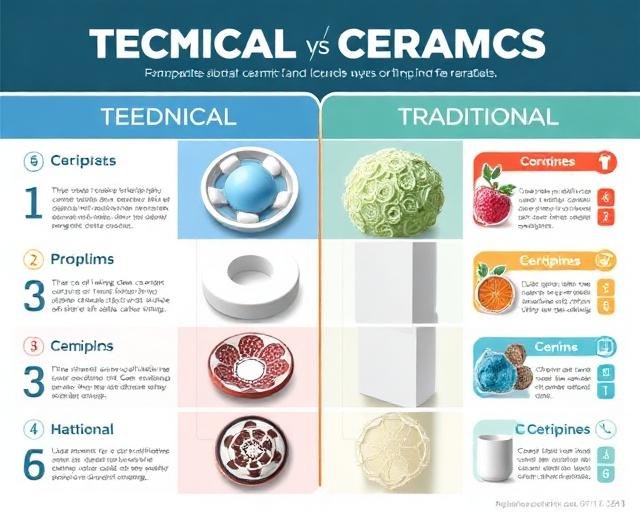
From our experience manufacturing precision components at JuchangCeramic, the division between these two categories of materials is not merely a matter of quality; it is a fundamental difference in atomic structure, raw material purity, and manufacturing methodology. In most professional situations involving high temperatures, corrosive chemicals, or extreme wear—such as those encountered when specifying a Ceramic Pump—traditional ceramics are entirely obsolete. In this uncompromising guide, we will dissect the 8 core differences between Technical Ceramics and Traditional Ceramic Materials, allowing you to apply commercial judgment when selecting materials for your critical infrastructure.
Quick Answer: Technical vs. Traditional Ceramics
If you are evaluating Technical Ceramics and Traditional Ceramic Materials for a manufacturing application, here is the definitive breakdown of their differences:
- Raw Materials: Traditional ceramics use naturally occurring, unrefined clay (silicates). Technical ceramics use synthesized, ultra-pure chemical powders (like Alumina or Silicon Carbide).
- Atomic Structure: Technical ceramics lack the glassy (amorphous) phase found in traditional ceramics, giving them superior mechanical strength.
- Manufacturing Process: Traditional ceramics are molded wet and fired. Technical ceramics are dry-pressed under immense pressure and sintered at temperatures exceeding 1600°C.
- Hardness & Wear: Technical ceramics (like Zirconia) approach the hardness of diamonds, making them ideal for high-wear ceramic plunger material selection.
- Thermal Shock Resistance: Traditional ceramics shatter under rapid temperature changes. Technical ceramics can withstand extreme, sudden thermal cycling.
- Chemical Inertness: Technical ceramics are impervious to almost all industrial acids and alkalis, unlike porous traditional ceramics.
- Machinability: Technical ceramics can be CNC ground to sub-micron tolerances post-sintering. Traditional ceramics cannot hold strict engineering tolerances.
- Electrical Properties: Technical ceramics are engineered as absolute insulators or specific conductors, heavily utilized in the semiconductor industry.
We recommend entirely avoiding traditional ceramics for any load-bearing, high-temperature, or chemical-contact applications. You must procure engineered technical ceramics to ensure operational safety and component longevity.
Table of Contents
- Defining the Two Materials
- How Technical Ceramics Are Manufactured
- The 8 Core Differences Detailed
- Commercial Benefits of Technical Ceramics
- Limitations and Hard Truths
- Who Should Use Technical Ceramics
- Who Does Not Need Them
- Common Procurement Mistakes
- Summary and Comparison Tables
- Expert Recommendation: JuchangCeramic
- Frequently Asked Questions (FAQ)
Defining the Two Materials
Traditional Ceramics are based almost exclusively on clay. The raw materials (kaolin, quartz, feldspar) are dug from the earth, mixed with water, shaped, and fired in a kiln. They are characterized by a high degree of porosity, relatively low mechanical strength, and poor dimensional stability. They are perfect for coffee mugs, toilets, and decorative tiles, but useless for engineering applications.
Technical Ceramics (also known as Advanced, Engineering, or Industrial Ceramics) are born in a laboratory. They do not use naturally occurring clay. Instead, they utilize synthesized chemical powders such as Aluminum Oxide (Al2O3), Zirconium Oxide (ZrO2), Silicon Carbide (SiC), and Silicon Nitride (Si3N4). Because the raw powder is synthesized, the manufacturer controls the exact particle size and purity, resulting in a finished material that is dense, flawless, and mechanically superior.
How Technical Ceramics Are Manufactured
The strength of technical ceramics is dictated by the manufacturing process. Unlike wet clay, technical ceramic powders are often mixed with a temporary binder and pressed into shape using Isostatic Pressing or Injection Molding under massive pressure. This “green part” is then sintered in highly controlled furnaces.
During sintering, the particles fuse together at the atomic level without melting completely. Because technical ceramics shrink by approximately 20% during this phase, achieving tight tolerances is incredibly difficult. This is why post-sintering custom ceramic machining services utilizing diamond-tipped grinding tools are required to achieve the exact dimensions necessary for a ceramic plunger vs metal plunger application.
The 8 Core Differences Detailed
1. Raw Material Purity
Traditional ceramics rely on impure, naturally mined clay containing silica and silicates. Technical ceramics utilize chemically synthesized, ultra-pure powders. If you are reviewing an engineering ceramics material guide, you will see that Alumina ceramics are frequently rated at 95%, 99%, or 99.8% purity, which dictates their performance ceiling.
2. Microstructural Density
Traditional ceramics contain a “glassy phase” after firing, which is inherently brittle and porous. Technical ceramics have an almost entirely crystalline microstructure. This extreme density eliminates internal voids where cracks can propagate, drastically increasing the material’s fracture toughness.
3. Extreme Hardness and Wear Resistance
While traditional ceramics can be scratched by hardened steel, technical ceramics like Silicon Carbide and Alumina are second only to diamonds on the Mohs hardness scale. This makes them the only viable choice for abrasive environments, which is why the benefits of ceramic bearings in high-RPM motors are undisputed.
4. High-Temperature Stability
A traditional ceramic will warp or melt under extreme industrial heat. Technical ceramics maintain their mechanical integrity at temperatures exceeding 1500°C (2700°F). If you are operating industrial furnaces, evaluating ceramic tube applications in high heat environments is mandatory, as metals will oxidize and fail under similar loads.
5. Thermal Shock Resistance
Taking a hot traditional ceramic plate and dropping it in cold water will cause it to shatter instantly. Technical ceramics, specifically Silicon Nitride, possess an extremely low coefficient of thermal expansion, allowing them to absorb massive, instantaneous temperature drops without cracking.
6. Absolute Chemical Inertness
Traditional ceramics are porous and will eventually degrade if exposed to aggressive acids. Technical ceramics are totally chemically inert. They will not rust, corrode, or react with hydrofluoric acid or strong alkalis, making them the standard for chemical dosing and fluid handling in a Ceramic plunger pump.
7. Precision Machinability and Tolerances
You cannot effectively machine a fired traditional ceramic to micron-level accuracy. Technical ceramics, however, are routinely CNC ground and lapped post-sintering to achieve absolute flatness and surface finishes measured in nanometers, a requirement for high-pressure pump seals.
8. Dielectric and Electrical Properties
While both offer insulation, technical ceramics provide specific, highly engineered electrical properties. They possess massive dielectric strength, which is why sourcing the best ceramic insulators for industrial use relies heavily on high-purity Alumina for high-voltage power grids and semiconductor manufacturing.
Commercial Benefits of Technical Ceramics
For commercial users, the Return on Investment (ROI) for specifying technical ceramics over traditional ceramics or metals is calculated in operational uptime. If a steel pump plunger must be replaced every 3 months due to abrasive wear, replacing it with a Zirconia ceramic plunger may extend the maintenance cycle to 24 months. The reduction in labor costs, replacement parts, and catastrophic plant downtime makes the higher initial purchase price of technical ceramics financially irrelevant over a fiscal year.
Limitations and Hard Truths
We must present practical judgment: technical ceramics are not indestructible. Their primary limitation is brittleness (low fracture toughness compared to steel). While they will not wear down or corrode, they will chip or shatter if subjected to a massive, direct mechanical impact. You cannot hit a ceramic component with a steel hammer.
Furthermore, because they require diamond tooling to machine after sintering, the manufacturing cost is significantly higher than that of stainless steel or traditional ceramics. You are paying for the precision machining hours just as much as the raw material.
Who Should Use Technical Ceramics
For heavy-duty applications and industrial engineers: If you are designing components for the aerospace, medical device, chemical processing, or semiconductor industries, you must use technical ceramics. Specifically, a Medical Ceramic Pump relies on the absolute biocompatibility and chemical inertness of technical ceramics to prevent contamination of intravenous fluids or pharmaceuticals.
Who Does Not Need Them
For beginners or low-stress structural applications: If you are building a generic fluid system pushing clean, low-pressure water at room temperature, specifying an ultra-pure Zirconia ceramic component is a massive waste of capital. Standard stainless steel or high-grade polymers will suffice perfectly.
Common Procurement Mistakes
Because ceramics do not yield or bend like metals, stress concentrates at sharp corners. If you design a ceramic component with sharp 90-degree internal angles or aggressive threads, it will crack under load. When evaluating a ceramic rod vs metal rod comparison, the ceramic rod must be designed with generous radii and chamfers to distribute mechanical stress safely.
Summary and Comparison Tables
Quick Summary Table: Technical vs. Traditional
| Attribute | Traditional Ceramics (Clay) | Technical Ceramics (Alumina/Zirconia) |
|---|---|---|
| Raw Material | Mined Earth (Silicates) | Synthesized Powders |
| Hardness | Low to Moderate | Extreme (Approaching Diamond) |
| Machinability | Poor (Cannot hold tight tolerances) | Excellent (Requires diamond grinding) |
| Thermal Shock | Fails instantly | Highly Resistant |
Comparison Table: Common Technical Ceramic Materials
| Material | Primary Strength | Best Industrial Application |
|---|---|---|
| Alumina (Al2O3) | Excellent electrical insulation & wear resistance. | High-voltage insulators, wear pads, pump seals. |
| Zirconia (ZrO2) | Highest fracture toughness (less brittle). | Pump plungers, cutting blades, medical implants. |
| Silicon Carbide (SiC) | Extreme hardness & high thermal conductivity. | Mechanical seal faces, bulletproof armor. |
| Silicon Nitride (Si3N4) | Unmatched thermal shock resistance. | High-performance engine bearings, welding pins. |
Pros and Cons of Technical Ceramics
| Pros (Advantages) | Cons (Limitations) |
|---|---|
| Impervious to almost all industrial chemicals and acids. | Inherent brittleness; susceptible to impact shattering. |
| Massive operational lifespan compared to steel or polymers. | High initial manufacturing and material cost. |
| Can withstand continuous operating temperatures above 1500°C. | Requires highly specialized diamond tooling to machine. |
| Does not gall, rust, or corrode under any circumstances. | Must be redesigned from metal counterparts to avoid stress points. |
Expert Recommendation: JuchangCeramic Manufacturing
In most professional situations, sourcing technical ceramics from a generic supplier is a gamble. The purity of the powder and the precision of the sintering process dictate whether the component will survive in the field. We recommend partnering directly with a dedicated manufacturer capable of achieving sub-micron tolerances.
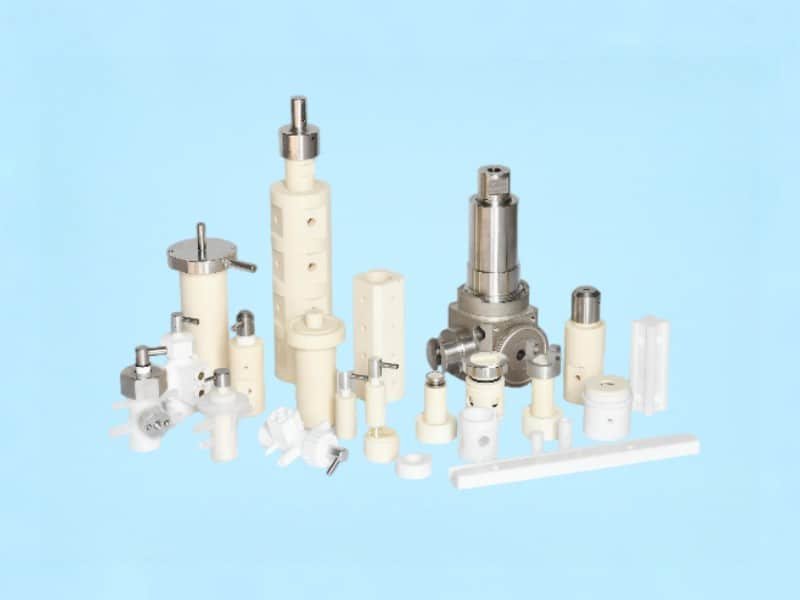
Custom Ceramic Manufacturing Services
JuchangCeramic delivers professional OEM and custom manufacturing solutions for precision ceramic parts, pumps, and components. Whether you have complete CAD drawings or just an operational concept, we transform your requirements into high-performance products.
- Material Expertise: Specializing in high-purity Alumina, Zirconia, and advanced industrial ceramic solutions for pumps.
- Precision Machining: Capable of diamond grinding and lapping post-sintered ceramics to exact engineering tolerances.
- End-to-End Production: From raw powder formulation to final inspection, we ensure accurate quotation and reliable, scalable production.
If you are exploring the advanced industrial ceramics applications for your next project, reviewing our industrial ceramic solutions for pumps will provide the baseline data necessary to upgrade your fluid handling systems successfully.
Frequently Asked Questions (FAQ)
Are technical ceramics stronger than steel?
In terms of compressive strength and hardness, yes, technical ceramics are vastly stronger than steel. They will not deform, and they resist abrasive wear exponentially better than hardened metal. However, in terms of tensile strength and impact resistance (fracture toughness), steel is superior. Steel bends; ceramics shatter.
Why are technical ceramics so expensive?
The cost is driven by the manufacturing process. The raw powders must be chemically synthesized to extreme purity. The firing (sintering) process requires massive energy to sustain temperatures over 1600°C for days. Most importantly, once fired, the ceramic is almost as hard as a diamond, meaning it can only be machined using expensive diamond grinding wheels at very slow speeds.
What is the difference between Alumina and Zirconia?
Alumina (Aluminum Oxide) is the workhorse of the technical ceramics industry. It is highly cost-effective, offers excellent electrical insulation, and has great wear resistance. Zirconia (Zirconium Oxide) is more expensive but possesses a unique property called ‘transformation toughening.’ This makes Zirconia significantly less brittle than Alumina, giving it the highest fracture toughness of any technical ceramic.
Authoritative Industry References
To ensure our materials science data aligns with global engineering standards, we reference intelligence from the following authorities:
- The American Ceramic Society (ACerS): The premier global organization advancing the study, understanding, and application of ceramics and glass materials. Visit ACerS
- ASTM International: Defining the rigorous testing standards for advanced ceramics, including flexural strength (ASTM C1161) and fracture toughness metrics. Visit ASTM
- MatWeb Material Property Data: The industry-standard database providing exact mechanical, thermal, and electrical property metrics for pure technical ceramics versus traditional materials. Visit MatWeb