
The global commodities market is unforgiving, and the trajectory of the alumina price per kg in 2026 serves as a perfect testament to this inherent volatility. For procurement managers, mechanical engineers, and industrial buyers who rely heavily on advanced ceramic components, tracking the raw cost of aluminum oxide is no longer a passive, academic exercise—it is a critical necessity. We constantly see purchasing departments caught off guard when the price of precision-machined ceramic parts fluctuates, simply because they fail to monitor the upstream macroeconomic dynamics of raw materials.
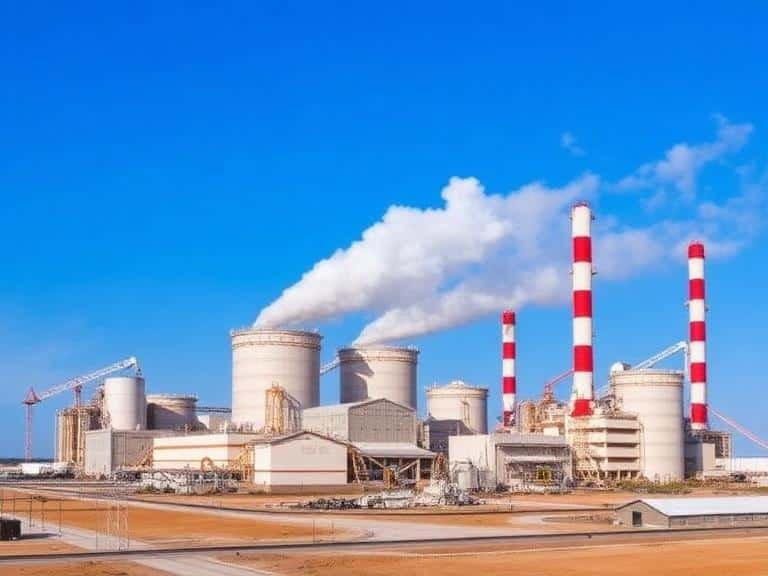
From our experience, understanding the vast disparity between bulk commodity pricing—often quoted on international metals exchanges—and the highly refined engineering grades required for advanced manufacturing is where true procurement strategy begins. In this comprehensive, authoritative guide, we will break down the exact alumina price per kg across diverse global regions. Furthermore, we will dissect the geopolitical forces driving these numbers, and explain exactly how these raw material costs cascade down to impact the final price of the precision ceramic components your operations depend on daily.
Table of Contents
- The Hard Numbers: Global Alumina Price per Kg in 2026
- Macro Factors Driving Cost Volatility
- Smelter Grade (SGA) vs. Chemical Grade Alumina (CGA)
- Direct Impact on Precision Ceramic Manufacturing
- High-Heat and Extreme Wear Applications
- Dielectric Insulation and Structural Rigidity
- Strategic Procurement Advice for 2026
- Summary Table: Regional Price Averages
- Frequently Asked Questions (FAQs)
- Industry References
The Hard Numbers: Global Alumina Price per Kg in 2026
In 2026, the global alumina market underwent a significant structural recalibration. Depending heavily on the geographic region and localized supply chain constraints, the baseline bulk alumina price per kg currently hovers between $0.40 and $0.65 USD. However, treating this as a blanket average is dangerously reductive. Let us examine the regional breakdown to understand where capital is flowing.
- North America: Following abrupt energy spikes and exceptionally tight domestic supply chains, prices reached approximately $0.47 to $0.48/kg in Q1 2026. Alumina Trihydrate specifically climbed closer to $0.65/kg, propelled by aggressive demand from the domestic construction and industrial chemicals sectors.
- Europe: Hovering stubbornly around $0.49/kg, the European market remains heavily penalized by structural energy costs. Natural gas storage depletion and geopolitical instability have kept refining costs artificially inflated compared to historical baselines.
- Northeast Asia (China): Sitting at a highly competitive $0.40/kg, this region benefits immensely from localized bauxite refining capabilities, massive economies of scale, and highly optimized, state-subsidized supply chains.
- India: Experiencing noticeable premiums at approximately $0.61/kg. This inflation is largely due to localized infrastructure demand surges and the strategic prioritization of primary aluminum exports over raw alumina sales.
Macro Factors Driving Cost Volatility
Why exactly are we seeing these fractured and volatile price structures in 2026? We track three primary culprits that continuously disrupt the equilibrium of the alumina price per kg.
First and foremost are severe energy overheads. The Bayer process—the chemical procedure universally used to extract alumina from bauxite ore—requires digesting crushed bauxite in hot sodium hydroxide (caustic soda) under extreme pressure. Caustic soda prices strengthened significantly in early 2026 due to global supply shocks. Furthermore, the massive amounts of thermal energy required for the subsequent calcination phase mean that any spike in natural gas or coal prices directly and immediately inflates the cost of alumina.
Secondly, geopolitical supply chain shifts are reshaping the map. Governments in bauxite-rich nations are increasingly treating their ores as strategic sovereign resources. By imposing export bans or exorbitant tariffs on raw bauxite, they force foreign refineries to scramble for feedstock, compressing global alumina availability and driving up the spot price.
Finally, the transition toward decarbonization introduces unavoidable “green” premiums. The push for sustainable, low-carbon footprint refining methodologies requires massive capital expenditures by refineries to upgrade aging infrastructure. While absolutely necessary for global ecological stability, this transition structurally raises the baseline cost of production across the board.
Smelter Grade (SGA) vs. Chemical Grade Alumina (CGA)
At this juncture, we must interject with a harsh industry reality: the $0.45/kg alumina price per kg you see scrolling across the London Metal Exchange (LME) or global commodity indexes does not apply to the materials used in advanced engineering. That pricing reflects Smelter Grade Alumina (SGA).
SGA accounts for over 92% of global market volume. It is a relatively coarse, commoditized powder fed in massive tonnages into electrolytic reduction cells to produce primary aluminum metal. In stark contrast, Chemical Grade Alumina (CGA) and ultra-high-purity calcined alumina are what professional manufacturers use to engineer precision ceramic components.
Achieving purity levels of 95%, 99%, or 99.8% requires extreme secondary thermal processing, relentless acid washing to remove metallic flux, and meticulous laser-diffraction particle size control to ensure a sub-micron uniform grain structure. Consequently, the alumina price per kg for high-purity ceramic-grade powders can easily range from $2.00/kg to well over $15.00/kg, depending on the exact morphology required. To truly grasp how these extreme material purities dictate mechanical performance, we strongly recommend reviewing an authoritative engineering ceramics material guide.
Direct Impact on Precision Ceramic Manufacturing
How does the fluctuation of the raw alumina price per kg translate to the finished components arriving on your factory floor? At JuchangCeramic, we utilize these expensive, high-purity alumina powders to press, sinter at temperatures exceeding 1600°C, and machine components designed to withstand the most brutal industrial environments known to man.
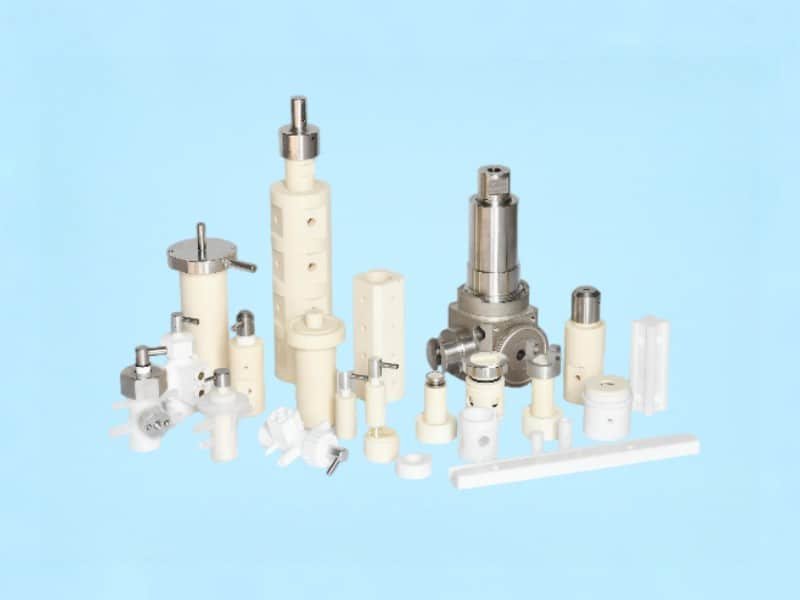
Consider the production of ceramic plungers utilized in ultra-high-pressure positive displacement fluid pumps. If the cost of high-purity calcined alumina spikes globally by 20%, the foundational cost of the raw pressed blank undeniably increases. However, the vast majority of the final cost in a finished ceramic plunger actually lies in the labor-intensive diamond grinding, lapping, and precision polishing required to achieve a flawless, friction-reducing mirror finish.
To fully understand the delicate balance between raw material costs and advanced machining labor, procurement teams should consult a dedicated ceramic plunger material selection guide. Furthermore, when executing a rigorous ceramic plunger vs metal plunger cost-benefit analysis, the superior wear resistance, immunity to chemical corrosion, and drastically extended lifespan of alumina always yields a lower total cost of ownership—even if raw powder prices experience temporary volatility.
High-Heat and Extreme Wear Applications
The core reason heavy industries readily absorb these raw material price fluctuations is because high-purity alumina ceramics are functionally irreplaceable. In metallurgy, aerospace, and semiconductor manufacturing, protecting sensitive measurement equipment is paramount. Utilizing advanced tubing made from 99.5% purity alumina provides an impenetrable barrier to protect delicate thermocouples from molten metals and highly corrosive reactive gases.
Exploring ceramic tube applications in high heat environments rapidly justifies the premium price of the raw material. A thermal failure in these extreme environments does not just cost the price of the tube; it results in catastrophic, multi-million dollar production downtime.
Similarly, the undeniable benefits of ceramic bearings in high-speed, non-magnetic, and chemically aggressive environments far outweigh the initial raw material expenditure. Unlike standard steel bearings, high-purity ceramic variants do not gall under immense friction, require absolutely zero external lubrication, and are completely immune to destructive electrical arcing.
Dielectric Insulation and Structural Rigidity
Another massive industrial sector heavily impacted by the 2026 alumina price per kg is high-voltage electrical insulation. Alumina is an exceptional, world-class dielectric material. However, finding the best ceramic insulators for industrial use relies entirely on sourcing components manufactured from alumina powder that is virtually free of any conductive metallic impurities. The purification processes required to remove trace iron or sodium from the powder add significant cost, but guarantee absolute electrical safety.
For load-bearing structural applications, engineers frequently evaluate the merits of a ceramic rod vs metal rod comparison. While exotic metal alloys will inevitably flex, creep, and permanently deform under sustained thermal and mechanical stress, an isostatically pressed and fully sintered alumina ceramic rod maintains absolute, unyielding dimensional stability right up to its extreme melting point.
Strategic Procurement Advice for 2026
From our extensive experience outfitting global manufacturing operations, buyers looking to effectively shield their supply chains from the inherent volatility of the alumina price per kg should immediately adopt the following strategies:
- Partner with Integrated Manufacturers: We recommend aggressively avoiding middle-men and import brokers. Work directly with factories like JuchangCeramic that purchase raw calcined powders in massive bulk tonnages and possess comprehensive in-house isostatic pressing, sintering, and 5-axis CNC diamond machining capabilities. Vertical integration absorbs price shocks far better than fragmented supply chains.
- Optimize Material Purity Specifications: Do not over-engineer your components unnecessarily. If your specific application only requires 95% alumina to survive abrasive mechanical wear, do not stubbornly demand 99.8% purity. The price delta per kilogram between these two grades is massive due to the exponential energy required for extreme purification. Let expert engineers guide your exact material specification.
- Establish Long-Term Supply Contracts: Secure blanket purchase orders. By accurately forecasting your annual, quarterly, or monthly usage of precision ceramic components, manufacturers can lock in raw powder prices from their suppliers before the next geopolitical crisis or energy spike hits the market.
Summary Table: Regional Price Averages (Q1 2026)
| Global Region | Average Smelter Grade Price (USD/kg) | Market Trend & Primary Drivers |
|---|---|---|
| Northeast Asia (China) | $0.40/kg | Stable. Benefiting from massive domestic refining scale and state-optimized logistics. |
| South America | $0.45/kg | Rising. Supported by resilient demand and localized supply chain constraints. |
| North America | $0.48/kg | Volatile. Impacted by elevated caustic soda costs and high industrial demand. |
| Europe | $0.49/kg | Elevated. Severely penalized by depleted natural gas storage and high regional energy costs. |
| India | $0.61/kg | Premium. Driven by aggressive domestic infrastructure expansion and primary aluminum export focus. |
*Note: The prices listed above reflect bulk commodity Smelter Grade Alumina. High-purity Chemical Grade Alumina required for advanced precision ceramics commands a significant premium, frequently exceeding $2.00 to $15.00/kg depending on strict purity tolerances.
Frequently Asked Questions (FAQs)
Bulk alumina (Smelter Grade) is produced by the millions of tons with relatively loose purity standards simply to be melted down into aluminum metal. Ceramic-grade alumina (Chemical Grade) undergoes intense secondary calcination, acid washing to remove microscopic trace metals, and precision milling to achieve an exact, uniform particle size. This energy-intensive purification process dramatically increases the manufacturing cost, justifying the premium alumina price per kg for engineering applications.
Yes, but it is only one piece of the puzzle. While bauxite is the fundamental raw material, the cost to convert bauxite into alumina is heavily dictated by the price of thermal energy (natural gas or coal) and chemical reagents (caustic soda). In 2026, energy volatility often impacts the final alumina price per kg far more aggressively than minor fluctuations in raw bauxite mining costs.
Secondary aluminum recycling is certainly growing and does structurally reduce the requirement for fresh primary alumina. However, this reduction in demand is currently being entirely offset by the skyrocketing, insatiable global demand for lightweight aluminum in the electric vehicle (EV) automotive sector and sustainable aerospace packaging. Therefore, recycling alone will not crash the alumina market price in the near future.
Industry References
1. U.S. Geological Survey (USGS). “Mineral Commodity Summaries: Bauxite and Alumina.” An authoritative annual review of domestic and global production, consumption, and supply chain dependencies.
2. International Aluminium Institute (IAI). “Global Mass Flow of Aluminium and Alumina.” Comprehensive statistical tracking of refining capacities and energy consumption metrics across the primary aluminum sector.
3. Advanced Ceramics Association. “Market Dynamics of High-Purity Technical Ceramics.” Research detailing the direct correlation between upstream chemical grade raw material costs and downstream precision component manufacturing.