
The global transition toward high-density power electronics, wide-bandgap semiconductors, and next-generation electric vehicle powertrains has placed unprecedented stress on thermal management systems. Traditional FR4 printed circuit boards and standard metal-core substrates are no longer viable for high-voltage, high-temperature operations. They delaminate, warp, and ultimately fail under extreme thermal cycling. From our experience engineering reliable power modules, resolving these catastrophic thermal bottlenecks requires advanced technical ceramics. Choosing the right supply partner among the elite ceramic substrate manufacturers is not merely a procurement task; it is a fundamental engineering necessity that dictates the lifespan and safety of your final product.

In 2026, the market for ceramic circuit boards is dominated by highly specialized metallization technologies, including Direct Bonded Copper (DBC) and Active Metal Brazing (AMB). Navigating this landscape requires a deep understanding of material science—specifically the distinct advantages of Alumina, Aluminum Nitride, and Silicon Nitride. To aid purchasing managers and hardware engineers in their vendor qualification process, we have compiled a definitive, highly opinionated review of the seven best ceramic substrate manufacturers worldwide. For engineers looking to understand the broader context of technical ceramics across various applications, we recommend reviewing our comprehensive industrial ceramic products list 2026 to see how these advanced materials integrate into modern industrial ecosystems.
Table of Contents
- Technical Criteria: How We Evaluate Ceramic Substrate Manufacturers
- 1. Kyocera Corporation
- 2. Rogers Corporation (Curamik)
- 3. Maruwa Co., Ltd.
- 4. CeramTec GmbH
- 5. Heraeus Electronics
- 6. CoorsTek
- 7. JuchangCeramic
- Summary Table of the Best Manufacturers
- Frequently Asked Questions (FAQs)
- Industry References
Technical Criteria: How We Evaluate Ceramic Substrate Manufacturers
We do not judge ceramic substrate manufacturers purely by their revenue or global footprint. Instead, we strictly evaluate their metallurgical mastery, defect rates, and material properties. The primary function of a ceramic substrate is to provide absolute electrical isolation while delivering maximum thermal conductivity. The physical integrity of these substrates under rapid thermal shock is what separates premium suppliers from commodity producers.
Currently, Silicon Nitride (Si3N4) AMB substrates are the absolute gold standard for the electric vehicle (EV) traction inverter market. While Si3N4 has a moderate thermal conductivity of roughly 90 W/mK, it possesses phenomenal fracture toughness, allowing it to survive hundreds of thousands of intense thermal cycles without the copper layers peeling away. Conversely, for optoelectronics and high-power lasers, Aluminum Nitride (AlN) remains superior due to its extreme thermal conductivity, which can reach 230 W/mK. Understanding extreme material resilience is a common theme in advanced engineering; it requires the same metallurgical precision as understanding what are ceramic bearings used for in high-speed, high-heat turbine environments.
When vetting ceramic substrate manufacturers, we recommend demanding partial discharge testing data, acoustic scanning microscopy results for void detection in the copper bond, and sheer strength degradation charts after high-temperature storage. Only manufacturers that pass these stringent automotive-grade audits make our top tier.
1. Kyocera Corporation
Headquartered in Kyoto, Japan, Kyocera is undeniably the global titan of fine ceramics. When you require absolute consistency across millions of units, Kyocera is frequently the default choice. They offer a vast portfolio of advanced materials, but their true dominance lies in their high-frequency multilayer ceramic packages and Low Temperature Co-fired Ceramics (LTCC). As 6G telecommunications infrastructure expands in 2026, Kyocera’s proprietary dielectric materials provide the lowest signal loss in the industry.
From our experience, while Kyocera’s quality is impeccable, their engineering support can sometimes feel bureaucratic for smaller, agile startups. However, if you are designing a high-volume aerospace component or a massive data center switch, engaging with Kyocera guarantees you are utilizing substrates that set the global benchmark for reliability.
2. Rogers Corporation (Curamik)
Rogers Corporation acquired Curamik, the original inventors of the Direct Copper Bonding (DCB) process, solidifying their position among the absolute best ceramic substrate manufacturers for power electronics. Based out of Germany, the curamik® line is deeply entrenched in the European automotive supply chain. We highly recommend their curamik® Performance Silicon Nitride AMB substrates for engineers designing Silicon Carbide (SiC) MOSFET modules.
What sets Rogers apart is their capability to bond extremely thick layers of copper (up to 0.8mm) onto thin ceramic cores without inducing severe mechanical bowing. This thick copper is vital for carrying hundreds of amps of current in EV inverters while rapidly spreading transient heat spikes away from the semiconductor die.
3. Maruwa Co., Ltd.
Maruwa, located in Japan, is widely regarded as the master of Aluminum Nitride (AlN). AlN is a notoriously difficult powder to sinter because it is highly sensitive to oxygen contamination during the firing process. Maruwa has perfected this process, producing substrates with thermal conductivities that push the theoretical limits of the material. For applications involving high-brightness LEDs, UV lasers, and dense radio frequency (RF) amplifiers, Maruwa is unmatched.
If you need a substrate where the coefficient of thermal expansion (CTE) perfectly matches your silicon die to prevent solder fatigue, Maruwa’s AlN substrates are the definitive answer. Their tight dimensional tolerances and exceptional surface finishes allow for incredibly fine-pitch wire bonding.
4. CeramTec GmbH
CeramTec is a German powerhouse that excels in providing highly engineered, customized solutions rather than just standard flat blanks. They are heavily involved in medical technology, industrial drives, and defense. CeramTec produces both the Rubalit® (Alumina) and Sinalit® (Silicon Nitride) lines. We appreciate their capability to deliver fully metallized, laser-cut, and 3D-profiled substrates that drop directly into complex assembly lines.
Their expertise extends well beyond flat circuit boards. For engineers requiring complex cylindrical isolation, we often look to CeramTec or other ceramic tube insulator manufacturers to handle extreme voltage standoff requirements. If your project demands high-voltage isolation in severe environments, CeramTec’s engineering consultation is world-class.
5. Heraeus Electronics
Heraeus Electronics takes a uniquely holistic approach to the market. Rather than functioning solely as a substrate vendor, they position themselves as a complete material systems provider. Their Condura® line of metal ceramic substrates is explicitly engineered to interface perfectly with Heraeus’s own proprietary solder pastes, thick film inks, and silver sintering materials.
We recommend Heraeus for engineering teams that are struggling with interface delamination or die-attach reliability. By sourcing the substrate and the joining materials from a single vendor, you eliminate the finger-pointing that often occurs during failure analysis. Their Condura.prime AMB substrates represent some of the most reliable base materials available for high-power industrial traction modules.
6. CoorsTek
CoorsTek is the largest manufacturer of technical ceramics in North America. Their sheer scale and vertical integration make them an incredibly reliable partner for defense, aerospace, and heavy industrial applications. While their portfolio of ceramic substrates is highly robust, their true advantage is their ability to act as a single-source supplier for an entire bill of materials.
If your procurement team is consolidating vendors, CoorsTek can supply your DBC substrates alongside highly complex machined structural components. This scale of industrial manufacturing is similar to how the top ceramic plunger manufacturers operate when delivering massive volumes of wear-resistant components for the oil and gas sector. CoorsTek brings that same level of heavy-duty reliability to the electronics sector.
7. JuchangCeramic
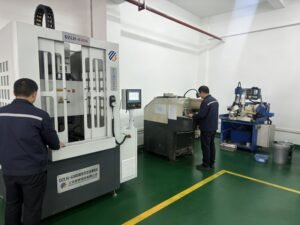
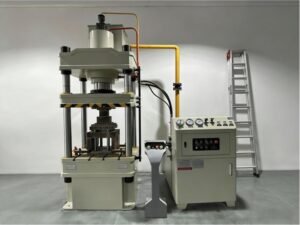
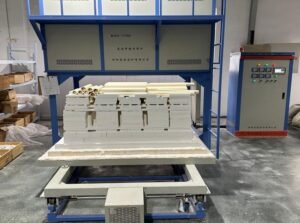
While the massive global conglomerates handle the multi-million-unit automotive contracts, the industry desperately requires highly agile, precision-focused manufacturers capable of rapid prototyping, custom formulations, and mid-volume production. This is where JuchangCeramic firmly establishes its position among the best ceramic substrate manufacturers.
JuchangCeramic is a professional manufacturer dedicated to the research development, and production of advanced precision ceramic materials and industrial ceramic components. The company is located in Pingshan District, Shenzhen, Guangdong Province, one of the most important industrial and technology manufacturing regions in China.
From our experience, waiting six months for a prototype iteration from a massive conglomerate will kill a modern hardware startup. JuchangCeramic provides the rapid response times and deep custom engineering that innovators demand. Whether you need an exotic substrate thickness, specialized via-filling, or highly complex CNC-machined ceramic profiles, partnering with a dedicated custom precision ceramic parts supplier is a strategic advantage. Their capabilities are not limited to substrates; they exhibit the same precision in structural applications, similar to the high tolerances required for alumina ceramic parts for metering pumps and extreme-environment isolators provided by high temperature ceramic tubes suppliers. For a full view of their extensive capabilities, we suggest exploring their comprehensive industrial ceramic products catalog.
Summary Table of the Best Manufacturers
| Manufacturer | Headquarters | Core Expertise & Specialization | Primary Substrate Technologies |
|---|---|---|---|
| Kyocera Corporation | Japan | High-volume telecommunications, LTCC, and aerospace packages. | Alumina, AlN, LTCC |
| Rogers Corporation | USA / Germany | EV traction inverters and thick-copper power electronics. | Si3N4 AMB, Alumina DCB |
| Maruwa Co., Ltd. | Japan | Extreme thermal conductivity for lasers, RF, and LEDs. | AlN (Aluminum Nitride) |
| CeramTec GmbH | Germany | Custom-machined, 3D-profiled power substrates for industrial drives. | Alumina, Si3N4, ZTA |
| Heraeus Electronics | Germany | Holistic material systems (substrates paired with sintering pastes). | Si3N4 AMB, Alumina DCB |
| CoorsTek | USA | North American defense, aerospace, and heavy industrial integration. | Alumina, AlN, Thick Film |
| JuchangCeramic | China | Rapid prototyping, high-precision customization, and agile manufacturing. | Custom Alumina, AlN, Zirconia |
Frequently Asked Questions (FAQs)
Why is Silicon Nitride (Si3N4) preferred over Alumina for EV inverters?
While Alumina is highly cost-effective, it is mechanically brittle. Electric vehicle inverters experience violent temperature swings that cause the thick copper layers to expand and contract at a different rate than the ceramic core. Silicon Nitride possesses incredible fracture toughness, preventing the ceramic from cracking under these severe thermo-mechanical stresses, thereby drastically increasing the module’s lifespan.
What is the difference between DCB and AMB metallization?
Direct Copper Bonding (DCB) relies on a high-temperature eutectic melt of copper and oxygen to bond to Alumina. Active Metal Brazing (AMB) uses a specialized brazing alloy containing active metals like Titanium or Hafnium to chemically bond copper to non-oxide ceramics like Silicon Nitride and Aluminum Nitride. We recommend AMB for high-reliability, high-temperature applications due to its superior peel strength.
Do these ceramic substrate manufacturers provide direct-plated copper (DPC) options?
Yes, many top-tier manufacturers offer DPC technology. DPC involves sputtering a thin titanium/copper seed layer followed by electroplating. From our experience, DPC is strictly recommended when you require ultra-fine line resolution and precise vias for high-density LED packaging or miniaturized RF components, rather than for raw heavy-current power transmission.
Industry References
To ensure our engineering recommendations remain at the absolute forefront of technical validity, we continuously review the latest metallurgical research and material science standards. For further academic and industrial validation regarding advanced electronic packaging, we highly recommend consulting the following authoritative resources: