
When a faucet begins to drip, leak, or exhibit stiff handle rotation, the culprit is almost invariably a failing internal cartridge. Plumbers and maintenance professionals face a heavily fragmented market filled with proprietary designs, unbranded aftermarket replacements, and confusing dimensional specifications. The reality is that identifying correct ceramic tap cartridge sizes is not a guessing game; it is an exercise in precise mechanical measurement. If you purchase a 40mm cartridge for a 35mm housing, or if the locating pins on the base are offset by even two millimeters, the replacement will fail instantly upon installation.
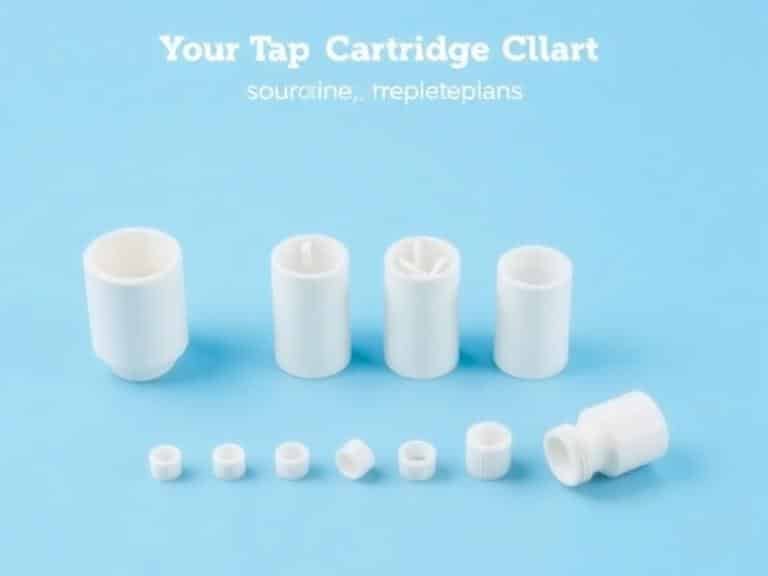
From our experience engineering fluid control systems, the market is saturated with poor-quality plastic housings and inferior ceramic discs that crack under thermal shock or high line pressure. You need to understand exactly what you are buying. This guide is not a passive overview. We are here to give you our definitive, commercial judgment on how to measure, source, and select the right ceramic tap cartridge to guarantee a watertight seal that will last for hundreds of thousands of cycles.
Table of Contents
- Quick Answer: Standard Sizes & Measurement
- What It Is: The Anatomy of a Ceramic Cartridge
- How It Works: Precision Alumina Discs
- Quick Summary Table: The Sizes Chart
- Benefits of Upgrading to High-Grade Ceramic
- Limitations and Mechanical Vulnerabilities
- Who Should Use It
- Who Does Not Need It
- Common Mistakes We See in the Field
- Buying Considerations and Caliper Strategy
- Expert Recommendation
- Frequently Asked Questions
Quick Answer: Ceramic Tap Cartridge Sizes
The vast majority of single-lever mixer taps utilize either a 35mm or 40mm diameter ceramic tap cartridge. To determine your correct size, you must remove the cartridge from the faucet body and measure the widest outer diameter of the main cylindrical base using digital calipers. You must also count the number of splines (teeth) on the brass or plastic top spindle (commonly 20 or 24 teeth) and measure the distance between the two locating pins on the bottom. We recommend always replacing your cartridge with an OEM-spec part featuring high-purity alumina ceramic discs rather than settling for unbranded hardware store alternatives.
What It Is: The Anatomy of a Ceramic Cartridge
A ceramic tap cartridge is the central mechanical engine of a modern faucet. Unlike older compression valves that relied on rubber washers forcefully squashed against a brass seat to stop water flow, a ceramic cartridge utilizes a self-contained plastic or brass cylinder housing two highly polished ceramic discs. One disc is fixed in place, while the other moves in relation to the handle’s position.
About JuchangCeramic: JuchangCeramic is a professional manufacturer dedicated to the research development, and production of advanced precision ceramic materials and industrial ceramic components. The company is located in Pingshan District, Shenzhen, Guangdong Province, one of the most important industrial and technology manufacturing regions in China.
-
Alumina Ceramic Parts | High-Precision Zirconia Components for Metering & Plunger Pumps
-
Ceramic Injection Pump
-
Ceramic machining
-
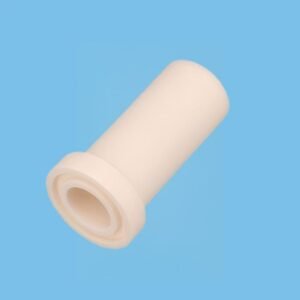
Ceramic parts manufacturing
-
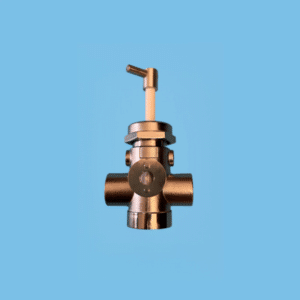
Ceramic pump for flash chromatography
-
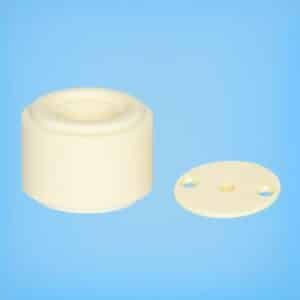
Custom Ceramic Machining
-
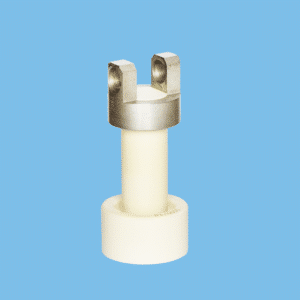
E-Liquid Ceramic Plunger Pump | Vape Oil Filling
-
Lithium Battery Electrolyte Ceramic Pump
The ceramic materials inside these cartridges are not standard pottery clay. They are typically composed of 95% to 99% aluminum oxide (alumina), a technical ceramic that is exceptionally hard and wear-resistant. If you want to understand the material science driving these components, exploring what is alumina ceramics reveals why it is the global standard for high-friction fluid control applications. The overall assembly includes the housing, the lever stem (spindle), silicone O-rings for bottom sealing, the ceramic discs, and a noise-reducing mesh.
How It Works: Precision Alumina Discs
To make a buying or usage decision, you must grasp the mechanics. The two internal ceramic discs are lapped (ground flat) to optical precision—often achieving surface flatness measured in light bands. Because they are so perfectly flat, when they are pressed together with a thin layer of specialized food-grade silicone grease, they create an impenetrable vacuum seal. Water cannot pass between them.
When you lift or rotate the faucet handle, the upper disc slides or rotates over the lower disc. The discs feature meticulously cut ports (holes). As the upper disc moves, its ports align with the hot and cold water ports of the lower disc, allowing water to flow upward through the faucet spout. The ratio of hot to cold alignment determines the temperature, while the degree of total opening dictates the flow rate. Because the custom precision ceramic parts supplier guarantees such extreme tolerances, there is virtually no physical wear from the shearing action of the discs themselves.
Quick Summary Table: Ceramic Tap Cartridge Sizes Chart
Below is our definitive quick reference chart for the most common profiles on the market. Always verify your physical measurements against these baselines.
| Diameter (Size) | Typical Application | Standard Stem Config | Flow Rate Capacity |
|---|---|---|---|
| 25mm | Slimline modern basin mixers, bidet taps | Square broach or small spline | Low to Medium |
| 35mm | Standard bathroom basin mixers, some kitchen sinks | 9x9mm square or 20/24 spline | Medium |
| 40mm | High-flow kitchen mixers, shower valves, bath fillers | 10x10mm square or 20/24 spline | High |
| 45mm / 47mm | Heavy-duty commercial kitchens, specialty thermostatic valves | Proprietary splines | Very High |
Benefits of Upgrading to High-Grade Ceramic
From our experience in the industrial ceramics sector, moving from standard brass compression valves to high-grade ceramic cartridges offers undeniable operational advantages.
First, longevity. A premium alumina ceramic cartridge is rated for 500,000 to 1,000,000 cycles without failure. This drastically reduces maintenance downtime in commercial properties. Second, user experience. The operation requires mere ounces of torque. You can turn the tap off completely with the flick of a finger, making it fully compliant with modern accessibility standards. Third, chemical resistance. Hard water, heavy scaling, and municipal water chlorine treatments will not degrade the ceramic discs, unlike rubber seals that rot and disintegrate. For an understanding of how these same materials handle extreme conditions, checking high temperature ceramic tubes suppliers will illustrate the robust nature of industrial-grade ceramics.
Limitations and Mechanical Vulnerabilities
Despite their superior design, ceramic tap cartridges are not invincible. They possess a critical weakness: extreme brittleness against debris. If a plumber fails to flush the water lines during a new installation, a tiny shard of copper shaving, a grain of sand, or a calcified stone can become lodged between the two ceramic discs. When the user forces the handle shut, the abrasive debris will score the highly polished surface or chip the ceramic outright. Once the surface is scratched, the vacuum seal is broken, and the tap will drip permanently. The cartridge cannot be repaired; it must be completely replaced.
| Feature | Ceramic Cartridge Pros | Ceramic Cartridge Cons |
|---|---|---|
| Lifespan | Extremely long (500k+ cycles); does not rot. | Catastrophic failure if exposed to grit/sand. |
| Operation | Quarter-turn or smooth lift; low physical effort. | Cannot simply “tighten” more to stop a leak. |
| Repairability | Fast swap of a single modular unit. | Cannot be fixed. Entire unit must be discarded. |
| Cost | Reduces long-term maintenance costs. | Higher initial replacement cost vs. a 5-cent rubber washer. |
Who Should Use It
For commercial users: Hotel maintenance teams, commercial property managers, and restaurant operators must standardize on ceramic disc technology. The reduction in leak-related water waste and maintenance hours justifies the initial procurement costs.
For heavy-duty applications: If you are running high-pressure booster pumps in an industrial or high-rise residential setting, you need the sheer strength of ceramic to hold back the line pressure. If you review the industrial ceramic products catalog, you will see that fluid control systems universally rely on ceramic gating for high-pressure scenarios.
Who Does Not Need It
For beginners dealing with exterior garden hose bibs or temporary utility sinks in freezing environments, ceramic cartridges are not ideal. Water trapped inside a cartridge housing during a freeze will expand and shatter the internal ceramic plates. In these specific, unconditioned environments, traditional brass and rubber frost-free sillcocks remain the superior, resilient choice.
Common Mistakes We See in the Field
We routinely diagnose failed installations because buyers make critical errors when consulting a ceramic tap cartridge sizes chart.
1. Measuring with a Tape Measure. You cannot measure a 35mm cartridge with a plastic ruler. If your measurement is 34.8mm or 35.2mm due to poor tool usage, you will end up buying the wrong part. You must use digital vernier calipers.
2. Ignoring the Locating Pins. Two cartridges can both have a 40mm diameter body, but if the two small plastic locating pins on the base are spaced 18mm apart on your tap, and you buy a replacement spaced 24mm apart, it will never seat correctly in the faucet manifold.
3. Mixing up Spline Counts. If you have a dual-handle faucet (hot/cold separate), the spindle holding the handle will have tiny grooves (splines). A 20-spline handle will not fit onto a 24-spline cartridge. Miscounting these is the number one reason for aftermarket returns.
Buying Considerations and Caliper Strategy
When you are ready to make a buying decision, follow this exact protocol. First, shut off your water supply. Extract the cartridge by removing the handle grub screw, taking off the handle, unscrewing the decorative dome, and using a wrench to remove the brass retaining nut.
Pull the cartridge straight up. Now, take your calipers and measure the main cylindrical plastic body. This determines your primary size (e.g., 35mm). Next, measure the overall length from the very bottom of the base to the top of the stem. Third, look at the base. Does it have two locating pins or none? Are the water entry ports circular, kidney-shaped, or square?
| Sourcing Option | Quality of Ceramic | Fit Guarantee | Price Tier |
|---|---|---|---|
| OEM Direct (Manufacturer) | Exceptional. High-purity alumina. | 100% exact dimensional match. | Premium ($30 – $60) |
| Specialty Plumbing Supply | Very Good. Tested to industry standards. | High, requires accurate caliper measurements. | Moderate ($15 – $30) |
| Generic Online Marketplaces | Poor to Unknown. Often low-grade materials. | Low. High risk of pin/spline mismatch. | Cheap ($5 – $15) |
In most professional situations, fluid control hardware demands exact engineering. You can read more about how precision fits dictate performance by exploring alumina ceramic parts for metering pumps, where the tolerances are equally unforgiving.
| Step | Action Required | Why It Matters |
|---|---|---|
| 1. Diameter Check | Measure the widest plastic base (usually 35mm or 40mm). | Determines if the cartridge will physically fit in the brass manifold. |
| 2. Pin Spacing | Measure center-to-center distance of the bottom pegs. | Ensures the cartridge locks in place and does not rotate. |
| 3. Stem Type | Check if the top is square or splined (count the teeth). | Ensures your existing handle will actually attach and turn. |
| 4. Direction (If Dual) | Note if the valve is clockwise or counter-clockwise open. | Prevents handles from operating backwards. |
Expert Recommendation
In our testing, the false economy of buying a $6 unbranded cartridge online inevitably leads to a flooded vanity cabinet six months later. We recommend prioritizing OEM replacement cartridges whenever possible. If the original manufacturer is defunct, source a high-quality aftermarket unit from a reputable plumbing supply house, explicitly checking that the internal components are certified alumina ceramic.
For facility managers mapping out large-scale renovations, standardize on fixtures that utilize universal 35mm or 40mm cartridges rather than proprietary dimensions. This ensures supply chain continuity. To grasp the broader cost dynamics of high-end ceramic components across industries, review a ceramic plunger price guide 2026 to understand why precision manufacturing commands a premium. Do not compromise on the central valve of your plumbing system.
Frequently Asked Questions
Are all 35mm ceramic cartridges interchangeable?
No. While the 35mm outer diameter allows the cartridge to slide into the faucet body, the overall height, the length of the stem, the shape of the stem (square vs. splined), and the positioning of the bottom locating pins vary wildly between manufacturers. You must match all these dimensions, not just the 35mm diameter.
Can I fix a leaking ceramic tap cartridge?
In most professional situations, no. If the ceramic discs are scratched by debris, they cannot be resurfaced. If the internal silicone O-rings have degraded, finding exact dimensional replacements is often more expensive in labor than simply dropping in a completely new cartridge module.
How tight should the retaining nut be when installing a new cartridge?
The brass retaining nut should be tightened only slightly past hand-tight, usually specifying around 10 to 12 Nm of torque. Over-tightening will compress the plastic housing, restrict the movement of the ceramic discs making the handle stiff, and potentially crack the cartridge assembly.
What is the difference between a 35mm and a 40mm cartridge?
Beyond the physical size difference of the housing, a 40mm cartridge has larger internal water ports, allowing for a significantly higher flow rate (gallons per minute). 40mm units are typically found in high-flow bath fillers and heavy-duty kitchen sinks, while 35mm units are used in standard bathroom basin taps. For more insights on diverse industrial components, review our industrial ceramic products list 2026.