
From our experience in precision engineering, mastering the Manufacturing Steps of ceramic part production is the only way to guarantee component reliability in high-stress environments. The 6 main steps are: 1. Powder Preparation (milling and mixing raw oxides), 2. Forming and Shaping (dry pressing, isostatic pressing, or injection molding), 3. Green Machining (CNC milling the fragile, unfired part), 4. Sintering (firing at extreme temperatures to achieve densification), 5. Hard Machining (diamond grinding and lapping to hit exact tolerances), and 6. Quality Control and Inspection. Skipping or rushing any of these phases results in micro-fractures, improper shrinkage, and catastrophic failure in the field.
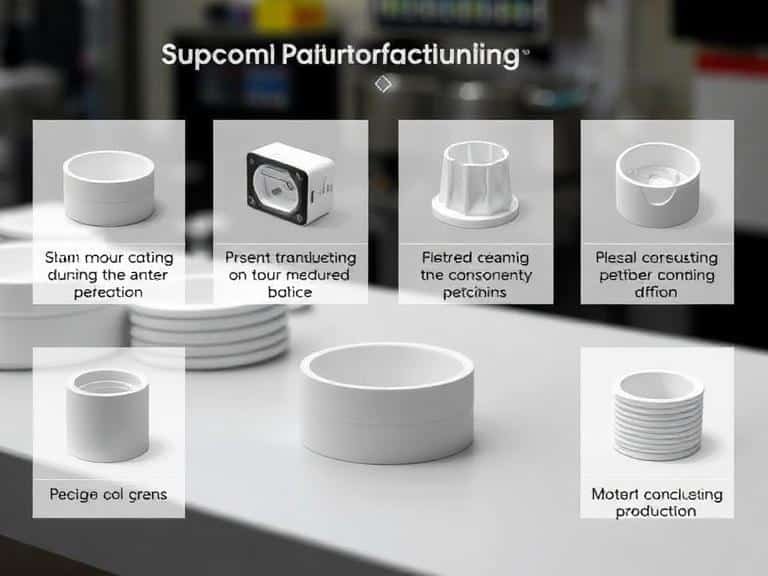
The industrial landscape is littered with failed projects born from a fundamental misunderstanding of advanced ceramics. Engineers accustomed to working with metals often assume they can source a ceramic component exactly like they source a steel one. This is a costly illusion. You cannot melt and pour zirconia like aluminum, nor can you easily drill it once it has reached its final hardness. Understanding the exact Manufacturing Steps of ceramic part fabrication is critical to determining whether upgrading from metal is actually worth the investment.
If you are procuring components for metering pumps, aerospace sensors, or corrosive chemical processing, you are not buying a generic commodity; you are buying a highly controlled thermodynamic process. In this uncompromising guide, we will break down the mechanics of each production phase, address the brutal realities of shrinkage and hard machining costs, and provide commercial judgment on how to specify these materials correctly.
Quick Answer: The Ceramic Production Lifecycle
- Step 1: Powder Preparation. Raw materials (Alumina, Zirconia, Silicon Carbide) are milled, mixed with organic binders, and spray-dried into a flowable powder.
- Step 2: Forming. The powder is compacted into a “green” (unfired) body using massive hydraulic presses or injection molding machines.
- Step 3: Green Machining. Because the green body is soft like chalk, complex geometries are CNC machined before the material becomes too hard.
- Step 4: Sintering. The part is fired in a kiln (up to 1800 degrees Celsius). The binders burn off, the ceramic particles fuse, and the part shrinks by approximately 20%.
- Step 5: Hard Machining. The fully dense, incredibly hard component is precision ground using diamond tooling to achieve micron-level tolerances.
- Step 6: Metrology & Inspection. Ultrasonic testing, coordinate measuring machines (CMM), and visual inspections ensure zero internal defects.
Table of Contents
- What It Is: The 6 Manufacturing Steps Detailed
- How It Works: The Science of Sintering
- The Commercial Benefits of Advanced Ceramics
- Limitations and Mechanical Drawbacks
- Who Should Use Advanced Ceramics
- Who Does Not Need It
- Common Mistakes in Engineering Design
- Critical Buying Considerations
- Expert Recommendation & Manufacturing Insight
- Essential Comparison Tables
- Frequently Asked Questions (FAQ)
What It Is: The 6 Manufacturing Steps Detailed
1. Powder Preparation
You cannot build a high-performance part out of inferior dust. The process begins by selecting high-purity raw powders (such as aluminum oxide or zirconium oxide). These powders are ball-milled to achieve a uniform particle size, often at the sub-micron level. We then add organic binders and plasticizers to create a slurry. This slurry is atomized in a spray dryer, resulting in a free-flowing, spherical powder ready for compaction. If you are exploring the engineering ceramics material guide, you will note that the purity of this initial powder dictates the final wear resistance of the part.
2. Forming and Shaping
The powder must be compacted into a solid shape, known as a “green body.” For flat, simple shapes, uniaxial dry pressing is utilized. For complex, hollow, or long tubular shapes—like those found in ceramic tube applications in high heat environments—Cold Isostatic Pressing (CIP) is mandatory. CIP uses fluid pressure to compact the powder uniformly from all directions, eliminating internal density gradients that cause warping during the firing stage.
3. Green Machining
Before firing, the compacted ceramic is highly fragile, handling much like compacted chalk. However, it is exceptionally easy to machine. During this stage, we utilize standard CNC lathes and mills to cut threads, bore holes, and carve out complex geometries. Because the part will shrink significantly during the next step, the green machining dimensions must be scaled up with extreme mathematical precision.
4. Sintering (Firing)
This is where the magic—and the risk—happens. The green bodies are placed into high-temperature kilns. As temperatures ramp up, the organic binders burn off. Then, at temperatures ranging from 1400 degrees Celsius to 1800 degrees Celsius, the ceramic particles fuse together through solid-state diffusion. The part densifies, eliminating porosity, and shrinks by approximately 15% to 25%. Controlling the thermal curve here is the hallmark of a premier manufacturer.
5. Hard Machining and Finishing
Once sintered, the ceramic is almost as hard as a diamond. You can no longer use standard steel or carbide tools. To hit tight dimensional tolerances or achieve a mirror-like surface finish, we must use diamond grinding wheels, honing tools, and diamond paste lapping. This step is incredibly time-consuming and expensive. When buyers compare the ceramic plunger vs metal plunger pricing, it is the diamond hard machining that accounts for the premium cost of the ceramic component.
6. Quality Control and Metrology
A microscopic internal void can lead to catastrophic failure under pressure. Top-tier manufacturers utilize Ultrasonic Non-Destructive Testing (NDT), fluorescent penetrant inspection, and high-precision CMMs to verify dimensional accuracy, concentricity, and surface roughness (Ra). Only parts that pass these stringent checks are certified for shipment.
How It Works: The Science of Sintering
Unlike metals, which are melted and cast, ceramics rely on solid-state sintering. The particles never actually turn into a liquid. Instead, at extreme heat, atoms diffuse across the boundaries of the particles, fusing them together and pulling the pores closed. This thermodynamic process fundamentally changes the mechanical properties of the material, yielding a structure that offers unparalleled hardness and chemical inertness.
The Commercial Benefits of Advanced Ceramics
For heavy-duty applications, the transition from metal to advanced ceramics offers massive operational dividends. When examining the benefits of ceramic bearings or metering plungers, the primary advantage is wear resistance. A zirconia plunger will outlast a 316 stainless steel plunger by a factor of 10x in abrasive pumping applications. Furthermore, ceramics are chemically inert and electrically insulating, making them the default choice for semiconductor manufacturing equipment and aggressive chemical dosing.
Limitations and Mechanical Drawbacks
In our testing, we constantly remind engineers that ceramics are not invincible; they are brittle. While they possess immense compressive strength, their tensile and impact strength is notoriously low. If you drop a wrench on a high-precision alumina shaft, it will shatter. Furthermore, the 20% shrinkage rate during sintering means that achieving ultra-tight tolerances without extensive post-sintering diamond grinding is physically impossible. This inherent limitation drives up the cost of complex, tightly toleranced parts.
Who Should Use Advanced Ceramics
For commercial users operating in extreme environments, upgrading to ceramics is absolutely worth the investment. Chemical processing plants, aerospace contractors, and medical device manufacturers rely on a trusted wear resistant ceramic parts supplier to eliminate downtime. If you are replacing metal parts every three months due to corrosion, galling, or abrasive wear, transitioning to high precision zirconia ceramic parts will fundamentally improve your ROI.
Who Does Not Need It
For beginners or engineers designing components for low-stress, low-temperature, or high-impact environments, do not specify advanced ceramics. If standard stainless steel, aluminum, or engineering plastics (like PEEK) can survive the operational envelope, stick with them. The cost of diamond grinding a ceramic part is simply not justified if a cheaper, more ductile material can do the job safely.
Common Mistakes in Engineering Design
The most catastrophic mistake we see is engineers designing ceramic components with sharp internal corners, knife edges, or fine threaded holes. Sharp corners act as severe stress concentrators. Because ceramics cannot yield or deform under stress (like metals do), a sharp corner will immediately initiate a crack. You must design with generous radii, chamfers, and avoid threads whenever possible.
Critical Buying Considerations
In most professional situations, your choice of manufacturer dictates the success of your product. When vetting a supplier, you must audit their capabilities across all 6 Manufacturing Steps of ceramic part production. Do they outsource their diamond grinding? If so, they lose control over the final tolerance. Do they formulate their own powder, or buy pre-mixed batches from brokers? You need a partner who provides end-to-end traceability, especially when dealing with precision ceramic components for pumps where concentricity tolerances are measured in microns.
Expert Recommendation
The JuchangCeramic Engineering Verdict
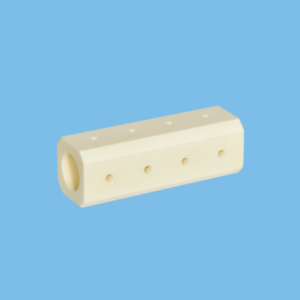
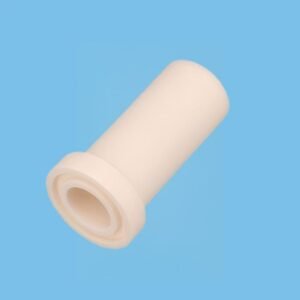
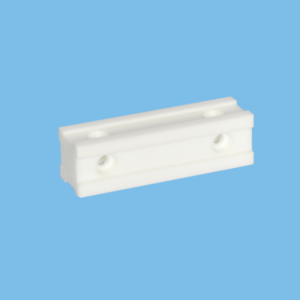
Is it actually worth paying a premium for custom technical ceramics? Yes, provided you partner with a manufacturer who controls the thermodynamics and metrology of the entire process.
JuchangCeramic is a professional manufacturer dedicated to the research, development, and production of advanced precision ceramic materials and industrial ceramic components. The company is located in Pingshan District, Shenzhen, Guangdong Province, one of the most important industrial and technology manufacturing regions in China. We do not skip steps. From sourcing high-purity zirconia to executing sub-micron diamond lapping, we ensure your components survive the environments where metals fail. We recommend involving our engineering team during your initial CAD phase to optimize your design for green machining and minimize unnecessary hard grinding costs.
Essential Comparison Tables
| Step | Process Action | State of Material |
|---|---|---|
| 1. Powder Prep | Milling, mixing, and spray drying raw oxides. | Free-flowing powder |
| 2. Forming | Pressing powder under extreme pressure. | Soft, chalk-like (Green Body) |
| 3. Green Machining | CNC cutting oversized dimensions to allow for shrinkage. | Soft, chalk-like (Green Body) |
| 4. Sintering | Firing at 1500°C+ to fuse particles. | Densifying and shrinking |
| 5. Hard Machining | Diamond grinding to hit final tolerances. | Extremely hard and dense |
| 6. Inspection | CMM, Ultrasonic, and visual metrology. | Finished Component |
| Property | Advanced Ceramics (Alumina/Zirconia) | Metals (Steel/Titanium) |
|---|---|---|
| Wear Resistance | Exceptional (Diamond-like hardness) | Moderate (Requires coatings) |
| Thermal Stability | Maintains strength up to 1500°C+ | Softens/melts at high temperatures |
| Impact Toughness | Poor (Brittle, shatters under shock) | Excellent (Ductile, absorbs shock) |
| Machining Cost | Very High (Requires diamond tooling) | Low to Moderate (Standard CNC tools) |
| Pros (Why it is worth the cost) | Cons (The engineering trade-offs) |
|---|---|
| Yields parts completely immune to chemical corrosion. | The 20% sintering shrinkage makes tight tolerances difficult without grinding. |
| Provides electrical insulation in high-voltage applications. | High setup costs for custom molds in Isostatic pressing. |
| Drastically extends the lifespan of wear-parts in abrasive environments. | Cannot be easily modified or re-machined in the field once fired. |
| Capable of operating in extreme heat without thermal deformation. | Requires highly specialized engineering knowledge to design properly. |
| Forming Method | Best Used For | Cost Profile |
|---|---|---|
| Dry Pressing | Simple, flat shapes (tiles, discs, basic insulators). | Low cost for high volume. |
| Cold Isostatic Pressing (CIP) | Long tubes, complex rods, large blocks. | Moderate tooling cost, excellent density. |
| Ceramic Injection Molding (CIM) | Tiny, ultra-complex geometries (medical parts, nozzles). | Very high initial mold cost, cheap at massive scale. |
Frequently Asked Questions (FAQ)
Why do ceramic parts shrink during manufacturing?
In most professional situations, the green body (unfired part) contains millions of microscopic pores between the compacted powder particles, as well as organic binders. During the sintering process, extreme heat burns off the binders and causes the ceramic particles to fuse together (solid-state diffusion). As the pores collapse and the material densifies, the overall volume of the part shrinks by 15% to 25%, depending on the specific material formulation.
Can I thread a ceramic part like a metal bolt?
While it is technically possible to machine threads into a green ceramic part before firing, we strongly advise against it for heavy-duty applications. Ceramics are brittle and notch-sensitive. The sharp V-shape of a standard thread acts as a massive stress concentrator, making ceramic threads highly prone to shearing or snapping under torque. If a mechanical connection is required, we recommend using metal inserts, clamping systems, or coarse, rounded thread profiles.
What is the difference between green machining and hard machining?
Green machining is performed before the part is fired, while the compacted powder is still soft. Standard carbide tools can easily cut the material, but tolerances are loose due to impending firing shrinkage. Hard machining is performed after sintering, when the ceramic is incredibly dense. This requires expensive diamond grinding wheels and lapping equipment, but it allows the manufacturer to achieve ultra-precise, micron-level tolerances and mirror finishes required for components like a ceramic plunger vs metal plunger comparison.
Authoritative Industry References
To further validate your engineering specifications and understand the global standards governing advanced technical ceramics, we recommend consulting the following authoritative organizations:
- The American Ceramic Society (ACerS) – The leading professional membership organization providing peer-reviewed research, manufacturing best practices, and scientific journals on advanced ceramic materials.
- ASTM International (Advanced Ceramics Committee C28) – The definitive source for globally recognized testing standards, determining the mechanical, thermal, and physical properties of advanced structural ceramics.
- National Institute of Standards and Technology (NIST) – A physical sciences laboratory of the U.S. Department of Commerce providing critical metrology data and foundational research on advanced materials and solid-state sintering thermodynamics.