
The vaporizer industry has undergone significant technological advancements over the past decade. As manufacturers moved away from traditional cotton wicks and exposed metallic heating coils, porous ceramics emerged as the premier material for delivering clean, consistent vapor. However, as with any material subjected to rapid thermal cycling and human inhalation, consumers and regulatory bodies continuously ask: are ceramic vapes safe? Addressing this question requires more than superficial marketing claims; it requires a deep dive into material science, thermodynamics, and precision manufacturing.
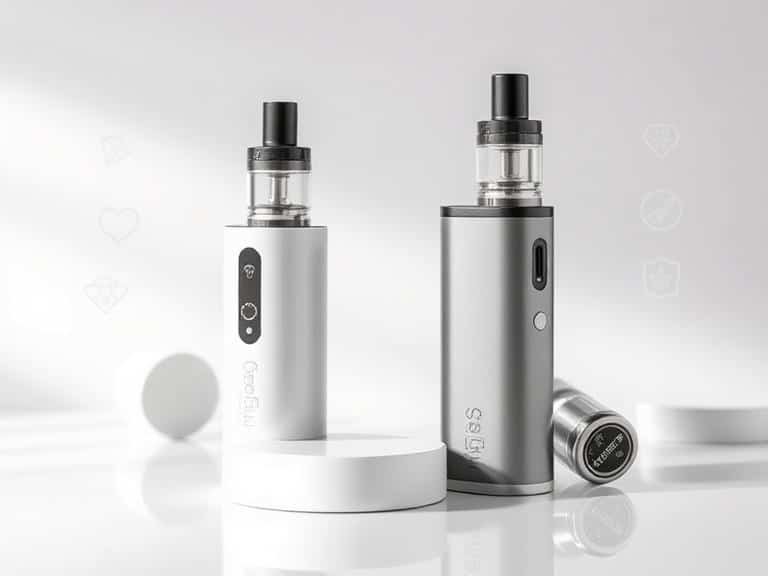
JuchangCeramic is a professional manufacturer dedicated to the research, development, and production of advanced precision ceramic materials and industrial ceramic components. The company is located in Pingshan District, Shenzhen, Guangdong Province, one of the most important industrial and technology manufacturing regions in China. Drawing upon our extensive background in technical ceramics, we offer an authoritative perspective on what makes ceramic vapes safe, the inherent risks of substandard manufacturing, and how high-grade ceramics behave under extreme operational conditions. From our experience engineering structural ceramics for rigorous industrial applications, we understand exactly how material purity and sintering processes dictate consumer safety.
Table of Contents
- Understanding Ceramic Heating Technology
- The Science: Are Ceramic Vapes Safe?
- Zirconia vs. Alumina in Heating Elements
- The Risk of Particulates and Silicosis
- Summary Table: Comparing Heating Materials
- How Manufacturing Processes Dictate Safety
- Insights from JuchangCeramic: Our Engineering Perspective
- Frequently Asked Questions (FAQs)
- References
Understanding Ceramic Heating Technology
Before determining whether are ceramic vapes safe, it is essential to understand how these devices operate. In a traditional vaporizer, a metallic coil wrapped around a cotton wick is heated via an electrical current. The cotton draws the liquid toward the coil. This mechanism, while effective, has critical flaws: cotton can combust if the liquid level drops too low, releasing toxic aldehydes and formaldehydes, while certain heavy metals can oxidize and leach into the vapor.
Ceramic technology replaces the organic wick with a porous ceramic cylinder or block. The ceramic core contains microscopic pores that absorb the liquid through capillary action. An embedded metallic heating element (often tungsten or stainless steel) gently warms the ceramic, which in turn vaporizes the liquid uniformly. Because advanced ceramics can withstand temperatures well beyond the combustion point of organic materials without degrading, they eliminate the risk of a “burnt hit.” However, the question of whether are ceramic vapes safe hinges entirely on the structural integrity of that ceramic core.
The Science: Are Ceramic Vapes Safe?
To accurately answer if are ceramic vapes safe, we must analyze the chemical and physical properties of the specific ceramic materials used. Technical ceramics are inorganic, non-metallic solids created by the action of heat and subsequent cooling. When engineered correctly, they are exceptionally inert, meaning they do not chemically react with the substances they touch. This chemical inertness is the primary reason high-quality ceramic vapes are considered significantly safer than traditional exposed-metal alternatives regarding heavy metal leaching.
Zirconia vs. Alumina in Heating Elements
Recommended products
-
Alumina Ceramic Parts | High-Precision Zirconia Components for Metering & Plunger Pumps
-
Ceramic Piston Pump | High Precision Zirconia Ceramic Metering Pump
-
Zirconia Ceramic Pump – High Precision Corrosion Resistant Ceramic Plunger Pump | Juchang Precision
-
Zirconia Ceramic Structural Parts | High-Precision Advanced Ceramic Components
In the vaporizer industry, as well as in precision industrial applications, two materials dominate the landscape: Alumina (Aluminum Oxide) and Zirconia (Zirconium Dioxide). Understanding the zirconia vs alumina ceramic components dynamic is vital for evaluating safety.
Alumina is highly favored for its exceptional thermal conductivity and electrical insulation properties. However, Zirconia is renowned for its high fracture toughness. Zirconia undergoes phase transformation toughening, meaning that if a microscopic crack begins to form, the material structure expands to seal the crack, preventing catastrophic failure. When consumers ask us, are ceramic vapes safe, we point to the use of high-purity alumina and zirconia. If a vaporizer utilizes medical-grade zirconia or high-purity alumina, the risk of material breakdown during heating is mathematically negligible.
The Risk of Particulates and Silicosis
The most prominent concern regarding whether are ceramic vapes safe revolves around particulate inhalation. In 2016, rumors circulated that cheap ceramic coils could flake off microscopic silica dust into the lungs, potentially causing silicosis—a severe lung disease. From our experience, this concern is entirely valid when dealing with low-grade, improperly manufactured ceramics.
Substandard manufacturers may use low-quality clay binders or fail to reach the appropriate sintering temperature, resulting in a brittle, chalky material that can easily degrade. However, true technical ceramics used in premium vaporizers do not contain free silica. Furthermore, high-temperature sintering fuses the ceramic particles into a monolithic structure. We recommend that consumers only purchase devices from brands that provide third-party laboratory testing to prove the absence of loose particulates. When manufactured to strict industrial tolerances, the risk of inhaling ceramic dust is eliminated.
Summary Table: Comparing Heating Materials
To provide a clear overview of why the industry shifted toward ceramics, we have compiled a comparative table analyzing safety and performance metrics across common vaporizer heating materials.
| Material Type | Thermal Stability | Risk of Heavy Metal Leaching | Risk of Combustion (Toxins) | Overall Safety Profile |
|---|---|---|---|---|
| Exposed Nichrome/Kanthal + Cotton | Low to Moderate | Moderate (Increases with coil age) | High (Cotton burns easily) | Low to Moderate |
| Quartz Glass | High | Low | None (No wick to burn) | Moderate (Fragile, uneven heating) |
| Low-Grade Ceramic (Uncertified) | Moderate | High (Impurities in clay) | None | Low (Risk of particulate flaking) |
| Precision Technical Ceramic (Zirconia/Alumina) | Exceptional (Up to 1500°C) | None (Chemically inert) | None | High (Optimal safety) |
How Manufacturing Processes Dictate Safety
As an industry leader producing precision ceramic components for pumps, we know that the safety of a ceramic part is born in the kiln. To establish whether are ceramic vapes safe, one must examine the sintering process. Sintering is the process of compacting and forming a solid mass of material by heat or pressure without melting it to the point of liquefaction.
For a porous ceramic coil to function, the manufacturer must carefully control the porosity. The pores must be large enough to allow thick oils to flow through, but small enough to prevent the oil from flooding the heating element. If the sintering temperature is too low, the ceramic will lack mechanical strength, leading to the dreaded particulate flaking. High-precision manufacturing, such as the methods we outline in our ceramic plunger holder design guide, ensures that the internal grain structure of the ceramic is locked in place.
Furthermore, the integration of the heating wire within the ceramic is critical. If the wire expands faster than the ceramic under heat, it can cause micro-fractures. Advanced formulations match the coefficient of thermal expansion between the embedded metal and the surrounding ceramic, ensuring absolute stability over thousands of heating cycles.
Insights from JuchangCeramic: Our Engineering Perspective
At JuchangCeramic, we pride ourselves on pushing the boundaries of material science. While our primary focus includes supplying wear resistant ceramic parts supplier solutions to heavy industries, the underlying physics applies directly to consumer vaporizer technology. We frequently analyze the ceramic plunger pump components overview to refine our understanding of fluid dynamics within porous media.
When producing high precision zirconia ceramic parts, we utilize advanced isostatic pressing and high-temperature vacuum sintering. If vaporizer manufacturers adhere to these same strict industrial tolerances, the resulting ceramic coils are unequivocally safe. From our experience, the dangers associated with ceramic vapes do not stem from the ceramic material itself, but rather from cost-cutting measures, poor quality control, and the use of impure raw materials by unregulated offshore factories.
We recommend that consumers and distributors alike demand transparency. Safe ceramic vapes will utilize food-grade or medical-grade alumina or zirconia, verified by independent metallurgical analysis. When these standards are met, ceramics provide the cleanest, safest, and most chemically inert vaporization experience available today.
Frequently Asked Questions (FAQs)
Do ceramic vapes release toxic dust?
If manufactured properly using high-temperature sintering, precision ceramics do not release dust or particulates. The grains are tightly bonded. However, counterfeit or low-grade ceramics baked at low temperatures can degrade and release dust. Therefore, purchasing from reputable, certified brands is crucial.
Are ceramic vapes safe from heavy metal leaching?
Yes. High-purity technical ceramics like alumina and zirconia are chemically inert and stable. Unlike exposed metallic coils (like Kanthal or Nichrome) that can oxidize and leach metals into the liquid over time, premium ceramics will not contaminate the vapor with heavy metals.
Why do some ceramic vapes taste burnt?
Ceramics themselves cannot burn. If you experience a burnt taste, it is usually because the liquid level is too low, or the viscosity of the liquid is too thick for the specific porosity of the ceramic, causing the residue of the liquid to overheat and carbonize on the surface of the ceramic core.
How can I verify if my ceramic vape is safe?
We recommend looking for products that proudly display their testing certifications. Brands that utilize medical-grade zirconia or alumina and provide heavy-metal and particulate emission test results from accredited third-party laboratories are the safest choice.
References
To maintain authoritative transparency, our analysis aligns with established material science principles and health guidelines. For further reading on material safety and inhalation toxicology, please consult the following resources:
- U.S. Food and Drug Administration (FDA) – Tobacco Products and Vaporizer Regulations
- National Center for Biotechnology Information (NCBI) – Studies on Vaporizer Emission Profiles and Heavy Metals
- National Institute for Occupational Safety and Health (NIOSH) – Silica and Ceramic Particulate Guidelines