
Procuring advanced technical ceramics is not like buying stamped steel or injection-molded plastics. When you are sourcing materials that must withstand 1,500°C temperatures, highly corrosive acids, or relentless abrasive friction, the margin for error is absolutely zero. From our experience at JuchangCeramic, operating as a dedicated OEM for precision fluid dynamics, we routinely consult with engineers who have burned thousands of dollars in capital because they selected the wrong manufacturing partner. They assume all Alumina Ceramic Manufacturers possess the same sintering technology and diamond-grinding tolerances. They do not.
In most professional situations, the B2B landscape is sharply divided. On one end, you have monolithic global conglomerates that demand astronomical Minimum Order Quantities (MOQs) and subject you to 24-week lead times. On the other end, you have unverified trading companies acting as brokers, applying a 40% markup on substandard ceramics that shatter under mechanical stress. You must apply commercial and practical judgment to your supply chain. In this definitive guide, we take a clear, uncompromising look at the industry. We will break down the 10 top global and domestic Alumina Ceramic Manufacturers for 2026, explain precisely how to vet their capabilities, and help you determine whether you actually need a global giant or an agile, specialized OEM for your next project.
Quick Answer: The Top 10 Alumina Ceramic Manufacturers
If you need to secure your supply chain immediately, here is our expert ranking of the top Alumina Ceramic Manufacturers globally and domestically, categorized by their operational strengths:
- The Global Heavyweights: Kyocera, CoorsTek, CeramTec, Morgan Advanced Materials, Saint-Gobain, and NGK Spark Plug (NTK). Best for Fortune 500 companies requiring millions of standardized units per month.
- The Specialty Fabricators: McDanel Advanced Material Technologies, Precision Ceramics, and Ortech Advanced Ceramics. Best for highly niche, low-volume aerospace or laboratory components.
- The Agile OEM Specialist: JuchangCeramic. Best for mid-to-high volume custom engineering, specifically excelling in Ceramic Pump components, plungers, and medical devices. We offer the precision of the giants without the bureaucratic lead times or exorbitant NRE (Non-Recurring Engineering) fees.
We recommend bypassing the massive conglomerates if your annual demand is under 500,000 units. Partnering with an agile OEM guarantees priority engineering support and vastly accelerated prototyping.
Table of Contents
- What It Is: The Role of the Manufacturer
- How It Works: The Manufacturing Process
- The Top 10 Alumina Ceramic Manufacturers
- Benefits of Partnering with Specialized OEMs
- Limitations of Global Conglomerates
- Who Should Use Which Tier
- Who Does Not Need Custom Ceramics
- Common Procurement Mistakes
- Expert Buying Considerations
- Pros vs Cons and Comparison Tables
- Expert Recommendation & Solutions
- Frequently Asked Questions
What It Is: The Role of Alumina Ceramic Manufacturers
A true alumina ceramic manufacturer is an advanced materials science facility. They do not simply cut existing stock. They begin with microscopic aluminum oxide (Al2O3) powder, blending it with precise binders to achieve purity levels ranging from 95% to 99.8%. The manufacturer is responsible for the entire lifecycle: pressing the green body, executing the thermal sintering profile, and performing the high-precision diamond grinding required to hit micro-tolerances.
If you are reviewing our engineering ceramics material guide, you understand that alumina is chosen for its extreme hardness and electrical insulation. However, the raw material is useless without a manufacturer capable of machining it to an Ra 0.2 surface finish.
How It Works: The Manufacturing Challenge
How it works physically dictates the commercial reality of your procurement. When alumina is sintered in a kiln at 1,600°C, the part shrinks by approximately 20%. Managing this shrinkage is where top-tier Alumina Ceramic Manufacturers separate themselves from budget machine shops. If the shrinkage is miscalculated, the component will not fit your assembly.
Because sintered alumina is nearly as hard as a diamond, standard steel tooling cannot cut it. Post-sintering machining requires custom diamond grinding wheels operating under constant coolant flow. In our testing and production lines, this final machining step accounts for the majority of the cost. Therefore, choosing a manufacturer with robust in-house CNC capabilities is critical when procuring a Ceramic plunger pump or a high-wear valve.
The 10 Top Global and Domestic Alumina Ceramic Manufacturers
Here is a detailed breakdown of the top 10 operators in the 2026 market, evaluated through a lens of commercial practicality.
1. Kyocera Corporation (Japan/Global)
Kyocera is the undisputed titan of advanced ceramics. Their catalog is virtually endless, covering everything from semiconductor components to automotive sensors. While their quality is impeccable, they operate at a scale that makes them highly inflexible. If you are a mid-sized engineering firm, securing engineering time from Kyocera is exceedingly difficult.
2. CoorsTek (United States/Global)
Based in Colorado, CoorsTek is the largest technical ceramics manufacturer in North America. They excel in military, defense, and heavy industrial armor applications. They are highly reliable but carry the premium pricing associated with massive domestic overhead.
3. CeramTec (Germany/Global)
CeramTec dominates the European market, particularly in bioceramics (hip replacements) and cutting tools (SPK). Their proprietary alumina blends are world-class, but their lead times can stretch into quarters rather than weeks.
4. Morgan Advanced Materials (United Kingdom)
Morgan focuses heavily on thermal management and structural ceramics. They are an excellent choice for ceramic tube applications in high heat environments, but their minimum order thresholds often alienate agile hardware developers.
5. Saint-Gobain Ceramics (France/Global)
A massive conglomerate known primarily for construction materials, their advanced ceramics division produces excellent refractory and wear-resistant alumina. They are geared toward bulk material supply rather than hyper-precision micro-machining.
6. NGK Spark Plug / NTK Technical Ceramics (Japan)
Originally known for automotive spark plugs, NTK is a powerhouse in electronic packaging and piezoceramics. Their alumina substrates are exceptional for the telecommunications sector.
7. McDanel Advanced Material Technologies (United States)
McDanel is a highly specialized domestic manufacturer focusing heavily on tubular ceramics. If you are searching for the best ceramic insulators for industrial use for furnace applications, they are a primary domestic source.
8. Precision Ceramics (United Kingdom/USA)
Operating somewhat differently, Precision Ceramics often acts as a master machinist, taking Macor or raw alumina blanks and machining them for clients. They are excellent for prototyping but can become cost-prohibitive for scaled mass production.
9. Ortech Advanced Ceramics (United States)
A solid domestic player in California that handles a wide variety of structural alumina and zirconia parts. They offer good engineering support but lack the aggressive pricing models found in direct overseas OEM partnerships.
10. JuchangCeramic (China/Global OEM)
For heavy-duty applications requiring rapid iteration and uncompromising precision, JuchangCeramic is the premier agile manufacturer. We specialize in fluid control—specifically the Medical Ceramic Pump, metering plungers, and wear parts. We offer the tight tolerances of the global giants without the crushing bureaucracy, allowing mid-sized firms to achieve a highly profitable cost-benefit ratio.
Benefits of Partnering with Specialized OEMs
The primary benefit of utilizing an agile OEM like JuchangCeramic over a monolithic giant is speed to market. When developing a new product, you will inevitably require design revisions. A specialized industrial ceramic solutions for pumps provider will update your CAD files, adjust the tooling, and push out a revised prototype in weeks. A global giant will require you to resubmit your project to a committee, delaying your launch by months.
Limitations of Global Conglomerates
We must use practical judgment: big does not always mean better for your specific supply chain. The limitation of massive Alumina Ceramic Manufacturers is their indifference to accounts generating less than $1M annually. Furthermore, their Non-Recurring Engineering (NRE) fees for custom molds are often double or triple the industry standard, effectively killing the ROI on a 5,000-unit production run.
Who Should Use Which Tier
For Fortune 500 Automotive and Semiconductor Firms: You should use Kyocera or CoorsTek. When you need five million identical sensors per month, the massive capital infrastructure of a conglomerate is required.
For Commercial Users, MedTech, and Industrial Fluid Systems: If you are manufacturing dosing pumps, medical devices, or specialized machinery, you should partner with JuchangCeramic. When evaluating a ceramic plunger vs metal plunger, the custom grinding expertise of a specialized OEM guarantees a superior seal and significantly lower unit costs.
Who Does Not Need Custom Ceramics
If your application involves low temperatures, zero chemical exposure, and minimal friction, you do not need advanced alumina. Machining standard stainless steel or injection-molding PEEK plastics will be significantly cheaper and entirely sufficient. Do not over-engineer a solution if the environment does not demand it.
Common Procurement Mistakes
From our experience, the most catastrophic mistake procurement officers make is selecting a manufacturer based purely on the quoted price of the raw alumina powder. The powder is cheap; the precision diamond grinding is expensive. If you accept a rock-bottom quote, you will receive a part with terrible surface roughness (Ra) and wide dimensional tolerances. If that part goes into a pump, it will shred the sealing rings immediately, destroying the equipment.
Expert Buying Considerations
When auditing Alumina Ceramic Manufacturers, you must ask about their post-sintering Quality Assurance (QA). Do they utilize Coordinate Measuring Machines (CMM) to verify concentricity and cylindricity? For high-wear applications, reviewing the benefits of ceramic bearings and plungers is moot if the manufacturer cannot hold a tolerance of ±0.005mm.
Summary and Comparison Tables
Comparison Table: Sourcing from Giants vs. Agile OEMs
| Metric | Global Giants (e.g., Kyocera) | Agile OEM (e.g., JuchangCeramic) |
|---|---|---|
| Minimum Order Quantity (MOQ) | Very High (Often 10,000+ units) | Flexible (Prototyping to Mass Production) |
| Custom Tooling Costs (NRE) | Extremely High | Highly Competitive / Subsidized |
| Communication & Support | Rigid, bureaucratic Account Managers | Direct access to manufacturing engineers |
| Lead Times for Prototypes | 12 to 24 Weeks | 4 to 8 Weeks |
| Primary Focus | Standardized, massive volume runs | Custom engineering and precision machining |
Pros and Cons of Alumina Ceramics (95% – 99.8%)
| Pros | Cons |
|---|---|
| Extreme hardness (Mohs 9) prevents abrasive wear. | Brittle nature requires careful installation to avoid impact shock. |
| Absolute chemical inertness against harsh acids and alkalis. | Cannot be machined with standard steel tools (requires diamond CNC). |
| Maintains structural integrity at temperatures up to 1,500°C. | High initial capital expenditure compared to metal counterparts. |
| Excellent electrical insulation properties. | Sintering shrinkage requires complex engineering calculations. |
Expert Recommendation & Integrated Solutions
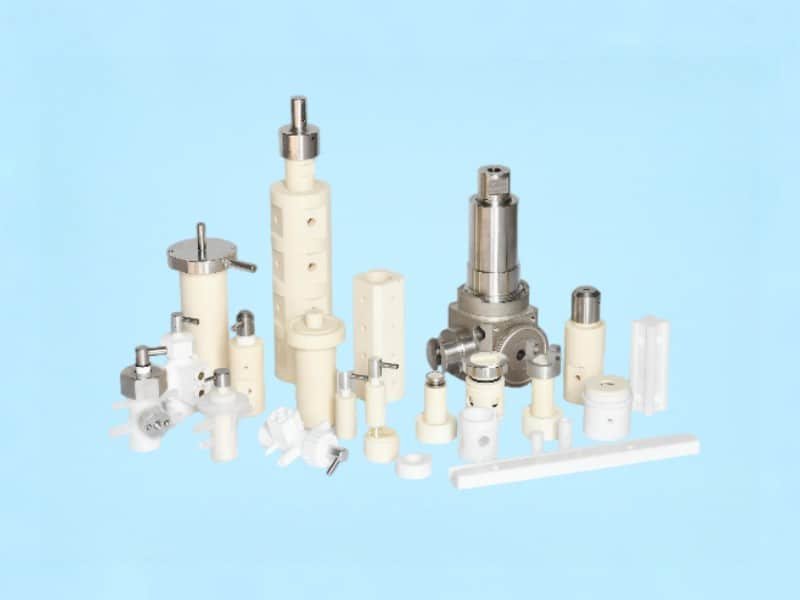
Is it actually worth upgrading from domestic metal fabrication to an overseas specialized ceramic manufacturer? Emphatically, yes. The lifecycle of a high-purity alumina plunger or valve seat outlasts 316 stainless steel by up to 10 times in abrasive environments. We recommend that commercial procurement teams consolidate their supply chain by utilizing custom ceramic machining services from a dedicated facility that controls both the powder pressing and the final diamond grinding.
Frequently Asked Questions
What should I look for when evaluating Alumina Ceramic Manufacturers?
In most professional situations, you must evaluate their raw powder purity (e.g., 95% vs. 99.5% Alumina), their sintering infrastructure, and most importantly, their diamond grinding CNC capabilities. Post-sintering machining is what guarantees micro-tolerances.
Why are lead times so long with massive global ceramic manufacturers?
Global giants prioritize multi-million dollar contracts for semiconductor or automotive sectors. If you need a batch of 5,000 custom ceramic plungers, you will be placed at the back of their production queue, often waiting 16 to 24 weeks. Agile OEMs like JuchangCeramic offer much faster turnarounds.
Is it worth upgrading from 95% to 99% alumina?
Yes, if your application involves extreme corrosive chemicals, plasma resistance, or high-voltage electrical insulation. However, for basic abrasive wear resistance in mechanical pumps, 95% to 96% alumina is often sufficient and significantly more cost-effective to manufacture.
Can I switch my metal component design directly to ceramic?
No. Ceramics are brittle and lack the ductility of metals. If you try a 1:1 drop-in replacement without rounding sharp internal corners or adjusting for thermal expansion mismatches in the assembly, the ceramic part will likely fracture under stress. An experienced OEM will redesign the part for ceramic manufacturability.
Industry References & Authoritative Guidelines
To ensure our manufacturing insights adhere to global engineering standards, JuchangCeramic references the protocols established by the following authoritative organizations:
- ASTM International: The global organization defining strict testing protocols for advanced ceramics, including ASTM C1161 for flexural strength and ASTM C1327 for Vickers indentation hardness. Review ASTM Ceramic Standards
- The American Ceramic Society (ACerS): The premier professional network providing peer-reviewed research on alumina microstructures, sintering behaviors, and industrial wear applications. Review ACerS Engineering Data
- International Organization for Standardization (ISO): Specifically ISO 20507 (Fine ceramics vocabulary) and related quality management systems that govern the production reliability of technical ceramics. Review ISO Manufacturing Standards