
In the high-stakes world of industrial engineering, component failure is simply not an option. When fluid control systems handle highly corrosive chemicals, or when aerospace applications demand materials that withstand extreme thermal shock, relying on standard metals or cheap plastic substitutes is a catastrophic operational error. Modern engineering demands technical ceramics. However, the supply chain you choose to acquire these ceramics is just as critical as the material itself. Relying on third-party brokers or generic trading companies introduces unnecessary risks, inflated costs, and severe communication bottlenecks.
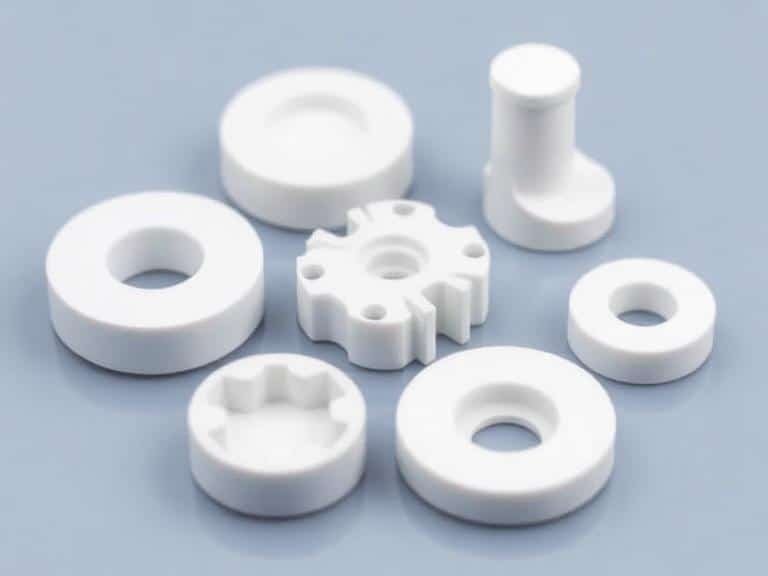
From our experience building heavy-duty fluid dynamics systems, the only logical commercial decision is to bypass the middlemen entirely. Partnering directly with an Advanced Ceramic Components Manufacturer guarantees material traceability, sub-micron precision, and scalable unit economics. In this comprehensive industry guide, we will break down exactly why cutting out the broker is the smartest engineering and financial move you can make. We will explain not only what this partnership entails, but WHETHER you actually need to upgrade your current supply chain to a direct manufacturing model.
Quick Answer: Why Go Direct?
Working directly with an Advanced Ceramic Components Manufacturer eliminates broker markups, reducing your procurement costs by up to 40%. More importantly, it grants your engineering team direct access to the factory’s R&D department, ensuring custom formulations, rapid prototyping, and exact diamond-machined tolerances that trading companies cannot guarantee. If your application requires high-purity alumina or zirconia with zero margin for error, a direct factory partnership is an absolute operational necessity.
Table of Contents
- What is an Advanced Ceramic Components Manufacturer?
- How the Direct Manufacturing Process Works
- Quick Summary Table: Broker vs. Manufacturer
- 8 Critical Benefits of a Direct Partnership
- Limitations and Mechanical Realities
- Pros and Cons Table
- Who Should Partner Directly vs. Who Does Not Need To
- Comparison Table: Material Alternatives
- Common Procurement Mistakes
- Buying Considerations: Vetting Your Supplier
- Buying Guide Table
- Expert Recommendation from JuchangCeramic
- Frequently Asked Questions (FAQ)
What is an Advanced Ceramic Components Manufacturer?
An Advanced Ceramic Components Manufacturer is a specialized industrial facility that owns and controls the entire production lifecycle of technical ceramics—from raw powder formulation to final precision machining. Unlike a trading company that merely buys finished parts and resells them, a true manufacturer operates state-of-the-art sintering kilns, cold isostatic pressing (CIP) equipment, and multi-axis CNC diamond grinding centers.
These facilities do not deal in traditional pottery clays. They engineer structural materials like Zirconium Oxide (Zirconia), Silicon Carbide, and high-purity Aluminum Oxide. If you are wondering what is alumina ceramics, it is a technical grade ceramic boasting extreme hardness and chemical inertness, making it indispensable for harsh industrial environments.
How the Direct Manufacturing Process Works
When you work with a direct factory, the process begins engineering-to-engineering. You submit your CAD drawings and operational stress requirements. The manufacturer then formulates the exact ceramic powder blend required. The powder is compacted into a “green body” (a fragile, pre-fired state), which is then sintered in furnaces at temperatures exceeding 1,600 degrees Celsius.
Because ceramics shrink up to 20% during sintering, calculating this shrinkage requires immense proprietary knowledge. After firing, the ceramic is nearly as hard as a diamond. The manufacturer then uses specialized diamond-tipped tooling to machine the component to sub-micron tolerances. This end-to-end control is why sourcing a custom precision ceramic parts supplier directly is far superior to buying catalog parts.
| Feature | Advanced Ceramic Components Manufacturer | Trading Company / Broker |
|---|---|---|
| Pricing | Direct factory pricing (Lowest unit cost) | 30% to 50% markup applied |
| Technical Support | Direct access to material scientists and CNC engineers | Sales reps with limited technical knowledge |
| Quality Control | In-house CMM inspection and full traceability | Relies on third-party or unknown factory QA |
| Customization | Full OEM/ODM design and custom powder formulation | Limited to existing catalog molds |
8 Critical Benefits of a Direct Partnership
1. Significant Cost Reductions
In most professional situations, cost control is paramount. By bypassing trading agents, you eliminate the middleman’s margin. This becomes increasingly apparent when scaling to bulk orders. For an accurate breakdown of market costs, referencing a ceramic plunger price guide 2026 highlights how direct factory pricing drastically lowers the total cost of ownership over the life of a product line.
2. Uncompromising Precision and Tolerances
Technical ceramics are famously difficult to machine. A direct Advanced Ceramic Components Manufacturer utilizes dedicated diamond grinding equipment capable of achieving tolerances tighter than 0.001mm. This is absolutely critical for dynamic applications like fluid metering pumps, where a microscopic gap can lead to catastrophic pressure loss or chemical leakage.
3. Absolute Material Traceability
Trading companies frequently switch factories to maximize their own profits, meaning your “alumina” part today might have a different purity level than the one you buy next month. A direct manufacturer guarantees batch-to-batch consistency. You know exactly what goes into the kiln, ensuring your industrial ceramic products catalog parts always perform predictably under thermal stress.
4. Accelerated Prototyping and R&D
When you need to adjust the geometry of a part, communicating through a broker takes weeks of back-and-forth emails. A direct manufacturer’s engineering team can alter the CAD file, adjust the green-machining process, and fire a new prototype in a fraction of the time, accelerating your time-to-market.
5. Custom Material Formulation
Not all applications require the same material properties. Sometimes you need extreme thermal shock resistance; other times, high fracture toughness is the priority. An Advanced Ceramic Components Manufacturer can tweak the yttria stabilizer in zirconia or adjust the glass binder in alumina to perfectly suit your specific environmental challenges.
6. Deep Industry Expertise
A factory that produces millions of parts annually understands the nuances of ceramic behavior. If you are designing high-wear components, consulting with top ceramic plunger manufacturers directly provides you with invaluable insights into chamfering edges, avoiding sharp internal corners, and optimizing wall thickness to prevent fracturing.
7. Reliable Production Scalability
A direct factory has the physical infrastructure to scale with your success. Whether you need 50 prototype units or 50,000 mass-production pieces, a dedicated manufacturer can allocate kiln space and machining centers to ensure your supply chain never bottlenecks.
8. Seamless Secondary Assembly
Many advanced manufacturers now offer secondary operations, such as metallizing ceramic surfaces for brazing, or assembling ceramic rods into stainless steel housings. Exploring ceramic rod applications in manufacturing reveals that receiving a pre-assembled, ready-to-install component significantly reduces your own internal labor costs.
Limitations and Mechanical Realities
We believe in commercial and practical judgment; working with technical ceramics is not a magic fix for every engineering problem. The primary limitation is the initial setup cost. Custom ceramic parts require expensive tooling, specifically custom pressing molds and diamond grinding wheels. Therefore, the Minimum Order Quantities (MOQs) and initial NRE (Non-Recurring Engineering) fees can be high.
Furthermore, ceramics are inherently brittle. While they boast immense compressive strength, they have poor tensile strength and low impact resistance. Dropping a ceramic plunger on a concrete floor will likely shatter it. Design engineers must account for this brittleness when drafting component housings.
| Advantages (Pros) | Disadvantages (Cons) |
|---|---|
| Lowest possible per-unit cost at scale. | High initial tooling and mold fees. |
| Direct communication with specialized engineers. | Longer lead times for initial prototyping (due to kiln firing cycles). |
| Guaranteed material purity and exact tolerances. | Higher Minimum Order Quantities (MOQ) compared to brokers. |
| Access to proprietary powder formulations. | Requires buyers to understand technical CAD and material specs. |
Who Should Partner Directly vs. Who Does Not Need To
For commercial users and OEMs: If you manufacture medical devices, semiconductor processing equipment, high-pressure fluid pumps, or aerospace components, partnering with an Advanced Ceramic Components Manufacturer is non-negotiable. You require ISO-certified traceability and guaranteed mechanical properties that only a direct factory can provide. Understanding what are ceramic bearings used for in high-RPM applications perfectly illustrates the need for factory-direct precision.
Who does not need it: For beginners, hobbyists, or small repair shops needing just one or two replacement ceramic parts, attempting to contract a manufacturing plant is a waste of time and capital. You should purchase standard, off-the-shelf components from domestic distributors who hold local inventory.
| Material Type | Wear Resistance | Corrosion Resistance | Max Operating Temp | Ideal Application |
|---|---|---|---|---|
| Advanced Ceramics (Alumina/Zirconia) | Exceptional (Diamond-like) | Absolute (Inert to most acids) | Up to 1,600°C | Metering pumps, high-heat insulators, wear pads. |
| Stainless Steel (316L) | Moderate | Good (Susceptible to pitting) | Up to 800°C | General structural components, food-grade housings. |
| High-Performance Plastics (PEEK) | Low to Moderate | Excellent | Up to 250°C | Lightweight, low-friction, moderate-temperature environments. |
Common Procurement Mistakes
The most catastrophic mistake companies make is treating ceramic design like metal design. You cannot simply take a CAD file intended for stainless steel and send it to an Advanced Ceramic Components Manufacturer. Sharp 90-degree internal corners, which are fine in steel, act as severe stress concentrators in ceramics and will cause the part to fracture during sintering or operation. Always consult with the factory engineers to add proper radii and chamfers.
Another frequent error is under-specifying the surface finish. In fluid control applications, if the surface roughness (Ra) is not specified correctly, the ceramic part will rapidly chew through PTFE seals. Ensure you clearly state the required diamond-polished finish on your technical drawings.
Buying Considerations: Vetting Your Supplier
When searching for high temperature ceramic tubes suppliers or custom parts manufacturers, you must audit their facility capabilities. Do they rely on outdated dry pressing, or do they utilize Cold Isostatic Pressing (CIP) for uniform density? Do they have 5-axis CNC grinding machines in-house?
| Criteria | What to Ask the Manufacturer | Why It Matters |
|---|---|---|
| Production Capability | Do you do your own sintering and diamond grinding in-house? | Ensures they are a real factory, controlling lead times and quality. |
| Material Data | Can you provide material data sheets (MDS) for your powder batches? | Guarantees the purity (e.g., 99.5% Alumina) required for your application. |
| Inspection Protocols | Do you utilize Coordinate Measuring Machines (CMM) for final QA? | Verifies that the sub-micron tolerances on your CAD drawings are actually met. |
| Tooling Costs | What are the upfront mold fees and typical lifespan of the tooling? | Allows you to accurately calculate your total amortized cost per part. |
Expert Recommendation from JuchangCeramic
In most professional situations, leaving your supply chain to chance by utilizing unverified brokers is a massive operational liability. We recommend consolidating your high-precision procurement by partnering directly with an established, vertically integrated facility.
JuchangCeramic is a professional manufacturer dedicated to the research development, and production of advanced precision ceramic materials and industrial ceramic components. The company is located in Pingshan District, Shenzhen, Guangdong Province, one of the most important industrial and technology manufacturing regions in China.
Recommended products
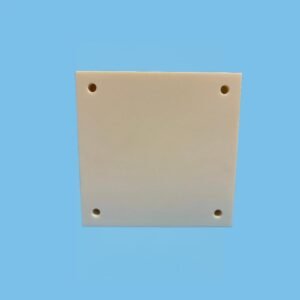
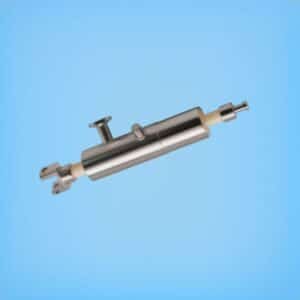
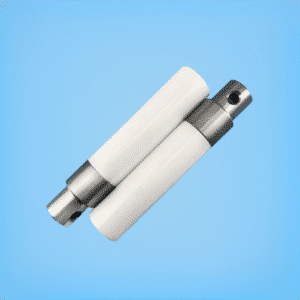
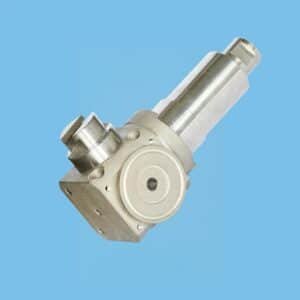
By engaging directly with JuchangCeramic, you secure unparalleled access to elite material science and precision diamond machining. Whether you need custom plungers, wear-resistant bearings, or specialized high-temperature insulators, our facility is equipped to transition your project from initial CAD prototyping to full-scale mass production seamlessly. Stop paying middleman markups for generic parts; elevate your engineering standards by going direct to the source.
Frequently Asked Questions (FAQ)
Why are technical ceramics more expensive than stainless steel?
Technical ceramics are initially more expensive because the raw powder synthesis is complex, the sintering process requires extreme temperatures (over 1,600°C) for extended periods, and final machining can only be done using expensive diamond-tipped tooling. However, their superior wear life often makes them cheaper in the long run.
How do I know if I am dealing with a real Advanced Ceramic Components Manufacturer or a trading company?
Always request a live video tour of the facility. A true manufacturer will gladly show you their powder mixing rooms, sintering kilns, and CNC grinding floors. Trading companies will typically avoid this or only show you an office space and an assembly room.
Can advanced ceramic components be threaded like metal parts?
Yes, internal and external threads can be ground into ceramic components, but it is highly challenging and expensive due to the brittleness of the material. In most professional situations, engineers design metal housings to encapsulate the ceramic, or use adhesives/shrink fits instead of threading the ceramic directly.
Authoritative References
To ensure your ceramic engineering and procurement adhere to the highest global standards, we recommend consulting the following authoritative organizations:
- ASTM International – Provides critical standards for testing the mechanical, thermal, and electrical properties of advanced technical ceramics.
- International Organization for Standardization (ISO) – ISO Technical Committee 206 develops strict international standards for fine ceramics, testing methodologies, and terminology.
- The American Ceramic Society (ACerS) – The leading professional membership organization providing peer-reviewed research, technological advancements, and industry publications in ceramic science.