
Finding a reliable partner for manufacturing technical ceramics is one of the most frustrating bottlenecks in modern mechanical engineering and industrial procurement. Purchasing agents and product engineers looking to source bespoke ceramic parts usa face a stark reality: domestic US manufacturing is plagued by staggering tooling costs, agonizingly slow lead times, and a severe shortage of specialized machining capacity. If your equipment requires the extreme thermal, electrical, or wear-resistant properties of technical ceramics, settling for off-the-shelf components is simply not an option.
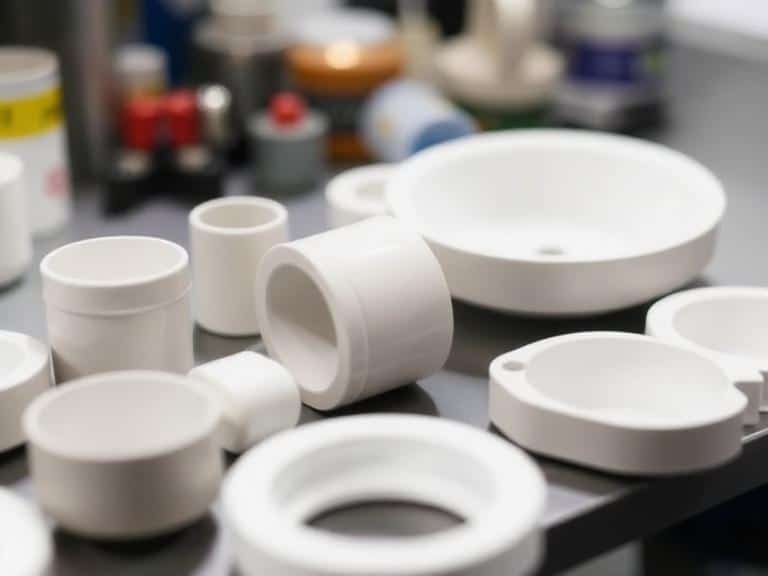
From our experience, navigating the supply chain for advanced custom ceramics requires a ruthless, commercially driven mindset. You are not just buying a piece of shaped alumina or zirconia; you are investing in highly complex powder metallurgy, precision green machining, high-temperature sintering, and diamond-abrasive hard grinding. In this guide, we will break down exactly how professional procurement teams secure high-precision custom ceramics, analyze the cost-benefit of domestic versus offshore manufacturing, and provide actionable intelligence on selecting the right manufacturing partner.
Quick Answer: How to Source Bespoke Ceramic Parts USA
If you need to procure bespoke ceramic parts usa, you have five primary avenues: 1) Direct US-based boutique manufacturers (highest cost, long lead times), 2) Domestic US distributors with hidden offshore networks (medium cost, reduced communication), 3) Direct offshore OEM partners (lowest cost, highest scalability), 4) Specialized onshore engineering and design firms, and 5) Rapid ceramic 3D printing bureaus for prototyping. In most professional situations, we recommend partnering directly with an established offshore manufacturer like JuchangCeramic for production runs, as this eliminates the domestic middleman markup while maintaining strict ISO-level precision and rapid scalability.
Table of Contents
- What It Is: The Reality of Custom Technical Ceramics
- How It Works: 5 Ways to Source Bespoke Ceramic Parts USA
- The Engineering Benefits of Bespoke Ceramics
- Limitations and Manufacturing Constraints
- Who Should Use It & Who Does Not Need It
- Common Mistakes in Ceramic Design
- Commercial Buying Considerations
- Expert Recommendation & Factory Direct Sourcing
- Essential Comparison Tables
- The Bottom Line
- Frequently Asked Questions (FAQs)
What It Is: The Reality of Custom Technical Ceramics
When we discuss bespoke ceramic parts usa, we are strictly talking about advanced technical ceramics—primarily Alumina (Al2O3), Zirconia (ZrO2), Silicon Carbide (SiC), and Silicon Nitride (Si3N4). These are not the clay-based ceramics used in pottery or construction. Technical ceramics are highly engineered inorganic, non-metallic materials synthesized from high-purity chemical powders.
-
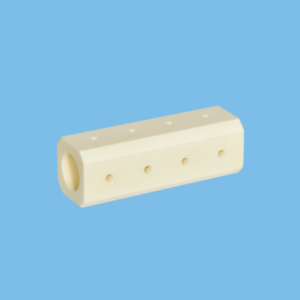
Alumina Ceramic Parts | High-Precision Zirconia Components for Metering & Plunger Pumps
-
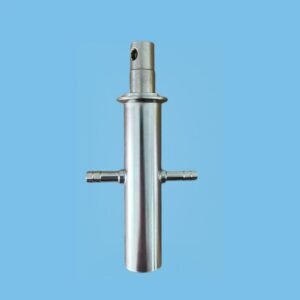
biopharmaceutical filling pump
-
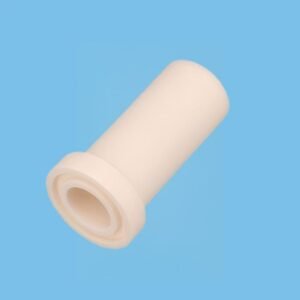
Ceramic parts manufacturing
-
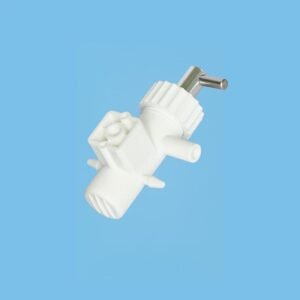
Ceramic pump for dialysis
-
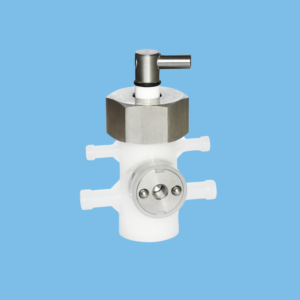
Dialysis Dehydration Ceramic Pump | Medical High-Precision CRRT Fluid Control Pump
-
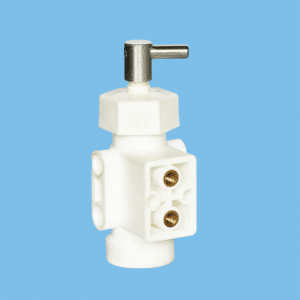
Medical Ceramic Pump for Dialysis Dehydration
-
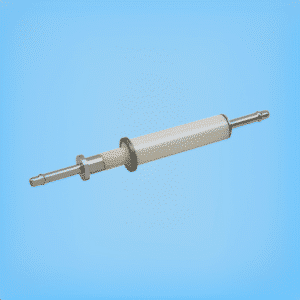
pharmaceutical filling pump
-
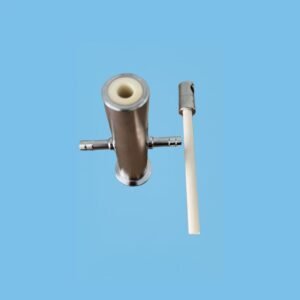
Valveless Ceramic Plunger Pump | High Precision Metering Pump
A bespoke ceramic part is a component machined and fired to a customer’s exact proprietary CAD print. Because these materials shrink by roughly 20% to 25% during the high-temperature sintering process (often exceeding 1600 degrees Celsius), creating a custom part requires intense mathematical modeling. The manufacturer must scale up the “green” (unfired) geometry perfectly so that the final fired piece achieves near-net shape. Following sintering, any critical dimensional tolerances—often down to +/- 0.001mm for aerospace or fluid metering applications—must be achieved using highly expensive diamond grinding equipment, as standard steel tooling cannot scratch technical ceramics.
Understanding what is alumina ceramics is the first step for any procurement officer, as it remains the workhorse material for 80% of custom industrial applications due to its excellent cost-to-performance ratio.
How It Works: 5 Ways to Source Bespoke Ceramic Parts USA
Procurement teams seeking bespoke ceramic parts usa must choose a supply chain strategy based on their budget, volume, and intellectual property requirements. Here are the five definitive ways to source these components.
- Direct Domestic US Manufacturers: These are factories located physically within the United States. They offer exceptional communication, strict ITAR compliance for defense contractors, and zero import logistics. However, their overhead is astronomical. Tooling costs are often 300% to 500% higher than global alternatives, and lead times can stretch from 12 to 20 weeks just for a first-article prototype.
- US-Based Distributors (White-Label Networks): Many companies advertising as manufacturers are actually sophisticated brokers. They take your CAD files, apply a massive 50% to 100% markup, and outsource the actual production to factories in Asia. While this simplifies your purchasing process, it destroys your unit economics.
- Direct Offshore OEMs: By going directly to specialized manufacturers in high-tech industrial hubs, commercial buyers can secure world-class precision at a fraction of the domestic cost. Reputable offshore factories possess the same, if not superior, 5-axis CNC green-machining and diamond grinding capabilities as their US counterparts. This is the optimal route for scaling production.
- Onshore Engineering and Design Firms: These firms do not manufacture anything; they consult. If your engineering team does not understand the design rules for brittle materials, these firms will optimize your CAD for ceramic manufacturability before you hand it off to a factory.
- Rapid Ceramic 3D Printing Bureaus: A relatively new development, SLA (Stereolithography) ceramic printing allows for tooling-free prototypes within days. While the surface finish and mechanical density rarely match pressed and sintered parts, this is an excellent way to test form and fit before investing in expensive steel molds for dry pressing.
The Engineering Benefits of Bespoke Ceramics
Why undergo the grueling process of sourcing custom ceramics instead of using standard 316L stainless steel or tungsten carbide? The benefits are absolute and commercially verifiable.
Firstly, technical ceramics offer supreme wear resistance. If you are dealing with abrasive slurries, a wear resistant ceramic parts supplier can provide zirconia components that outlast metal equivalents by a factor of 10 to 1. Secondly, they provide total chemical inertness, making them immune to virtually all acids and alkalis. Finally, their electrical insulation properties at high temperatures make them indispensable in semiconductor manufacturing and high-voltage applications.
For heavy-duty applications, such as high-pressure fluid handling, utilizing a custom ceramic plunger holder design ensures leak-free operation for millions of cycles without degradation.
Limitations and Manufacturing Constraints
We must address the practical realities. In our testing and daily manufacturing operations, technical ceramics demonstrate severe fracture toughness limitations compared to metals. They are incredibly brittle. If your custom part is subjected to sharp, sudden impacts or point-loading, it will shatter. Designing for ceramics requires generous radii, the elimination of sharp internal corners, and compressive (rather than tensile) load applications.
Commercially, the limitation is the upfront tooling cost. If your part geometry requires dry pressing or injection molding (CIM), the initial mold costs can range from thousands to tens of thousands of dollars. You must have a clear path to high-volume production to amortize these tooling expenses.
Who Should Use It & Who Does Not Need It
For commercial users: OEM pump manufacturers, medical device companies, semiconductor equipment builders, and automotive sensor manufacturers absolutely must utilize bespoke ceramic parts usa supply chains. When standard sizes fail to integrate into your proprietary equipment, custom engineering is your only defense against mechanical failure and market irrelevance.
For beginners: Hobbyists, low-budget startups, or companies looking for a “quick fix” to a wear problem should avoid custom ceramics. If you only need five pieces of a simple tube or rod, the engineering and setup costs will bankrupt your project. You are far better off adapting your design to use standard, off-the-shelf ceramic rod applications that can be purchased from catalog suppliers.
Common Mistakes in Ceramic Design
When buyers submit drawings to a ceramic pump parts manufacturer, they routinely make expensive errors. The most common mistake is applying metal machining tolerances to ceramic parts. Specifying a +/- 0.005mm tolerance on a non-critical surface forces the manufacturer to use diamond grinding, multiplying the cost of the part by five. You should only specify tight tolerances on critical mating surfaces; leave the rest as “as-fired” tolerances (typically +/- 2%).
Another fatal error is ignoring the transition between thick and thin cross-sections. In ceramics, uneven wall thicknesses cool at different rates during sintering, leading to internal stress, warping, and cracking. Keep your wall thicknesses as uniform as humanly possible.
Commercial Buying Considerations
When evaluating a partner for bespoke ceramic parts usa, you must demand transparency. Ask the supplier directly: “Do you own the kilns, or are you brokering this out?” You must also assess their quality control laboratory. Do they possess Coordinate Measuring Machines (CMM) and laser micrometers to verify the dimensions they claim to hold?
We recommend establishing a Minimum Order Quantity (MOQ) strategy early in negotiations. Many domestic US manufacturers refuse to turn their machines on for less than a $10,000 order. Conversely, capable offshore OEMs are often willing to run smaller pilot batches (100 to 500 units) utilizing green-machining techniques without requiring expensive hard tooling, allowing you to prove your concept commercially before committing heavy capital.
Understanding the pricing landscape is critical. Before entering negotiations, review resources like a ceramic plunger price guide to benchmark global manufacturing costs against domestic quotes.
Expert Recommendation & Factory Direct Sourcing
If you require high precision, scalable volume, and absolute commercial viability, relying exclusively on domestic US manufacturing is a fast track to margin erosion. To remain globally competitive, you must optimize your supply chain by partnering directly with elite offshore manufacturers.
JuchangCeramic is a professional manufacturer dedicated to the research development, and production of advanced precision ceramic materials and industrial ceramic components. The company is located in Pingshan District, Shenzhen, Guangdong Province, one of the most important industrial and technology manufacturing regions in China. By partnering directly with an OEM like JuchangCeramic, US buyers bypass the massive distributor markups. Whether you need high precision zirconia ceramic parts or custom alumina insulators, working with a factory that possesses in-house powder preparation, pressing, sintering, and final diamond lapping ensures you receive bespoke ceramic parts usa quality at highly aggressive global pricing.
Essential Comparison Tables
| Sourcing Method | Best Used For | Cost Profile | Lead Time |
|---|---|---|---|
| Direct US Manufacturer | Defense, ITAR, highly sensitive IP | Extremely High | 10-16 Weeks |
| US Distributor/Broker | Companies afraid of importing | High (Includes middleman markup) | 8-12 Weeks |
| Direct Offshore OEM (e.g., JuchangCeramic) | Commercial scaling, aggressive margins | Highly Competitive | 4-8 Weeks |
| Engineering/Design Firm | CAD optimization for brittle materials | Consulting Fees Apply | N/A (Design only) |
| Ceramic 3D Printing | Rapid form/fit prototyping | Low to Medium | 1-3 Weeks |
| Factor | Domestic US Manufacturer | Direct Offshore OEM (JuchangCeramic) |
|---|---|---|
| Unit Cost | Premium (High labor & facility costs) | Aggressive (Economy of scale, lower overhead) |
| Tooling Cost | Often prohibitive for startups | Highly accessible, fast ROI |
| Precision Capability | ISO 9001 standard, tight tolerances | ISO 9001 standard, identical tight tolerances |
| Communication | Same time zone | Requires managing a 12-hour time difference |
| Bespoke (Custom) Ceramic Parts | Standard (Off-The-Shelf) Ceramic Parts |
|---|---|
| Pro: Exact fit for proprietary engineering assemblies. | Pro: Zero tooling costs and immediate availability. |
| Pro: Material composition can be tailored to specific stress profiles. | Pro: Perfect for initial testing and proof-of-concept. |
| Con: High initial setup and tooling costs. | Con: Forces engineers to compromise on design to fit available sizes. |
| Con: Lead times range from 4 to 12 weeks. | Con: Competitors can easily reverse-engineer and buy the same parts. |
| Material Type | Primary Advantage | Ideal Application |
|---|---|---|
| Alumina (95% – 99.8%) | Excellent electrical insulation, highly cost-effective, very hard. | Wear pads, electrical insulators, pump plungers. |
| Zirconia (Y-TZP) | Highest fracture toughness (resists cracking better than Alumina). | Precision nozzles, medical devices, structural components. |
| Silicon Carbide (SiC) | Extreme hardness, unmatched thermal conductivity. | Mechanical seal faces, semiconductor equipment, armor. |
| Silicon Nitride (Si3N4) | Superior thermal shock resistance and high-temperature strength. | Engine components, welding pins, bearing balls. To learn more, see what are ceramic bearings used for. |
The Bottom Line
Sourcing bespoke ceramic parts usa does not mean you are forced to pay exorbitant domestic manufacturing rates. The most successful commercial enterprises utilize direct offshore OEMs to acquire elite technical ceramics at a fraction of the cost. By understanding the manufacturing constraints, avoiding unnecessary ultra-tight tolerances, and selecting the correct material—whether it be alumina or zirconia—you can dramatically improve the lifespan of your mechanical systems. Stop paying middleman markups; engage directly with a proven factory partner to secure your proprietary components.
Frequently Asked Questions (FAQs)
What is the typical lead time for custom bespoke ceramic parts?
In most professional situations, the lead time for a custom ceramic part depends heavily on the manufacturing method. Green-machined prototypes typically take 3 to 5 weeks. If high-volume dry pressing molds are required, initial tooling and first-article inspection can take 6 to 10 weeks.
Why are custom ceramic parts so expensive compared to metal?
The raw material powders are highly refined, but the true cost lies in the machining. Because fired technical ceramics are harder than almost any metal, they can only be machined or ground using specialized diamond-abrasive tooling, which is a slow, extremely expensive process.
Can I thread a custom ceramic part like a steel bolt?
While it is technically possible to machine threads into ceramics, we strongly recommend against it. Ceramics are notch-sensitive, and the sharp root of a V-thread creates massive stress concentrations that almost always lead to fracture under load. It is much better to use metal inserts, flanges, or epoxies for joining ceramic parts.
Authoritative Industry References
- National Institute of Standards and Technology (NIST): Advanced data on the structural reliability and fracture mechanics of advanced technical ceramics. NIST Advanced Materials Research
- The American Ceramic Society (ACerS): The leading professional membership organization providing technical resources, standards, and peer-reviewed research for the ceramic engineering industry. American Ceramic Society
- MatWeb Material Property Data: A comprehensive commercial database for comparing the exact mechanical, thermal, and electrical properties of various ceramic grades (e.g., Alumina 99.5% vs. Zirconia Y-TZP). MatWeb Technical Ceramics Data