
Procuring industrial fluid control systems is a high-stakes endeavor. When you transition from standard metallic pumps to advanced technical ceramics, the financial investment and operational expectations skyrocket. Engineers specify ceramic pumps for a singular reason: standard alloys have failed. Whether you are pumping highly corrosive acids, abrasive slurries, or ultra-pure pharmaceutical fluids, ceramics offer unparalleled longevity. However, sourcing these highly specialized components is fraught with risk. If you do not know the exact Questions to Ask a Ceramic Pump Manufacturer, you will invariably purchase inferior products that shatter, leak, or contaminate your process line.
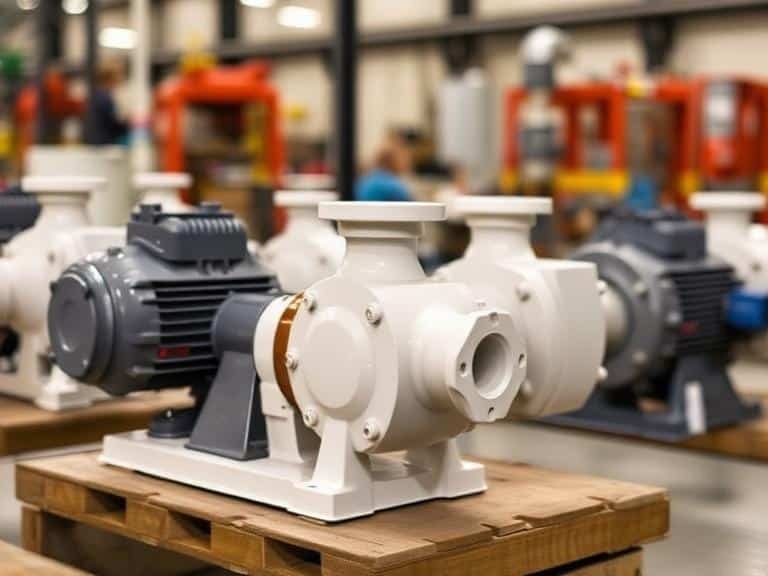
From our experience engineering fluid handling solutions at JuchangCeramic, the market is flooded with trading companies masquerading as true manufacturers. These middlemen peddle low-purity ceramics with atrocious dimensional tolerances, leaving the end-user to deal with the catastrophic fallout of a failed production line. You must apply commercial and practical judgment to every vendor interaction. In this comprehensive procurement guide, we will outline the definitive interrogation strategy you must deploy. We will explain exactly what to ask, how to interpret the manufacturer’s answers, and how to verify if their components are actually worth using, buying, or upgrading to.
Quick Answer: The Mandatory Manufacturer Vetting Checklist
Before issuing a purchase order, the critical Questions to Ask a Ceramic Pump Manufacturer must cover raw material origins, manufacturing infrastructure, and quality control. You must ask: 1. Are you a direct manufacturer or a trading company? 2. What specific ceramic grades (e.g., 99.5% Alumina or Y-TZP Zirconia) do you use? 3. What are your maximum machining tolerances for concentricity and surface finish? 4. How do you handle custom OEM prototyping? 5. What are your exact lead times for sintered parts? 6. Can you provide material data sheets for chemical compatibility? 7. How do you bond or assemble ceramic to metal shafts? 8. What non-destructive testing (NDT) do you perform? 9. Do you have minimum order quantities (MOQs)? 10. What is your warranty and post-sale technical support policy? Accepting vague answers to any of these points is a guaranteed path to mechanical failure.
Table of Contents
- What It Is: The Vendor Qualification Process
- How It Works: Interpreting the Answers
- The 10 Critical Questions to Ask
- Benefits of Rigorous Vetting
- Limitations of the Questioning Process
- Who Should Use It & Who Does Not Need It
- Common Procurement Mistakes
- Strategic Buying Considerations
- Essential Procurement Tables
- Expert Recommendation from JuchangCeramic
- Frequently Asked Questions (FAQ)
What It Is: The Vendor Qualification Process
Vendor qualification in the advanced ceramics sector is a forensic audit of a supplier’s engineering capabilities. It is not merely a price negotiation. The process involves systematically verifying the manufacturer’s claims against their actual factory footprint, material science knowledge, and historical case studies. Formulating the right Questions to Ask a Ceramic Pump Manufacturer acts as a filter to instantly weed out brokers who outsource their production to unqualified sub-tier factories.
Technical ceramics are unforgiving. Unlike steel, you cannot simply weld a patch onto a cracked ceramic plunger. The component must be perfectly pressed, uniformly sintered at extreme temperatures, and then diamond-ground to micron-level precision. The qualification process ensures that the factory holds the specialized CNC grinding equipment, the high-temperature kilns, and the metrology lab necessary to produce a flawless pump component.
How It Works: Interpreting the Answers
Knowing what to ask is only half the battle; knowing how to interpret the response is where commercial judgment comes into play. If you ask a supplier about their ability to hold a 0.005mm tolerance on a ceramic plunger pump components overview, and their response is an immediate, enthusiastic “Yes, no problem!” without asking to see your CAD drawings or inquiring about the specific ceramic material, they are lying. A true engineering firm will review the geometry, calculate the shrinkage rate of the material during sintering, and provide a detailed DFM (Design for Manufacturing) report before making tolerance guarantees.
The 10 Critical Questions to Ask a Ceramic Pump Manufacturer
1. Are you a direct manufacturer with in-house sintering and grinding?
In most professional situations, dealing with a trading company adds an unnecessary 30% markup and destroys traceability. Ask for a live video tour of their facility. You need to see the cold isostatic presses, the sintering kilns, and the diamond grinding machines. If they cannot show you the machines making the parts, walk away.
2. What specific material grades do you recommend for my fluid?
Never accept “ceramic” as a material specification. You must ask whether they recommend high-purity alumina, silicon carbide, or yttria-stabilized zirconia. For highly abrasive slurries, you must evaluate zirconia vs alumina ceramic components. A knowledgeable manufacturer will ask for your fluid’s pH level, temperature, and particulate size before making a recommendation.
3. What are your maximum machining tolerances and surface finishes?
Ceramic pumps rely on incredibly tight clearances between the plunger and the cylinder to create a seal without elastomers. Ask for their standard grinding tolerances. You are looking for an answer in the realm of +/- 0.002mm to 0.005mm, with surface roughness (Ra) capabilities down to 0.1 or 0.05 microns. You need a verified precision ceramic components for pumps expert.
4. How do you handle Custom OEM Prototyping?
If you are designing a proprietary medical dosing pump, you cannot use off-the-shelf parts. Ask about their tooling costs and minimum quantities for prototypes. A reputable factory will offer a clear path from a low-volume, soft-tooled prototype run to high-volume, hard-tooled mass production.
5. What are your exact lead times?
True technical ceramics require 3 to 5 days just in the sintering kiln to achieve proper densification, followed by weeks of slow, careful diamond grinding. If a supplier promises custom parts in 7 days, they are either lying or planning to machine your part out of a porous, pre-fired machinable ceramic block, which is entirely unsuitable for advanced industrial ceramics applications.
6. How do you ensure chemical and wear resistance?
Ask for material data sheets detailing the density and porosity of their sintered parts. A lower density means higher porosity, which leads to fluid absorption, bacterial growth, and rapid wear. Demand high-density, zero-porosity components from a proven wear resistant ceramic parts supplier.
7. What is your method for ceramic-to-metal bonding?
Most ceramic pump plungers must be attached to a stainless steel driving rod. Because ceramics and metals have drastically different thermal expansion coefficients, improper bonding will cause the ceramic to shatter during operation. Ask if they use specialized epoxies, shrink-fitting, or mechanical fastening, and compare this against your operational temperature. Reviewing a ceramic rod vs metal rod comparison will help you understand these thermal dynamics.
8. What Non-Destructive Testing (NDT) do you perform?
Micro-cracks in ceramics are invisible to the naked eye but will cause catastrophic failure under pressure. Ask if they utilize ultrasonic testing, dye penetrant inspection, or X-ray imaging to guarantee structural integrity before shipping the parts.
9. Do you impose Minimum Order Quantities (MOQs)?
For heavy-duty applications, tooling costs can be high. Clarify the financial threshold required to start a project. Ensure the MOQ aligns with your testing phase budget before you commit engineering resources to their platform.
10. What is your warranty and failure analysis protocol?
If a part fails prematurely in the field, will the manufacturer assist with a metallurgical root-cause analysis? You need a partner who stands behind their product and possesses the laboratory equipment to determine if the failure was caused by improper material selection, a manufacturing defect, or an unforeseen application parameter. Check their ceramic plunger material selection guide to see how deeply they understand application matching.
Benefits of Rigorous Vetting
The primary benefit of asking these questions is extreme risk mitigation. By thoroughly interrogating a manufacturer, you ensure that you are buying from a facility that understands the catastrophic consequences of a pump failure in a chemical plant or a pharmaceutical line. It also establishes authority; when a supplier realizes you understand the nuances of high precision zirconia ceramic parts, they are far less likely to cut corners on your order.
Limitations of the Questioning Process
We recommend commercial vigilance: questions are only the first step. The limitation of an interview is that salespeople can be coached to provide the right answers. In our testing, the only way to truly validate a manufacturer is to order a small prototype batch and subject the components to brutal, real-world destructive testing in your own facility. You must verify that the parts meet the claimed geometric tolerances using your own coordinate measuring machines (CMM).
Who Should Use It & Who Does Not Need It
For commercial users and heavy-duty applications: If you are operating in the petrochemical, medical device, water treatment, or semiconductor sectors, you absolutely must deploy this questionnaire. Your systems run 24/7, and downtime costs thousands of dollars per hour. You require verified, top-tier manufacturing partners.
Who does not need it: For beginners or hobbyists purchasing low-pressure, low-temperature aquarium pumps or basic agricultural sprayers, undergoing a rigorous metallurgical vetting process is a massive waste of time. Standard off-the-shelf plastic or brass components are sufficient and far more economical.
Common Procurement Mistakes
The most catastrophic error in ceramic procurement is buying exclusively on price. If one manufacturer quotes $50 for a ceramic plunger and another quotes $15, the cheaper option is almost certainly using low-purity recycled alumina powder and skipping the final diamond polishing phase. That $15 part will shred your pump seals in a week, costing you ten times the savings in maintenance labor.
Another common mistake is failing to account for thermal shock. Engineers often specify ceramics for high-heat environments but forget that rapid cooling will shatter alumina. If your application involves rapid temperature swings, you must consult with the manufacturer about substituting alumina for silicon nitride or reviewing the ceramic tube applications in high heat environments to understand thermal thresholds.
Strategic Buying Considerations
When you are ready to evaluate a ceramic pump parts manufacturer, consider the long-term scalability of the relationship. Can this manufacturer supply not only your pump plungers but also the complementary best ceramic insulators for industrial use or explain the benefits of ceramic bearings for your motor assemblies? A manufacturer with broad capabilities simplifies your supply chain.
Essential Procurement Tables
| Vetting Category | Target Metric | Why It Matters |
|---|---|---|
| Material Purity | 99% – 99.5% Alumina or Y-TZP Zirconia | Prevents chemical leaching and ensures maximum hardness. |
| Surface Finish (Ra) | 0.05 to 0.1 microns | Eliminates friction, preventing premature pump seal failure. |
| Concentricity | < 0.005mm | Ensures the plunger moves perfectly true, preventing jamming. |
| Quality Assurance | ISO 9001 Certification & Full CMM Reporting | Guarantees batch-to-batch consistency for long-term production. |
| Feature | True Ceramic Manufacturer | Trading Company (Broker) |
|---|---|---|
| Engineering Support | Direct access to material scientists; thorough DFM reviews. | Salesmen acting as messengers; delays in technical answers. |
| Pricing | Transparent, factory-direct pricing. | 20% to 40% hidden markup applied. |
| Quality Control | In-house metrology lab; strict accountability. | Relies on third-party factories; quality fades over time. |
| Custom Tooling | Molds kept in-house; fast modification capabilities. | Molds are outsourced; modifying designs is slow and costly. |
| Approach | Pros | Cons |
|---|---|---|
| Custom OEM Parts | Perfectly tailored to your fluid dynamics; maximizes system efficiency and lifespan. | Requires upfront tooling costs and 4-8 week lead times for initial prototypes. |
| Off-The-Shelf Parts | Immediate availability; zero tooling costs; ideal for rapid testing. | Forces you to compromise on pump design; may not offer the exact purity grade needed. |
Expert Recommendation from JuchangCeramic
In most professional situations, the operational integrity of your fluid control system relies entirely on the precision of its ceramic components. You cannot afford to play guessing games with unverified suppliers. We recommend demanding absolute transparency, from raw material powder sourcing to final diamond polishing.
JuchangCeramic delivers professional OEM and custom manufacturing solutions for precision ceramic parts, pumps, and components. Whether you have complete drawings or just an idea, we transform your requirements into high-performance products with accurate quotation and reliable production.
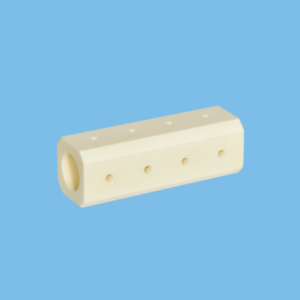
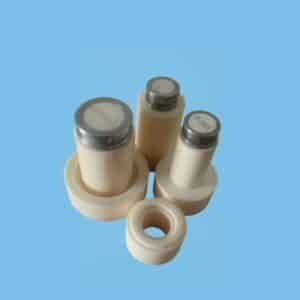
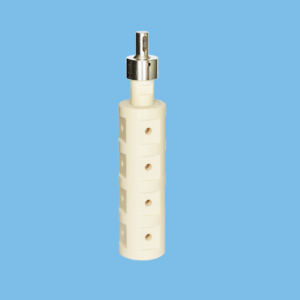
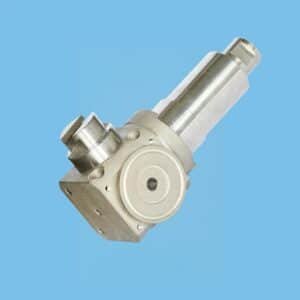
We invite you to bring us your toughest Questions to Ask a Ceramic Pump Manufacturer. Our engineering team is prepared to provide detailed DFM analysis, material recommendations, and strict tolerance guarantees to ensure your next project is a definitive success. Stop settling for subpar components and partner with a facility that understands the science of extreme environments.
Frequently Asked Questions (FAQ)
What are the most critical Questions to Ask a Ceramic Pump Manufacturer?
The most critical questions involve verifying their in-house machining tolerances, asking about the specific purity grades of their alumina or zirconia, requesting case studies of their pumps handling similar corrosive fluids, and determining their exact lead times for custom tooling and prototyping.
Why is material purity so important in ceramic pumps?
Material purity dictates chemical inertness and wear resistance. A 95% alumina pump component contains binders that can degrade under harsh acidic or alkaline conditions. In most professional situations, demanding 99% or 99.5% purity is required to prevent premature mechanical failure and fluid contamination.
How long does it take to get custom ceramic pump prototypes?
True ceramic manufacturing involves tooling, pressing, sintering, and diamond grinding. From our experience, you should expect custom prototypes to take between 4 to 8 weeks. Any manufacturer promising a 1-week turnaround is likely modifying an off-the-shelf part rather than fabricating a true custom component.
Authoritative Industry References
To further validate your procurement strategy and understand the rigorous standards governing technical ceramics, we recommend consulting the following resources:
- ASTM International – For standardized testing methods regarding the flexural strength, density, and chemical resistance of advanced technical ceramics.
- The American Ceramic Society (ACerS) – For peer-reviewed data on the latest advancements in zirconia and alumina material science for industrial applications.
- International Organization for Standardization (ISO) – Specifically ISO 9001 quality management systems, which are mandatory for verifying the operational consistency of global manufacturing facilities.