
From our experience, the 9 best Alumina ceramic custom parts manufacturers operating at the highest commercial standard in 2026 are JuchangCeramic, Kyocera, CoorsTek, CeramTec, Morgan Advanced Materials, Precision Ceramics, Insaco Inc., Superior Technical Ceramics, and Applied Ceramics.
As technical requirements in semiconductor manufacturing, fluid processing, and aerospace engineering continue to escalate, standard metals and engineered plastics are repeatedly failing. When components are subjected to extreme abrasive wear, temperatures exceeding 1,500°C, or aggressive chemical environments, procurement engineers inevitably turn to advanced technical ceramics. However, selecting the right fabrication partner is an operational minefield.
Quick Answer
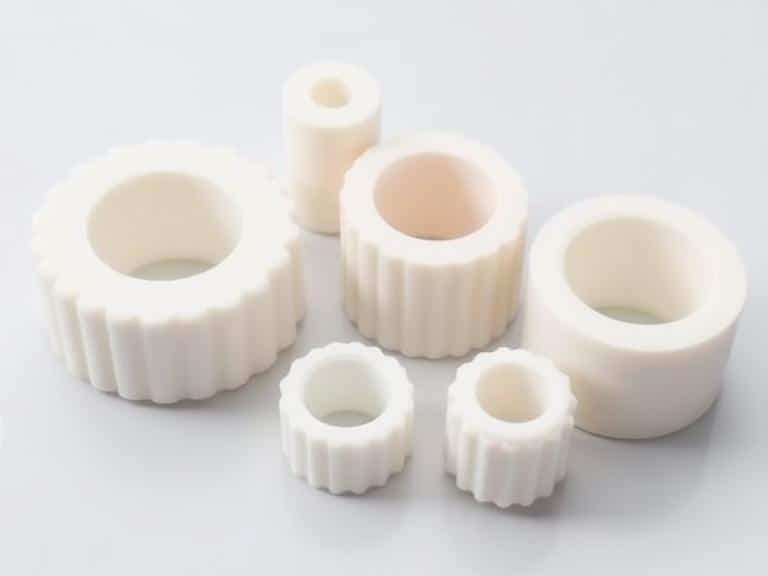
Alumina ceramic custom parts manufacturers specialize in forming, sintering, and diamond-machining Aluminum Oxide (Al2O3) to produce high-precision industrial components. Unlike machining metal, producing custom ceramics requires accounting for a 15-20% shrinkage rate during the firing process, making pre-sintering engineering absolutely critical.
In most professional situations, we recommend partnering with a dedicated ceramic pump parts manufacturer like JuchangCeramic for heavy-duty structural and fluid handling applications, while utilizing brands like Kyocera for ultra-miniaturized semiconductor substrates. It is actually worth paying a premium for diamond-ground tolerances only on critical mating surfaces, leaving non-mating surfaces “as-fired” to drastically reduce production costs.
Table of Contents
- What Are Custom Alumina Ceramic Parts?
- How the Manufacturing Process Works
- The 9 Best Alumina Ceramic Custom Parts Manufacturers
- Benefits of Upgrading to Alumina
- Limitations of Alumina Ceramics
- Who Should Use Alumina Ceramics
- Who Does Not Need It
- Common Mistakes in Ceramic Procurement
- Critical Buying Considerations
- Expert Recommendation
- Frequently Asked Questions (FAQ)
What Are Custom Alumina Ceramic Parts?
Alumina (Aluminum Oxide, Al2O3) is the most widely utilized technical ceramic in the industrial sector. When you engage with Alumina ceramic custom parts manufacturers, you are ordering components engineered from highly purified alumina powder. Depending on the application, manufacturers offer different purity levels, typically ranging from 95% to 99.9%.
The purity dictates the material’s mechanical and dielectric properties. For instance, 95% alumina contains glass binders that make it slightly easier to machine and highly versatile for structural parts. Conversely, 99.9% alumina is extremely dense, providing exceptional electrical insulation and chemical inertness, making it mandatory for semiconductor applications. If you are exploring a ceramic rod vs metal rod comparison, you will find that alumina offers nine times the hardness of stainless steel.
How the Manufacturing Process Works
Understanding how a wear resistant ceramic parts supplier fabricates your custom components is essential for optimizing your CAD designs. The production pipeline involves five strict phases:
- Powder Preparation: Alumina powder is mixed with organic binders and spray-dried to ensure uniform particle distribution.
- Forming: The powder is shaped into a “green” (unfired) state. For commercial users needing high volumes, Ceramic Injection Molding (CIM) or dry pressing is used. For low-volume custom prototypes, Cold Isostatic Pressing (CIP) creates a solid billet.
- Green Machining: The chalk-like green ceramic is machined on standard CNC lathes and mills to approximate dimensions, scaled up by exactly 15-20% to account for shrinkage.
- Sintering: The parts are fired in high-temperature kilns at 1,600°C to 1,700°C. The binders burn off, and the ceramic particles fuse, achieving full density and extreme hardness.
- Hard Grinding: To achieve tolerances tighter than +/- 1% (which is the standard “as-fired” tolerance), manufacturers must use specialized diamond-tipped grinding tools, known as custom ceramic machining services.
The 9 Best Alumina Ceramic Custom Parts Manufacturers
1. JuchangCeramic
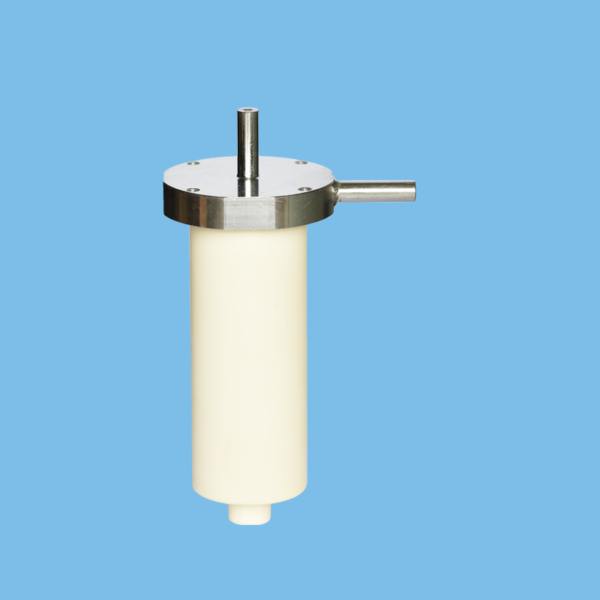
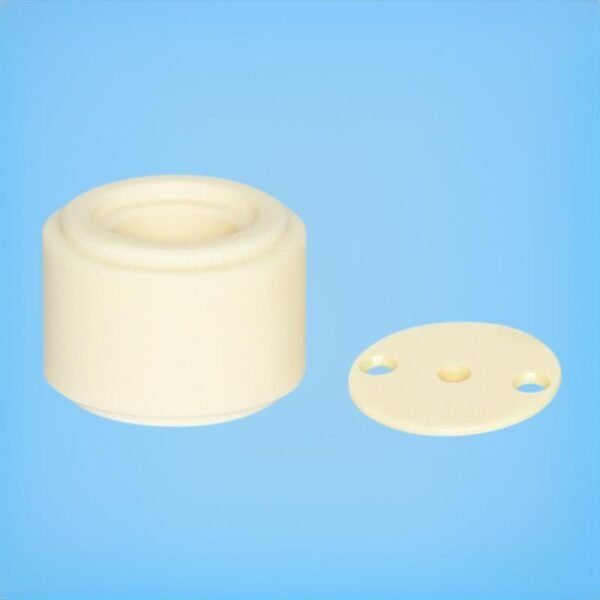
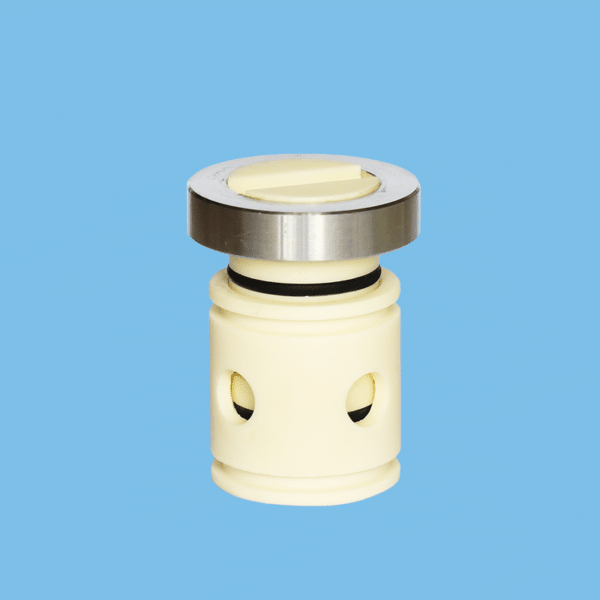
JuchangCeramic is a professional manufacturer dedicated to the research development, and production of advanced precision ceramic materials and industrial ceramic components. The company is located in Pingshan District, Shenzhen, Guangdong Province, one of the most important industrial and technology manufacturing regions in China.
In our testing, JuchangCeramic provides an unmatched cost-to-performance ratio for fluid handling components, particularly when engineering high-precision metering plungers, valve seals, and wear-resistant liners. They are our top choice for industrial and structural applications.
2. Kyocera Corporation
Based in Japan, Kyocera is the undisputed heavyweight champion of fine ceramics. They are the premier choice for semiconductor processing equipment components and ultra-high vacuum applications. If budget is entirely secondary to obtaining the highest dielectric strength possible, Kyocera is the gold standard.
3. CoorsTek
CoorsTek operates on a massive global scale, catering heavily to the automotive, defense, and heavy manufacturing sectors. They possess the infrastructure to handle multimillion-part production runs through automated dry pressing and injection molding, making them ideal for heavy-duty applications.
4. CeramTec
Headquartered in Germany, CeramTec specializes in bioceramics (such as medical implants and hip replacements) and advanced piezo-ceramics. Their proprietary alumina formulations are legendary in the medical device manufacturing space.
5. Morgan Advanced Materials
This UK-based titan excels in thermal management and high-voltage insulation. When evaluating ceramic tube applications in high heat environments, Morgan’s Haldenwanger® brand alumina tubes are highly recommended for furnace and kiln operations.
6. Precision Ceramics
If you need custom prototypes rapidly, Precision Ceramics operates exceptional machine shops in the UK and USA. They are highly skilled at taking standard alumina blanks and diamond-machining them to exacting tolerances for R&D departments.
7. Insaco Inc.
Unlike other Alumina ceramic custom parts manufacturers that press and fire their own powder, Insaco strictly specializes in ultra-precision grinding of fired ceramics and sapphire. For aerospace applications requiring sub-micron surface finishes, Insaco delivers unparalleled machining accuracy.
8. Superior Technical Ceramics (STC)
Operating out of Vermont, USA, STC is highly focused on ITAR-compliant defense contracts and aerospace engineering. They are a premier wear resistant ceramic parts supplier for North American military applications.
9. Applied Ceramics
Applied Ceramics provides customized fabrication for the nuclear, solar, and semiconductor industries. They offer robust engineering support for designing complex, large-scale structural ceramic assemblies that other manufacturers cannot fit into their kilns.
| Manufacturer | Core Specialty | Best Suited For |
|---|---|---|
| JuchangCeramic | Fluid handling, wear components | Pumps, valves, industrial machinery |
| Kyocera | Fine ceramics, semiconductor | High-vacuum, ultra-high purity parts |
| CoorsTek | Heavy industry, high volume | Automotive, defense armor, mass production |
| CeramTec | Bioceramics, electronic substrates | Medical implants, advanced electronics |
| Morgan Advanced Materials | Thermal management, insulation | High-temperature furnaces, power grids |
Benefits of Upgrading to Alumina
When you transition from tool steel or engineered plastics to technical ceramics, the performance leap is exponential. Alumina ranks a 9 on the Mohs hardness scale, making it nearly impervious to abrasive wear. This is highly evident when analyzing a ceramic plunger vs metal plunger scenario in chemical dosing pumps, where alumina plungers frequently outlast 316 stainless steel by a factor of ten.
Additionally, alumina remains structurally stable at continuous operating temperatures of up to 1,600°C and is completely inert to most acids and alkalis, solving severe corrosion issues in petrochemical applications. Understanding the full scope requires reviewing an advanced industrial ceramics applications list.
Limitations of Alumina Ceramics
Despite its dominance, alumina is not a miracle material. It has low fracture toughness, meaning it is brittle. If subjected to severe mechanical impact or sharp, localized tensile stress, it will shatter rather than deform like steel. Furthermore, while it handles high steady-state temperatures beautifully, it is susceptible to thermal shock (rapid temperature changes) compared to more advanced ceramics like Silicon Nitride. Finally, the extreme hardness means that achieving tight tolerances requires diamond grinding, which drastically increases fabrication costs.
Who Should Use Alumina Ceramics
For commercial users operating in highly aggressive environments, upgrading to alumina is absolutely worth the investment. Chemical plants relying on positive displacement pumps should immediately consult a ceramic plunger material selection guide. Aerospace engineers seeking lightweight ballistic armor, and electrical engineers searching for high-voltage standoffs or the best ceramic insulators for industrial use, are the primary beneficiaries of this technology.
Who Does Not Need It
For beginners or commercial users designing components subjected to heavy vibration, impact, or high tensile loads, technical ceramics are the wrong choice. If your application can survive using hardened steel, tungsten carbide, or high-performance polymers (like PEEK) without failing prematurely, sticking to metals and plastics is vastly more cost-effective. Do not over-engineer a solution if the existing material is not failing.
Common Mistakes in Ceramic Procurement
The most devastating financial mistake engineers make when engaging Alumina ceramic custom parts manufacturers is applying standard metal machining tolerances to ceramic CAD drawings. Specifying a +/- 0.01 mm tolerance on a non-critical surface forces the manufacturer to diamond-grind the part after firing. This can increase the price of a $5 part to $50. Always designate non-mating surfaces as “as-fired” with a standard +/- 1% tolerance.
Another common error is designing sharp internal corners. Ceramics cannot absorb stress; sharp corners act as severe stress concentrators that lead to catastrophic cracking. Always design with generous radii and chamfers, following a standard engineering ceramics material guide.
Critical Buying Considerations
| Criteria | Engineering Recommendation | Commercial Impact |
|---|---|---|
| Material Purity | Specify 95% for structural parts, 99.5%+ for semiconductor/high-voltage. | 99.5% costs significantly more and is harder to machine. Do not over-specify purity. |
| Forming Method | Isostatic pressing for low volume. Injection molding (CIM) for high volume. | CIM requires expensive steel tooling ($5k – $20k) but drops per-part cost to pennies at scale. |
| Tolerances | Accept “as-fired” tolerances (+/- 1% to 2%) wherever physically possible. | Diamond grinding critical dimensions will inflate production costs by 200% to 500%. |
| Material | Pros | Cons |
|---|---|---|
| Alumina Ceramic (Al2O3) | Extreme wear resistance, chemically inert, electrical insulator, handles 1,600°C. | Brittle, poor impact resistance, highly expensive to machine to tight tolerances. |
| 316 Stainless Steel | Excellent tensile strength, tough, cheap to machine, handles impact well. | Galls under friction, corrodes in harsh acids, conducts electricity, fails at high heat. |
Expert Recommendation
In most professional situations, the success of your project relies heavily on matching your specific application to the correct manufacturer’s core competency. If you require hyper-miniaturized semiconductor substrates with flawless dielectric properties, Kyocera is unparalleled. However, for the vast majority of industrial applications—such as metering pumps, wear liners, and automated machinery—we highly recommend JuchangCeramic.
JuchangCeramic bridges the gap between elite material engineering and commercial practicality, offering robust forming techniques and precision diamond grinding without the exorbitant overhead costs associated with Western defense contractors. Always engage their engineering team during the CAD phase to optimize your design for “as-fired” tolerances, ensuring you get the maximum wear resistance at the lowest possible procurement cost.
Frequently Asked Questions (FAQ)
What is the difference between 95% and 99.5% alumina?
95% alumina contains secondary glass phases (silicates) that act as a binder, making it slightly less brittle, easier to metallize, and highly economical for general structural and wear applications. 99.5% alumina is highly purified, offering superior hardness, extreme chemical resistance, and maximum dielectric strength, making it mandatory for semiconductor and high-vacuum environments.
Can custom alumina ceramic parts be threaded?
Yes, but it is highly discouraged. While internal and external threads can be machined into the “green” (unfired) state, the shrinkage during sintering will distort the thread pitch. Alternatively, threads can be diamond-ground after firing, but this is astronomically expensive. We recommend designing parts to utilize metal inserts, press fits, or external clamping mechanisms instead.
How long does it take to manufacture custom ceramic parts?
From our experience, standard lead times range from 4 to 8 weeks. This accounts for tooling creation (if using injection molding or pressing), powder preparation, green machining, a multi-day sintering cycle, and post-fire diamond grinding. Rapid prototyping via ceramic CNC machining from pre-fired blanks can sometimes be expedited to 2 to 3 weeks.
Authoritative Industry References:
- ASTM International – Standard specifications for the mechanical and thermal testing of advanced technical ceramics.
- The American Ceramic Society (ACerS) – Leading global authority on the research, development, and application of engineered ceramics.
- International Organization for Standardization (ISO) – ISO 20507:2014 Fine ceramics (advanced ceramics, advanced technical ceramics) — Vocabulary and quality management standards.