
Navigating the industrial materials landscape can be treacherous for procurement managers and engineers alike. When specifying components for high-stress, high-temperature, or high-wear environments, the debate of Ceramic Glass vs. Ceramic frequently surfaces. Unfortunately, the market is flooded with generic advice that fails to address the severe commercial consequences of choosing the wrong material. As JuchangCeramic, a professional manufacturer dedicated to the research, development, and production of advanced precision ceramic materials in Shenzhen, China, we see companies hemorrhage money by misapplying these two distinct material families.
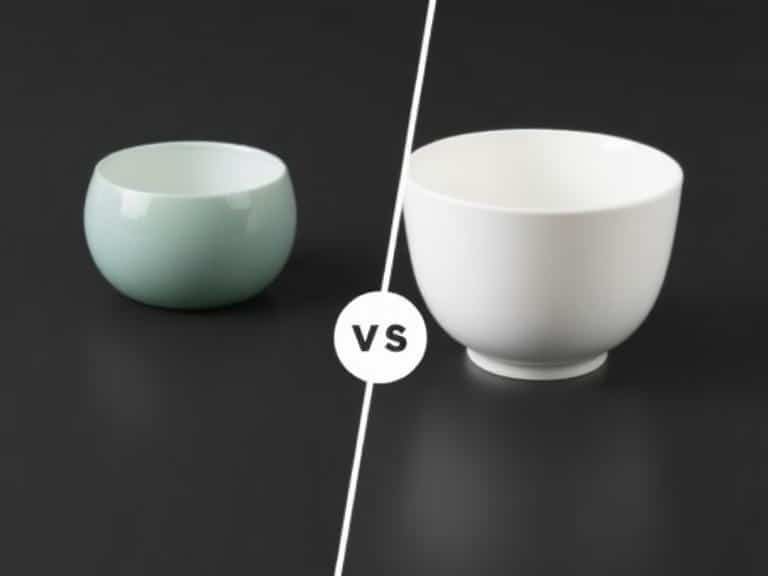
In most professional situations, the distinction between a glass-ceramic and an advanced technical ceramic dictates whether a machine runs flawlessly for a decade or suffers catastrophic failure within weeks. You cannot treat these materials interchangeably. We are going to break down the exact engineering realities, strip away the marketing jargon, and provide you with the commercial intelligence required to make a profitable buying decision.
Quick Answer: Ceramic Glass vs. Ceramic
The core difference in the Ceramic Glass vs. Ceramic debate lies in their crystalline structure and manufacturing process. Ceramic glass begins as an amorphous glass that is heat-treated to achieve partial crystallization, resulting in a material with near-zero thermal expansion, making it immune to thermal shock. Advanced technical ceramics (like alumina and zirconia) are formed from metallic oxide powders pressed and sintered into a fully crystalline structure, providing unmatched mechanical hardness, wear resistance, and compressive strength.
Verdict: Choose ceramic glass for extreme, rapid temperature fluctuations (e.g., stovetops, optical mirrors). Choose technical ceramics for extreme mechanical wear, high-pressure, and abrasive environments (e.g., industrial pump plungers, bearings, and cutting tools).
Table of Contents
- What is Ceramic Glass and What is Technical Ceramic?
- How They Work: Fabrication and Microstructure
- Quick Summary Table
- Ceramic Glass vs. Ceramic: A Comparison Across 6 Aspects
- Benefits and Limitations (Pros vs Cons)
- Who Should Use Which Material (And Who Does Not Need It)
- Common Mistakes in Material Sourcing
- Buying Considerations: A Practical Guide
- Our Expert Recommendation
- Frequently Asked Questions (FAQ)
- References
What is Ceramic Glass and What is Technical Ceramic?
To make a sound purchasing decision, you must first understand what you are actually buying. Ceramic glass (properly known as glass-ceramic) is a hybrid material. It starts its life as a traditional glass formulation (amorphous and non-crystalline) that is subjected to a highly controlled, multi-stage thermal treatment. This nucleates and grows crystals within the glass matrix. The resulting material shares properties of both glass and ceramic—chiefly, an incredibly low coefficient of thermal expansion.
Technical Ceramic (or advanced ceramic), on the other hand, is an entirely different beast. Materials like alumina (aluminum oxide), zirconia (zirconium dioxide), and silicon carbide are entirely crystalline. They are manufactured from highly purified synthetic powders, shaped under immense pressure, and sintered in kilns at temperatures exceeding 1,600 degrees Celsius. To understand the baseline of these materials, you can explore what is alumina ceramics in our technical library. Technical ceramics are designed to replace metals in the most abusive mechanical and chemical environments on earth.
How They Work: Fabrication and Microstructure
How these materials perform in the field is directly tied to how they are made. In our testing, we have observed that the partial glass matrix in ceramic glass acts as a shock absorber for thermal changes, but a weak point for mechanical stress. When a heavy object strikes ceramic glass, the amorphous glass phase propagates the crack rapidly.
Conversely, the fully dense, interlocked crystalline structure of technical ceramics halts crack propagation. When you look at an industrial ceramic products list 2026, you will notice that almost all heavy wear parts are technical ceramics, not glass-ceramics. During the sintering process of a technical ceramic, the powder particles fuse together, eliminating porosity and creating a material that is often harder than tungsten carbide.
Quick Summary Table
| Material Characteristic | Ceramic Glass (Glass-Ceramic) | Advanced Technical Ceramic (Alumina/Zirconia) |
|---|---|---|
| Crystalline Structure | Partial (50% – 95% crystalline in a glass matrix) | Fully Crystalline (100%) |
| Thermal Expansion | Near-Zero (Immune to thermal shock) | Low to Moderate (Susceptible to severe thermal shock) |
| Mechanical Hardness | Moderate (Scratches relatively easily compared to technical ceramic) | Extreme (9+ on Mohs scale, approaches diamond) |
| Primary Commercial Use | Cooktops, fireplace doors, telescope mirrors | Pump plungers, industrial bearings, wear plates |
Ceramic Glass vs. Ceramic: A Comparison Across 6 Aspects
To settle the Ceramic Glass vs. Ceramic debate for commercial applications, we must evaluate them across six critical engineering aspects. From our experience, ignoring even one of these parameters will result in premature equipment failure.
1. Thermal Shock Resistance
This is where ceramic glass dominates. Because its coefficient of thermal expansion is virtually zero, you can heat a piece of ceramic glass to 700 degrees Celsius and immediately plunge it into ice water without it shattering. Technical ceramics, particularly alumina, will crack under sudden extreme temperature gradients (though specialized zirconia formulas perform slightly better). If your application involves rapid, extreme temperature cycling without mechanical impact, ceramic glass is the superior choice.
2. Mechanical Strength and Wear Resistance
In most professional situations involving moving machinery, technical ceramics obliterate ceramic glass. If you need alumina ceramic parts for metering pumps, ceramic glass cannot even be considered. The friction and pressure of a high-speed pump would disintegrate glass-ceramic. Technical ceramics offer immense compressive strength and abrasion resistance, maintaining their surface finish over millions of cycles.
3. Machinability and Manufacturing Tolerances
Both materials are notoriously difficult to machine once fully fired, requiring diamond-tipped tooling. However, technical ceramics can be machined in their “green” (unfired) state to near-net shape, and then precision-ground after sintering. This allows for hyper-accurate precision ceramic components for pumps. Ceramic glass is usually cast or rolled into flat sheets and then cut, making it excellent for flat two-dimensional applications but highly impractical and expensive for complex, three-dimensional engineering geometries.
4. Optical Properties
Ceramic glass can be engineered to be fully transparent, translucent, or opaque depending on the crystallization process. This is why it is the standard for high-end induction cooktops and inspection windows in blast furnaces. Advanced technical ceramics are almost universally opaque (with the exception of specialized transparent alumina like sapphire, which is prohibitively expensive for standard industrial use).
5. Chemical Inertness
Both materials exhibit phenomenal chemical resistance compared to metals. However, for heavy-duty applications involving highly corrosive acids or alkalis at elevated temperatures, ultra-pure alumina or zirconia technical ceramics provide a slightly more robust barrier than the residual glass phase found in ceramic glass, which can be vulnerable to hydrofluoric acid and strong hot alkalis.
6. Cost and Scalability
For flat sheet applications, ceramic glass is highly scalable and relatively cost-effective. For complex industrial components, technical ceramic is far more economical. Knowing the ceramic plunger price guide 2026 is essential; you will find that mass-producing a cylindrical plunger out of alumina via dry pressing is vastly cheaper and yields a stronger product than attempting to machine it from a block of ceramic glass.
| Evaluation Aspect | Ceramic Glass Winner/Loser | Technical Ceramic Winner/Loser | Deciding Factor |
|---|---|---|---|
| Thermal Shock | Winner (Zero expansion) | Loser (Can crack if shocked) | Presence of rapid temperature swings. |
| Wear Resistance | Loser (Softer surface) | Winner (Extreme hardness) | Presence of friction or abrasives. |
| Complex Machining | Loser (Best for flat sheets) | Winner (Excellent 3D shaping) | Component geometry requirements. |
| Optical Transparency | Winner (Can be transparent) | Loser (Opaque) | Need for visual inspection/light transmission. |
| Chemical Resistance | Excellent | Superior | Severity of chemical environment. |
| Cost for 3D Parts | High (Difficult to shape) | Low (Highly scalable production) | Volume and shape complexity. |
Benefits and Limitations (Pros vs Cons)
We recommend evaluating materials strictly on their commercial ROI. A material is only “good” if it solves your specific engineering bottleneck without destroying your budget.
| Material Type | Pros (Benefits) | Cons (Limitations) |
|---|---|---|
| Ceramic Glass | Impervious to massive thermal shock. Can be manufactured completely transparent. Easily produced in large, flat sheets. | Lacks the sheer mechanical strength of technical ceramics. Vulnerable to point-impact fracturing. Not economically viable for complex 3D machine parts. |
| Technical Ceramic | Unmatched wear and abrasion resistance. Can be precision ground to micron-level tolerances. Maintains structural integrity under extreme physical loads. | Susceptible to sudden thermal shock (cracking). Completely opaque. Inflexible and brittle if subjected to bending forces. |
Who Should Use Which Material? (And Who Does Not Need It)
For Commercial Users in Thermal Environments: If you are manufacturing laboratory hot plates, industrial furnace viewing windows, or consumer induction stovetops, you absolutely must use ceramic glass. Technical ceramic will obscure vision and likely crack when a cold substance hits a hot surface.
For Heavy-Duty Applications and Manufacturing: If you are building fluid handling systems, you need technical ceramics. Whether you are looking at a ceramic plunger holder design guide or trying to understand what are ceramic bearings used for, the answer is always advanced alumina or zirconia. The mechanical friction of a pump or a bearing requires a fully crystalline structure to prevent catastrophic wear.
For Beginners and Low-Spec Applications: Who does not need either? If your application operates at room temperature, experiences low friction, and has no exposure to corrosive chemicals, neither of these advanced materials is worth the premium. Stick to standard stainless steel, aluminum, or high-density industrial plastics.
Common Mistakes When Sourcing Ceramic Materials
In our testing and daily interactions with global procurement teams, the most common mistake is conflating “heat resistance” with “thermal shock resistance.” An engineer will specify an alumina ceramic rod because it can withstand 1,500 degrees Celsius (heat resistance). However, if that rod operates in a process where it is rapidly cooled by liquid nitrogen, it will shatter instantly (poor thermal shock resistance). In that specific scenario, a specialized glass-ceramic or a highly engineered silicon nitride is required.
Another major error is failing to account for brittleness. Regardless of whether you choose ceramic glass or technical ceramic, neither material can handle severe bending or tensile stress. They must be loaded in compression. Designing a metal-to-ceramic joint without proper polymer or soft-metal gaskets will lead to point-loading and immediate failure.
Buying Considerations: A Practical Guide
When you are ready to issue a purchase order, use this guide to ensure you are communicating correctly with your manufacturer.
| Consideration | What to Specify | Why it Matters |
|---|---|---|
| Material Purity | Specify exact purity (e.g., 99.5% Alumina). | Higher purity yields better chemical and wear resistance but increases cost and brittleness. |
| Surface Finish (Ra) | Specify Ra value in microns. | Vital for moving parts. A poor surface finish on ceramic plunger pump components will destroy your pump seals instantly. |
| Dimensional Tolerance | Specify acceptable variance (e.g., ± 0.005mm). | Post-sintering diamond grinding is expensive. Only demand ultra-tight tolerances where absolutely mechanically necessary. |
| Thermal Environment | Specify maximum operating temp and rate of temperature change. | Allows the manufacturer to steer you away from a material that will fail due to thermal shock. |
Our Expert Recommendation
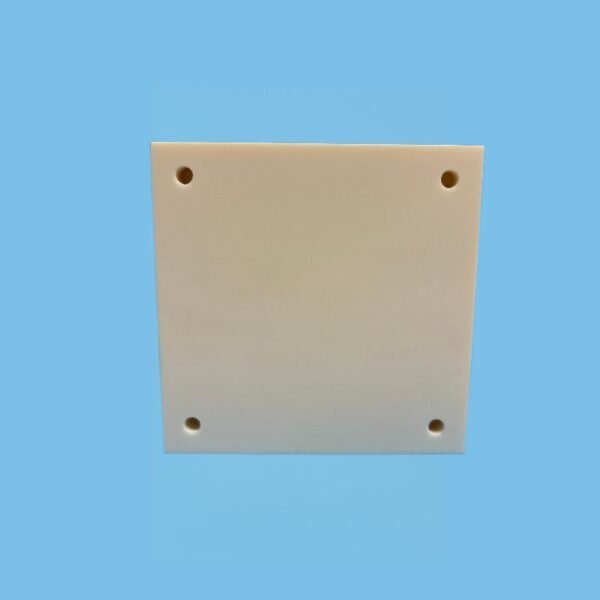
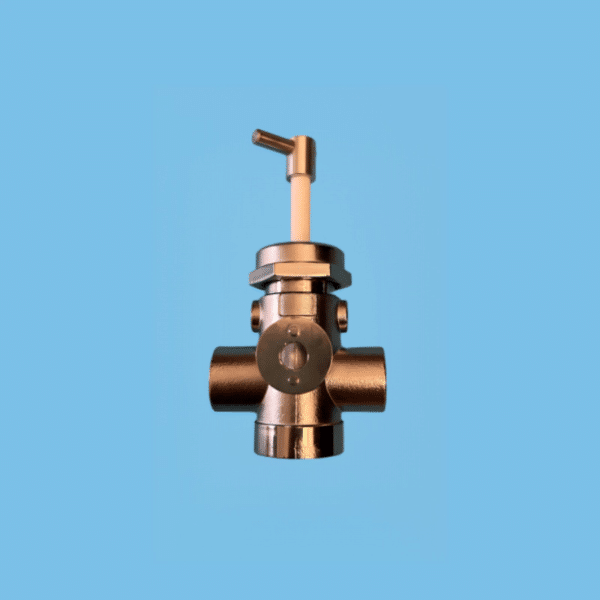
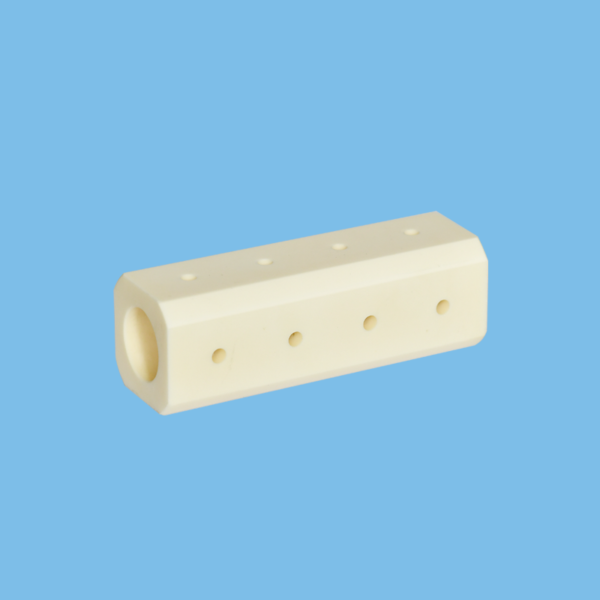
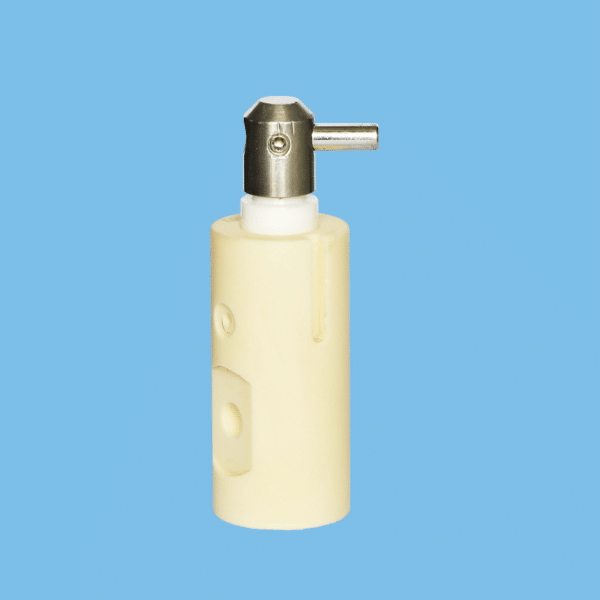
As industry practitioners, our definitive recommendation at JuchangCeramic is to strictly segment your material choices based on the primary stressor of your application. Do not try to find a “jack-of-all-trades” material.
If your primary enemy is rapid temperature fluctuation, buy ceramic glass. It is purpose-built for that environment and performs flawlessly. However, if your primary enemy is mechanical wear, friction, chemical corrosion, or abrasive fluids, ceramic glass is a liability. You must upgrade to precision-engineered technical ceramics like alumina or zirconia. We highly recommend reviewing our technical documentation on these materials to ensure your next industrial build is engineered for longevity and maximum commercial return on investment.
Frequently Asked Questions (FAQ)
Is ceramic glass stronger than regular glass?
Yes. Because of its partially crystalline structure, ceramic glass is significantly tougher and more mechanically robust than standard silica glass. More importantly, it is vastly superior at handling extreme heat and rapid temperature changes without shattering.
Can I use ceramic glass for industrial machine bearings?
No. Ceramic glass lacks the extreme hardness, compressive strength, and wear resistance required for high-load mechanical friction. For bearings, you must use advanced technical ceramics such as silicon nitride or zirconia, which are fully crystalline and designed specifically to withstand immense mechanical abuse.
Why are technical ceramics more expensive for complex shapes?
Technical ceramics shrink up to 20% during the high-temperature sintering process. To achieve precise tolerances for complex shapes, the components must be ground using expensive diamond tooling after they are fully hardened. This post-processing is labor and equipment-intensive, driving up the cost compared to casting standard metals or glass.
References
- The American Ceramic Society (ACerS) – Global standards and research on technical ceramics and glass-ceramic materials.
- National Institute of Standards and Technology (NIST) – Material property databases for advanced industrial ceramics.
- Ceramics International (Elsevier) – Peer-reviewed academic journals detailing the microstructural differences between amorphous glasses and crystalline ceramics.